 Μake us preferred on Google
 Greece’s old blue identity cards are entering their final stretch. Starting August 3, the cards will no longer be valid as travel documents outside Greece, and by September 2027 they will be phased out entirely, no longer accepted for any transaction with the state.
So far, about 3.79 million citizens have obtained the new-style ID, a figure that remains low against the total number of people who still need to make the switch within the next 15 months.
What is changing, and when
The shift is driven by a European Union regulation, 2019/1157, which requires member states to phase out identity cards that lack a machine readable zone, the strip of coded text found on modern passports and IDs. Under the regulation, Greek cards without that feature stop being valid outside the country as of August 3, 2026. The final cutoff for domestic use, including dealings with public services, comes in September 2027.
Anyone who has not switched over by then will effectively be left without a valid form of identification, since the old cards will no longer be recognized by any public authority. The new ID is also now a prerequisite for obtaining a Greek passport.
Booking an appointment
Appointments are booked through a dedicated online platform. Citizens pay two fees electronically, 10 euros (5 euros for members of large families) and a separate 0.50 euro charge. No supporting documents need to be submitted in person, since the police authority retrieves the necessary records automatically.
About 580,000 appointments have already been scheduled through September 24. Emergency appointments remain available for cases involving a lost or stolen card, or an urgent need to travel abroad.
Citizens can either be photographed at the police station itself or use a photo uploaded in advance by a professional photographer. The new card is typically issued within about seven days, at which point the old one is handed back in. The tax authority’s records are updated automatically as part of the process, with no extra step required from the cardholder.
Why the rollout has been slow
Fewer than half of Greeks have made the switch, for a mix of reasons. Some held off waiting for the rollout of the Personal Number, a unique identifier now built into the new card, to be completed. Others struggled to find open appointment slots, and some have cited concerns about surveillance.
The platform for issuing the new cards went live at the end of 2023, but uptake was initially modest. Demand picked up sharply after 2025, which created a backlog. In Attica and other major cities, police stations were booked solid for months. That eased once citizens gained the ability to apply regardless of where they are officially registered as living, meaning someone can now get the new ID even at a vacation destination, as long as they are staying there for more than a week.
All Greek citizens over the age of 12 are required by law to hold an ID card, a rule in place since 1945.
What is actually different about the new card
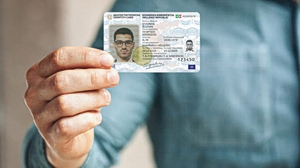
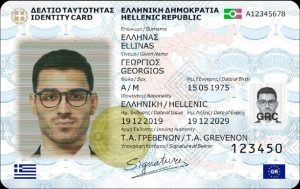
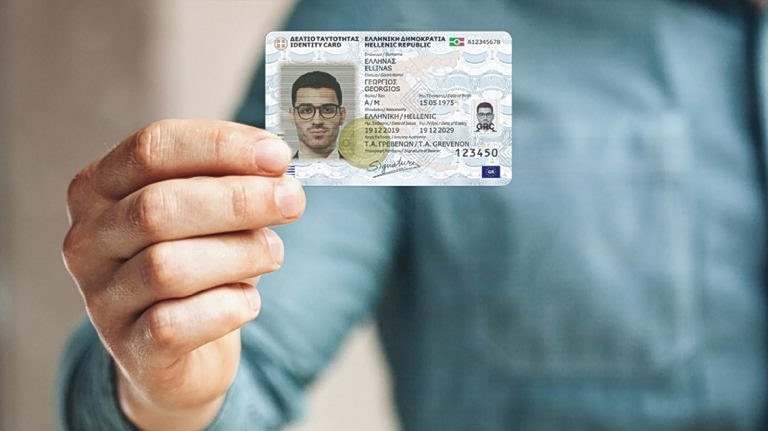
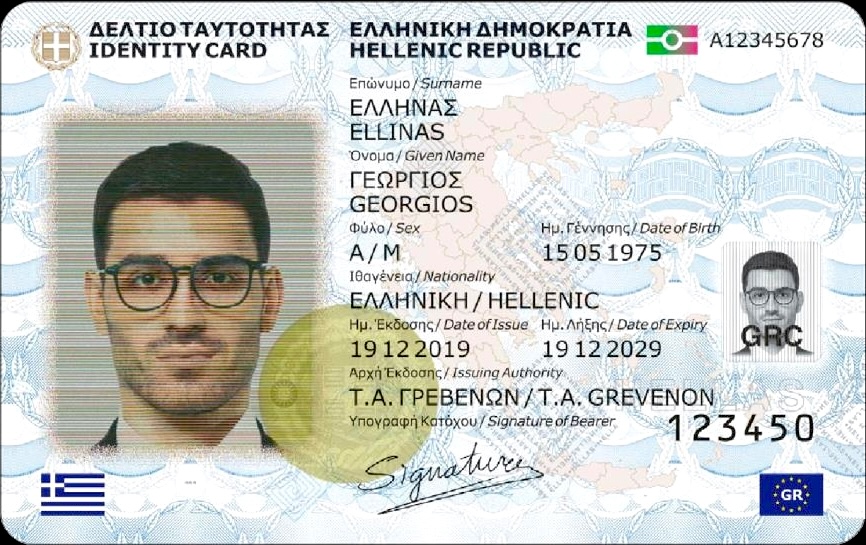
The old blue cards are nearly identical in design to those first issued in 1961, and are now considered easy to forge. The new version is built to meet international security standards set by the International Civil Aviation Organization, the United Nations body that sets standards for travel documents.
Made of polycarbonate in a credit card format, the new ID uses laser engraving to embed personal data and the photo within the card’s inner layer, rather than printing them on the surface, making tampering far more difficult.
The card’s embedded chip stores the holder’s digital photo, the machine readable zone, two fingerprints, the surnames of both parents, the municipality where the holder is registered, their municipal registry number, and their Personal Number.