 Μake us preferred on Google
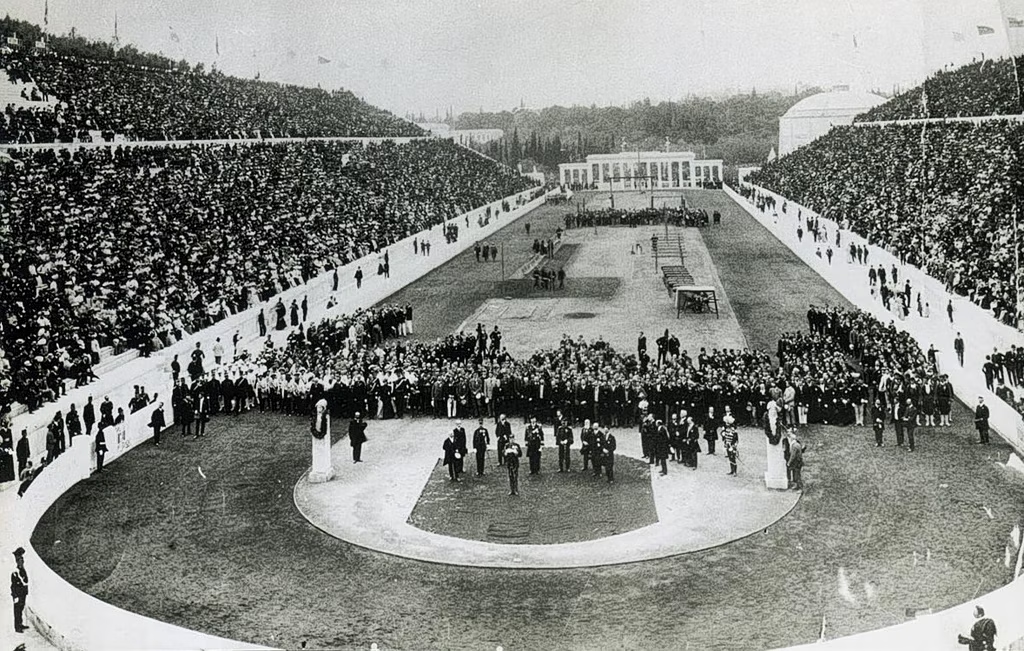
 “Greek! Greek!” the spectators who had filled the Panathenaic Stadium (the Kallimarmaro as Greeks call it) shouted as Spyros Louis crossed the finish line of the marathon at the first modern Olympic Games.
It was Thursday, March 29, 1896. The Panathenaic Stadium was pulsating, “breathing” through the bodies of the people who surrendered themselves to the white Pentelic marble and to the force of historic moments. Then. Now. Into eternity.
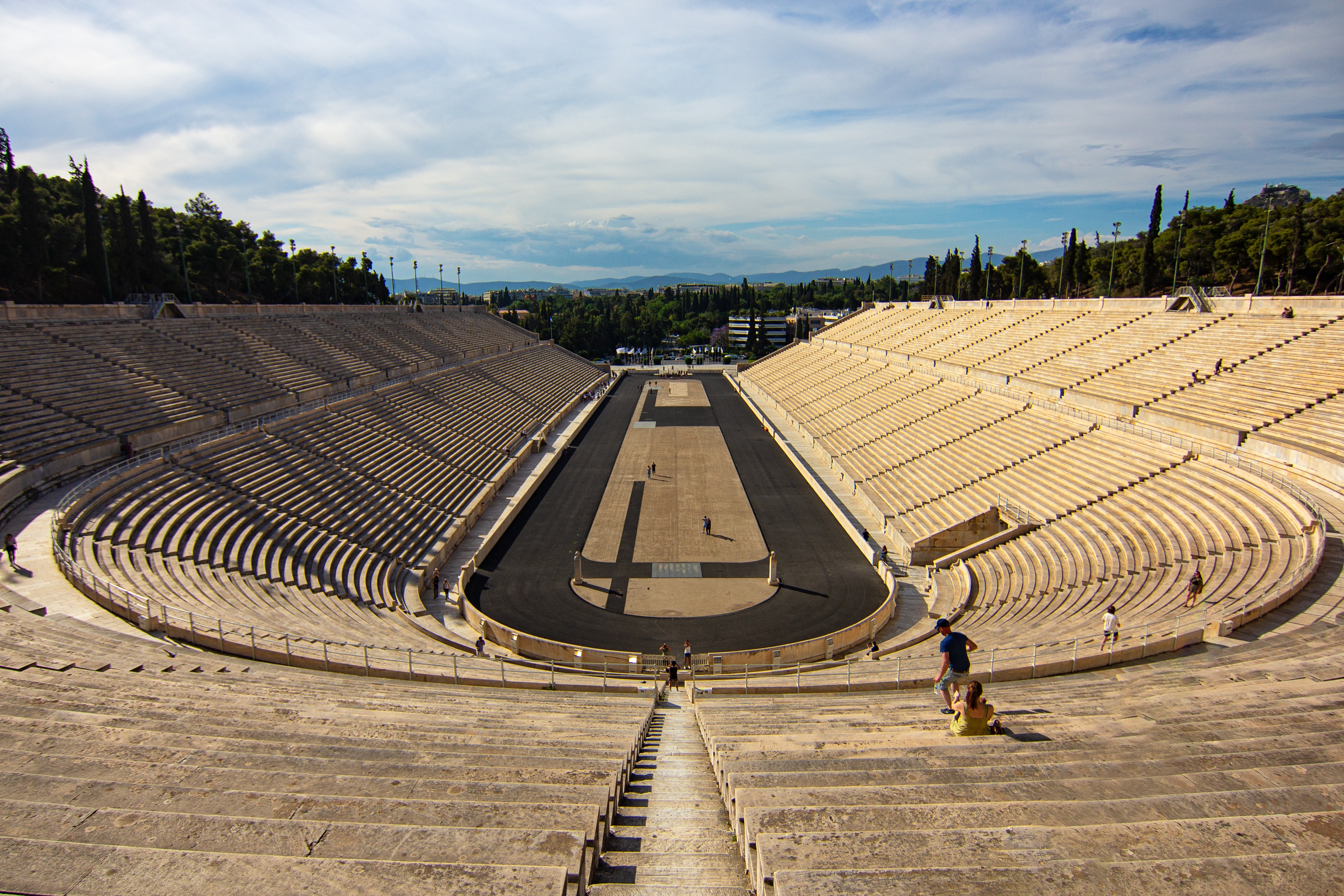
The Panathenaic Stadium remains a living symbol of the city’s historical continuity, connecting the ancient past with the modern cultural and sporting life of Greece. A stadium separated from human presence is a stadium “in waiting.”
“Global Symbolism”
“We have a dilemma here that concerns, on the one hand, the protection of monuments and, on the other, their use. Well, this is not a real dilemma. The dilemma should not be protection or use. The real issue is the balance between the living presence of monuments today in modern society and ensuring their authenticity and long-term preservation,” Georgios Papaioannou, Professor in Museology and Director of the Museology Lab at the Ionian University tells TO VIMA.
He continues: “The Panathenaic Stadium is indeed a unique monument with global symbolism. Having finished the Athens Marathon in the Panathenaic Stadium several times myself, I know from personal experience the power a monument has when it remains alive. The discussion should not be whether we close monuments off from the world, but how we manage them in a way that allows for their modern use, a use that does not undermine their long-term protection. So we are talking about clear management rules, monitoring impacts and limits, and of course ensuring that use does not turn into overexploitation. Balance is the key to keeping them alive today.”
Museums Exhibition Designer Erato Koutsoudaki recalls her earliest memory of some kind of spectacle or concert. That memory is intertwined with the Kallimarmaro Stadium, with an experience that, in the eyes of that five-year-old girl, seemed particularly impressive. And undoubtedly, it was.
“Of course archaeological monuments should be used, but sometimes it seems we cannot find the right measure and method. Monuments should not be cut off from our lives, but they need rules, and we must ensure we leave them as we found them for future generations.
There are ways for everything. And yes, we do not need to put them in a glass case, but I believe there are multiple ways to respect them. We ourselves are respected when we respect them. The Kallimarmaro has hosted sporting events and iconic concerts, which are elements of the monument. They are parts of the monument and features of the history of our society, which has ensured it establishes rules to respect it,” she notes to TO VIMA.
The use of monuments for cultural events is permitted only with authorization from the Ministry of Culture and under strict protection conditions. Among other things, restrictions are provided regarding structures, equipment, sound levels, fire protection measures, and crowd management.
For certain monuments of special significance, including the Panathenaic Stadium, requests are obligatorily examined by the competent central advisory councils of the Ministry of Culture before a decision is made.
“Each event is evaluated on a case-by-case basis, based on the type of event, the expected number of visitors, the protection measures and technical specifications proposed, as well as the proposed constructions. The legislation provides that events must be compatible with the character of the monument and distinguished by quality, aesthetics, and artistic value,” the General Directorate for the Restoration, Museums and Technical Works states to TO VIMA.
Papaioannou is clear about the delicate balance in the use of monuments. “We should not say no, but we should also not say yes to overexploitation. Each use must be evaluated based on management rules, monitoring impacts and any limits set, to ensure that this use does not harm the monument.”
“We must not forget that there is a fine line between proper use and commercialization,” notes Koutsoudaki, referring to events that have sparked varied reactions in civil society. “What I always consider with some discomfort is when the hosted event gains more benefit than the monument itself, and therefore than us as citizens. And I do not only mean financial benefits, but also the cultural footprint an event leaves. Clearly, any concession must also financially benefit the monument, so that we have the ability to maintain it, restore it, and study it,” she concludes.
A Living ‘Organism’
The long-term use of the Stadium throughout the 20th century is multi-layered and reveals it as a living “organism” that contributes to collective identity and memory. Built to host the ancient Panathenaic Games and restored for the first modern Olympic Games in 1896, it must not be forgotten that the Kallimarmaro has been, and remains, the cradle of the sporting ideal.
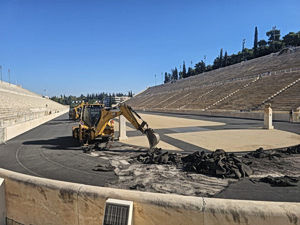
In this context, and with the aim of hosting international track and field events, the Hellenic Olympic Committee decided on a full renovation of the Stadium, with the funding of the works undertaken by Evangelos Marinakis. In fact, the first phase of the works has already begun and concerns the complete replacement of the track’s tartan surface.
The Panathenaic Stadium is an emblematic landmark of Athens, maintaining its enduring connection with the city’s past. From antiquity to today, this space has been a point of reference for cultural and sporting activities, whose value is deeply embedded in the collective unconscious. The Kallimarmaro, nestled in the hollow between the hills of Ardittos and Agra, once with the Ilissos River flowing before it, thrives as a life-giving cell of a society that needs it.
The question is not whether monuments should “live.” Historic spaces that do not touch anyone fade, even if they are preserved. They are not diminished when used with care and control; they do not lose their character. On the contrary, they illuminate the present without harming their roots, strengthening the bond between the public and cultural heritage.