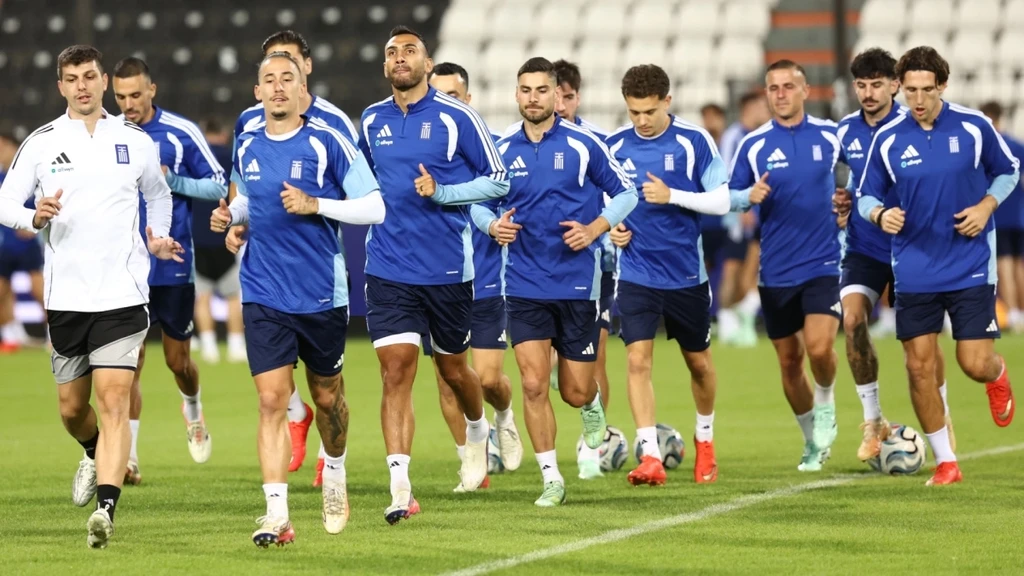
Greece national team coach Ivan Jovanovic on Saturday dismissed reports that Borussia Dortmund asked the Greek national team to “manage” the playing time of teenage midfield sensation Konstantinos Karetsas, as Greece prepares to face Germany at Toumba Stadium in Thessaloniki on Sunday.
Jovanovic was asked about reports that Dortmund had contacted the Hellenic Football Federation (EPO) over the handling of Karetsas, who has emerged as one of the most closely watched young players in the Greek squad.
“There is no request from Dortmund for Karetsas. There are some exaggerations,” Jovanović said at his pre-match news conference. “As a federation, we are in weekly communication with the clubs, both when the players are competing in Europe and when they are in Greece. We are informed about all matters concerning our players.”
Jovanovic said Sunday’s match would be more demanding than Greece’s first encounter with Germany, despite Greece’s 1-0 victory in Augsburg on Sept. 27. He pointed to changes in the German squad and the presence of fresher players while rejecting the suggestion that Germany had underestimated Greece in the first meeting.
Greece will now attempt to add another significant result to its Nations League campaign in front of a home crowd at Toumba.
Mitsotakis visit
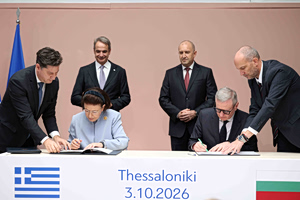
The national team received a visit from Prime Minister Kyriakos Mitsotakis on Saturday, a day before the match. Mitsotakis went to the team’s hotel in Thessaloniki and met with the players, Jovanovic and EPO president Makis Gagatsis.
The visit took place in a relaxed atmosphere as the team completed preparations for another major League A Nations League fixture. Jovanović presented Mitsotakis with a Greece national team shirt bearing the prime minister’s surname and the No. 10.
The prime minister’s visit came as attention builds around a Greek team that has attracted increasing recognition for its young players and its performances under Jovanović.
Επίσκεψη του Πρωθυπουργού Κυριάκου Μητσοτάκη στο ξενοδοχείο της Εθνικής ομάδας🤝 pic.twitter.com/LCZJziqTjQ
— Ethniki Omada (@EthnikiOmada) October 3, 2026
Klopp
Germany coach Jürgen Klopp has also singled out the current Greek generation for praise, suggesting it could become the “golden generation” of Greek football.
“This could be the golden generation of Greek football,” Klopp said, according to German reports, when discussing the current Greek side.
Klopp contrasted the present team with Greece’s Euro 2004 champions, who won the tournament under German coach Otto Rehhagel with a disciplined, defensive approach and relatively little possession. He recalled that the team created comparatively few chances but had players such as Angelos Charisteas capable of converting them.
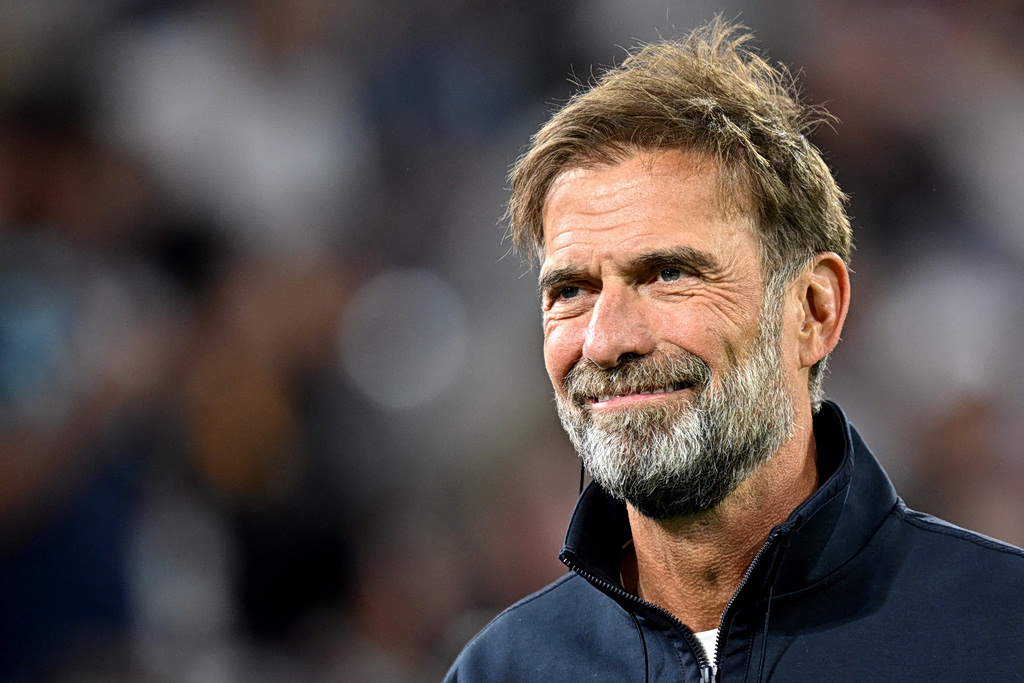
The current side, Klopp said, is different, with a younger group of players competing at major European clubs. He has also praised the progress made under Jovanović, saying the team was taking “steps in the right direction” and “play[ing] real football.”
The Germany coach acknowledged the difficulty of Sunday’s game, saying Germany had never played at Toumba and would seek a better result than in Augsburg.
“We haven’t played at Toumba before,” Klopp said. “We will obviously try to get a better result than in the first game. Greece were very disciplined against us.”
He also pointed to Greece’s 2-2 draw with the Netherlands, in which Greece led 2-0 before the Dutch came back to level.
“Greece went 2-0 up and then the Netherlands caused them problems,” Klopp said. “We’ll watch the video tonight. Greece have a strong defensive line.”
Klopp also confirmed that Bayern Munich goalkeeper Jonas Urbig would start again for Germany, explaining that the young goalkeeper had not been playing regularly at club level while the other German goalkeepers had been getting regular action.
The coach was also drawn into another round of questions about Joshua Kimmich and Germany’s midfield selection. Klopp defended the depth of his options and rejected the notion that one player should automatically occupy a starting position.
“Why should one player always play in the future?” he asked, stressing the need for different types of midfielders and for players to be in good form.
Eventually, with reporters continuing to press him on Kimmich, Klopp ended the discussion with a smile: “I give up. Officially, already now. On this subject, I give up. Do whatever you want.”
Germany will enter Sunday’s match seeking to respond to its defeat in Augsburg, while Greece will attempt to maintain the momentum generated by its results and the emergence of a younger generation that has increasingly drawn attention beyond the country.
For Jovanović, the immediate priority remains the match itself — and managing a Greek squad that, after a 1-0 victory in Germany, now faces the same opponent on home soil with expectations considerably higher than they were before the two teams first met.