 Μake us preferred on Google
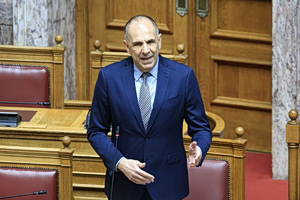
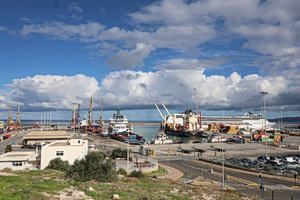
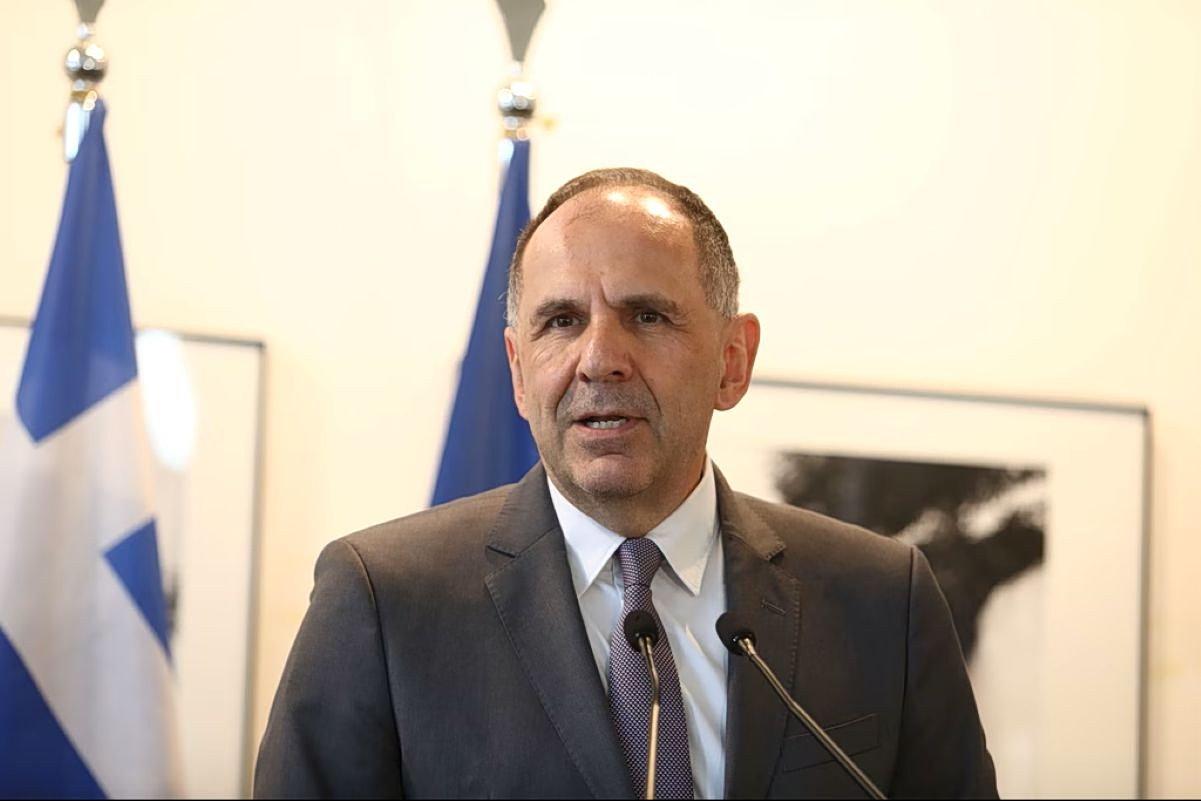
Greek Foreign Minister Giorgos Gerapetritis has not ruled out the possibility that Turkey or Libya could attempt to obstruct upcoming seismic surveys by U.S. energy company Chevron south of Crete, citing the uncertainty of international relations and the need for Greece to prepare for every possible scenario.
In an interview with Ta Nea published Saturday, Gerapetritis addressed the planned exploration work, tensions with Turkey and Libya, and the restart of work on the Great Sea Interconnector (GSI), the electricity link between Greece and Cyprus.
“I do not rule anything out, however unlikely it may seem,” he said when asked whether Turkey or Libya might invoke the 2019 Turkish-Libyan maritime agreement to interfere with Chevron’s surveys. “The fluidity of international relations makes reliable predictions impossible and requires us to be prepared for every potential scenario.”
Gerapetritis said the areas granted to Chevron for exploration by both Greece and Libya respect the median line, in accordance with Greece’s position under international law. He also noted that a major U.S. energy company such as Chevron would have conducted a thorough legal review of the claims involved before signing agreements with the Greek and Libyan governments.
Gerapetritis expects Greece-Cyprus electricity link to continue
The foreign minister expressed confidence that work on the Great Sea Interconnector would continue without disruption.
The project is classified as a Project of Common Interest by the European Union and is considered strategically important because it would end Cyprus’ energy isolation while strengthening the EU’s energy security and resilience.
Gerapetritis said implementation would proceed in accordance with international law and the European acquis, adding that Greece had issued the necessary permit and a NAVTEX—a maritime notice to inform vessels of activities in a specified area—for work on its continental shelf.
He also rejected criticism suggesting that a French diplomatic note delivered to Turkey over the GSI could provide Ankara with evidence to support claims to maritime rights.
“No communication constitutes proof of sovereign rights,” he said, dismissing such arguments as “ridiculous.” He added that the diplomatic exchange created no legal precedent and accused those making such claims of oversimplifying complex technical issues.
Gerapetritis said the electricity link, alongside other energy connectivity projects, would turn Greece’s geographic position into a source of geopolitical and economic strength.
Greece rejects Turkish-Libyan maritime agreement
Gerapetritis reiterated Greece’s position that the 2019 maritime memorandum between Turkey and Libya is invalid and has no legal effect because it contradicts international law of the sea. He said its ratification by Libya’s House of Representatives did not change that legal position.
According to the minister, all 27 EU member states, as well as Cyprus, the United States, Israel, the United Arab Emirates, Bahrain and Egypt, share Greece’s position. He also pointed to a letter Egypt sent to the United Nations challenging the agreement.
Athens and Tripoli are expected to begin technical discussions in the coming period on extending their delimited exclusive economic zone, he said.
Gerapetritis described Greece and Libya as genuine neighboring countries with a mutual interest in maintaining good relations, but warned that unilateral actions intended to impose unlawful consequences on Greece would carry repercussions. Athens has informed its partners and allies and continues to assess the situation, he added.
Asked about a possible Turkish parliamentary bill formalizing the “Blue Homeland” doctrine, Gerapetritis described the concept as an unfounded maximalist theory with no basis in international law of the sea. Greece is monitoring the legislative initiative and has already informed its partners and allies, he said, adding that it would assess the bill once an official text becomes available.
“Unilateral actions that harm our national interests are unacceptable,” he said, while emphasizing that Greece seeks dialogue based on international law but is also prepared to respond through international diplomacy when necessary.
Next round of Greek-Turkish talks set for December
The next round of structured political dialogue between Greece and Turkey, including discussions on a positive agenda, is expected to take place in Turkey on December 7 and 8, Gerapetritis said.
Contacts on confidence-building measures are also continuing. The most recent meeting between the two delegations took place in Athens on October 9.
The minister said the two countries had maintained a structured, periodic dialogue with a defined agenda and tangible outcomes since 2023. Although fundamental differences remain, he argued that functioning communication channels contribute to stability and help prevent crises.
On Greece’s longstanding right to extend its territorial waters to 12 nautical miles, Gerapetritis said the country would exercise that right unilaterally, in accordance with international law of the sea, at a time and in a manner of its choosing.
He said the Foreign Ministry was preparing methodically to protect national interests, pointing to previous extensions of Greek territorial waters in the Ionian Sea and as far as Cape Tainaron, as well as efforts to strengthen Greece’s international standing and deterrence capabilities.
“Greece has grown and will continue to grow,” he said.
Athens opposes Turkish candidate for UN secretary-general
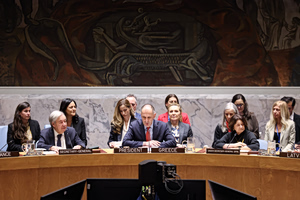
Gerapetritis also confirmed that Greece does not support the candidacy of Feridun Sinirlioğlu for the position of United Nations secretary-general.
He said the role requires guarantees of independence, impartiality and commitment to the UN Charter, Security Council resolutions and the organization’s international treaty framework. These requirements apply both to the candidate and to the country from which they come, he said.
The minister cited Turkey’s failure to implement UN resolutions on Cyprus and its decision not to ratify the 1982 UN Convention on the Law of the Sea, which he described as one of the organization’s most important and widely applied conventions.
On the Cyprus issue, Gerapetritis said it remained a major priority for Greek foreign policy. Greece and the Republic of Cyprus had succeeded in bringing the issue back to the center of the UN secretary-general’s efforts after a prolonged period of stagnation, including through the appointment of his personal envoy, he said.
Athens hopes to see progress before Antonio Guterres’ term ends at the end of the year and expects the next secretary-general to continue the effort toward a just and sustainable settlement based on relevant Security Council resolutions and the agreed framework.
Greece seeks faster EU accession for Western Balkans
Gerapetritis also outlined Greece’s expectations for a ministerial meeting of the Friends of the Western Balkans group, scheduled to take place in Athens on Monday.
He said Greece had consistently supported the region’s European integration since the 2003 Thessaloniki Agenda and had reaffirmed that commitment through the signing of the Delphi Declaration last April with the foreign ministers of Western Balkan countries. The declaration aims to turn the region’s European perspective into a concrete action plan with clear milestones and measurable results.
The Athens meeting will bring together foreign ministers from six EU member states and all six Western Balkan partners, as well as European Commission Vice President and EU foreign policy chief Kaja Kallas and European Commissioner for Enlargement Marta Kos.
Against a backdrop of rising nationalism and efforts by outside powers to exert influence in the region, Greece hopes the meeting will produce concrete initiatives to accelerate the accession process, while respecting the necessary reforms and the principle that progress should be assessed on each country’s own merits.
Gerapetritis said Greece hopes to welcome a Western Balkan partner into the EU during its presidency of the Council of the European Union in the second half of 2027.
Gerapetritis responds to criticism over foreign policy
Asked about criticism from former Prime Minister Antonis Samaras over the government’s handling of the Great Sea Interconnector, Gerapetritis said he would not speculate about the motives behind Samaras’ statements.
He said he respected differing views and welcomed criticism, however sharp, but argued that political debate should focus on policy and not target individuals with hostile characterizations. He added that former holders of high public office should also be judged on their own record.
The minister said the government intended to leave a legacy that included maritime spatial planning, marine environmental parks, the development of Greece’s underwater resources in the Ionian Sea and south of Crete up to the median line with Libya, stronger defense capabilities and secure borders.
He also cited electricity interconnection projects with Cyprus and Egypt, as well as upgraded relations with the United States, Egypt, Israel, India and Gulf countries.
Greece’s 2027 EU presidency preparation underway
Gerapetritis said the Foreign Ministry had been preparing since early 2025 for Greece’s presidency of the Council of the European Union in the second half of 2027, both organizationally and in terms of policy priorities.
He stressed that the continuity of state institutions meant the success of the presidency, which he described as a national objective, should not depend on election cycles.
The presidency will coincide with major EU decisions on the bloc’s budget, strategic autonomy, common defense, competitiveness, enlargement, migration and energy security.
Gerapetritis said the government in office at the time would play an important role in determining how effectively Greece uses the opportunity to advance European integration and national interests. The choice of leadership, he added, would be among the issues voters would address in the next national election.