 Μake us preferred on Google
A Greek proposal to coordinate the sale of telecommunications spectrum across the European Union has become part of negotiations over the bloc’s next long-term budget, following its inclusion in a revised negotiating framework for the 2028-2034 Multiannual Financial Framework.
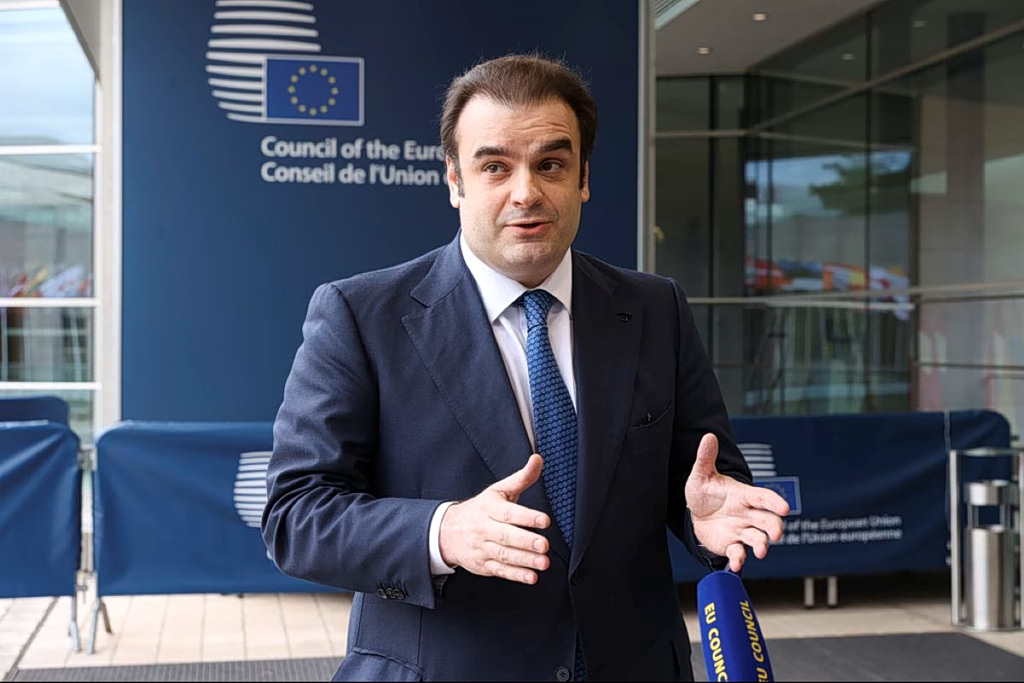
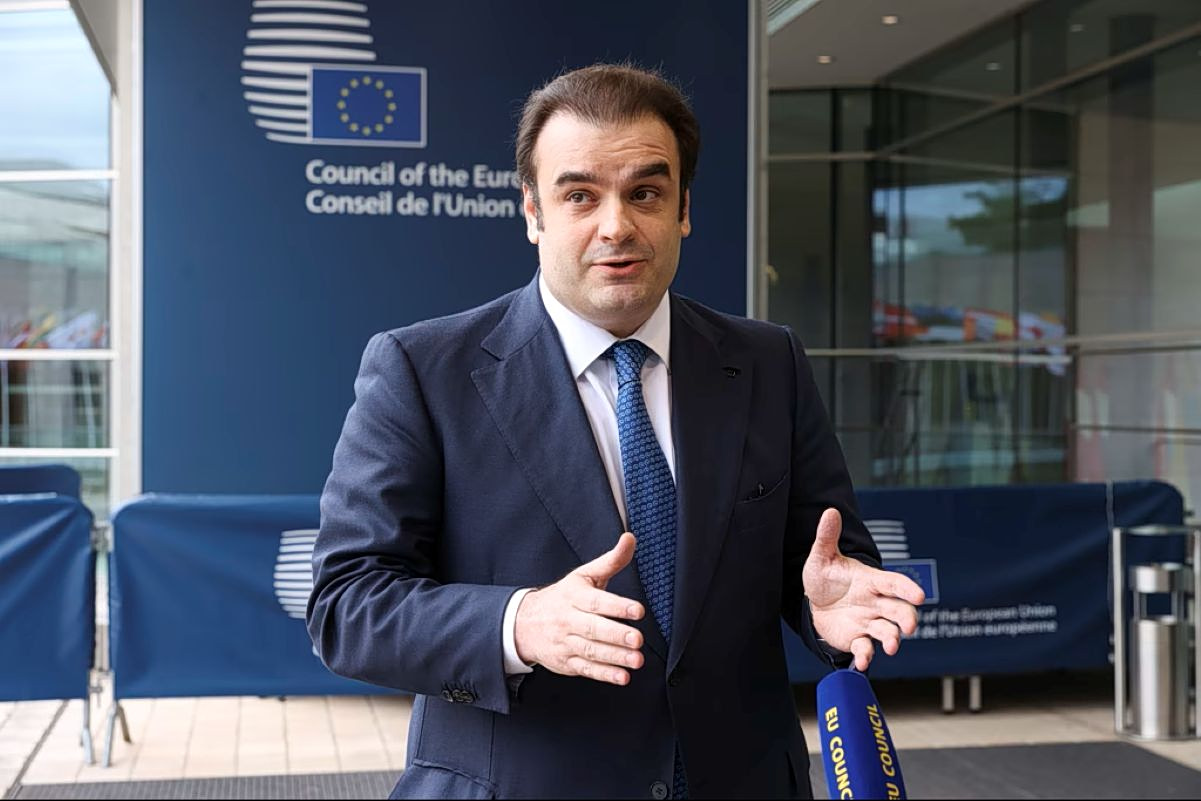
The initiative, put forward by Greek National Economy and Finance Minister and Eurogroup President Kyriakos Pierrakakis, proposes creating a European Spectrum Union to coordinate future auctions of frequencies for 6G networks across the bloc.
The revised framework, known as the “Nego-box,” was presented by European Council President António Costa following consultations with member states. According to European Commission sources cited in the report, the inclusion of specific provisions based on the Greek proposal marks its transition from a political initiative to a subject of formal EU-level negotiations.
At the heart of the proposal is the idea that the EU could generate new sources of revenue rather than focus exclusively on distributing existing funds.
How the proposed European Spectrum Union would work
Pierrakakis first presented the proposal in July and outlined its details in September 2026. It calls for coordinating future auctions of 6G spectrum across Europe, with part of the proceeds going toward the EU budget and another portion supporting strategic technology investments.
The proposal’s initial estimated funding potential is between €12 billion and €15 billion, excluding possible additional revenue from future renewals of 5G spectrum licenses.
The revised negotiating framework explicitly provides for revenue from spectrum usage rights in the bands above 6 GHz, which are intended for 6G services, to be included in the EU budget.
These revenues would provide an additional source of EU funding, reducing member states’ national contributions accordingly.
The framework also opens the possibility of generating revenue from other frequency bands already auctioned by member states when existing usage rights expire or are renewed. This could establish a recurring source of EU revenue from the use of radio spectrum.
The European Commission is expected to incorporate the relevant proposal into sector-specific legislation during the first half of 2028.
A new source of funding for EU priorities
The Greek initiative seeks to address the challenge of financing the EU’s growing strategic needs without triggering repeated disputes among member states over how much each country contributes and receives.
The bloc faces increasing investment needs in defense, competitiveness, technology and infrastructure, while also seeking to maintain strong cohesion policies.
Rather than focusing solely on how existing resources should be distributed, the proposal aims to use shared European assets to generate additional revenue and strengthen the bloc’s capacity to invest.
Its inclusion in the revised negotiating framework reflects this broader approach, although it does not guarantee that member states will ultimately agree to the proposal.
Building on Greece’s 5G experience
The proposal draws on a model introduced in Greece when Pierrakakis served as minister of digital governance.
During the country’s 5G spectrum auctions, 25% of the proceeds was allocated to the Phaistos Fund, an investment fund established to finance innovative businesses and fifth-generation technologies.
The Greek initiative seeks to extend this approach to the European level, using the transition to 6G to generate new resources and strengthen the EU’s telecommunications single market.
Part of the proceeds could also be used, through the European Investment Bank and private-sector participation, to mobilize investments worth several times the initial funding in next-generation networks, artificial intelligence infrastructure and critical digital technologies.
Key dates in the EU budget negotiations
The inclusion of the proposal in the revised “Nego-box” represents a significant step, but the final decision remains subject to negotiations among EU member states.
The special European Council meeting on Nov. 26-27 and the regular summit scheduled for Dec. 17-18, 2026, are expected to be important milestones in discussions over the bloc’s next long-term budget.
Greece is entering those negotiations with a specific proposal that could reshape how the EU raises funds to support its strategic priorities.