 Μake us preferred on Google
 It would have been just another notification among the countless ones we receive daily on our mobile phones—briefly catching our attention before being pushed aside in favor of the next. The (almost self-fulfilling) prophecy that social media has an addictive dimension has now, for the first time, received judicial validation.
Over the past week, Silicon Valley’s Big Tech narrative of “neutral technological platforms” has begun to unravel. In one of the first major cases resulting in a ruling against the very design of social media, a court in Los Angeles held Meta (the parent company of Facebook and Instagram) and Google (the parent company of YouTube) responsible for the intentional design of addictive products that caused serious harm to a young user.
The Algorithm in the Dock
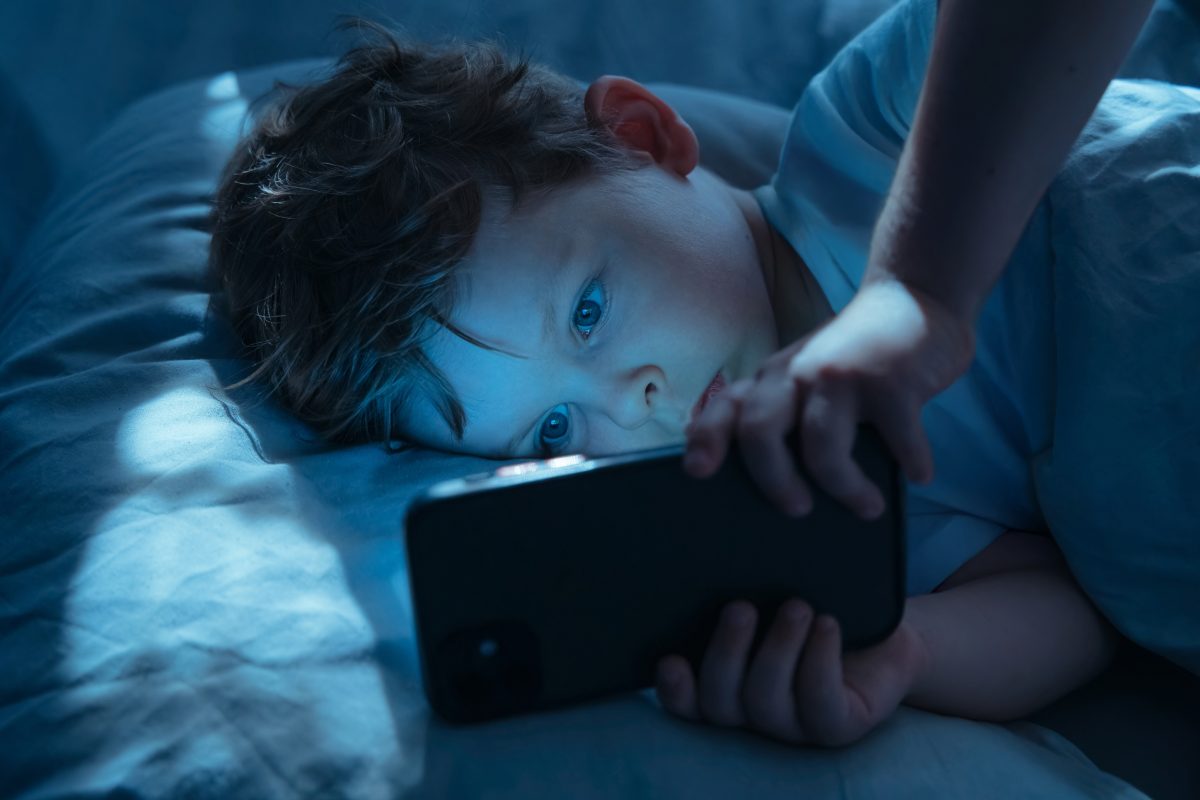
The plaintiff, a 20-year-old woman identified in proceedings by the initials KGM, presented striking evidence: her addiction to YouTube began at the age of six and to Instagram at nine. As she described during the hearing, these platforms led her to severe depression, self-harm, social anxiety, and body image disorders, while also damaging her relationships with family and school.
In a landmark ruling, the US court awarded her $6 million in compensation, finding that the companies had been negligent and had failed to warn users of the risks.
Just one day earlier, another court in New Mexico imposed a massive $375 million fine on Meta, convicting the company of misleading the public about the safety of its platforms, which facilitated minors’ exposure to harmful content and potential sexual exploitation.
These decisions are not isolated legal incidents for tech giants. Rather, they strongly resemble the first major court defeats of the tobacco industry in the 1990s. Above all, they confirm what the scientific community has long warned: that infinite scrolling, autoplay videos, and constant notification bombardment are not accidental or harmless design choices.
As the plaintiff’s lawyer argued, these are digital “Trojan Horses” that enter children’s rooms and take control, entirely disregarding the immense psychological cost.
Evidence from Greece
In an increasingly connected world, the effects of excessive social media use do not differ significantly whether a teenager lives in California or in the remotest parts of the Balkans. According to the latest nationwide school surveys by the Research University Institute for Mental Health (EPIPSI), led by sociologist and PhD in Social Medicine of the University of Athens, Tasos Fotiou, and under the scientific supervision of Emeritus Professor of Psychiatry Anna Kokkevi, the situation in Greece is deeply concerning.
As early as 2024, data showed that nearly one in two 16-year-olds in Greece (48%) is so attached to social media that they themselves recognize it as a problem. This self-awareness of entrapment is one of the clearest symptoms of addiction. Even more worrying is that, at the same age, one in six teenagers (16%, based on 2022 data) shows proven problematic use with clear signs of dependency.
Rates are consistently higher among girls, who appear more strongly affected by the pressures of curated digital perfection and constant comparison.
Moral Panic as a Trap
However, the spread of moral panic is not a cure-all. As experts point out, including Professor of Child Psychiatry and Director of the Child Psychiatry Department at the University of Athens Medical School, Katerina Papanikolaou, social media use and psychological distress often coexist, but this does not establish a clear cause-and-effect relationship.
Data from large-scale studies—such as a recent University of Manchester study tracking 25,000 adolescents aged 11 to 14 over three years—challenge the dominant narrative. Increased screen time does not, by itself, lead to worsening mental health. The problem often appears to run in the opposite direction: children already experiencing psychological difficulties—such as anxiety, learning difficulties, neurodevelopmental disorders, or family problems—tend to turn to social media as an escape.
Algorithms, with their ability to detect vulnerability, reinforce it and often expose teenagers to even more harmful or risky content. Social media, therefore, is not always the “root of evil,” but rather a multiplier of an already existing crisis.
Europe’s Uncertainty
Meanwhile, as US courts tighten their grip on tech platforms, Europe is still searching for its footing in largely uncharted territory. What practical impact do US rulings have in Europe? As legal expert Stergios Konstantinou explains, despite their significance, they are not binding law.
Unlike the Anglo-Saxon system (US, UK), where case law creates legal precedent, in continental legal systems judges retain interpretative independence.
Nevertheless, the wave of lawsuits acts as a pressure mechanism: it indirectly forces providers to make corrective changes and abandon so-called “dark patterns” (manipulative design techniques) to avoid global legal risk.
As Konstantinou notes, the European Union already provides users with a broader and stricter framework of protection. The Digital Services Act (DSA) explicitly prohibits the use of dark patterns, with special safeguards for minors, operating in full complementarity with the GDPR.
In Greece, this regulatory framework—together with the Audiovisual Media Services Directive—grants oversight powers to authorities such as the National Council for Radio and Television (ESR, e.g. for YouTube monitoring) and the Hellenic Telecommunications and Post Commission (EETT), where complaints can be submitted. However, for a compensation claim like those in the US to succeed, specific legal provisions under the Civil Code or relevant special legislation are required.
The Reclaimed Time
Considering that nearly 98% of 15-year-olds across OECD countries now own a smartphone, it becomes clear that digital penetration has reached saturation point, extending even to primary school children.
Perhaps, however, the deeper issue is not what teenagers do while online, but what they stop doing because of this dependency. Screens act as “time predators”: they steal hours of valuable sleep, limit physical activity, erase outward-looking interests, and replace authentic face-to-face interaction with friends and family with an artificial illusion of companionship.