Data revealed that Greek tourism overperformed in 2025, as tourism receipts amounted to 16.7 billion euros in the first 8 months, a 12% rise compared to 2024. Despite this encouraging figure, a concerning point emerged regarding the restaurant industry.
In a year when Greece welcomed record numbers of tourists, two of the country’s brand-name spots, Mykonos and Santorini, saw a drop in revenue in the restaurant sector.
Experts in the restaurant industry note that the average spending per traveler arriving in Greece has consistently declined over the past years.
ELSTAT figures show that as early as 2024—when accommodation and food-service revenue nationwide was rising 9.2%—both Mykonos and Santorini were already posting declines.
Studies indicate that Greece is attracting more visitors each year, even as spending per trip continues to fall. Data show average expenditure slipping to about €530 in 2024 from €640 in 2011. In practice, tourist volumes are rising, but spending is not keeping pace. The food-service sector is the first to feel the pressure.
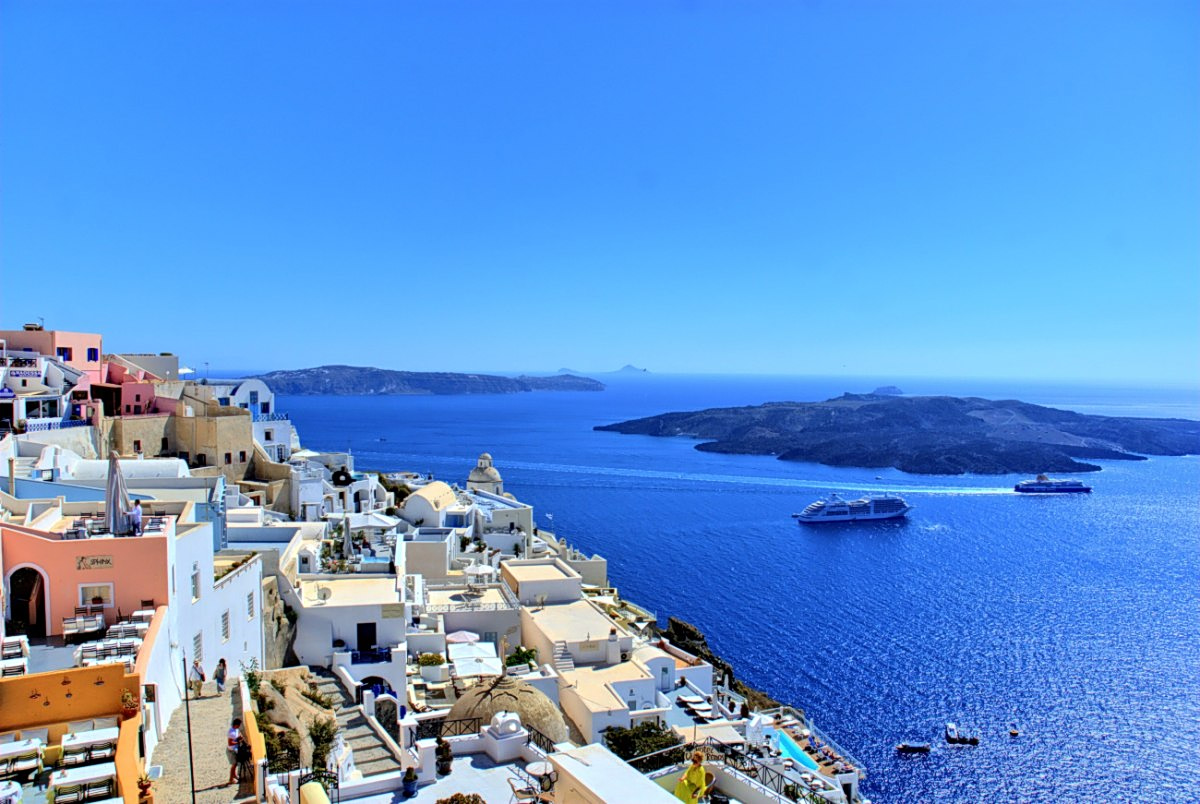
Santorini offers the clearest illustration of this shift. In the second quarter of 2025, restaurant turnover dropped 21%, with revenue falling from €145.2 million to €113.1 million—the sharpest decline in the country.
The trend persisted in the third quarter, with accommodation revenue down 14.7% and food service down 13.3%, making Santorini the destination facing the most severe strain for two consecutive quarters. Over six months, the market has lost nearly a third of its turnover.
The abrupt downturn on the island cannot be explained without factoring in the seismic activity that affected demand and arrivals. A portion of tourists shifted to Paros, Naxos, Crete and Rhodes, a trend visible in regional data from ELSTAT.
But the picture is not purely cyclical. Santorini is one of the first islands where dining prices have reached the limits of visitor tolerance, with average per-person costs often exceeding €40–50.
The concentration of tourist businesses, the consistently high number of arrivals beyond the island’s capacity and the difficulty of moving around during peak periods have created a market highly sensitive to changes in demand. When consumption shifts toward cheaper options, losses multiply.
Mykonos shows a different but equally telling pattern. In the second quarter of 2025, food-service revenue fell 8%, followed by a 2.7% decline in the third quarter. In absolute terms, the losses are far smaller than Santorini’s, but Mykonos displays something Santorini has not to the same extent: a persistent underperformance compared with the national average for a second straight year.