
 Μake us preferred on Google
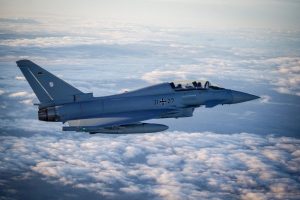
 Beyond addressing some of the structural gaps in its Air Force — gaps widely acknowledged as inconsistent with the level of power Turkey seeks to project as NATO’s main pillar in Southeastern Europe — the country’s agreement with Britain for the purchase of 20 Eurofighter jets signifies something much greater: Ankara’s active participation in shaping Europe’s new security architecture and its dynamic reconnection with the Western alliance, or at least with its core.
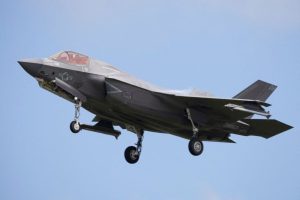
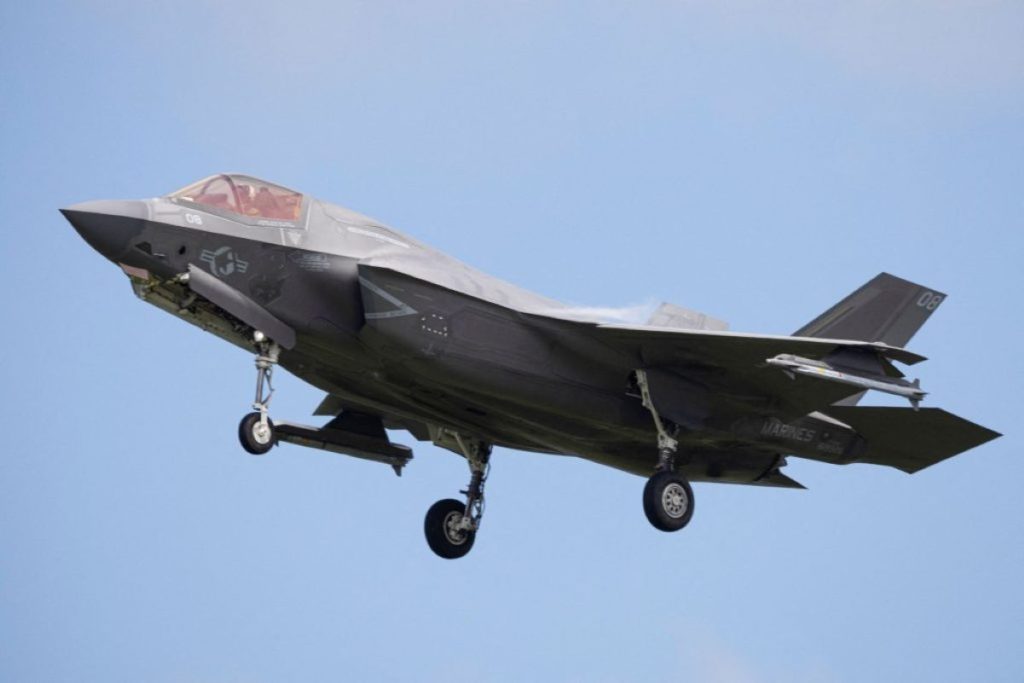
This comes despite the fact that Turkey’s defense industry remains under US sanctions and has been excluded from the F-35 fifth-generation fighter program due to its purchase of Russian S-400 missiles.
Willing partners
The deal, worth about €9.2 billion, with the European consortium that includes the United Kingdom, Germany, Italy and Spain, is among those Turkish President Recep Tayyip Erdoğan likes to call “kazán-kazán” — a win-win for all sides.
Ankara, currently facing an operational impasse — analysts estimate that only around 50 Turkish F-16s are presently flight-ready — upgrades its air capabilities, though it remains unclear what equipment the Eurofighters will carry. The British side, meanwhile, is restarting a nearly dormant production line funded by Turkish money.
More importantly, the Eurofighter purchase follows a series of bilateral agreements with major European and NATO members, notably Spain and Italy, with whom Ankara maintains excellent defense and diplomatic relations.
“Turkey is strengthening its position and potential role both directly within NATO — absorbing the pressure from its ongoing ambivalent stance on the war in Ukraine — and in the medium term in designing and developing Europe’s new security architecture,” says Panagiotis Tsakonas, Professor of International Relations at the University of Athens, speaking to To Vima.
He adds that such bilateral collaborations enhance Ankara’s ability to bypass objections from EU member states such as Greece and Cyprus, “while at the same time slowing the EU’s pursuit of strategic autonomy.”
Anna Zachariadou, a defense and security analyst, notes that “the Turkish defense industry is becoming more visible among some EU member states, due in part to Turkey’s NATO membership and the current geopolitical timing.” However, she points out that not all EU countries view Turkey as a potential partner.
Convergence with Europe
The reality is that in just a few years, Ankara has converged with most major European capitals. Last September, the Spanish government announced the acquisition of 45 Turkish Hurjet training aircraft, worth €3.68 billion.
“The Spanish purchase is of a different magnitude,” an experienced Greek diplomat tells To Vima: “It involves a large number of aircraft, a high price tag, and reaffirms Turkey’s engagement with one of the EU’s most traditional member states.”
Spain and Turkey have indeed cooperated closely in defense for at least a decade. In 2014, Madrid deployed a Patriot missile battery to the Turkish-Syrian border, and later the two sides shared naval design expertise.
A similar level of cooperation exists between Turkey and Italy, notably through the acquisition of Piaggio Aerospace by Baykar, the flagship of Turkey’s defense industry and one of the world’s leading drone manufacturers. Baykar has also agreed with Italy’s Leonardo on the joint production of drones, while Ankara and Rome are simultaneously facing a number of shared regional security challenges.
According to Professor Tsakonas, through such pathways, Turkey is largely restoring its image as a “problematic ally.” “It confirms former US ambassador to NATO Ivo Daalder’s observation that ‘it is very difficult to live with Turkey, but impossible to live without it,’ while increasing its bargaining leverage in taking on roles that support the Alliance’s goals.”
Bypassing SAFE?
Regardless of whether it is included in the SAFE program, Turkey has indirectly gained access to EU funds and Western technology by investing in European companies. Yet, as a parliamentary source with deep knowledge of the EU defense industry initiative explains to To Vima:
“We shouldn’t underestimate SAFE. It involves loans worth billions of euros for developing joint European weapons. The same conditions that apply to third-country participation in SAFE also apply to the broader €850 billion ReArm program.”
Thus, even though Turkey is, through bilateral deals and with NATO Secretary-General Mark Rutte’s backing, already well positioned within Europe’s security architecture, senior diplomatic sources emphasize that Athens will not yield, despite heavy pressure.
“If Turkey does not withdraw its casus belli and its ‘grey zones’ theory, it will not participate,” the sources state.
Zachariadou reminds that, on Athens’ initiative, Turkey potentially falls under Article 16 of SAFE, which covers states that “contradict the principles of EU security and defense.” “Greece has ensured the inclusion of provisions in SAFE that make it harder for the Turkish industry to participate,” she notes.
“Turkey’s participation in SAFE is limited to 35% of the total €15 billion, while access to the remaining 65% is blocked by the Greek (and Cypriot) veto. Therefore, Ankara is deprived not only of EU funding but also of the crucial European know-how and innovation,” Tsakonas explains.
The missile question
As for Aegean balances following Turkey’s purchase of 20 Eurofighters — to which it plans to add 24 used jets from Qatar and Oman — defense analysts remain cautious, waiting to see the specifics of the armament packages, particularly concerning the French Meteor missiles.
“If the Turks do acquire the Meteor, the gap with the Rafale narrows,” a Greek air force pilot tells To Vima. Another military expert notes, however, that by choosing the Eurofighter, Turkey “commits itself for at least 15 years to an intermediate technology, clearly inferior to the F-35, which means Athens will maintain air superiority.”
Although Athens has not reacted publicly to the Eurofighter deal, a well-informed Foreign Ministry source stresses that “it will be ensured that this equipment will not be used against another member state. Even if the British are confident that Turkey will obtain the Meteors, the same does not apply to the Germans — let alone to the French, who are directly responsible.”
Athens, the same sources recall, has already asked Paris not to provide the Meteor missiles to Turkey, noting that the Greek capital holds additional means of leverage in this matter.