 Μake us preferred on Google
 The terse official statement about German Chancellor Friedrich Merz’s visit to Turkey belies its true weight. The trip, prepared since his first day in office, marks a dramatic step in Berlin’s effort to visibly upgrade relations with Ankara under the new coalition government.
According to reporting by To Vima, Merz will meet President Recep Tayyip Erdogan in Ankara this coming Thursday. Beyond a joint press conference, Deputy Government Spokesperson Sebastian Hille revealed little, mentioning only talks on foreign policy, economic cooperation, migration, security, and bilateral ties. What he did not say, however, is what matters most.
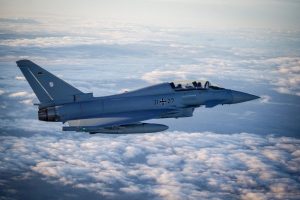
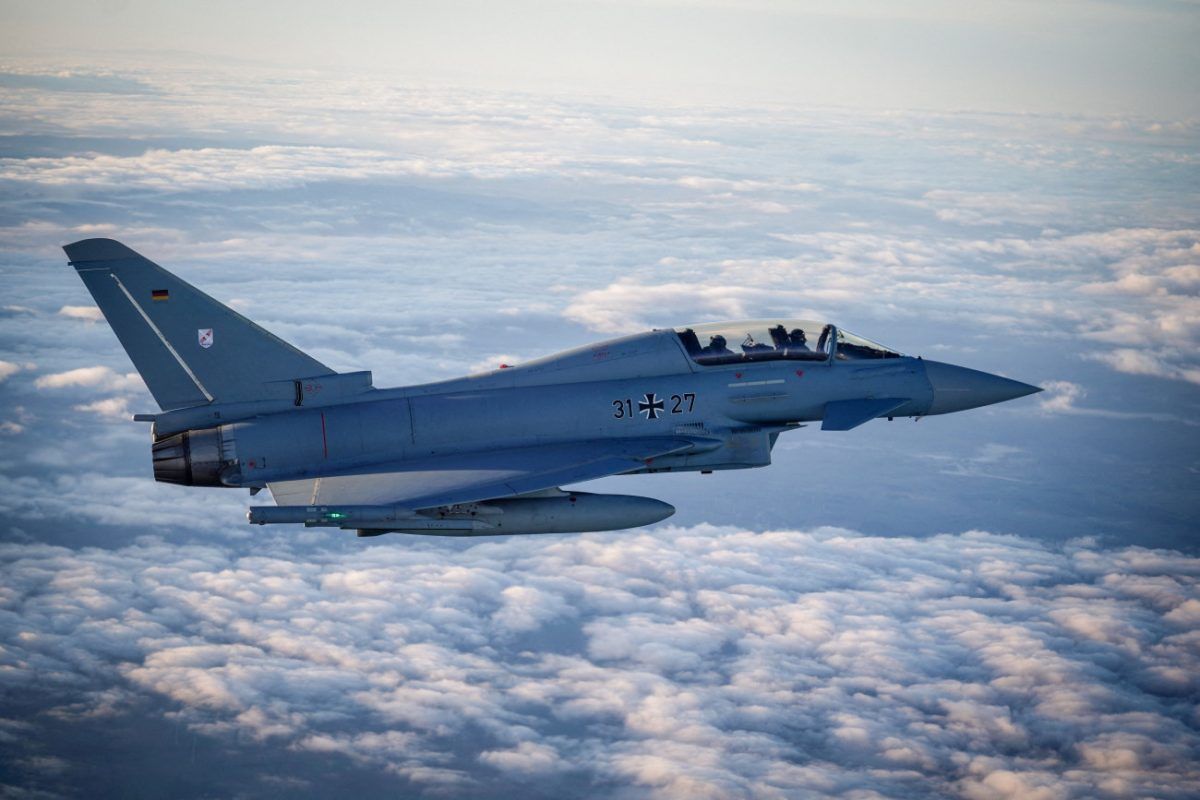
According to To Vima’s own reporting Merz is not coming empty-handed. Sources say he will bring with him a long-sought prize for Erdogan: 40 state-of-the-art Eurofighter Typhoon jets.
In a recent interview with Turkey’s Anadolu Agency, Michael Schoellhorn, CEO of Airbus Defence and Space, confirmed that the signing of the deal is “a matter of time.” The first 20 aircraft, equipped with Meteor air-to-air missiles, are expected to be delivered starting in 2031.
The Eurofighter is built by a consortium that includes Germany, the U.K., Spain, and Italy, with Britain’s BAE Systems holding the largest stake. The deal had been stalled for months pending German approval — consent that finally came shortly after a meeting between Merz and Erdogan in Tirana, Albania on the sidelines of the European Political Community Summit last May.
Under pressure from British Prime Minister Keir Starmer, Berlin relented, emphasizing that Greek Prime Minister Kyriakos Mitsotakis had been kept informed and assured that the aircraft would be used strictly within NATO’s framework and “never against another member of the Alliance.”
Germany is expected to share development costs with Saudi Arabia, while final assembly will take place in the U.K. “Turkey is a regional heavyweight, and the chancellor wants to deepen ties,” said Yasar Aydın, a researcher at the Berlin-based German Institute for International and Security Affairs, while talking to To Vima. “It has a dynamic arms industry, a strong military and navy, and undeniable geopolitical importance — all reasons for Merz’s keen interest in cooperation.”
A New Geopolitical Reality
Berlin’s diplomatic push also aims to include Turkey in the EU’s SAFE defense funding program, a proposal Athens strongly opposes. During his visit to Ankara on Oct. 18, German Foreign Minister Johann Wadephul openly supported the idea with the caveat that Turkey must first “resolve regional disputes.”
Can Germany sidestep Greek objections? Aydın believes Ankara’s role in Europe’s changing security landscape is now too significant to ignore. “German policymakers argue that arms export restrictions no longer have the deterrent effect they once did. Instead, European countries now depend on Turkey’s defense industry for affordable weapons and ammunition,” he said. Through SAFE, the EU seeks to boost its deterrence capacity and modernize its armed forces and Turkey, Aydın added, “enters the game as a low-cost, profitable supplier.”
From Tension to Pragmatism
If signed, the Eurofighter deal would open a new chapter in German-Turkish relations, long strained by political and human rights disputes.
In 2016, the Bundestag officially recognized the Armenian genocide, condemning the German Reich’s role as a military ally of the Ottoman Empire and its failure to stop “crimes against humanity” from being perpetrated. That same year, a failed coup against Erdogan unleashed mass arrests and imprisonments, including of dual German-Turkish citizens, for speech that would be protected in any Western democracy.
Relations worsened further with Turkey’s incursions into northern Syria in 2016 and 2018 — actions deemed violations of international law. Large-scale arms transfers had long been taboo in Berlin due to Turkey’s human rights record.
Yet, time seems to have washed much of that away. Ankara’s brief veto of Sweden’s NATO membership, rising Russian aggression, and Erdogan’s controversial praise of Hamas during his 2023 Berlin visit have all been set aside as Germany recalibrates its priorities.
A Shift in German Policy
“The coordinates of German policy toward Turkey have changed,” Aydın said. “They’ve moved away from promoting democratic values toward transactional power politics. That frustrates many in Turkish civil society who feel abandoned by Europe.” The leader of Turkey’s opposition has voiced the same frustration, saying he wished their sister party in Germany had shown stronger support. “But I don’t see that interest in Germany — or anywhere else,” Aydın added.
He sees little hope for progress on customs union reform, visa liberalization, or democratic reforms. “Those run counter to Erdogan’s political interests,” he noted.
What Berlin does expect, though, is Ankara’s cooperation in disarming Hamas, rebuilding Gaza, and maintaining de-escalation in the Aegean and Eastern Mediterranean — goals the chancellor hopes to secure during his high-stakes visit to Ankara.