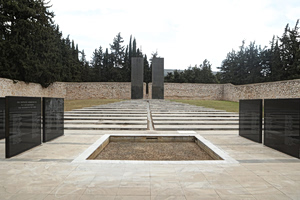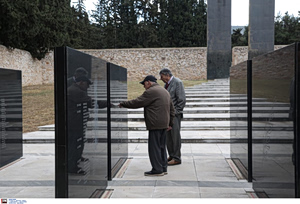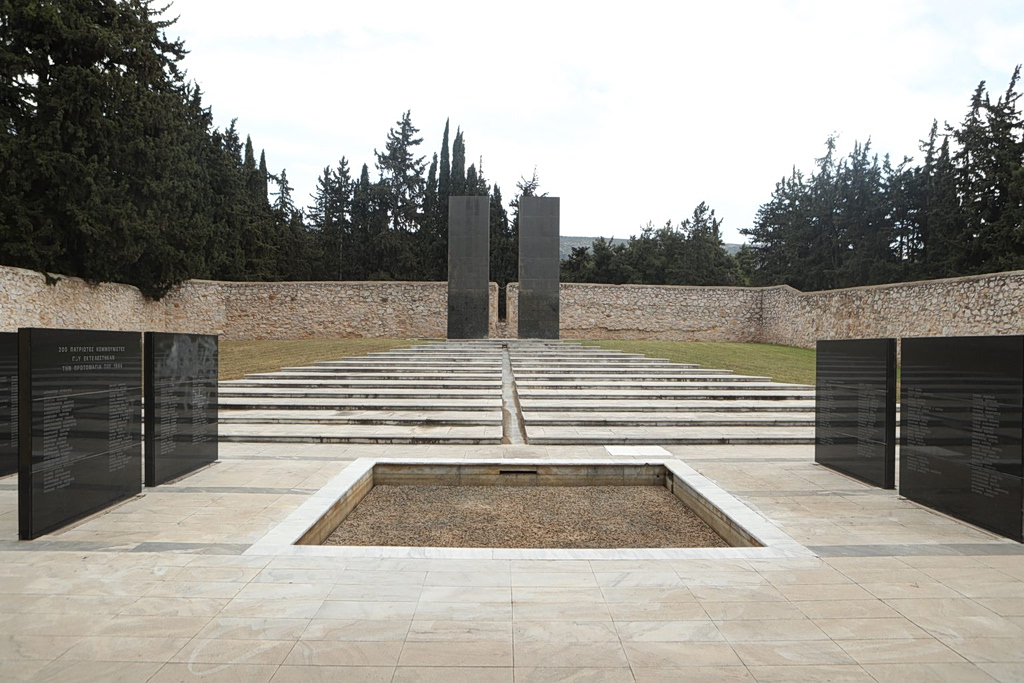
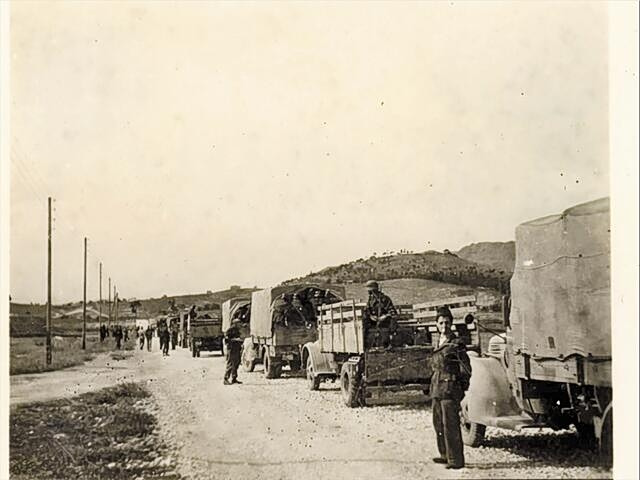
Greece’s culture ministry on Wednesday announced that it has declared the entire T. de Craene/H. Heuer photo collection – which includes images of the mass execution of 200 Greek men by Nazi occupying forces at Kaisariani shooting range on May 1, 1944 – a protected national monument.
The decision comes after a recommendation by the ministry-affiliated Central Council of Modern Monuments.
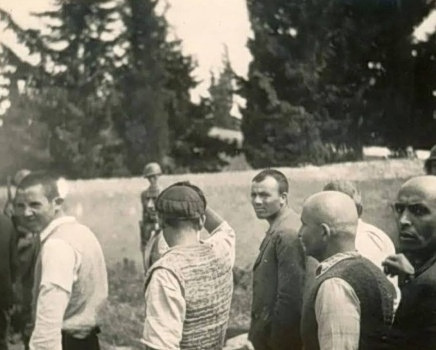
The collection is historically invaluable, according to the ministry, showing how the propaganda machinery of Axis occupation forces in Greece during WWII used imagery to shape perceptions and attitudes.
“These photos provide a ‘face’ to the patriots’ courage and patriotism, just moments before their execution, making them priceless,” said Culture Minister Lina Mendoni announced.
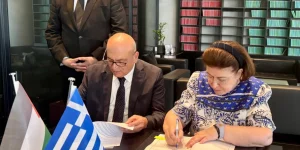
Greek Culture Minister Lina Mendoni, right
Upon learning of the photographs’ availability, the ministry issued instructions to serious broach the prospect of purchasing the collection.
The images appeared on the auction site e-bay.de on Feb. 14.
Alleged owner, Tim de Craene, a collector specializing in World War II memorabilia, offered them up for sale through his company, Crain’s Militaria. Following extensive media attention and public interest in Greece and abroad, the 12 photos were withdrawn from the online auction on Feb. 16.
The larger collection, originally compiled by Wehrmacht 2nd Lt. Hermann Heuer, remains for sale. Heuer served in occupied Europe, including in Belgium, France, and Greece, and in 1944 was ordered to observe—or possibly assist—in the execution of the 200 Greek prisoners at Kaisariani.
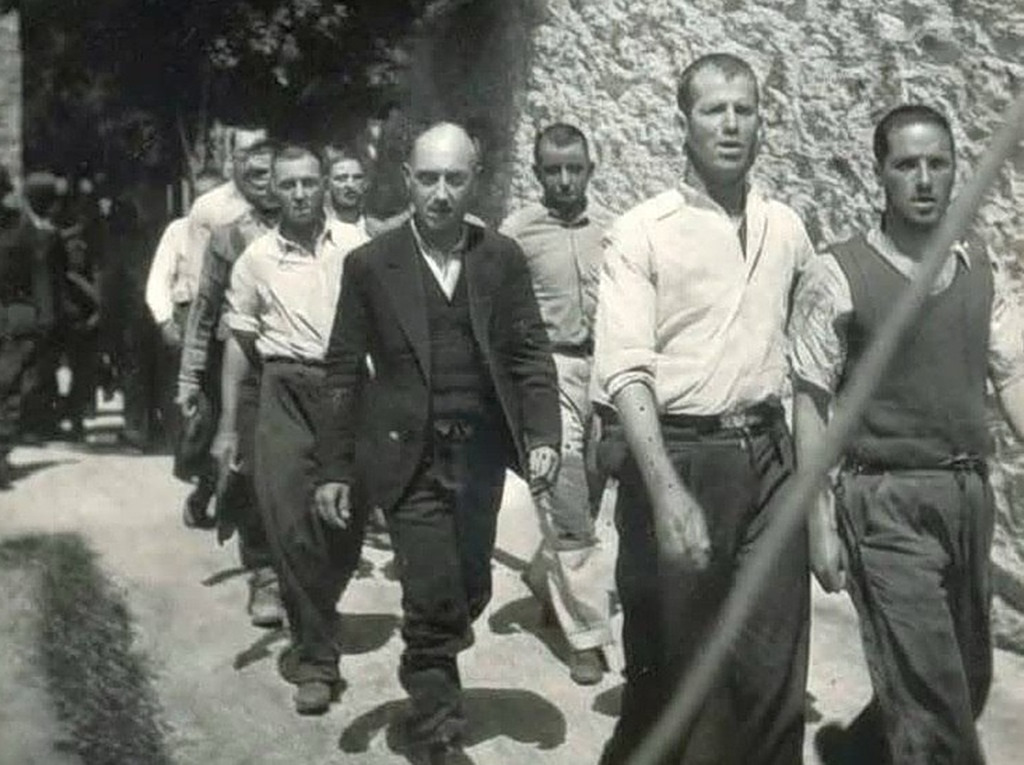
Mendoni emphasized the significance entailed in the full collection, stressing that it not only documents the victims’ heroism but also shows the German occupiers’ perspective. She noted that Nazi propaganda, orchestrated by the notorious chief propagandist Joseph Goebbels, used photography and film to stage “evidence of success” as a tool of influence.
Experts from the ministry are due to meet with the collector in Belgium this week to assess the collection in person.
The monument designation strengthens the Greek state’s ability to acquire the photographs.