 Μake us preferred on Google
 Israel announced Thursday that it is suspending relations with the office of United Nations Secretary-General António Guterres after Israeli entities were included on a UN blacklist related to sexual violence in conflict zones.
Israel’s Ambassador to the UN, Danny Danon, stated that the Israeli mission would have no further contact with the Secretary-General’s office for as long as Guterres remains in his post.
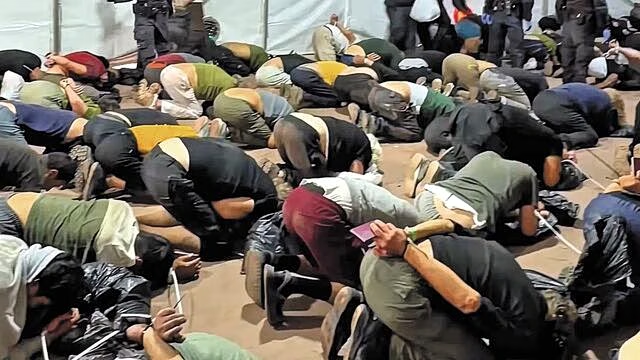
The blacklist is part of the annex to the UN Secretary-General’s annual report on Conflict-Related Sexual Violence (CRSV). Specifically, the Israeli Prison Service is set to be included in the 2026 blacklist, while other Israeli bodies remain under monitoring.
Danon sharply condemned the decision, calling it politically driven and disconnected from reality. He said the UN Secretary-General chose to put Israel on the same blacklist as Hamas, ISIS, and what he described as the world’s most depraved terrorist organizations, calling it a moral disgrace and a total collapse of whatever credibility the UN had left.
Israeli officials argue that once Hamas was added to the list, intense pressure was placed on Guterres to include Israel as well. Israel’s UN delegation says it spent months engaging with UN representatives, submitting documents, data, and detailed responses to allegations raised in the report. Israel also extended an invitation for UN officials to visit and assess the claims in person. Despite all of this, Israeli officials say the Secretary-General went ahead with what they consider a politically motivated decision.
As a direct consequence, Israel announced it would freeze relations with the UN Secretary-General’s office and cancel a previously planned visit by UN Special Representative Pramila Patten.
In August 2025, Guterres had already put Israel “on notice” for potential inclusion, citing documented concerns over alleged patterns of abuse. Israel has consistently denied those allegations.
Guterres’ term is set to end on December 31, 2026, and Israel indicated it will not resume contact with his office for the remainder of his tenure. In a pointed remark, Danon suggested Israel would wait for a new, more impartial Secretary-General to take office before reconsidering engagement.