Exceptionally low water levels on the Danube River in Serbia have once again exposed dozens of wrecks from Germany’s World War II navy, bringing remnants of the conflict back into view near the river port of Prahovo.
According to Serbian media, many visitors have been approaching and climbing aboard the corroded remains of the former Nazi fleet. The wrecks have become increasingly visible in recent years, particularly during the hot summer months when the river’s water level drops significantly.
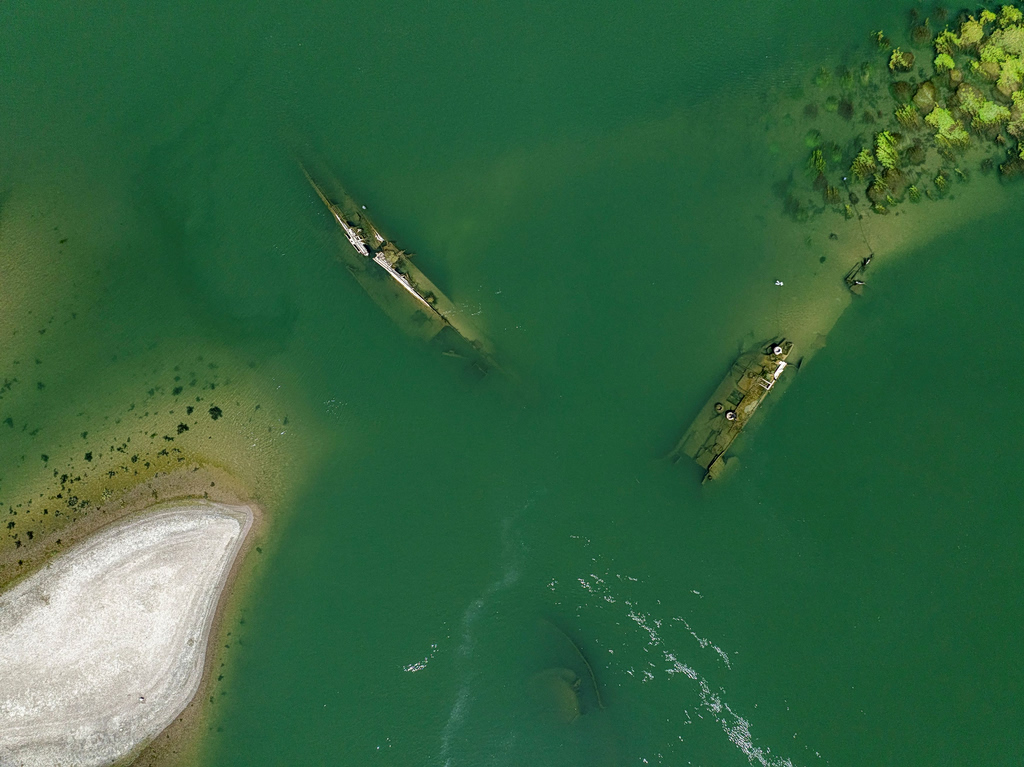
A drone view shows a sunken German warship from World War II, exposed due to low Danube River levels caused by drought and extreme heat, in Prahovo, Serbia, July 30, 2026. REUTERS/Djordje Kojadinovic
The ships are concentrated near the Iron Gates, the dramatic Danube gorge that forms part of the border between Serbia and Romania. Their presence is linked to the final days of World War II.
As German forces retreated under pressure from the Soviet Danube Flotilla, the German Navy deliberately scuttled parts of its Black Sea Fleet. Around 200 vessels were sunk in an effort to create a barrier that would slow the advance of Soviet forces.
Today, the wrecks near Prahovo remain both an important historical reminder and a significant hazard to navigation on the Danube, especially during periods of low water.
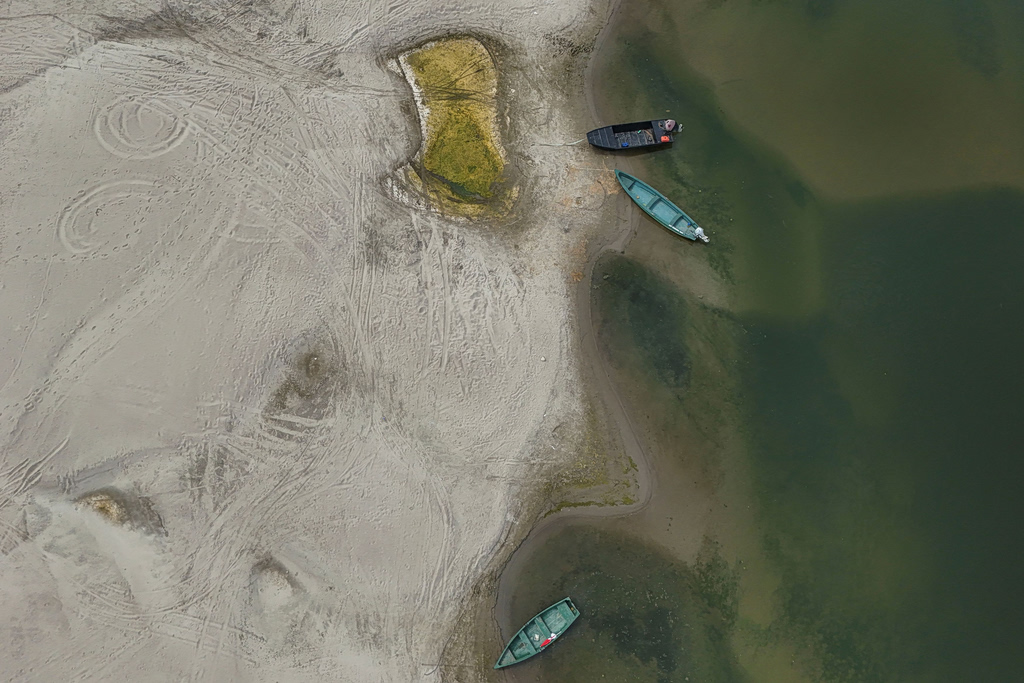
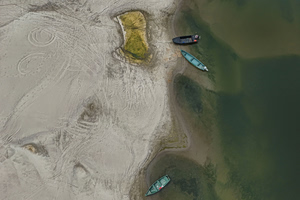
A drone view shows fishermen boats on sand banks on the Old Danube river ramification, in Rasova, Constanta, Romania, August 3, 2026. Inquam Photos/George Calin via REUTERS ATTENTION EDITORS – THIS IMAGE WAS PROVIDED BY A THIRD PARTY. ROMANIA OUT. NO COMMERCIAL OR EDITORIAL SALES IN ROMANIA
To address the problem, the European Union is funding a project to gradually remove the sunken vessels, which lie in one of the river’s most challenging navigation corridors.