 Μake us preferred on Google
The Hellenic American Leadership Council (HALC) is urging the Trump administration to block Turkey’s candidate for UN secretary general, citing his record on Cyprus and his refusal to directly address questions about the republic’s sovereignty during a UN hearing last week.
In a letter to Secretary of State Marco Rubio and U.S. Ambassador to the United Nations Mike Waltz, HALC called on Washington to publicly oppose Feridun Sinirlioglu’s candidacy, work with other Security Council members to prevent his selection and exercise the American veto if necessary.
The group questions whether Sinirlioglu, a former Turkish foreign minister and longtime UN ambassador, could impartially promote compliance with Security Council decisions that Ankara has repeatedly disregarded. Its objections focus on his defense of Turkey’s positions on Cyprus, including a 2022 diplomatic letter in which he asserted that the Republic of Cyprus had ceased to exist as a legal entity in 1963.
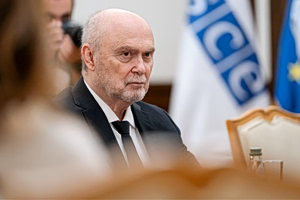
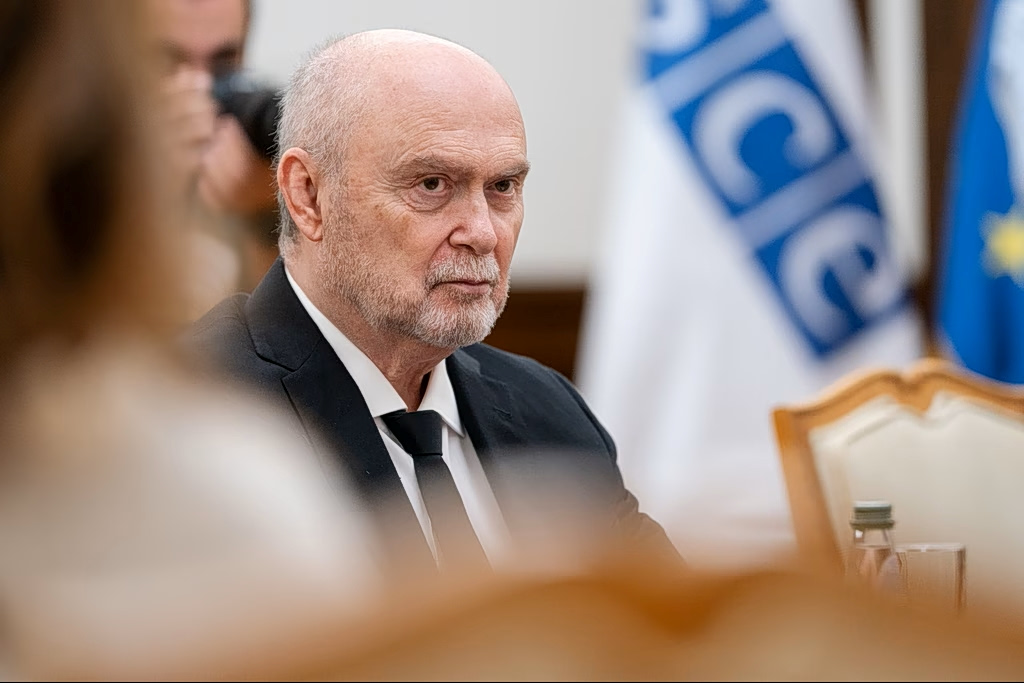
Sinirlioglu, who currently serves as secretary general of the Organization for Security and Co-operation in Europe (OSCE), was formally nominated by Turkey on November 1. He is seeking to succeed Antonio Guterres, whose second term ends on December 31.
HALC’s intervention followed a November 6 hearing at the UN General Assembly, where representatives of Cyprus, Greece and Israel pressed Sinirlioglu on his diplomatic record and his commitment to international law.
The sharpest exchange concerned Cyprus, which has been divided since Turkey’s 1974 invasion and following military occupation. Ankara remains the only government that recognizes the self-declared Turkish Cypriot state in the occupied northern part of the island.
The Cypriot delegation confronted Sinirlioglu with a letter he had submitted to the United Nations on May 19, 2022, while serving as Turkey’s permanent representative.
In the document, circulated as an official General Assembly and Security Council record, Sinirlioglu maintained that the Republic of Cyprus had “ceased to exist as a legal entity in 1963.”
Asked whether he still held that position and recognized the republic’s sovereignty, independence, territorial integrity and status as a UN member, Sinirlioglu offered no direct answer.
He said the UN Charter would guide his work, including on Cyprus, and quoted former Secretary General Dag Hammarskjοld on the distinction between personal convictions and the obligation to act impartially in international office.
HALC said the hearing gave Sinirlioglu an opportunity to disavow his earlier position, but he did not do so.
“A candidate who will not clearly affirm the sovereignty of a UN member state has no business leading the United Nations,” the organization said.
HALC also cited Turkey’s longstanding disregard of Security Council resolutions concerning Cyprus, particularly Resolutions 541 and 550.
Resolution 541, adopted in 1983, declared the unilateral declaration of independence by the Turkish Cypriot administration legally invalid and called for its withdrawal. Resolution 550, adopted the following year, condemned subsequent secessionist actions, urged countries not to recognize the breakaway entity and called for the transfer of Varosha to UN administration.
Varosha, once a thriving Greek Cypriot resort district of Famagusta, has remained largely deserted since its residents fled during Turkey’s 1974 military offensive. The area subsequently came under Turkish military control, and its former inhabitants have not been permitted to return to their properties.
The district became the focus of renewed tensions in 2021, when Turkish and Turkish Cypriot leaders announced the further reopening of part of its fenced area.
The Security Council condemned the move in July of that year and called for the reversal of the decision and all steps taken in Varosha since October 2020. Sinirlioglu was serving as Turkey’s UN ambassador at the time.
During the November 6 hearing, Cyprus asked whether he endorsed the Council’s position and would use the authority of the secretary general’s office to encourage implementation of the relevant resolutions.
His response offered no specific commitment on either point.
The Cypriot delegation also sought his condemnation of an August 2023 assault on UN peacekeepers near Pyla, a village inside the UN buffer zone where Greek Cypriots and Turkish Cypriots live alongside one another.
The incident occurred when Turkish Cypriot security personnel confronted members of the United Nations Peacekeeping Force in Cyprus (UNFICYP) who were attempting to prevent unauthorized construction work in the buffer zone.
Several peacekeepers were injured and UN vehicles were damaged, prompting condemnation from the United Nations and calls for the Turkish Cypriot side to respect the peacekeeping mission’s authority.
Sinirlioglu did not specifically address the request to condemn the assault.
Greece raised its own concerns about his diplomatic record, focusing on the 2019 maritime agreement between Turkey and Libya, which Athens rejects as contrary to international law.
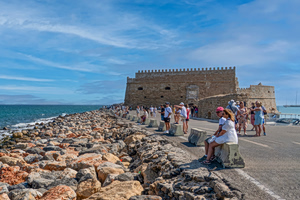
The agreement establishes maritime boundaries claimed by Ankara and Tripoli while disregarding maritime rights for islands, including Crete and the Dodecanese. Athens maintains that Turkey and Libya do not have adjacent or opposite coastlines that would permit them to establish a common maritime boundary.
The Greek delegation asked how Sinirlioglu reconciled his stated commitment to international law and peaceful dispute resolution with his previous defense of Turkey’s maritime claims.
Sinirlioglu responded that although Turkey had nominated him, he was not appearing as a representative of the Turkish government.
He also reminded the Greek delegation that Athens had supported his selection as OSCE secretary general, pointing to his appointment and subsequent service as evidence that he could act independently of his national government.
The response did not address Greece’s specific objections to the maritime agreement.
Israel challenged Sinirlioglu over Hamas, referring to his opposition, while serving as Turkey’s UN ambassador in 2018, to a General Assembly amendment condemning the Palestinian militant group.
Israel’s representative cited the atrocities committed during the October 7, 2023, attacks and asked whether Sinirlioglu would now unequivocally condemn Hamas.
Sinirlioglu said he fully condemned terrorism in all its forms. But when discussing whether Hamas should be held accountable under international law, he used the phrase “if and when,” referring to violations established through international legal rules and institutions.
HALC said the response fell short of the unequivocal condemnation Israel had requested.
The organization described Sinirlioglu’s performance at the hearing as “disastrous,” arguing that his answers compounded concerns arising from his previous diplomatic positions.
In its letter, HALC called on Rubio and Waltz to declare American opposition to his candidacy and coordinate with other Security Council members to prevent his selection, including through a U.S. veto if needed.
It also urged Washington to reaffirm its support for Cyprus’ sovereignty and territorial integrity and the full implementation of relevant Security Council resolutions.
Greece holds a seat on the 15-member Security Council through December 2026, giving Athens a direct role in deliberations over the next UN chief. As an elected member, however, Greece does not possess veto power.
The United States is one of five permanent members with that authority.
Under the UN Charter, the secretary general is appointed by the General Assembly following a recommendation from the Security Council. That recommendation requires at least nine affirmative votes and no veto from any permanent member.
A U.S. veto would therefore prevent the Council from recommending Sinirlioglu for the post, regardless of the support he receives from other members.