
 Μake us preferred on Google
Ukrainian and Russian officials began a new round of U.S.-mediated peace talks in Abu Dhabi on Tuesday, Nov. 10, their first direct negotiations since February, as Washington presses for an agreement that could extend well beyond ending the war to redefine Europe’s security arrangements. The two days of talks bring together delegations from Kyiv and Moscow, with President Donald Trump’s envoys Steve Witkoff and Jared Kushner acting as mediators. The discussions follow renewed diplomatic efforts by the White House after months in which the war in Iran had largely diverted Washington’s attention from Ukraine.
More than four years after Russia launched its full-scale invasion, Moscow occupies roughly one-fifth of Ukrainian territory. Despite Trump’s repeated predictions that an agreement is within reach, the two sides remain deeply divided over territorial concessions and the guarantees that would prevent another war. This time, however, the United States is pursuing a broader agreement that would address not only Ukraine’s future but also relations between Russia and NATO, raising concerns among European governments about the concessions Moscow might demand. Kushner however, sought to temper expectations ahead of the meeting, acknowledging that the negotiations were unlikely to produce an immediate breakthrough. The discussions, he said, could help “build momentum toward the next phase of negotiations.”
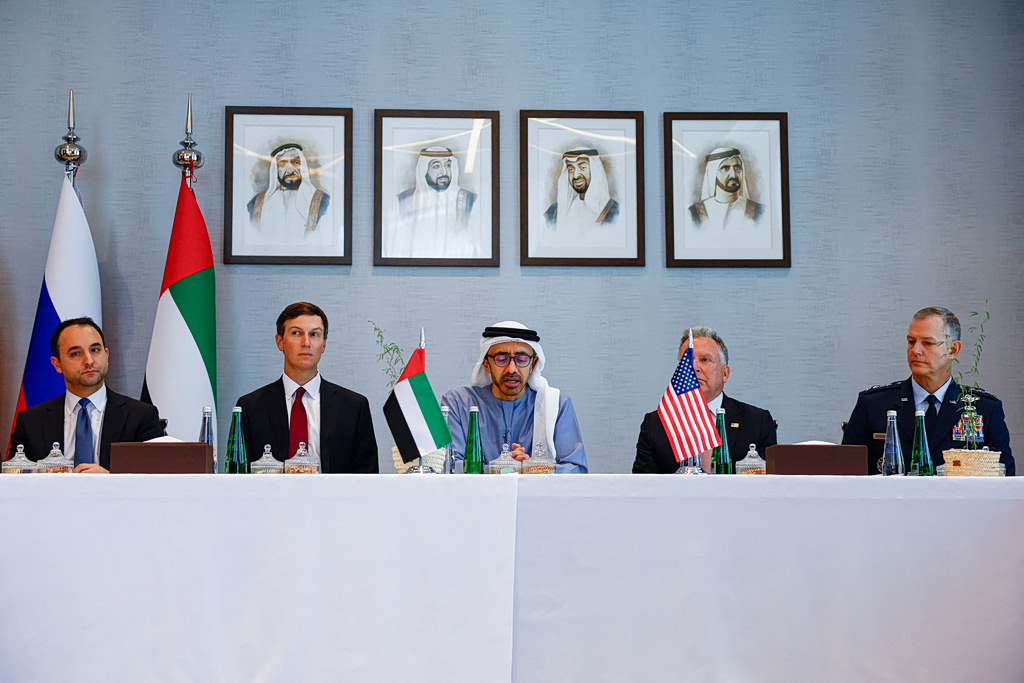
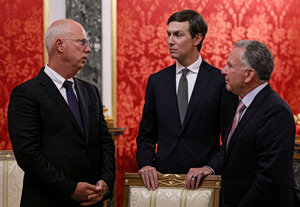
Jared Kushner, US President Donald Trump’s son-in-law, United Arab Emirates’ Foreign Minister Sheikh Abdullah bin Zayed bin Sultan Al Nahyan, United States Special Envoy Steve Witkoff and US Air Force General Alexus Grynkewich attend the UAE-hosted trilateral talks between the United States, Russian and Ukrainian delegations, in Abu Dhabi, United Arab Emirates, November 10, 2026. The talks, convened by the US, are focused on efforts to end the war in Ukraine, post-war security arrangements and de-escalation. REUTERS/Rula Rouhana
Russia’s Territorial Demands Complicate Peace Talks
At the center of the negotiations is the eastern Ukrainian region of Donbas, much of which is under Russian control. Russian President Vladimir Putin has insisted that Ukraine surrender the entire region, including territory still held by Ukrainian forces. Ukrainian President Volodymyr Zelensky has rejected those demands, arguing that relinquishing strategically important territory would jeopardize the country’s future security.
American officials nevertheless suggested ahead of the talks that both sides had privately shown some willingness to compromise. A U.S. official told Reuters that negotiators believed Putin and Zelensky might ultimately agree to territorial concessions, with each side making some compromises. Under the proposal described to Reuters, Ukraine would receive security guarantees, an end to the war and a roadmap toward European Union membership. A senior Ukrainian official, however, told Reuters that Kyiv would not consider such concessions. Territorial issues could be discussed only at the leadership level and in conjunction with appropriate security guarantees for Ukraine, the official said.
Zelensky, meanwhile, has argued that recent Ukrainian battlefield gains have strengthened his government’s negotiating position. In his nightly address Monday, he pointed to the recapture of territory in Donetsk and said Russian forces were suffering “record losses,” a claim Moscow disputes. “Ukrainian forces are currently genuinely strengthening Ukraine’s negotiating position,” Zelensky said, urging Washington to persuade the Kremlin to end the fighting.
A New Security Framework for Europe
Beyond the Russian territorial demands, American negotiators want to establish what they describe as a new security architecture for Europe, potentially changing how NATO and Russia manage their relationship.
According to The Guardian, U.S. officials have discussed measures ranging from improved military communications and greater transparency to the possible revival of the NATO-Russia Council, whose activities have been largely suspended since Russia’s invasion in 2022. The discussions could also include easing sanctions against Moscow and providing Ukraine with security guarantees resembling NATO’s Article 5, the alliance’s collective defense provision. A U.S. administration official told The Guardian that such guarantees would represent a significant commitment of American resources and military support, although their precise terms have not been established.
Russia has consistently opposed Ukraine joining NATO or the deployment of Western troops on Ukrainian territory.
European officials are particularly concerned that Moscow could use the negotiations to revive longstanding demands for NATO to reduce its military presence in Eastern Europe. In 2021, Russia proposed restrictions on NATO enlargement, limits on missile deployments and the withdrawal of allied forces to positions held before 1997. NATO rejected those demands. The prospect of reopening discussions about Europe’s security arrangements has therefore raised questions about whether a settlement intended to end the war in Ukraine could also require far-reaching concessions affecting other European countries.
Kushner said Monday that the proposed framework would emphasize closer consultations, reliable crisis communications, military transparency and measures to reduce the risk of escalation, while respecting national sovereignty. But even American officials acknowledge that the framework remains loosely defined. Speaking Monday, Secretary of State Marco Rubio said progress had been made on its possible structure, although the immediate priority remained ending the fighting.
Europe Demands a Seat at the Table
European governments, wary of an agreement between Washington and Moscow that could determine the continent’s security without their participation, have intensified efforts to secure a role in the negotiations.
Ahead of Tuesday’s main meeting, Ukraine’s chief negotiator, Rustem Umerov, said his delegation had held separate consultations with representatives from Europe, NATO and the EU, as well as the American mediators. “We are doing everything to ensure that Europe is a participant in the diplomatic process,” Umerov said.
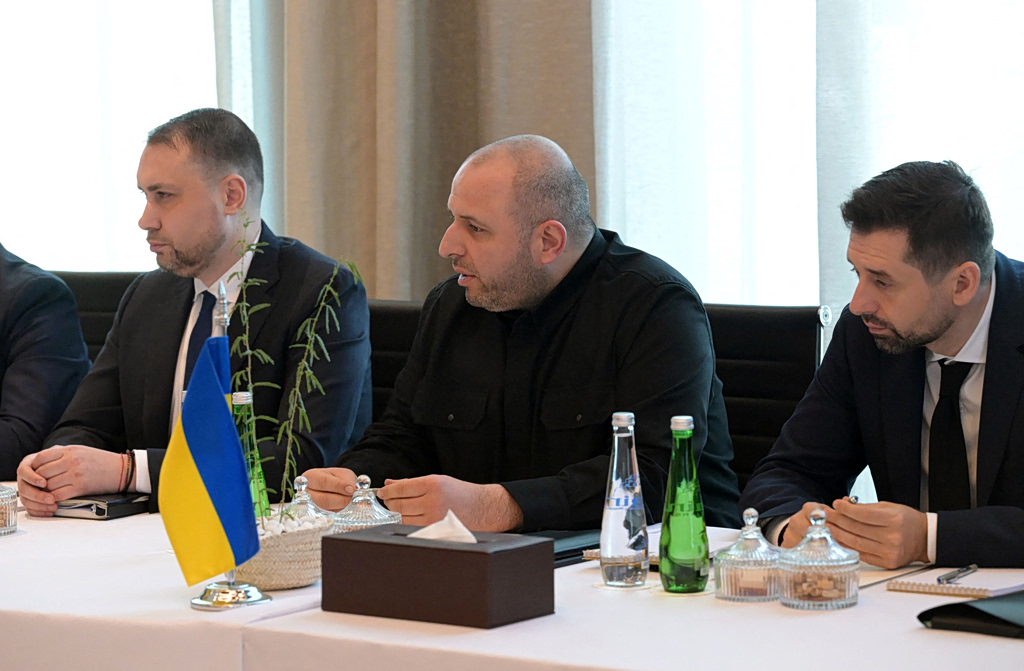
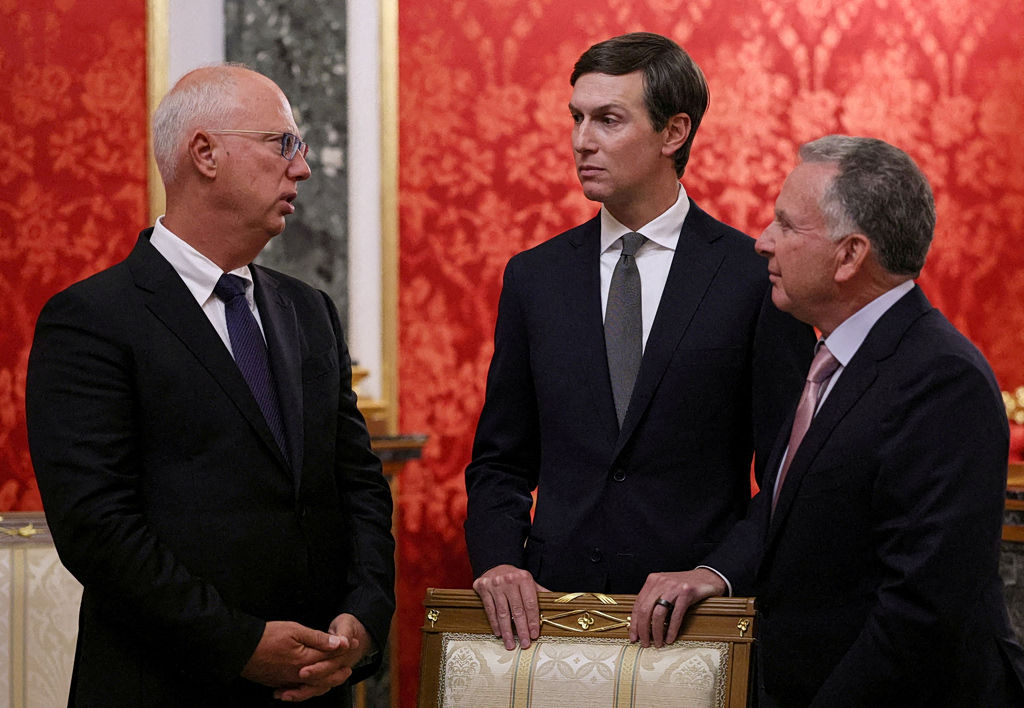
Members of the Ukrainian delegation, led by Rustem Umerov, attend US-led trilateral peace talks with the Russian delegation in Abu Dhabi, United Arab Emirates, November 10, 2026. Sputnik/Grigory Sysoyev/Pool via REUTERS ATTENTION EDITORS – THIS IMAGE WAS PROVIDED BY A THIRD PARTY.
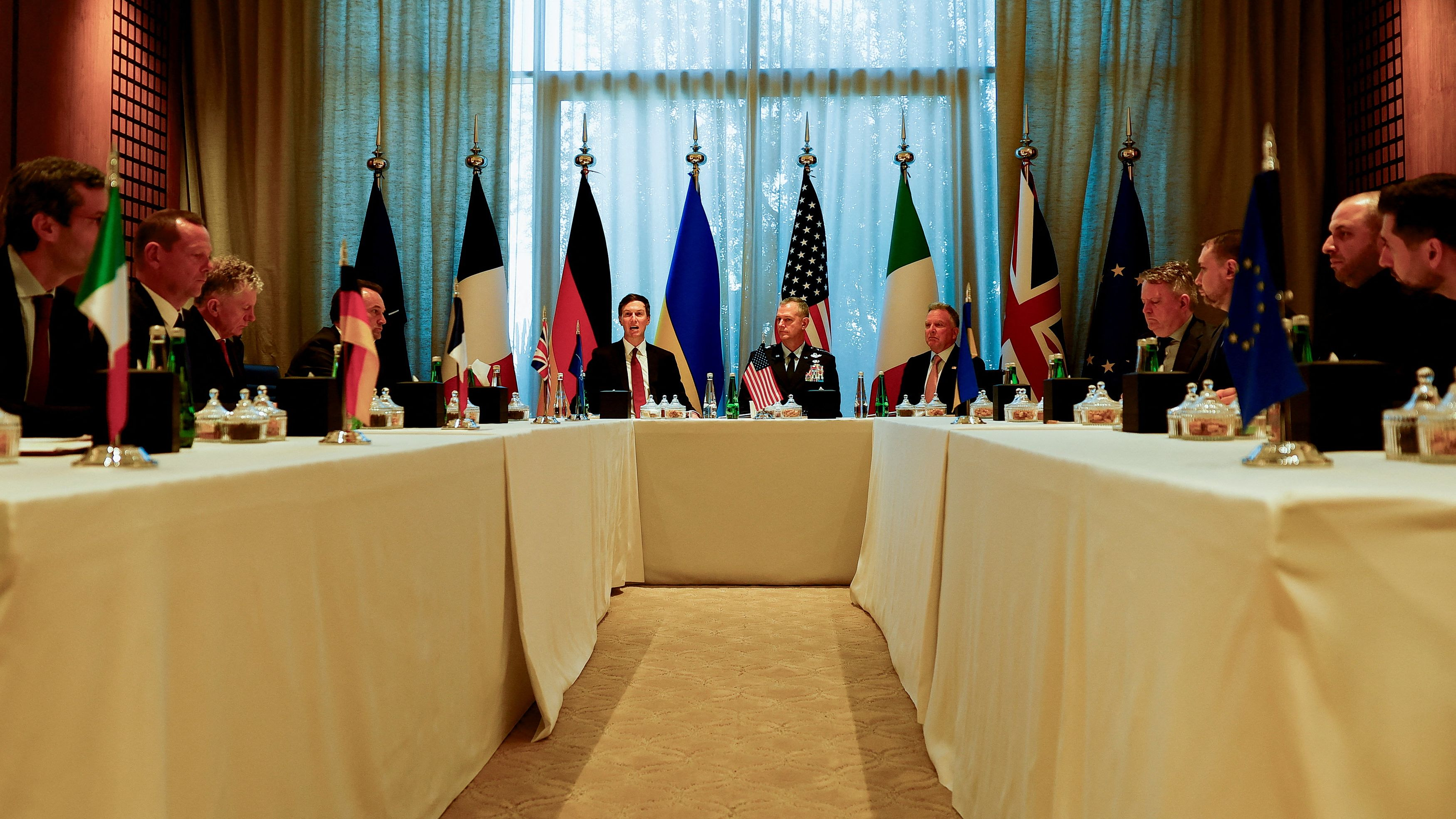
Representatives from France, Germany, Britain, Italy and the European Union were also expected to meet American negotiators in Abu Dhabi. France has insisted that any lasting settlement must address broader European security concerns and that European governments must therefore be involved.
Moscow, however, has made clear that it does not see a role for European representatives in the trilateral meeting.
EU foreign policy chief Kaja Kallas challenged the premise that Europe needed an entirely new security framework, arguing that existing agreements already establish the principles Russia must respect. “We already have a European security architecture in place,” she said Monday at a meeting of Group of Seven foreign ministers. “The problem is that Russia is not respecting these agreements.” European Commission President Ursula von der Leyen has similarly called for NATO allies and EU countries to participate in any substantive discussions about the continent’s future security.
Trump’s Optimism Meets Ukrainian Skepticism
Trump has once again expressed renewed confidence that the war could soon end, particularly after meeting Kremlin envoy Kirill Dmitriev at the White House last week. On the eve of the Abu Dhabi talks, he said Washington was seeing a “very strong inclination” toward an agreement and suggested that both sides were exhausted by the conflict. The president has repeatedly predicted an imminent breakthrough since returning to office, although successive rounds of negotiations have failed to produce a settlement. His latest diplomatic push comes after the U.S. midterm elections, which weakened his political position at home, and amid continuing concerns in Europe about Washington’s approach toward Moscow.
Ukrainian officials have also questioned whether a deal negotiated under American pressure would adequately protect their country’s interests. Oleksandr Merezhko, chairman of the Ukrainian Parliament’s foreign affairs committee, told the BBC that he believed Trump wanted “a quick deal at the expense of Ukraine.” Merezhko argued that stronger sanctions and military pressure, rather than concessions, were needed to persuade Putin to negotiate seriously.
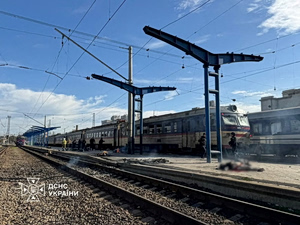
Meanwhile, Russian attacks on Ukrainian cities and energy infrastructure have continued, reinforcing concerns in Kyiv that Moscow is seeking additional leverage as the diplomatic process resumes.
Source: Reuters, Guardian, BBC