 Μake us preferred on Google
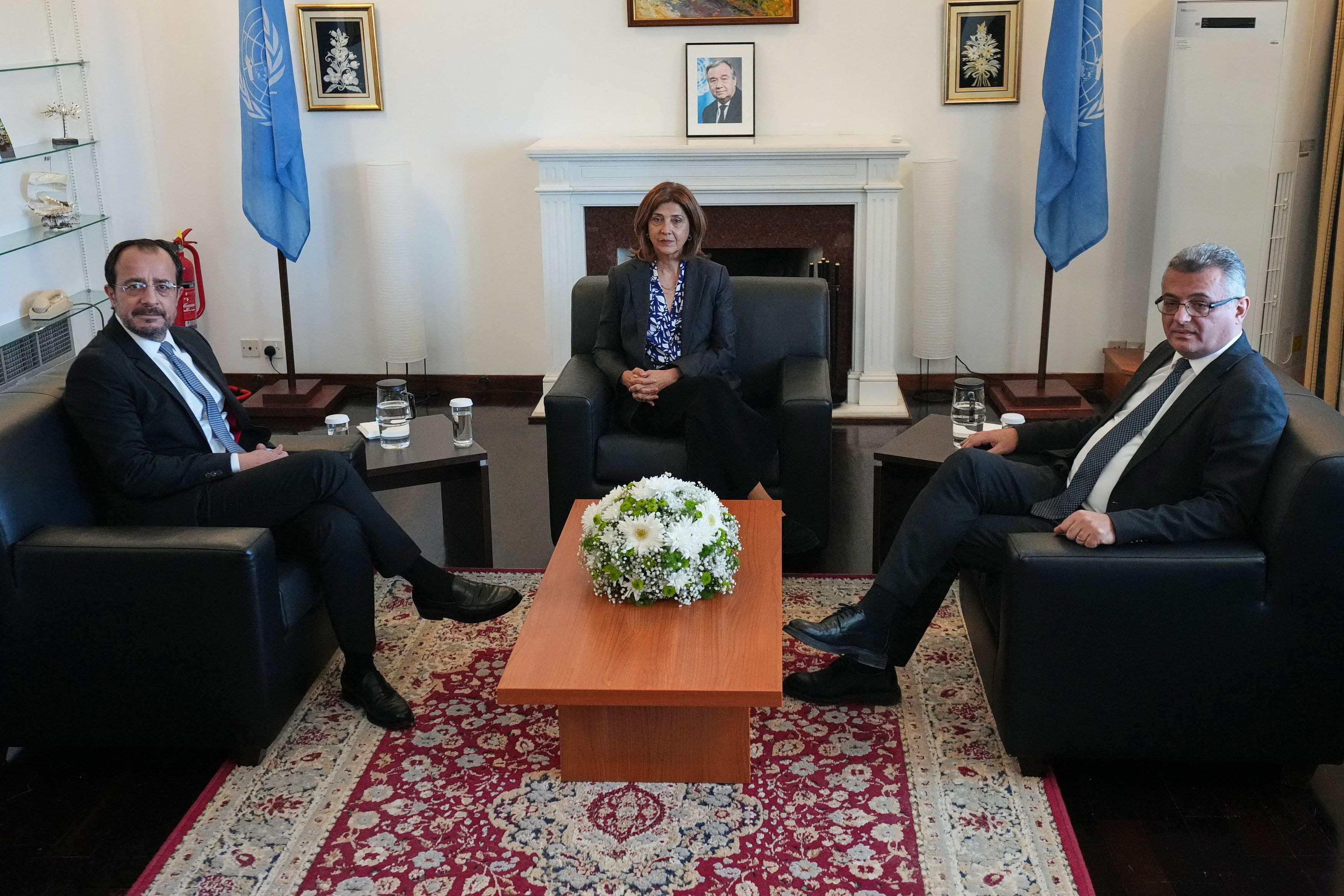
A three-hour meeting between Cyprus President Nikos Christodoulides and Turkish Cypriot leader Tufan Erhurman in Nicosia on Monday produced an agreement to open two new crossing points across the divided island and set the stage for further talks with United Nations Secretary-General António Guterres. The two leaders agreed to meet Guterres in the coming weeks, raising hopes of reviving negotiations over the Cyprus dispute, which have been effectively stalled since 2017.
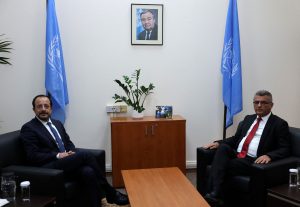
The meeting, held under the auspices of Maria Angela Holguin, the U.N. secretary-general’s personal envoy on Cyprus, also yielded agreements on cultural heritage, environmental cooperation, education and emergency response. The most immediate development concerns the opening of two crossings, Louroujina-Lympia and Kambos-Karavostasi, connecting communities on opposite sides of the island’s dividing line. The United Nations said the crossings would open simultaneously, although no date has been announced. The issue has long been a source of disagreement between the two sides, making Monday’s agreement particularly significant for local communities.
The leaders also agreed to exchange archival material through the Technical Committee on Cultural Heritage, advance joint environmental projects and resume Imagine, a bicommunal educational program. Other measures include establishing a rapid response mechanism for emergencies and restoring Maronite churches and an Armenian monastery.
Next Stop: Talks With Guterres
Before Monday’s meeting, Christodoulides said he had accepted all the proposals put forward by Holguin and was awaiting positive responses from the Turkish Cypriot side as well. The Cypriot President maintained that the UN proposals were already among the 19 recommendations submitted by the Greek Cypriot side. He also emphasized that the diplomatic effort extended beyond confidence-building measures to address both the process and the substance of any potential settlement. Afterward the meeting, Christodoulides expressed satisfaction with what had been agreed upon, saying the discussions had gone well.
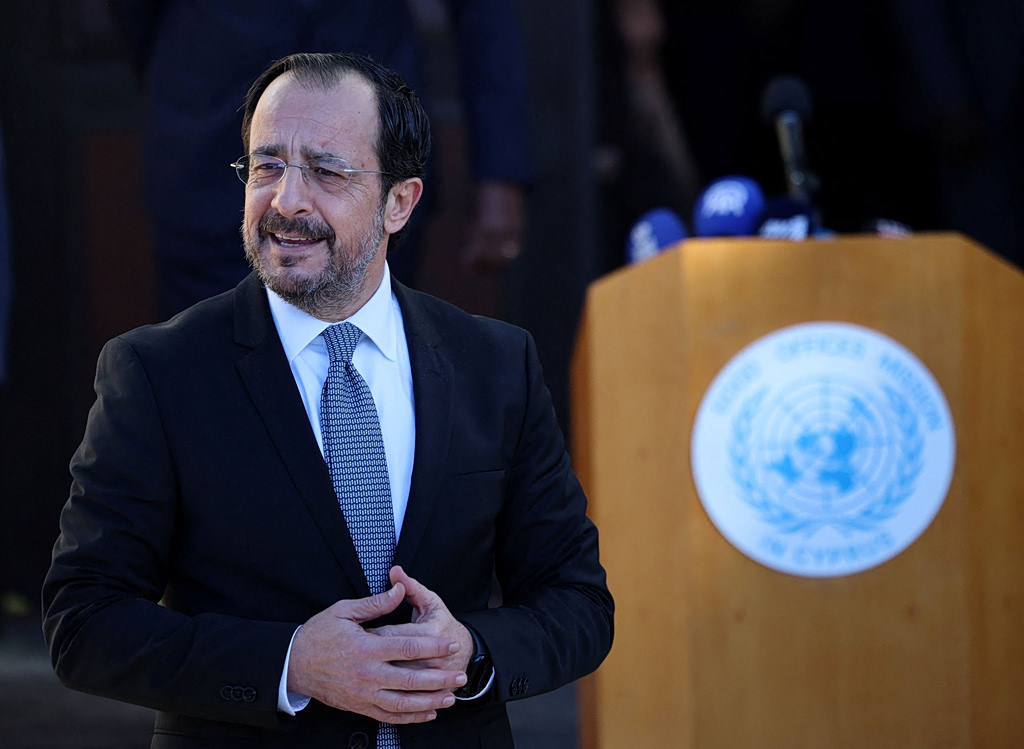
Cyprus’ president and Greek Cypriot leader Nikos Christodoulides leaves after a meeting with UN Secretary-General’s Personal Envoy on Cyprus Maria Angela Holguin and Turkish Cypriot leader Tufan Erhurman at a UN compound in the Nicosia airport area, inside the United Nations-controlled buffer zone in the divided capital of Nicosia, Cyprus November 9, 2026. REUTERS/Yiannis Kourtoglou
Attention now turns to the planned meeting with Guterres, which could determine whether the progress achieved during Monday’s encounter will lead to a resumption of negotiations. Nicosia hopes the agreements reached will pave the way for an expanded 5+1 conference, bringing together the two Cypriot communities, Greece, Turkey, Britain and the United Nations.
Erdogan Reaffirms Support for Two States
Yet the diplomatic progress in Nicosia coincided with renewed opposition from Turkish President Recep Tayyip Erdogan to the framework underpinning decades of U.N.-led peace efforts. Speaking to reporters on his return from Azerbaijan, Erdogan reiterated his support for a two-state solution, arguing that the existence of two separate states on the island must now be accepted as a reality. He dismissed previous approaches to resolving the Cyprus dispute as a waste of time and energy and urged the international community to recognize the Turkish Cypriot state, which is recognized only by Turkey.
His remarks highlighted the fundamental disagreement that continues to complicate efforts to resolve the division of Cyprus.
The U.N.-backed framework for a settlement calls for a bizonal, bicommunal federation, a model that would reunify the island under a federal political structure. Ankara’s insistence on two separate states runs directly counter to that approach.
The contrasting messages on Monday underscored the limits of the progress achieved in Nicosia. While the two Cypriot leaders reached agreements on practical measures and committed to further diplomatic engagement, Turkey’s position on the form of a settlement remains unchanged.