 Μake us preferred on Google
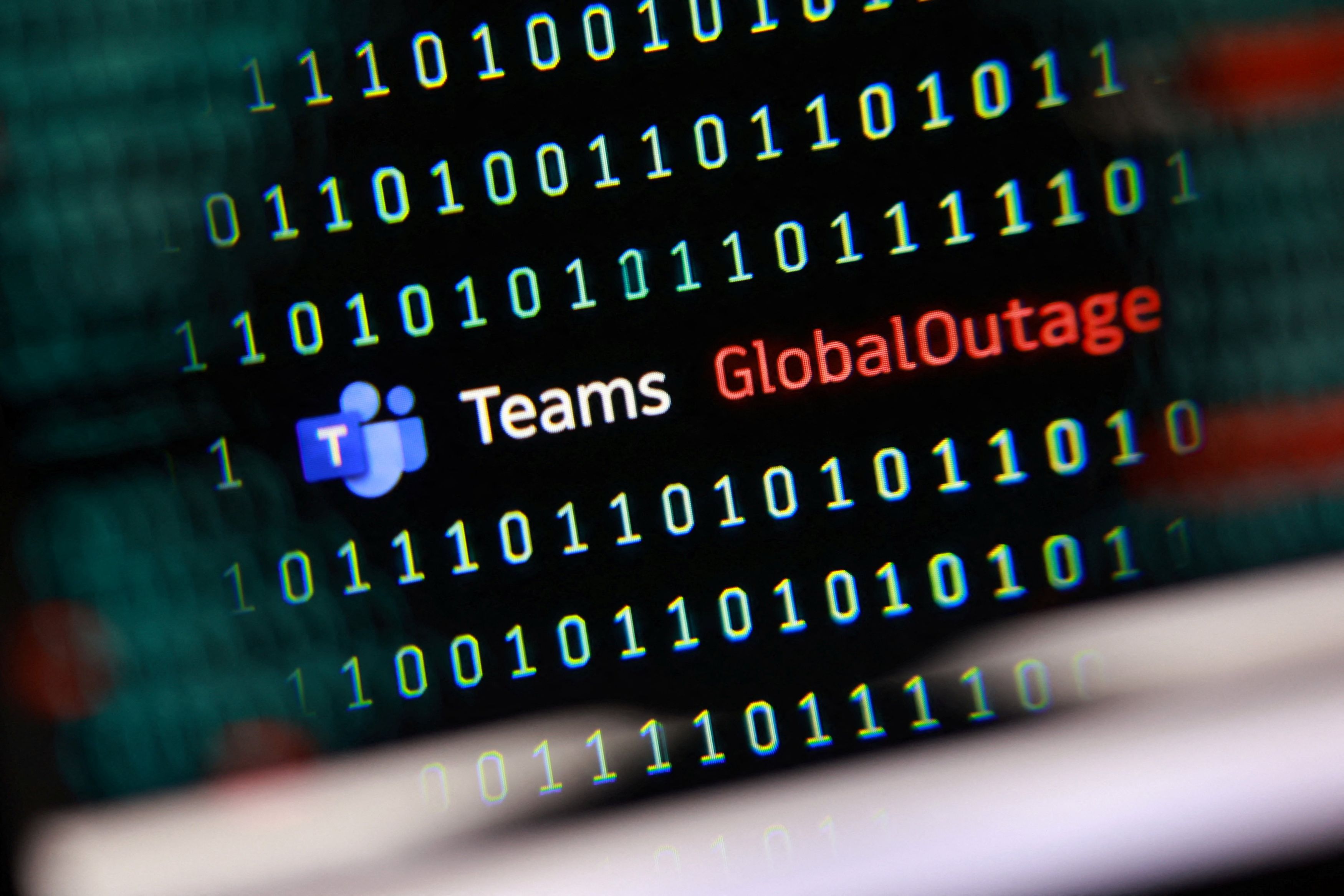
Imagine trying to send an urgent email, join an important meeting or save your files, and suddenly everything goes dark. Millions of users around the world faced exactly that scenario as a serious global outage knocked out Microsoft’s most popular tools and cloud services, including Outlook, Teams and the AI assistant Copilot.
According to the outage-tracking website DownDetector, about 130,000 people reported problems accessing Microsoft Outlook starting Thursday afternoon, November 12, with problems reported in more than 70 countries. The real number is likely far higher. As the BBC noted, DownDetector only captures users who report problems, and Microsoft says 430 million people use its Microsoft 365 services, pointing to a massive global outage.
In a statement on the X platform, the tech giant said it was “making every effort to limit the impact” and was “restarting the affected servers to bring them back online.”
Mahmoud Elkhodr, a lecturer in information and communication technology at CQUniversity in Australia, explained in an article for The Conversation that several services can go down at the same time when they rely on shared systems. This outage shows exactly what happens when that shared infrastructure fails, and why we need to prepare for digital outages the same way we prepare for natural disasters.

A drone view of the Microsoft campus in Redmond, Washington, US, October 26, 2026. REUTERS/David Ryder/File Photo
What Went Wrong?
As of Friday afternoon (Sydney time), Microsoft had not been able to explain exactly what caused the blackout.
At first, the company spoke of “increased load” in several regions. Shortly afterward, however, it revised that explanation, clarifying that the problem was not higher user traffic but the fact that thousands of servers had suddenly stopped working.
Attention then turned to the automated checks the system runs to verify whether servers are ready to handle traffic. Microsoft said a key process on the “wounded” servers had become overloaded.
Although all software updates were temporarily frozen while the company checked what went wrong, officials said no recent change appeared to be linked to the failure.
Jake Moore of cybersecurity firm ESET told the BBC that the problem began when a number of machines went down and the rest had to absorb their traffic. He compared it to closing a lane on a highway, which pushes all the cars into the remaining lanes and causes everything to back up. Because companies run on different sets of servers in different parts of the world, he added, some users may find that Teams works while their email does not.
The Evidence Does Not Point To A Cyberattack
According to experts, a cyberattack, such as a DDoS attack, which usually floods systems with millions of fake requests from outside, can be ruled out. Microsoft itself made clear that traffic to the site had not increased and that the problem was not caused by a security breach. No hacker group has claimed responsibility.
The real cause appears to be much more mundane and usually internal. The company’s safety systems include automated checks to isolate problematic servers. But when that mechanism itself gets “stuck” or makes a mistake, it can take healthy servers offline. As a result, the remaining servers are forced to carry a huge load they were not designed for, setting off a domino effect.
Such large-scale failures are usually caused by the systems themselves, as happened last August, when a faulty code update took down Microsoft’s email.
Even so, until the official investigation is complete and the final findings are published, this explanation rests solely on the company’s statements.
A Slow And Unusual Recovery
Recovery has been difficult. Microsoft admitted that although some servers had come back, they “froze again” as soon as they started receiving user traffic.
By Friday morning, the company said it was seeing early signs of stabilization, but that capacity had not yet returned to normal and system health remained uneven as traffic was gradually brought back. To protect delayed messages, Microsoft extended its email timeout window to 48 hours, so that emails sent during the outage can still be delivered once service is restored. It said it would publish a full report once the incident is resolved.
The length of the disruption has puzzled experts. Gergely Orosz, author of The Pragmatic Engineer newsletter and a former senior engineer at Skype and Uber, told the BBC it was highly unusual for a company of Microsoft’s engineering caliber to need more than 12 hours to contain a global outage affecting a service with over 100 million users. He said he could not remember a business email outage taking this long to fix, adding that this “could well be the most disruptive email-related business outage of all time.”
Who Has Been Affected
In the UK, the outage disrupted public services and businesses alike, according to the BBC.
- Health care: GPs reported being unable to access NHS email, which meant they could not see prescription requests or send referrals, and many turned to the phone. The National Pharmacy Association warned that patients could face longer waits and delays to some prescriptions. The GMB union said staff at 111 and 999 services could not pass on patient details in the usual way, creating a large backlog, although emergency call-outs appeared unaffected. The NHS Alliance said clinical systems were still working and contingency plans were in place.
- Schools: Many schools said their email was down and asked parents to call them instead, for example to report a child’s absence.
- Parliament and government: MPs lost access to Microsoft services on their parliamentary accounts, but Parliament said alternative arrangements allowed the day’s business to go ahead. The government said it was working closely with Microsoft and had contingency plans in place, while intelligence operations, which run on a separate system, were not affected. Defense Minister Luke Pollard said systems need to become more resilient and able to recover faster.
- Police: Several forces, including the Metropolitan Police, Greater Manchester Police and North Yorkshire Police, warned that online forms might not work and urged people to call instead.
- Airports: Heathrow, Manchester and Stansted said their operations were running normally.
- Workers: Readers told the BBC they were unable to work or reach colleagues abroad, had lost calendar entries, or were stuck trying to close business deals. One reader said scammers posing as Microsoft had called asking for login details to “restore access.”
The “Emergency Plan”
The blackout was a very practical reminder that we need better protection against digital breakdowns. In everyday life, this means it is a good idea to keep essential information stored offline, so that we are not stuck if the internet goes down.
For their part, businesses and organizations that depend on a single tech giant, such as Microsoft or Google, should have backup crisis plans ready. Most importantly, they should test them in practice and not just on paper, exactly like earthquake or fire drills.
As our lives depend more and more on technology, from smart homes and cars to hospitals and public services, and as artificial intelligence enters every sector, the cost of another digital shutdown will be incomparably greater. Protecting ourselves against these “black boxes” is not a luxury but the only way forward.