Britain’s political map showed signs of dramatic upheaval on Friday as the right-wing Reform UK party, led by Brexit firebrand Nigel Farage, made significant early gains in local elections and appeared poised to claim a historic victory in a parliamentary by-election.
In the closely watched contest for the parliamentary seat of Runcorn and Helsby, a full recount was underway after initial results showed Reform leading Labour by just four votes. If confirmed, this would mark the narrowest by-election result in British history. The seat had been held by Labour until the incumbent MP resigned following a conviction for assaulting a constituent.
“Labour have demanded a recount. We are very confident we have won,” Farage posted on social media platform X.
Reform UK have won the Runcorn & Helsby by-election by 4 votes!
Labour have demanded a recount. We are very confident we have won.
— Nigel Farage MP (@Nigel_Farage) May 2, 2025
The developments represent a significant electoral test for both the governing Labour Party and the opposition Conservatives—the two parties that have dominated British politics for over a century. Reform’s rising popularity, once dismissed as a fringe movement, now threatens to fracture the traditional two-party structure.
According to Reuters, more than 1,600 local authority seats were contested across England on Thursday, along with six high-profile mayoral races. Among the most striking results was in Greater Lincolnshire, where former Conservative minister Andrea Jenkyns, now a Reform candidate, led the race to become the region’s first directly elected mayor. If successful, she would hold Reform’s most powerful political office to date, overseeing a region of roughly one million people.

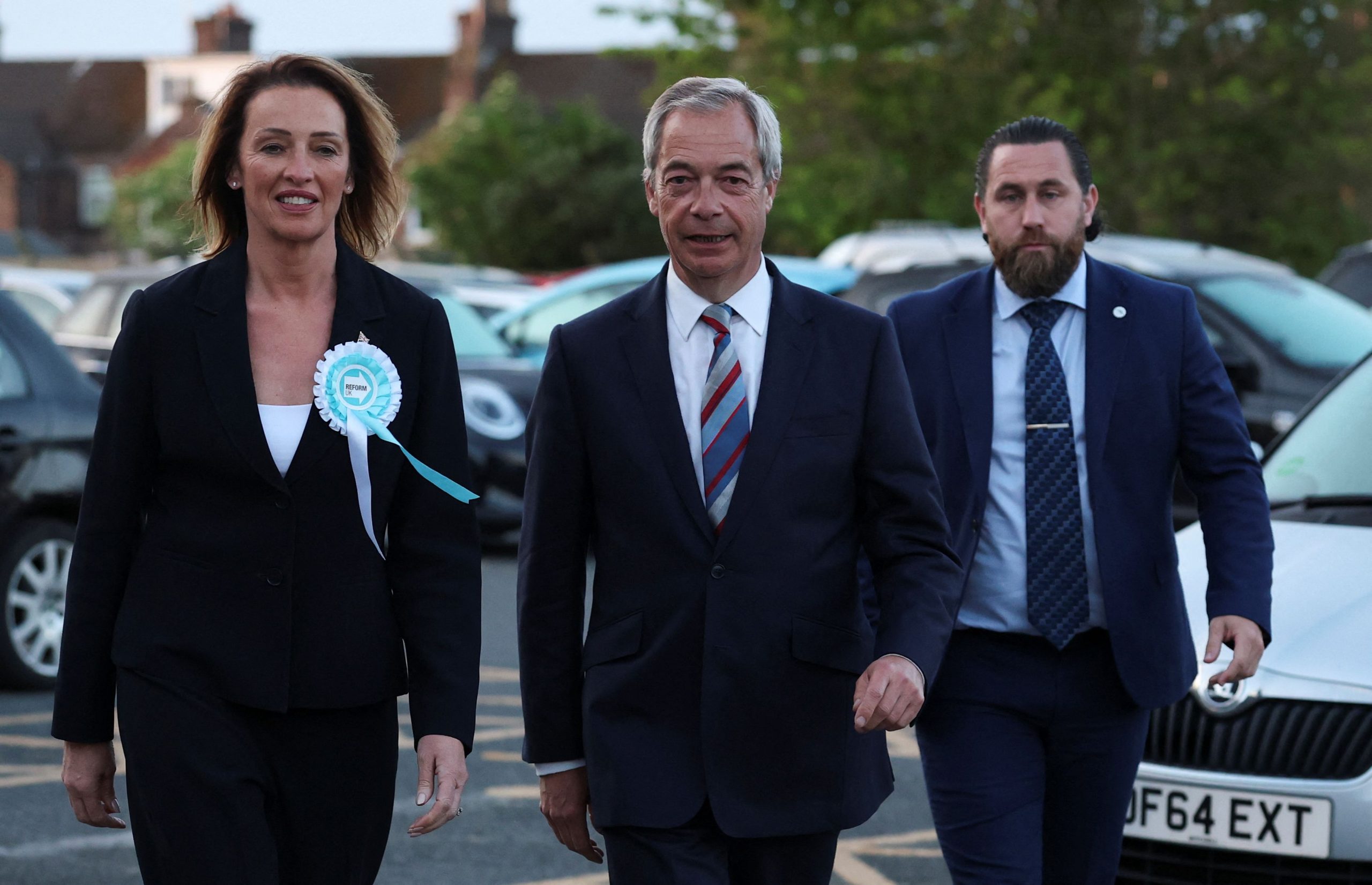
FILE PHOTO: British MP and Reform UK party leader Nigel Farage poses for a picture with a man, as Reform UK’s candidate for Greater Lincolnshire, Andrea Jenkyns, campaigns ahead of local elections, in Scunthorpe, Britain, April 29, 2025. REUTERS/Phil Noble/File Photo
Reform, originally established as the Brexit Party in 2018, has seen a surge in polling support in recent months, often eclipsing Labour and the Conservatives in certain areas. The party, once seen as focused solely on immigration and EU withdrawal, is now making inroads into mainstream politics by capitalizing on growing public dissatisfaction with both major parties.
That discontent has intensified since last year’s general election, when Labour Prime Minister Keir Starmer secured one of the largest parliamentary majorities in UK history. Since then, however, his government has experienced one of the steepest popularity declines ever recorded for a newly elected administration, driven by controversial tax increases, benefit cuts for the elderly, and a donation scandal.
The results from Friday’s elections could give Reform UK a critical opportunity to expand its grassroots infrastructure and entrench itself as a serious challenger ahead of the next general election, expected in 2029.