 Μake us preferred on Google
Serbia has entered a new political era. The Student List has won the country’s snap parliamentary election, a dramatic breakthrough for a movement that grew out of months of student protests and quickly became the country’s most powerful political force. The vote was widely seen as a referendum on Aleksandar Vučić’s political dominance and the system built around his party over more than a decade.

Members of the electoral list “Student List – Students Win” celebrate following the first results of the parliamentary election in Belgrade, Serbia, October 25, 2026. REUTERS/Marko Djurica
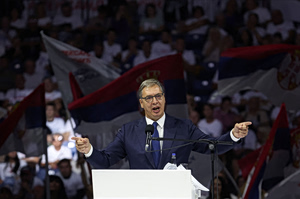
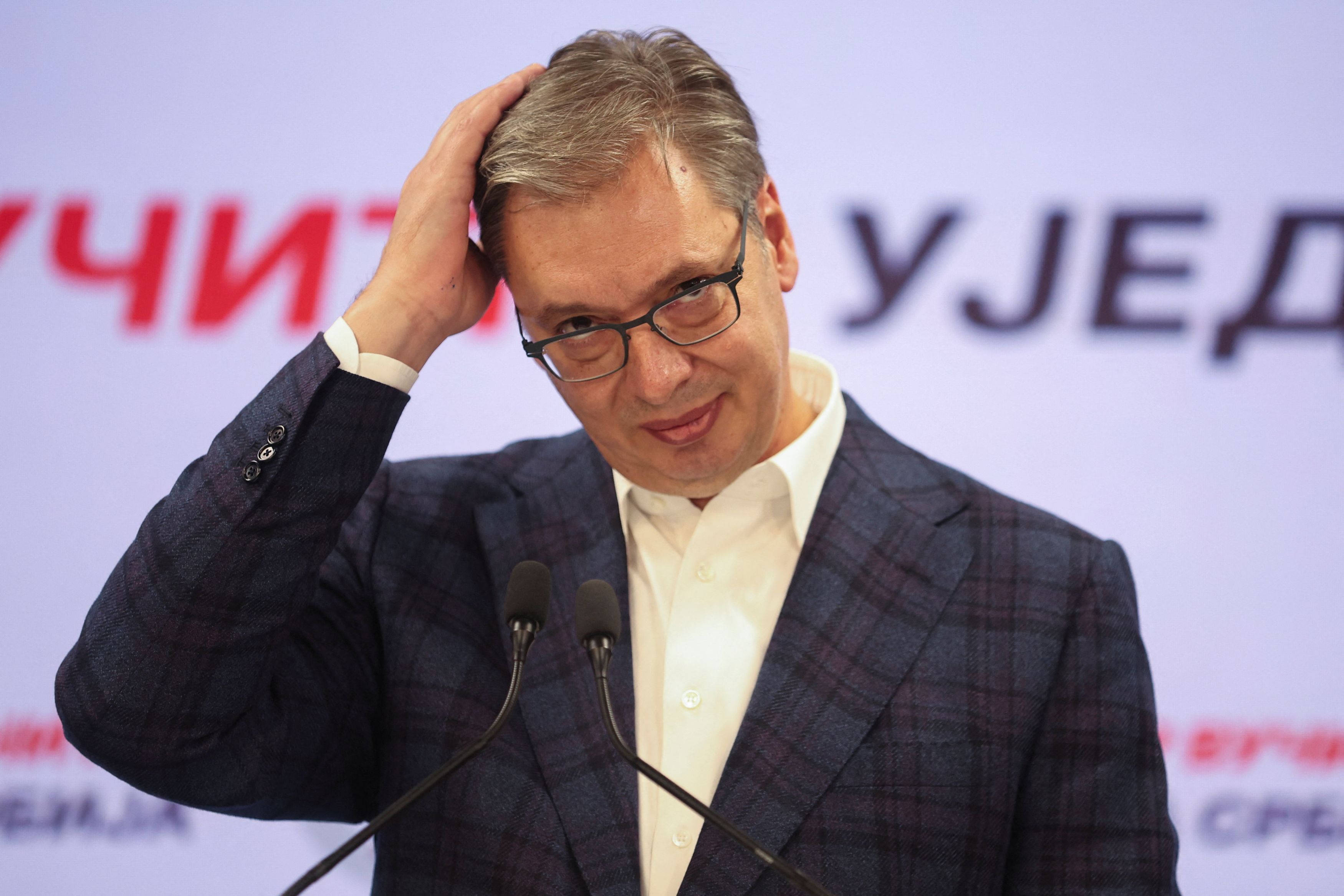
Speaking at the headquarters of the Serbian Progressive Party (SNS) on Sunday evening, Vučić, the former president and party leader, conceded defeat and acknowledged that the opposition Student List (Students Win) will be the largest force in parliament.
A Clear Majority
According to the first projection by Ipsos/CeSID, broadcast by Serbian TV channel N1, the Student List won 52% of the vote, against 39.3% for Vučić’s coalition. Preliminary results show the Student List receiving about 2.2 million votes and the SNS around 1.72 million.
A majority in Serbia’s parliament requires 126 of the 250 seats. According to preliminary results, the Student List is set to win between 135 and 140 seats, giving it a clear majority to form a government on its own, Vučić admitted. He estimated that his party would secure about 105 seats.
Official final results are still pending.
The concession carries particular weight, as the SNS has dominated Serbia’s political system since 2012.
From the Novi Sad Tragedy to Victory
The Student List’s rise did not come out of nowhere. It began with the tragedy of November 1, 2024, when part of the canopy at Novi Sad railway station collapsed, killing 16 people.
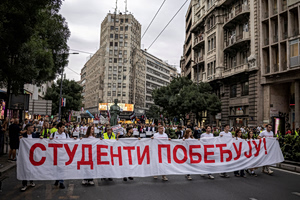
The disaster sparked mass protests, with students and citizens denouncing corruption, a lack of transparency and poor accountability in state institutions. The demonstrations grew into one of the largest social movements Serbia has seen since the fall of Slobodan Milošević in 2000, spreading from university lecture halls and the streets of Novi Sad to Belgrade and dozens of other cities.
The movement chose an unusual strategy. Instead of relying on traditional politicians, it fielded candidates from academia, culture, education and civil society. Its list is headed by cardiologist Ilija Srdanović. This approach allowed it to draw support from different political and social groups and to move beyond traditional party divisions.
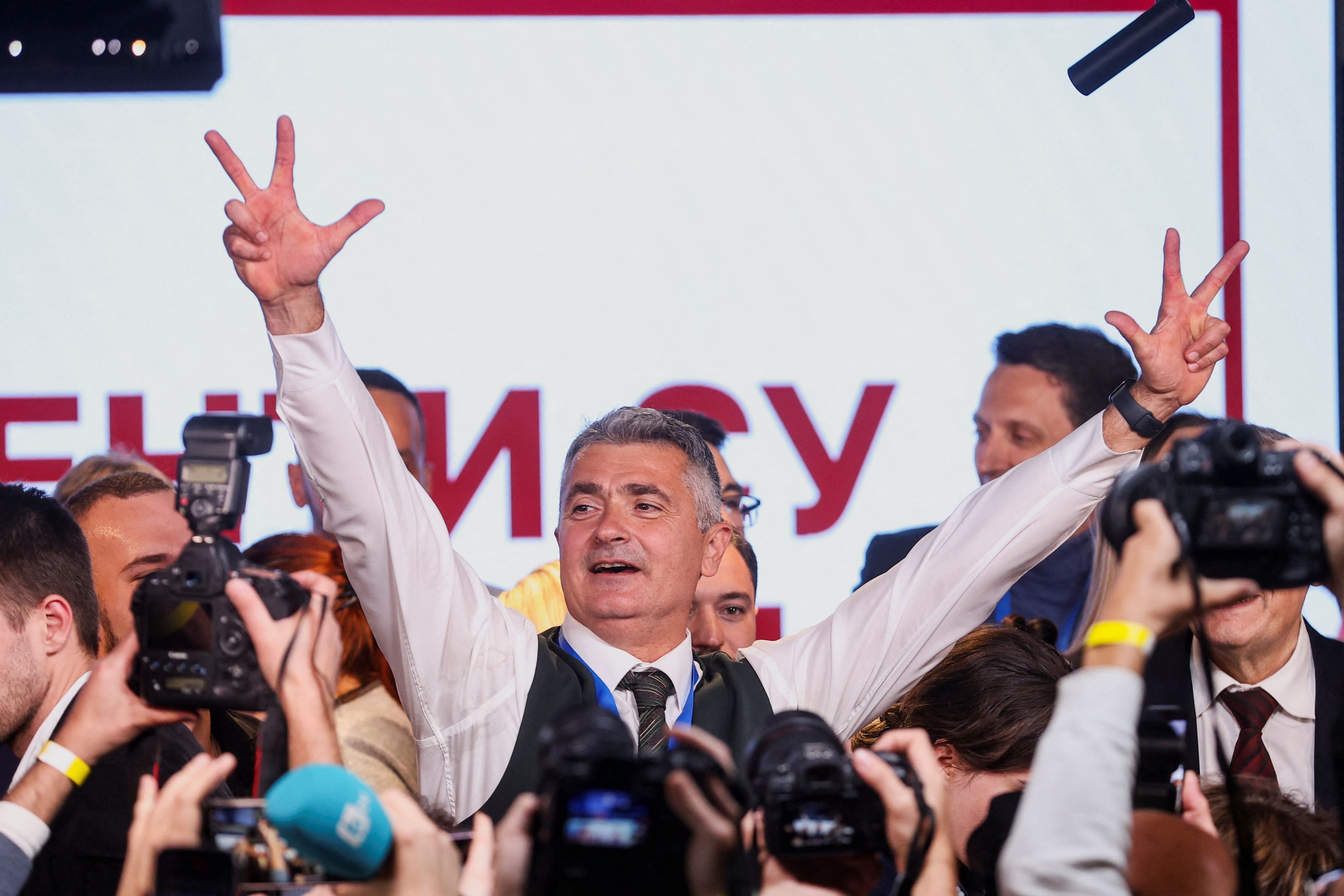
Ilija Srdanovic, first on the electoral list “Student List – Students Win”, celebrates following the first results of the parliamentary election in Belgrade, Serbia, October 25, 2026. REUTERS/Djordje Kojadinovic
Record Turnout and Complaints of Irregularities
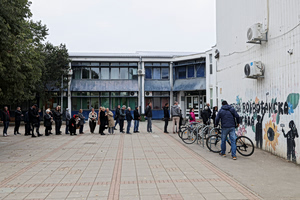
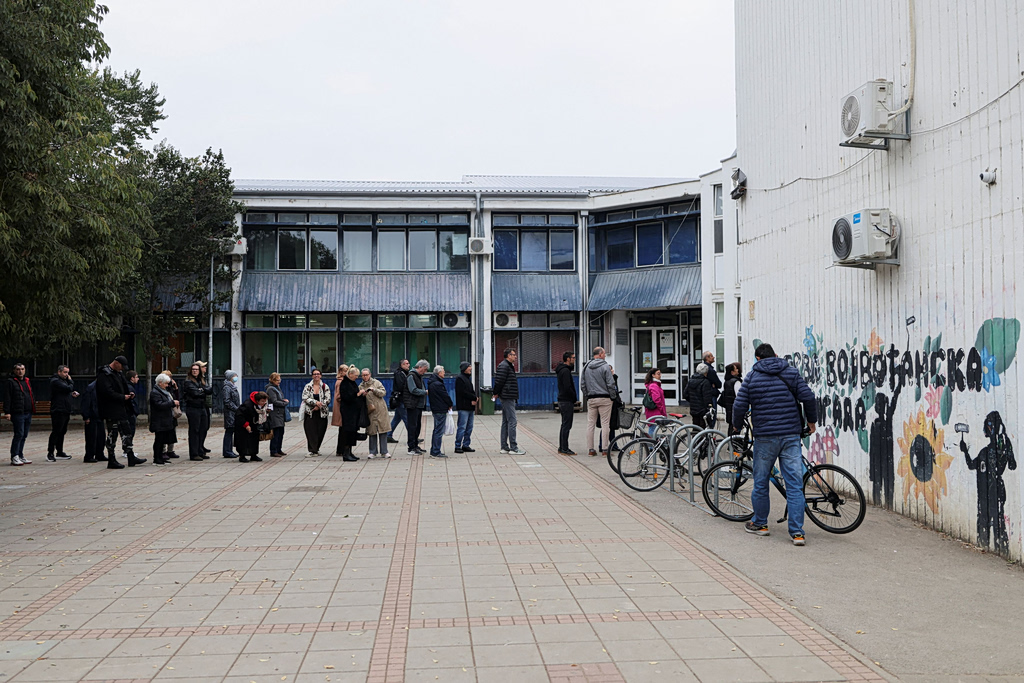
Voters turned out in large numbers. According to election observers, turnout reached about 67.8% by 7 p.m., well above previous elections and one of the highest since the breakup of Yugoslavia.
The vote, however, was marred by serious complaints. The independent monitoring group CRTA reported cases of pressure on voters and polling staff, problems protecting the secrecy of the ballot and restricted access to the election commission. Observers also reported incidents of violence and intimidation at some polling stations. These complaints are expected to be examined further, since Vučić’s concession does not replace the official count.
What It Means for Russia, China and the EU
The shift in Serbia’s political balance carries major geopolitical significance. Vučić pursued a foreign policy of balancing between powers, maintaining close ties with Russia and China while officially supporting the country’s EU path. Serbia is a key player in the Western Balkans, with a crucial role in regional stability, particularly on the issue of Kosovo.
The Student List has not yet presented a fully developed foreign policy program. The movement brings together a range of ideological currents, from pro-European liberals to nationally minded supporters. Its victory therefore does not automatically mean a break with Moscow or Beijing, or an immediate alignment with the West. So far, its priorities have focused mainly on fighting corruption, strengthening the justice system and restoring trust in institutions.
The End of an Era
Vučić’s concession is one of the most significant political developments in Serbia’s modern history. For the first time in more than a decade, the system built around the SNS faces the loss of power.
If confirmed, the new parliamentary majority will have to tackle difficult challenges, including economic growth, institutional reform, the fight against corruption and maintaining regional stability. The transition will also require cooperation among a diverse mix of political and social forces.
Most strikingly, a movement that began as a protest over a tragedy has turned into a force capable of winning power. For Vučić, the defeat marks the end of 12 years of political dominance. For Serbia, it opens a new chapter, with prospects for change but also serious challenges. The question now is whether the Student List can turn mass mobilization into effective government without upsetting the country’s delicate international balance.