
 Μake us preferred on Google
 Artificial intelligence could bring a major shift in the way wars are fought, according to the head of Ukraine’s defense ministry AI research center, who said future conflicts may be shaped by competing battlefield systems powered by data and automation.
Danylo Tsvok, head of the center created in March to expand AI and data-driven decision-making in Ukraine’s defense strategy, said artificial intelligence was already playing an active role in the war against Russia.
“AI will form a new paradigm of warfare. It’s already actively doing so,” Tsvok told Reuters.
Ukraine is currently using AI in several military areas, including drone operations, combat planning and the analysis of Russian missile activity. Tsvok said the next step could be the creation of a unified battlefield operating system that connects weapons, data and command structures.
He predicted that within the next three to five years, if the conflict continues, warfare could become a competition between opposing AI-driven systems.
“The system that possesses more data and better understands that data, proposes solutions — that system will gain the advantage over the other,” he said.
AI and the changing battlefield
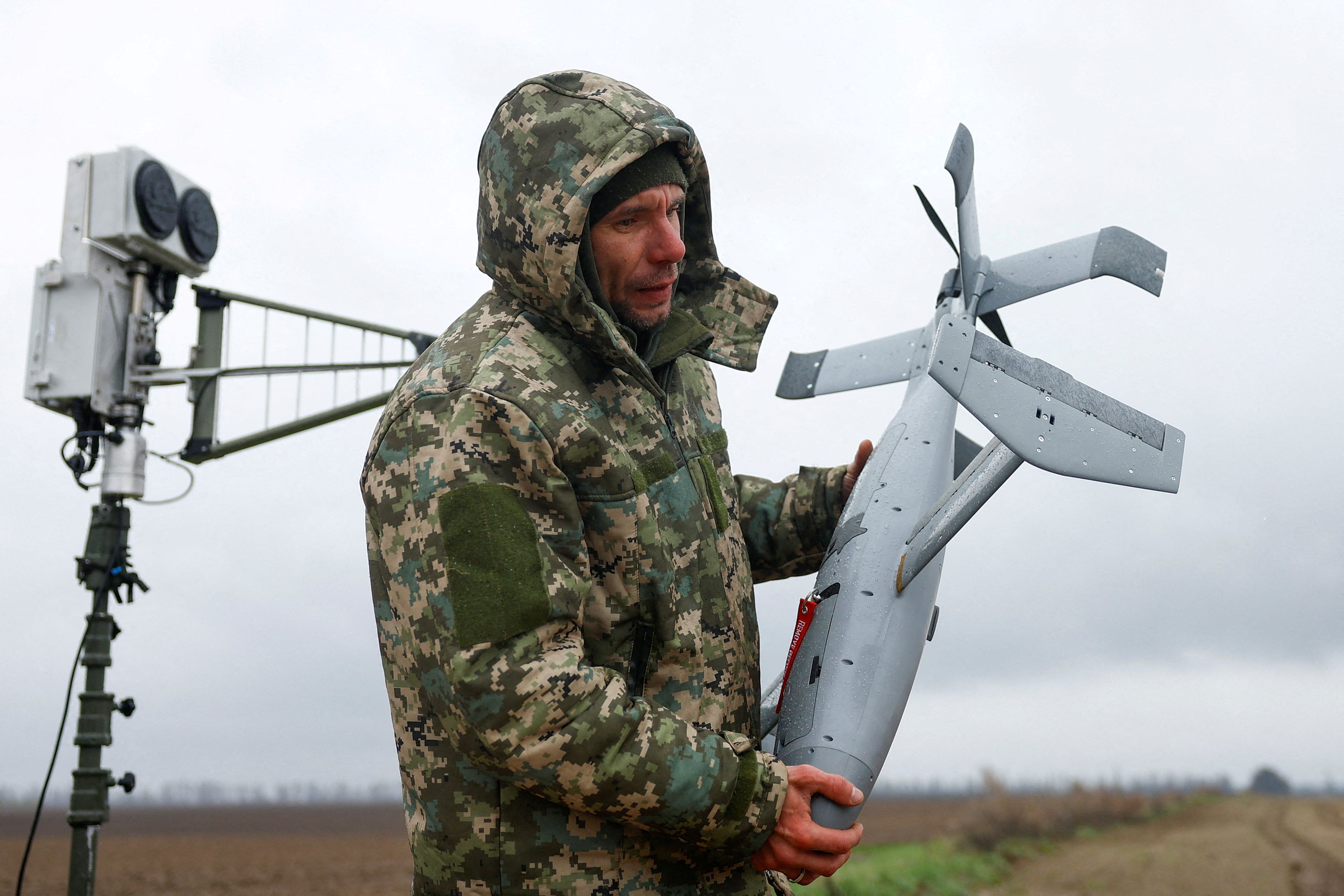
Drones have already transformed combat in Ukraine, with both Russian and Ukrainian forces launching thousands of unmanned aerial vehicles each day. Their ability to monitor areas and strike targets with precision has accelerated the process of identifying and attacking enemy positions.
Tsvok said AI could further speed up this process by analyzing information from the 1,200-kilometre front line and providing recommendations to commanders more quickly.
Ukraine’s goal, he said, is to combine different weapons and data systems into “one single living organism” capable of coordinated action.
A growing technology race
The war has created a testing ground for military technology, attracting interest from foreign AI companies seeking battlefield data to develop and improve their systems.
Some companies, including U.S.-based Palantir, have provided Ukraine with technology, while Kyiv has also created the Brave1 Dataroom project to share battlefield data with allied countries for software development.
Russia is also expanding its AI capabilities. A Ukrainian air defense commander previously told Reuters that Moscow’s growing use of AI in planning drone and missile attacks could reduce the time needed to prepare strikes.
Tsvok said Ukraine still follows the principle of keeping humans involved in combat decisions, but warned that AI systems may eventually become faster than human decision-making.
“The question is: how do we keep up with making decisions that autonomous systems propose?” he said.