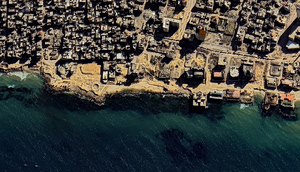
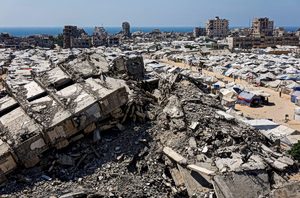
GAZA CITY—From an elevated perch on the eastern edge of Gaza City, a military official standing near bulldozers described the extent of Israel’s entrenchment in the Palestinian enclave. He pointed out two of Israel’s more than 30 bases in the territory, a third of which have been built since a ceasefire with Hamas took effect last year.
Israel says it is using the outposts to guard a new dividing line with Hamas-held territory as its military clears out tunnels on the Israeli-controlled side—a job it says is almost complete.
In the process, Israel is removing essentially every structure its troops encounter, military officials said. During a recent visit, The Wall Street Journal didn’t see any buildings remaining on the Israeli side of the line.
The fortified outposts, which overlook a vast sea of rubble, often sit on high ground within the Israeli side of the so-called Yellow Line, the boundary separating Israeli-controlled territory from the rest of Gaza, according to analysis of satellite imagery and the official.
“The Yellow Line is where you see the buildings that stand,” the military official said in the sandy ruins of Shuja’iyya, a neighborhood that saw repeated rounds of fighting during the war.
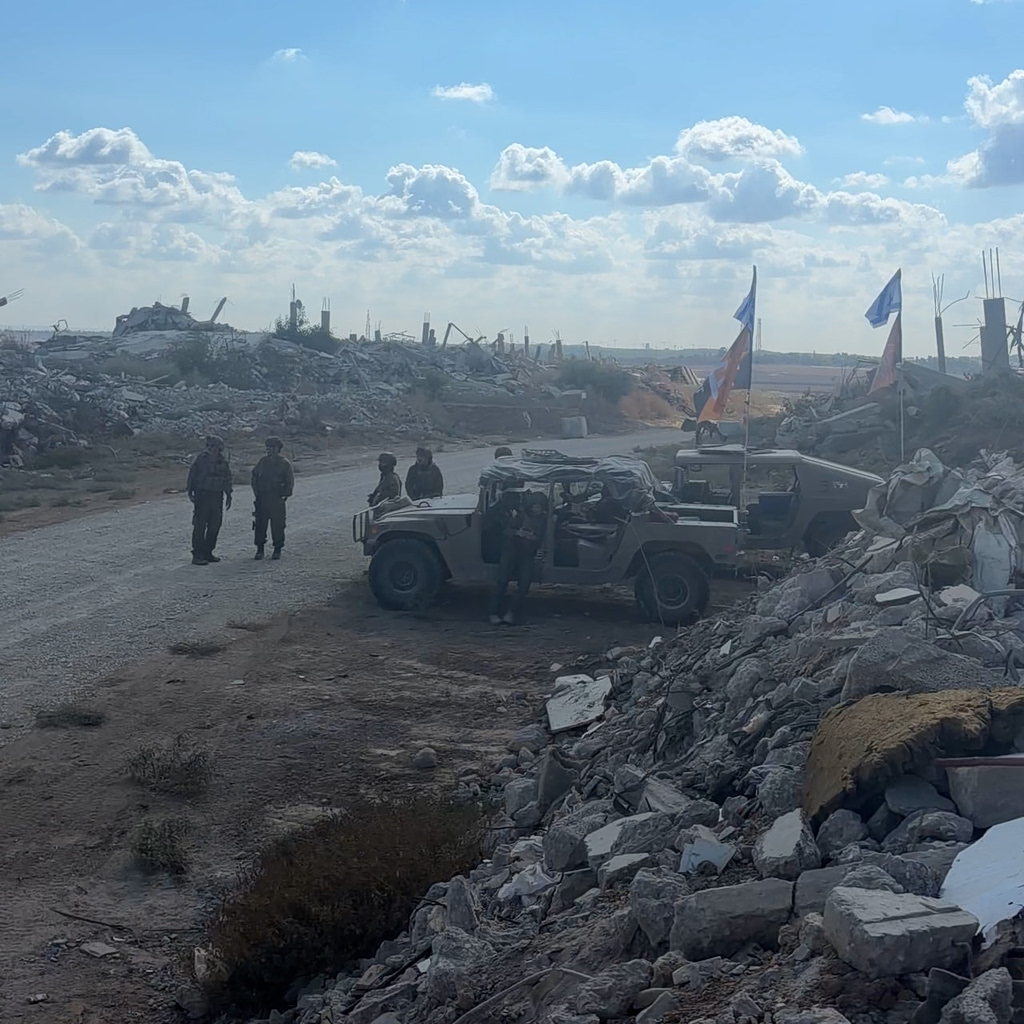
The outskirts of the war-torn Shuja’iyya neighborhood in an Israeli-controlled part of Gaza. Anat Peled/WSJ
Israel doesn’t allow journalists to enter Gaza on their own, saying the environment isn’t safe. Tightly controlled military embeds are the only way for international reporters to access the enclave. The Journal went on such an embed in early October. Many news organizations have criticized Israel’s policy on access for international journalists to Gaza and are pressing for independent access.
Israeli officials say the military outposts and flattened areas are meant to reinforce Israel’s defenses after the October 7, 2023, Hamas-led attack on Israel, in which about 1,200 people were killed and some 250 hostages taken to Gaza.
During the attack, militants overran civilian communities and front-line bases near the border, including an outpost staffed by unarmed female observers and the Erez Crossing, where soldiers were killed. Officials say Israel decided it needed wider buffer zones and a stepped-up military presence to protect civilian communities and soldiers.
Buildings can hide tunnel entrances or be used by militants, the military said. Soldiers took the Journal through a sprawling tunnel in the outskirts of Shuja’iyya that they said had been discovered eight months ago. Israel has destroyed nearly all the tunnels on its side of the Yellow Line, two other military officials said.
“The Yellow Line is a new border line—serving as a forward defensive line for our communities and a line of operational activity,” Israel’s military chief of staff, Eyal Zamir, said in December.
The Israeli military has expanded its control of Gaza from 53% under the terms of the deal drawn up as part of President Trump’s peace plan last October to around 70% now as it steadily shifts the Yellow Line forward, according to Israeli Prime Minister Benjamin Netanyahu .
The 32 Israeli outposts in service in Gaza are visible on satellite imagery, according to analysis by Jake Godin, a senior researcher at Bellingcat, an investigative consortium. The fortifications follow the Yellow Line and range from roughly 1 to 3 miles inside Gaza’s border with Israel.
The Israeli government’s mapping agency last month briefly released high-resolution, unblurred images on the internet of northern Gaza from 2025 that showed several Israeli military outposts. The images have since been blurred by the Israeli government.
Godin said that the outposts take several months to build and follow a similar rectangular layout. Most are paved, likely to ease access for military vehicles.
They are filled with temporary structures for soldiers to sleep, eat and work in and have communication towers nearby.
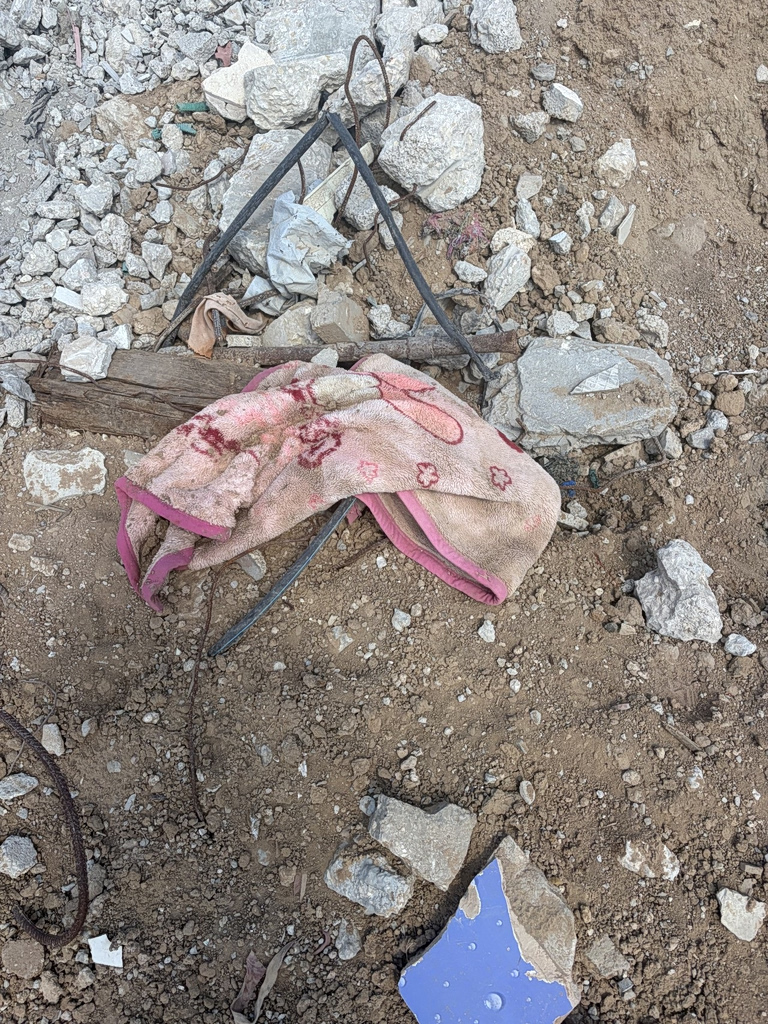
A blanket left behind in Gaza’s wreckage. Anat Peled/WSJ
Military officials and analysts said the outposts were mainly being used for routine security tasks and were tactical rather than permanent.
“The way all these bases are being built is a kind of reflection for the sad fact that Israel actually has no strategy,” said Michael Milshtein, a former Israeli military intelligence officer. “You are not building such sites if you want to stay forever or if you have any other idea.”
The Israeli prime minister’s office didn’t respond to a request for comment.
Under the second phase of Trump’s plan, Israeli troops were meant to gradually pull back from their positions as Hamas disarmed and handed control to a civilian administration and an international security force. But a year after the deal’s announcement, all of those elements are still stalled.
Hamas has said it is willing to disarm, but it disagrees with Israel on the terms , while the militant group continues to assert its authority in the enclave. A committee of Palestinian technocrats hasn’t so far entered Gaza, and the international stabilization force lacks troops and agreement on its mandate . Funding for Gaza’s reconstruction remains stuck.
No progress is expected ahead of Israeli elections set for October 27, people familiar with the matter said. Netanyahu’s party is in a tough fight. Likud’s hard-right coalition partners have strongly objected to the terms of the Gaza peace agreement. Netanyahu has said that Israel rejects its terms .
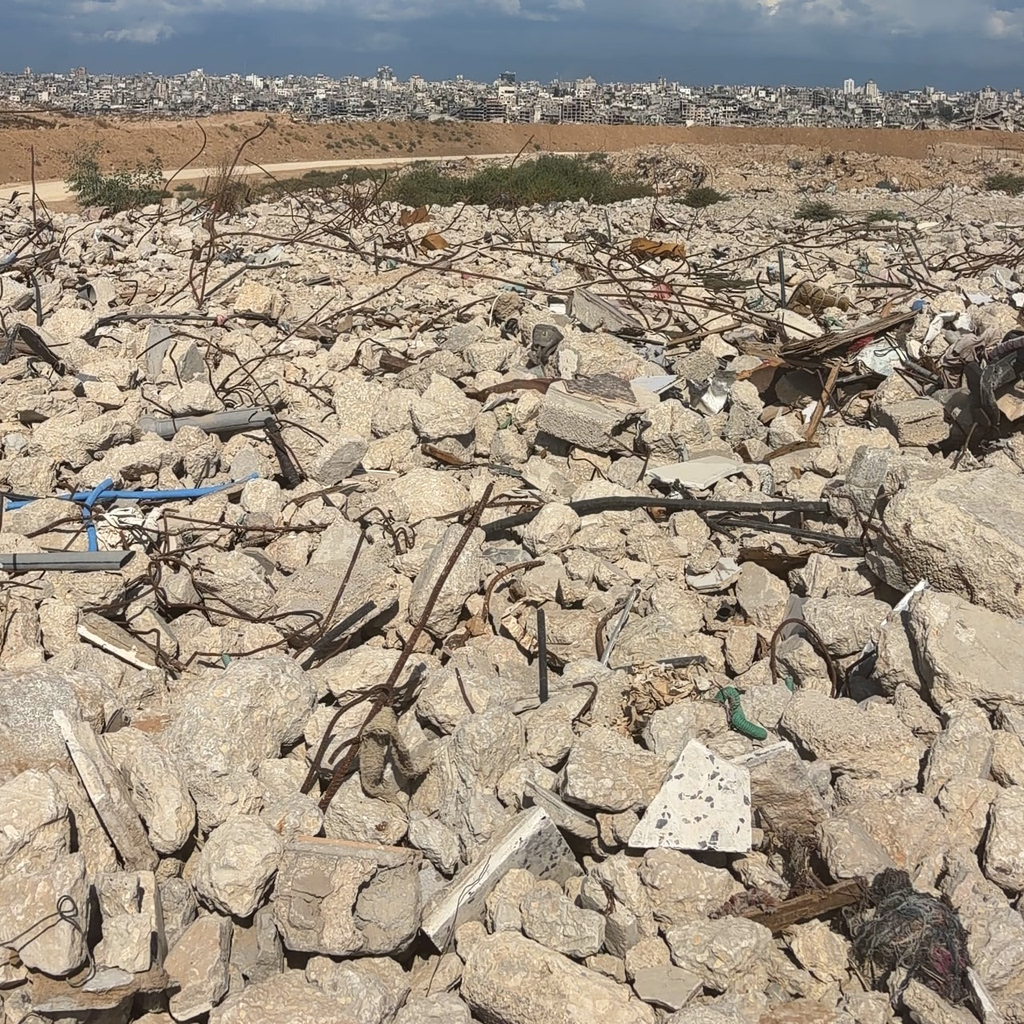
Vast amounts of rubble blanket the Israeli-controlled side of the Yellow Line in Gaza. Anat Peled/WSJ
The U.S. administration has pressured Netanyahu to move forward with the peace plan, while acknowledging Israel’s security concerns. The Israeli military has continued to carry out strikes in Gaza. Many of the targets have been what Israel says were militants involved in the Oct. 7 attacks .
Gaza health authorities have reported more than 1,400 Palestinian deaths since the Trump-brokered ceasefire went into effect a year ago, without saying how many were combatants.
Israel’s history with the enclave shows that it can also abandon the military outposts it builds in Gaza when circumstances change. The military walked away from sturdier bases set up to protect Israeli settlements in Gaza when Israel unilaterally disengaged from the territory in 2005, Milshtein said.
Israel also abandoned facilities in a sprawling military zone known as the Netzarim corridor that divided northern and southern Gaza before the 2025 ceasefire.
“Based on what I’ve seen, they could easily just abandon these outposts,” Godin said. “They have destroyed a lot of buildings to build these outposts, and that is something that can’t be undone, but they could easily leave these giant dirt berms where they are.”
Write to Anat Peled at anat.peled@wsj.com