 Μake us preferred on Google
Did 007 just start a showdown between two rival luxury watch brands?
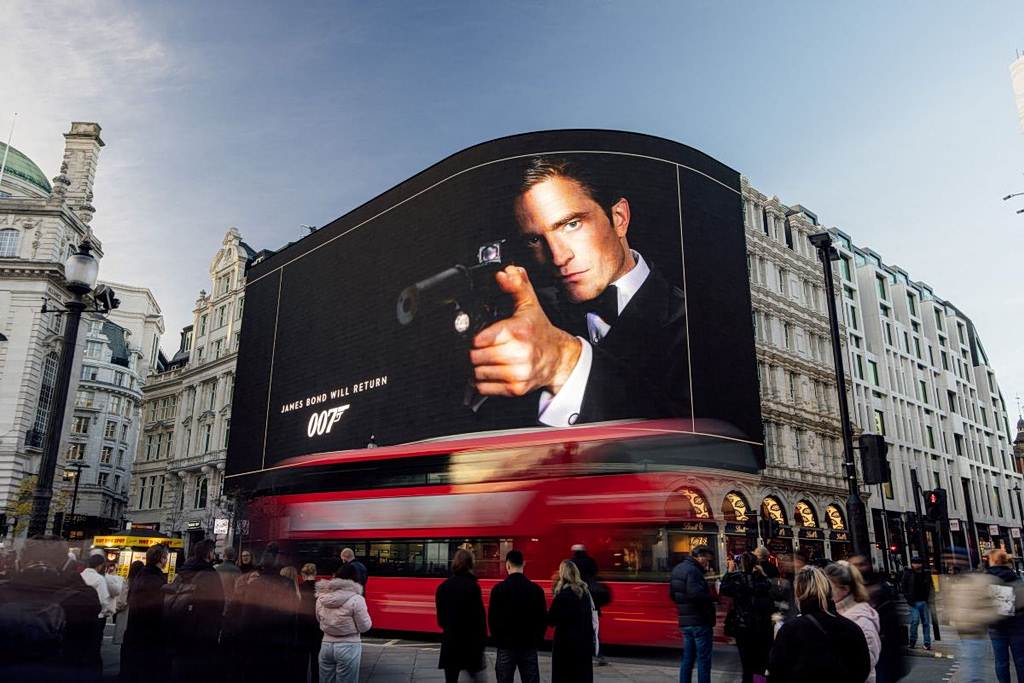
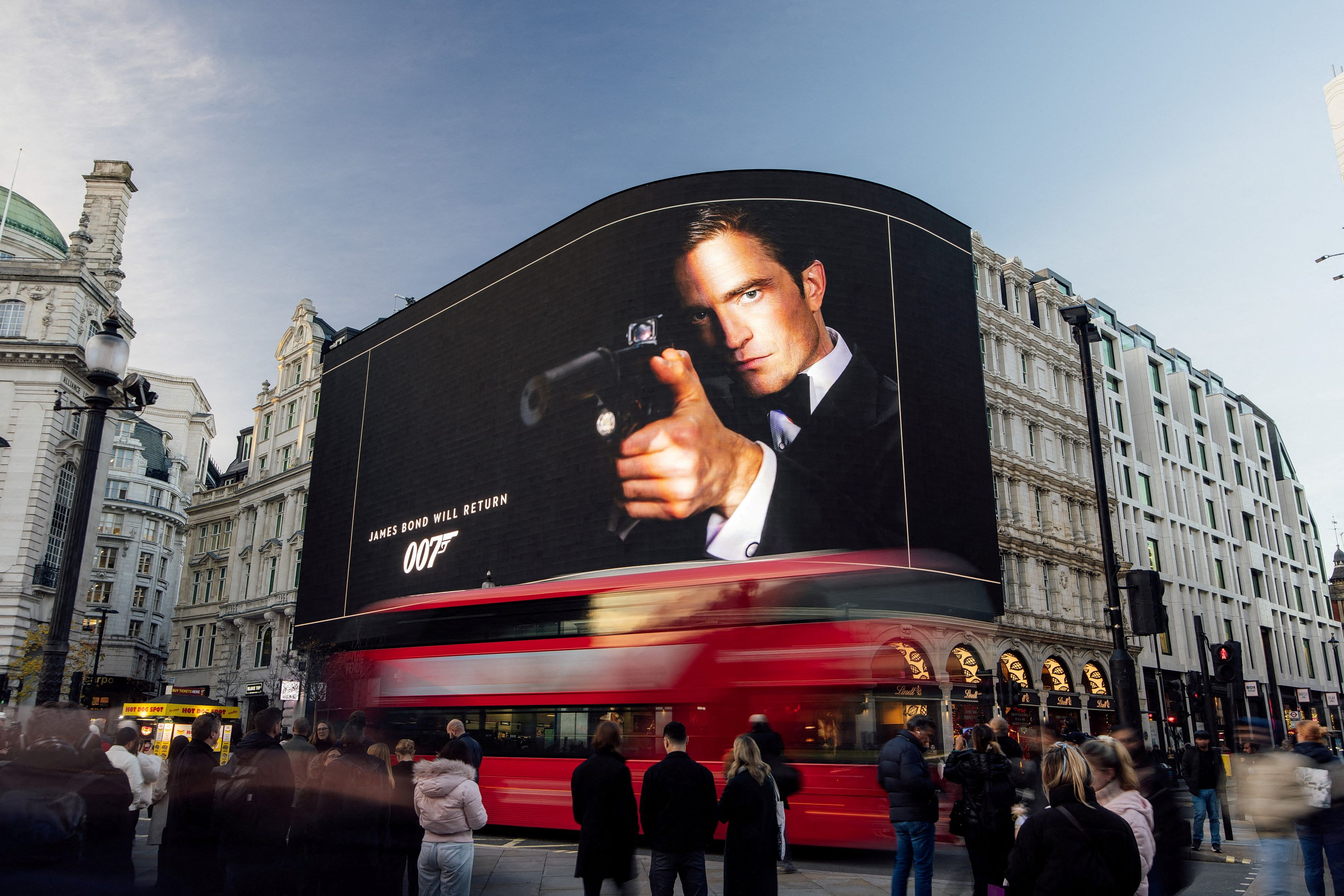
James Bond has worn an Omega Seamaster ever since “GoldenEye” was released in 1995. But Robert Pattinson’s bare wrist in the Instagram post that announced him as the new 007 sparked chatter among watch collectors that Bond is about to swap his Omega for Jaeger-LeCoultre—the brand that signed Pattinson as an ambassador in September.
That would be bad news for Omega’s owner Swatch Group , which is already under pressure and operating in the toughest part of the luxury watch business.
A 30-year tie-up with the James Bond movie franchise has been great for Omega. Immediately after “GoldenEye” was released, sales of Omega’s Seamaster Diver 300M increased roughly fivefold, says Oliver Müller , the founder of consulting firm LuxeConsult who worked at Omega between 1997 and 2001. Two years later, sales settled 30% to 40% above pre-movie levels.
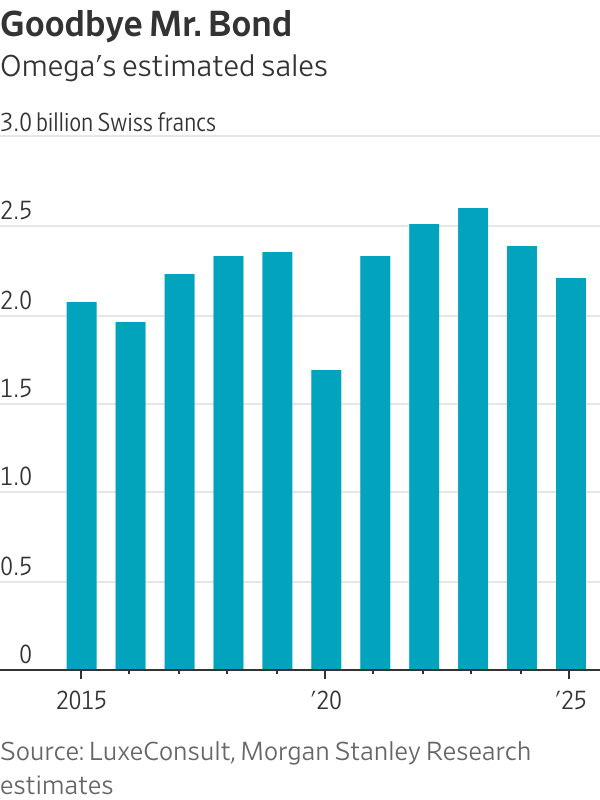
But the Omega brand has struggled lately, with sales falling 8% in 2025, Morgan Stanley estimates. This is a problem for Swatch, which relies on the brand for nearly half of group operating profit, according to Bernstein luxury analyst Luca Solca.
Omega’s models largely sit in a harsh part of the luxury watch industry—the $8,000 to $10,000 price range. JLC’s models tend to cost a bit more, but are still mostly in the midtier luxury range. The K-shape economy is hollowing out this part of the business so much that one rival brand, Zenith, has decided to abandon it altogether and move upmarket.
Brands that are selling well these days are ones that cost more than your average car. Demand for watches priced above 50,000 Swiss francs, equivalent to around $59,000, is booming. According to Morgan Stanley, this price segment generated 89% of the total growth in the Swiss luxury watch industry last year, despite only being 1.4% of all the watches sold by volume.
This is benefiting expensive brands like Rolex, Patek Philippe, Audemars Piguet and Richard Mille. Their combined share of the Swiss luxury watch market has risen from 36.7% in 2019 to 49% in 2025, Morgan Stanley data shows.
Unfortunately, investors can’t get direct exposure to these privately owned names. The best proxy is Rolex and Patek Philippe’s authorized retailer, Watches of Switzerland , whose shares are up around 60% this year.
Meanwhile, a middle-class consumer who used to stretch for an $8,000 Omega to mark a major milestone is trading down to more accessible brands like Grand Seiko, whose lineup includes innovative models in the $3,000 to $5,000 price range. Gen Z shoppers are gravitating toward Cartier, where an entry-priced watch costs $3,800.
Adding to the challenge is that JLC and Omega both perform badly in the secondhand market. Watch collectors increasingly check resale values before deciding which brand to buy in the primary market. In September, Omega watches resold at a 32% discount to the original retail price on average, WatchCharts data shows.
Pattinson is expected to draw a new and younger audience to the Bond franchise. If Omega can hold on to the connection, it could expose the brand to fresh customers and boost sales. However, it will be harder to move the needle today as Omega already makes more than $2 billion a year in sales.
If JLC landed the James Bond partnership, it could become a household name. But even if Pattinson only wears the brand in his personal life and on the red carpet, it will benefit from the extra exposure.
JLC needs to sell more watches because of its expensive manufacturing base. Prestigious Swiss watchmakers tend to be vertically integrated and make their watches and components in-house.
This high fixed-cost structure only works when a company is selling watches in big numbers and can spread the costs over a lot of goods. JLC’s production has been falling because demand is weak: the brand sold 78,000 watches last year, down from 110,000 in 2017, LuxeConsult’s Müller estimates. This may explain why JLC has a measly 3.6% operating margin, based on Morgan Stanley estimates.
Production numbers at Omega have dropped even more sharply. It sold 460,000 watches last year, down from 730,000 in 2017.
JLC is just one small brand within Richemont, which also owns fast-growing jewelry brands Cartier and Van Cleef & Arpels. Its stock has far outperformed Swatch over the past three years because the jewelry business is offsetting weak watch brands, gaining more than 50% to Swatch’s roughly 20% decline.
Being on James Bond’s wrist would be a nice-to-have for Richemont, but is more important than ever for Swatch.
Write to Carol Ryan at carol.ryan@wsj.com