ELIE, Scotland— Graham Bucknall likes to say that when he bought the Ship Inn here on the Firth of Forth, he wasn’t sure if he’d taken on a cricket team with a pub, or a pub with a cricket team.
“I still don’t know which,” he said, setting out to clear the seaweed and tamp down the sand at the world’s only cricket club to play all its home matches on the beach.
For over 30 years, the Ship Inn has fielded a team to take on visitors from across the U.K. This summer’s highlights included the annual match against the Marylebone Cricket Club, the stewards of Lord’s Cricket Ground in London and the ancient guardians of the game, and a grudge match against Earlsferry, the village across the bay.
It’s a bit of a lark. Wait staff bring pitchers of beer and trays of glasses onto the beach during what other sports call “hydration breaks.” The umpire wears shorts and flip-flops.
Bucknall’s wife, Rachel, a classically trained singer, languidly relays the scores over the PA system—“A swing and a miss. Oh dear!”—along with the occasional public-service announcement about dogs running off with a stray ball.
Yet more teams are vying for a chance to play, which is testament to a surprising trend: Cricket, long ignored here as the game of the English upper classes, is having something of a revival.
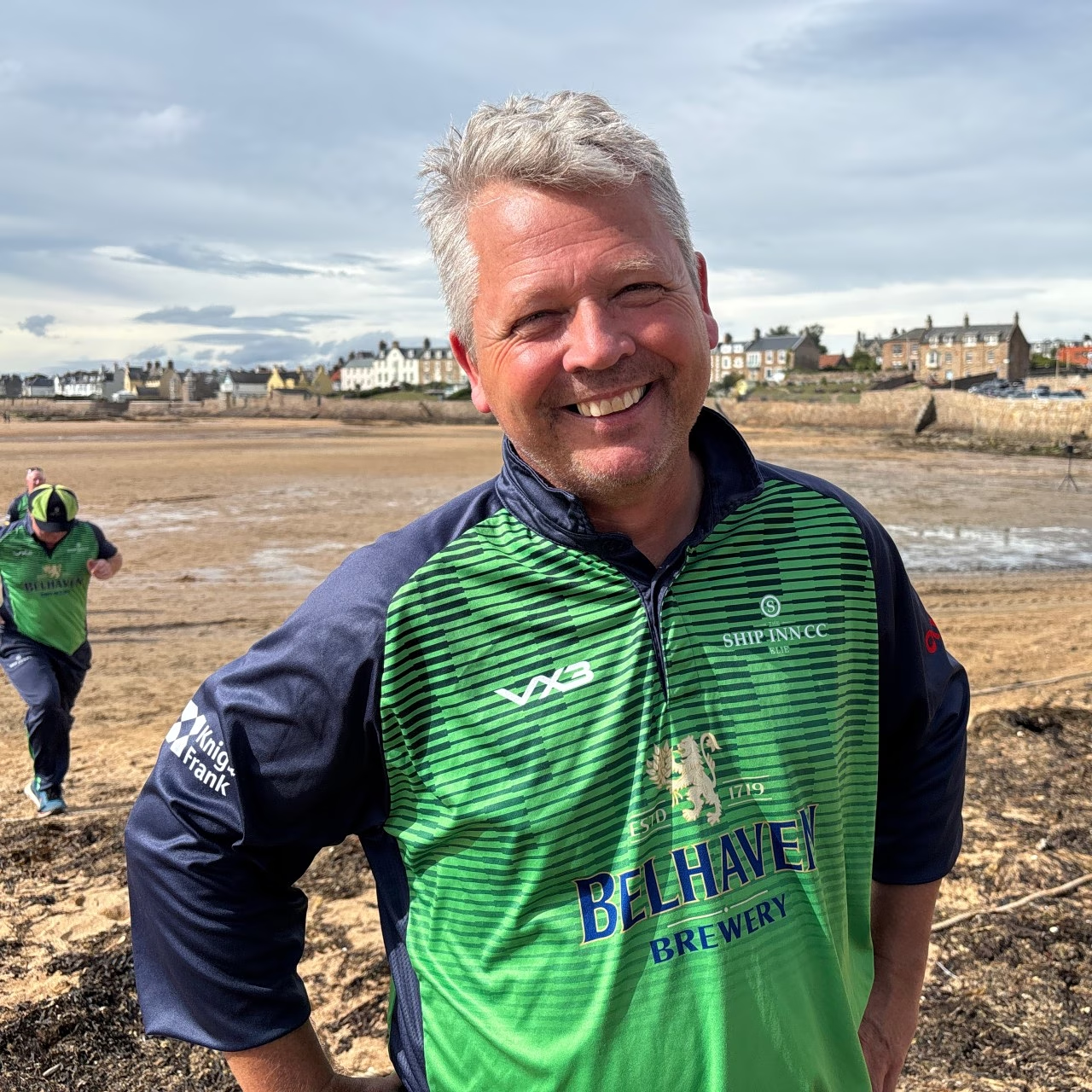
Pete Deakin works to spread word—and love—of cricket in Scotland. James Hookway/WSJ
There are various theories: More people from England have come to live in Scotland; Bucknall is from Yorkshire and moved north years ago. Immigration from the cricket-mad nations of the old British Empire has provided a shot in the arm.
But Scots with little experience are also beginning to play it as an alternative to soccer and rugby, and a run of warmer, drier summers could help explain why.
“We’ve not had to cancel a game in two years,” said John Amis , chair at the Bass Rock Cricket Club, which plays across from Elie on the southern side of the Firth of Forth.
In the past, Scottish cricket teams might travel 100 miles to find competition, only to be rained out. For a sport that can take hours or days, with batters running up and down to gradually accumulate points rather than rounding bases like in baseball, this was a nuisance.
If the weather holds up, the sight of cricket-curious Scots knocking a ball about on a summer’s day could soon be filed alongside some of the odder consequences of climate change, like vineyards in Sweden or growing mangoes in Sicily.
“There are more people playing cricket in Scotland now than rugby,” noted Duncan Hodge , a former Scottish international rugby star who was captaining a team of former players who’d switched to cricket for a match at the Ship Inn.
The teams are getting better, too—even the Ship Inn’s, said Pete Deakin , an Englishman who works to spread word in Scotland as the Marylebone club’s representative.
“The touring sides are expecting a decent game when they come here,” he said. “The standard has definitely improved.”
Not that the players are necessarily in peak condition. “I think for a lot of us it’s an opportunity to tap in to our school days again,” says Ship Inn player Jamie Robertson . “It’s only 15 games a year, anyway.”
New fans are coming from the pub’s beachfront beer garden. Scott Carrick began watching cricket on television during the pandemic and gradually figured out the nuances.
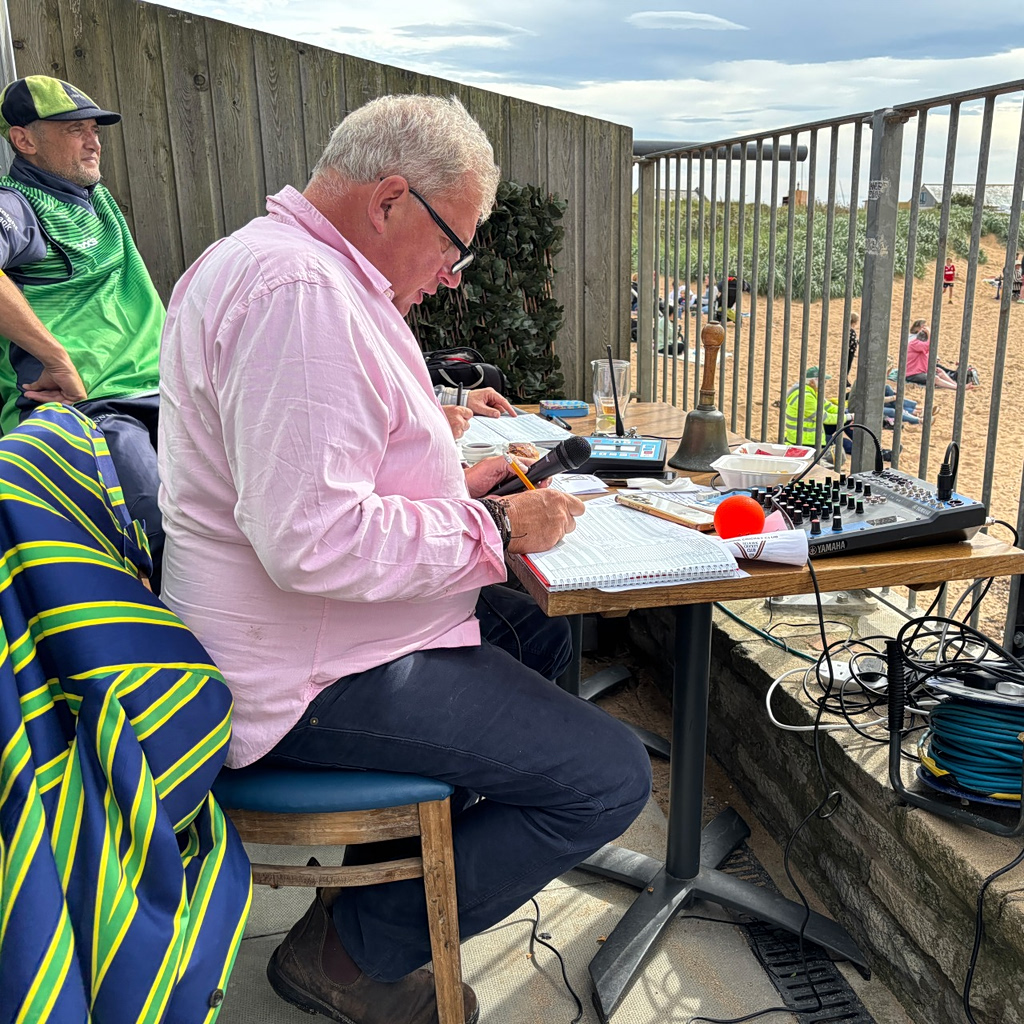
Ship Inn owner Graham Bucknall helps keep the pitch, and sometimes the score, in order. James Hookway/WSJ
“It was a good thing to have on in the background while working from home,” he said. Since then he’s traveled across England to watch matches, including at Lord’s.
Carrick concedes the game still has niche appeal in Scotland. It’s usually limited to those who learned it at a private school or in more rural areas.
“I’d say about 90% of my mates don’t get it,” Carrick said.
But it helps if it’s played on a beach on a warm, sunny day.
As the tide receded, Bucknall and his team hitched a heavy steel roller to the back of a quad bike to pack down the sand. Stray bits of seaweed were flung to the side. Bats were lined up while Bucknall explained some of beach cricket’s more unusual rules.
“If a spectator catches a ball in the beer garden, then they win their height in beer, or soft drinks as appropriate.”
As the match progressed, some spectators formed their own games farther down the beach. A few of their cries could be heard above the seagulls.
“Good shot, sir,” one man said. “Well bowled!” shouted another.
Not everyone seemed to have grasped the game’s finer points. One man was spotted riding his cricket bat like a hobby horse toward the dunes, slapping his backside in the breeze.