 Μake us preferred on Google
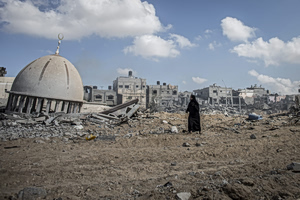
‘I fear we will forget.’ That is how Greek orthopaedic surgeon Alexandros Vris sums up what he witnessed during his recent humanitarian mission to Gaza. It is not that he doubts whether he will return. Rather, he fears that the world will grow accustomed to the images, stop looking and, eventually, forget the people still living among the ruins.
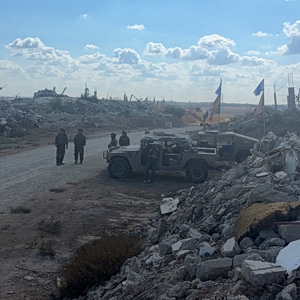
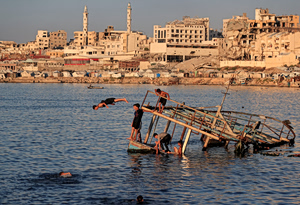
On Sunday, November 1, hospitals in Gaza reported that eight people, including a child, had been killed in fresh Israeli strikes. For Vris, these figures are not simply another news story. They represent the continuation of a daily reality he has witnessed at first hand: operating on the wounded, meeting families who have lost almost everything, and working alongside healthcare professionals struggling to keep what remains of the health system functioning.
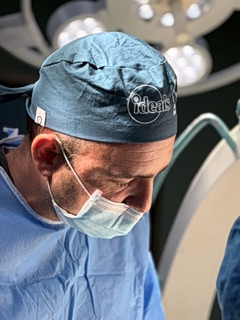
An orthopaedic surgeon at the Royal London Hospital, where he works as part of the Limb Reconstruction team at Barts Health NHS Trust, and an honorary lecturer at Queen Mary University of London, Alexandros Vris returned to Gaza for the first time since the outbreak of the war. Before 2023, he had taken part in five humanitarian missions through the organisation IDEALS.
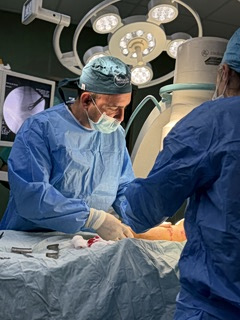
He travelled to Jordan on October 6 and entered Gaza on October 8, remaining there until October 20. For 12 days, he worked inside a hospital which, as he describes it, continues to operate but bears little resemblance to a functioning medical facility under normal circumstances.
‘There are 1.7 million people living in tents’
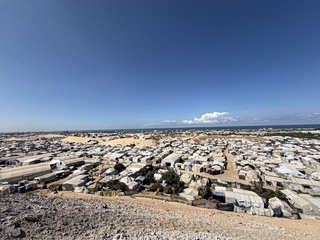
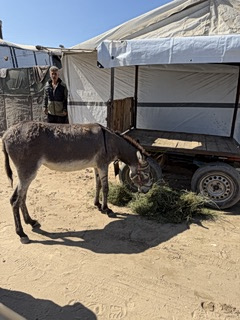
The first sight to shake him was not inside the operating theatre. It was the seemingly endless expanse of makeshift encampments.
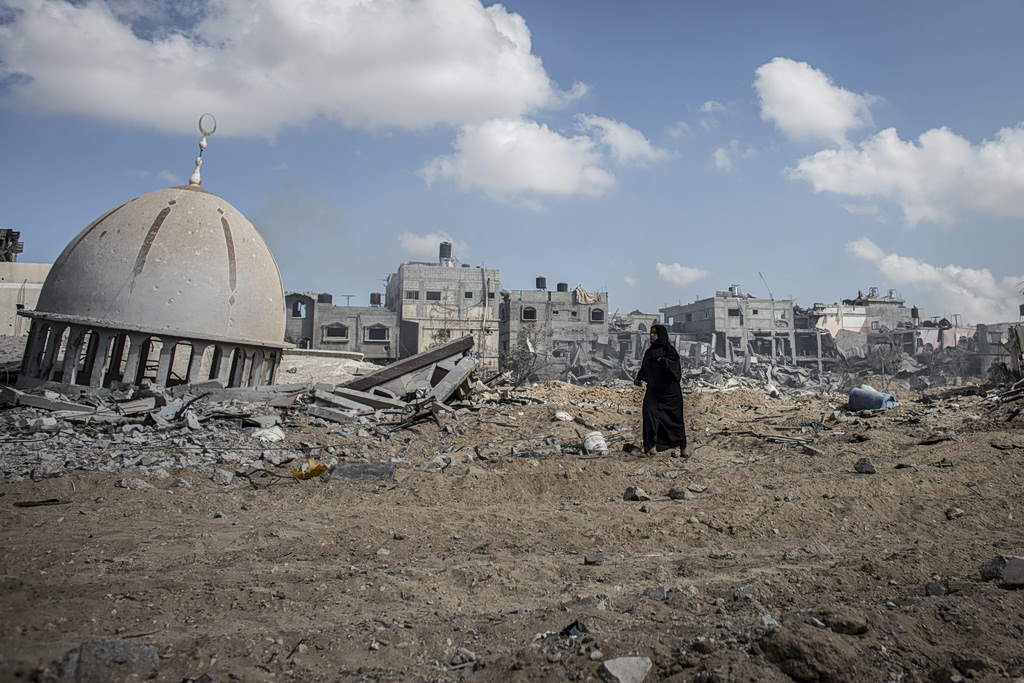
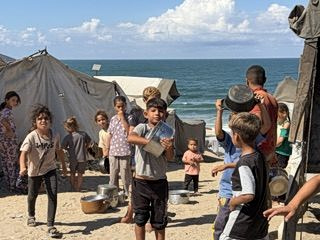
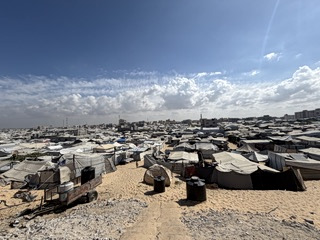
‘It is an ocean of tents,’ he says. An estimated 1.7 million people, according to his assessment, are living in tents in a territory that was already one of the most densely populated places in the world before the war.
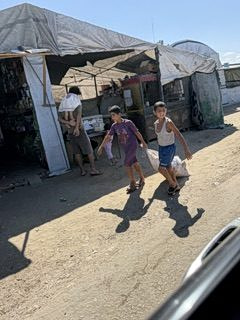
The tents often stand shoulder to shoulder, leaving barely enough room to pass between them. Some have been assembled using materials salvaged from destroyed buildings; others consist of old sheets and improvised structures. For many families, the ground is their floor. When it rains, water seeps inside and floods their living spaces.
‘From a public health perspective, in terms of dignity and freedom, it is tragic to see. You simply cannot believe it.’
The humanitarian crisis extends far beyond the lack of shelter. Access to drinking water is extremely difficult, with residents relying on water tankers carrying limited supplies. Desalinated water, he explains, is highly saline and is used mainly for washing.
Everyday life has become an unrelenting struggle for survival. Someone has to find water, someone else must look for bread or queue for food distributions. Even children are involved in these efforts.
‘I have never witnessed such human suffering’
Vris is trained to deal with complex orthopaedic cases. His specialism in limb reconstruction involves severe injuries, deformities, fractures that have failed to heal and cases requiring intricate surgical procedures to give patients a chance of walking again.
He has dealt with difficult cases throughout his career. Gaza, however, was an altogether different experience.
‘As doctors, we are trained. We have seen difficult cases. But I have never witnessed such human suffering.’
Behind every injury lies a personal story of loss. Patients have lost relatives, friends, children or parents. They are people living in tents, trying at the same time to cope with the consequences of their injuries.
One case that has remained indelibly etched in his memory is that of a woman who was the sole survivor of a school that had been bombed. According to what she told him, between 200 and 250 people had been killed. She had been injured almost three years earlier and was still living with her leg held together by an external metal fixation device, without having received the definitive treatment she needed.
‘Three years with metal rods in her leg,’ he says. In a functioning healthcare system, such an injury should have been treated definitively long ago.
‘The equipment is like trying to do delicate work with a rusty knife’
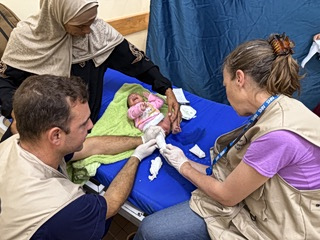
The volunteer medical team was accommodated inside the hospital, in two rooms set aside for visiting medical staff. Their working day began in the morning with patient assessments and continued with operations, often until late into the evening.
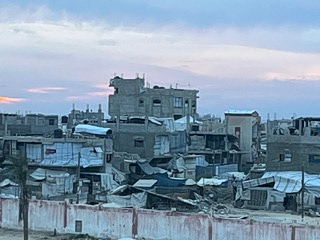
The hospital was not a makeshift field facility. It was a proper hospital, but with departments damaged by bombing and severe restrictions on its ability to function.
The greatest challenge was the shortage of medicines and appropriate surgical equipment. The range of available drugs was extremely limited, while much of the equipment used in orthopaedic procedures had been salvaged from devices previously used on other patients.
‘The equipment is incredibly difficult to work with. It is like trying to carry out delicate work with a 50-year-old rusty knife.’
Doctors are attempting to sterilise and reuse metal components, plates and screws. The problem, he explains, is not simply sterilisation but, above all, the quality and suitability of the equipment. A screw may be defective or a plate may not fit properly, creating serious complications during an operation.
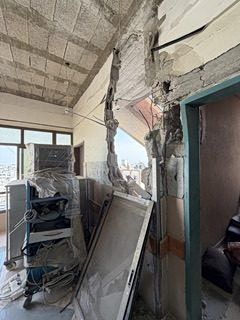
There are also power cuts, shortages of protective equipment and difficulties in maintaining standard surgical protocols.
‘I don’t care what religion they are – they must let us do our jobs’
Particularly concerning are the restrictions on access to specialised medical equipment. Vris describes the case of a patient with a large tumour in his thigh, which appeared to be deteriorating rapidly.
To treat him safely, detailed diagnostic investigations were needed first. But the lack of access to MRI scanning and other essential tests made it impossible to establish the precise extent of the disease.
‘I couldn’t go in blind. If I removed it without all that information, he could have died from bleeding.’
MRI scanners are unavailable because they fall under the category of so-called dual-use items, which can theoretically serve both civilian and military purposes.
He also refers to magnifying loupes used by plastic surgeons which, according to his experience, were not permitted to enter Gaza.
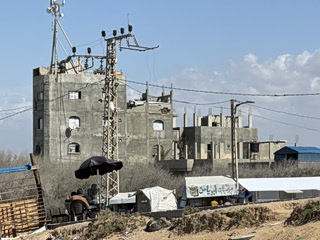
His message to governments is unequivocal: ‘There is no need for any government to make some dramatic statement. They simply need to let us go in, do our jobs and bring in all the equipment we need.’
He adds: ‘I don’t care what religion they are or what they do. A three- or four-year-old child who was born and has lived through war has done absolutely nothing wrong.’
‘Almost all Gaza’s local journalists are dead’
Vris explains that, because of restrictions on access to Gaza, foreign journalists cannot enter the territory freely, while local journalists have also been devastated by the war.
‘They don’t allow journalists to come in. […] And almost all Gaza’s local journalists are dead. So we end up doing a little bit of reporting ourselves, with very basic and rather makeshift means. But there is no news coverage and there are no photographs.’
‘We risk seeing an entire generation left with permanent disabilities’
Rehabilitation is perhaps the most overlooked dimension of the crisis. A patient may survive an explosion, undergo surgery and keep a limb, but that does not mean they will ever be able to walk again.
For Vris, the absence of physiotherapy, specialist follow-up and appropriate equipment fundamentally changes even the way surgeons decide which procedures to perform.
‘We choose a treatment that does not require much rehabilitation, even if the outcome is slightly worse.’
In different circumstances, an injured patient might undergo a more complex operation and subsequently follow a structured rehabilitation programme. In Gaza, however, doctors have to work on the assumption that a patient may never return for a follow-up appointment.
The danger is that an entire generation could emerge from the war having survived the fighting but facing permanent disabilities, chronic pain and injuries that have never been properly treated.
‘You cannot blame a child’
It is the stories of the children that continue to haunt him following his return to London.
He remembers a four-year-old girl who survived a rocket strike on a house that was engulfed in flames. Her father had been killed earlier, and the latest attack claimed the lives of the rest of her family. The child was brought to intensive care with extensive burns and no surviving relatives able to look after her.
He also remembers a seven-year-old girl who suffered a severe arm injury from shrapnel while carrying bread home. Since then, she has not spoken again or eaten bread, having come to associate it with the traumatic experience.
And there was another girl, aged five, who was shot by a bullet that passed through her abdomen and back, causing serious internal injuries.
‘They are children. How can a child possibly be to blame?’ he asks.
He admits that these images still return to him in his sleep. He makes no attempt to dramatise the experience, but neither does he conceal its psychological toll.
‘I fear we will forget’
Despite the difficulties, Vris does not believe the presence of foreign doctors is futile. Even if a single mission cannot transform the overall situation, it can save an individual life and, just as importantly, support local healthcare workers.
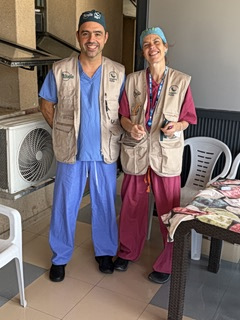
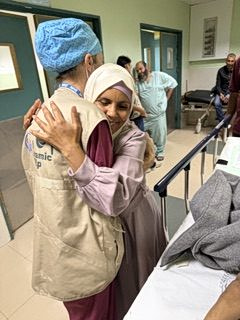
He describes colleagues who continue working every day, despite living with their families in tents and having to travel for hours to reach the hospital. Behind their smiles and professional commitment are people who have lost relatives and are struggling to survive like everyone else.
‘You help them carry on. Because if the local doctors stop working too, people there will be lost.’
He intends to return. Asked what frightens him most about the coming months, he does not speak only of shortages, further attacks or the inability to rehabilitate the wounded.
‘What frightens me most is that we will forget – that we will forget what is happening in Gaza. It is a disgrace to the human race that this is happening.’
He ends with a decision that leaves no room for doubt:
‘I will definitely go back.’