WASHINGTON—A growing number of GOP lawmakers have little incentive to come to work or toe the party line, putting critical legislation in danger as Republicans lurch toward the midterms.
Some are privately calling it the zombie Congress.
GOP leaders are increasingly concerned that members will lose motivation to show up, or may break with the party if they do, potentially stalling or killing some bills, according to lawmakers and aides. While the Senate has been the main focus of GOP cracks , the House is also facing an uncertain summer and fall, with attendance issues and a renewed sense of independence among retiring, defeated or angry members threatening to upend the Republican agenda.
“If you’re not at least a little bit frustrated right now, then I question your, maybe your sanity. Nobody signed up for this,” said Rep. Steve Womack (R., Ark.), who worried problems passing bills could hurt GOP chances in the fall. “Right now it’s almost like shooting ourselves in the foot,” he said.
Just this past week, a renewed rebellion over the stalled Save America Act voter-ID bill stopped action on the House floor and prompted House Speaker Mike Johnson (R., La.) to throw in the towel and send members home early for the Fourth of July holiday. On a typically party-line procedural vote meant to set the agenda for the week, holdouts led by Rep. Anna Paulina Luna (R., Fla.) swelled to more than a dozen to easily block the measure.
“I don’t care who in this chamber hates me for it,” Luna said on social media.
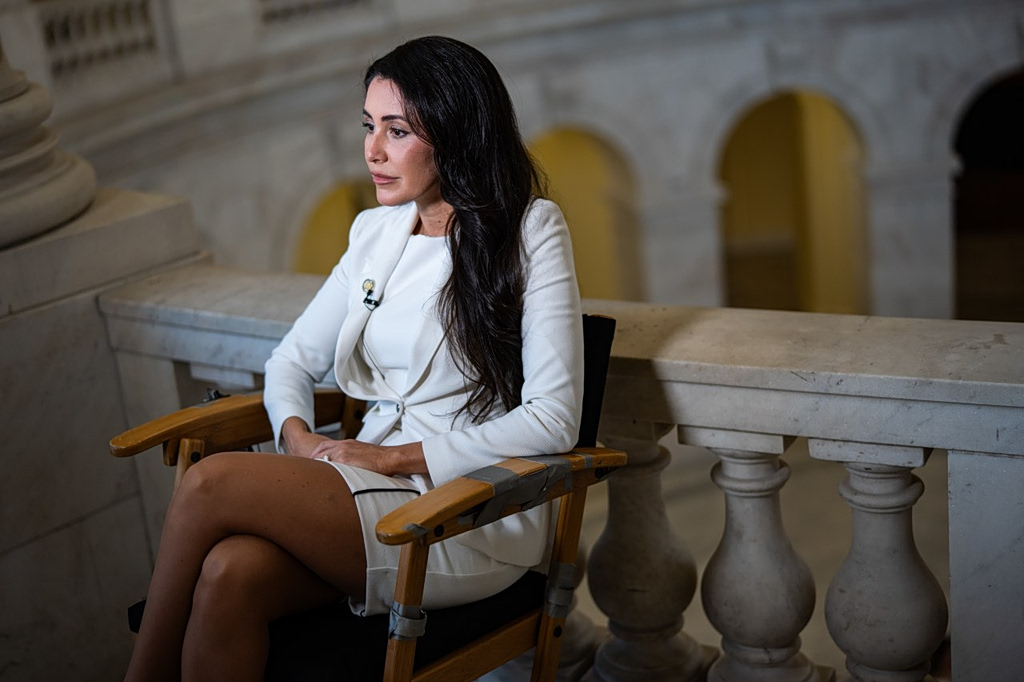
Rep. Anna Paulina Luna (R., Fla.) last month. Salwan Georges for WSJ
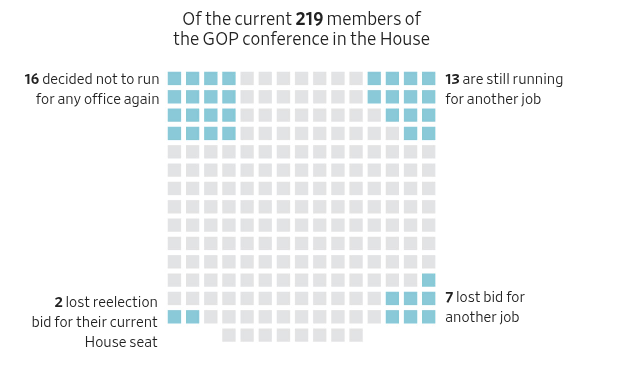
Seven Republicans missed the vote entirely. Almost none can be spared given the party’s narrow 219-212 majority, which includes one independent who caucuses with the GOP.
Even as routine daily votes are going off the rails, Johnson and President Trump are pushing for a third party-line budget reconciliation bill, on the heels of Trump’s tax law last year and $70 billion for immigration enforcement in June. That measure could include Republican priorities such as a big defense-spending boost, bypassing Democratic objections. Republican absences or defections could doom the already long-shot effort.
“This entire Congress has been about three or four, maybe one, or no vote margin, and then it’s exacerbated by the fact that the people who can vote are not here,” said GOP Rep. Kevin Hern , who is running for Senate in Oklahoma. In an election year, people who lose “are going to be less enthusiastic about coming back,” he said.
Congress also needs to pass bipartisan spending bills by the end of September to avoid another government shutdown, along with other targets including the farm bill and defense-policy proposal. Democrats have played hardball on spending bills this Congress, and the recent anti-Washington insurgency in their own ranks could further complicate any legislative progress.
“We always have to deal with absences, a narrow majority, that’s life in the big city, and you know we’re just going to keep working through, but you know we’re going to get our work done,” Majority Leader Steve Scalise (R., La.) told reporters last month.
A number of factors are converging to make life difficult for Republicans. About three dozen House Republicans aren’t returning next term. Roughly half are quitting to seek a different office—and of those, many are still campaigning, while several have lost.
“I promise to be more of a menace than ever. This is nothing holding me back,” said Rep. Nancy Mace (R., S.C.) after she was defeated in her bid for governor .
Other various factors could also weigh on attendance. Rep. Tom Kean Jr. (R., N.J.) missed nearly four months of votes after he was hospitalized for depression . He returned to Congress on June 30. Rep. Neal Dunn (R., Fla.) has also missed multiple votes due to illness.
GOP leaders have repeatedly hammered their members about attendance in various closed-door meetings, as well as in public statements. But leadership is becoming increasingly worried about a lawmaker version of senioritis, according to top Republicans.
“It is going to be harder to get votes,” said Rep. Jason Smith (R., Mo.), who chairs the House Ways and Means Committee.
GOP leaders are also trying to tamp down any efforts by departing lawmakers to leave early. Johnson says he tries to be “very direct” with members who are considering an exit before the end of the term. “We’ve had a lot of those conversations. I want everybody to be able to take whatever opportunity presents itself, but the timing is really important,” he said in a recent interview.
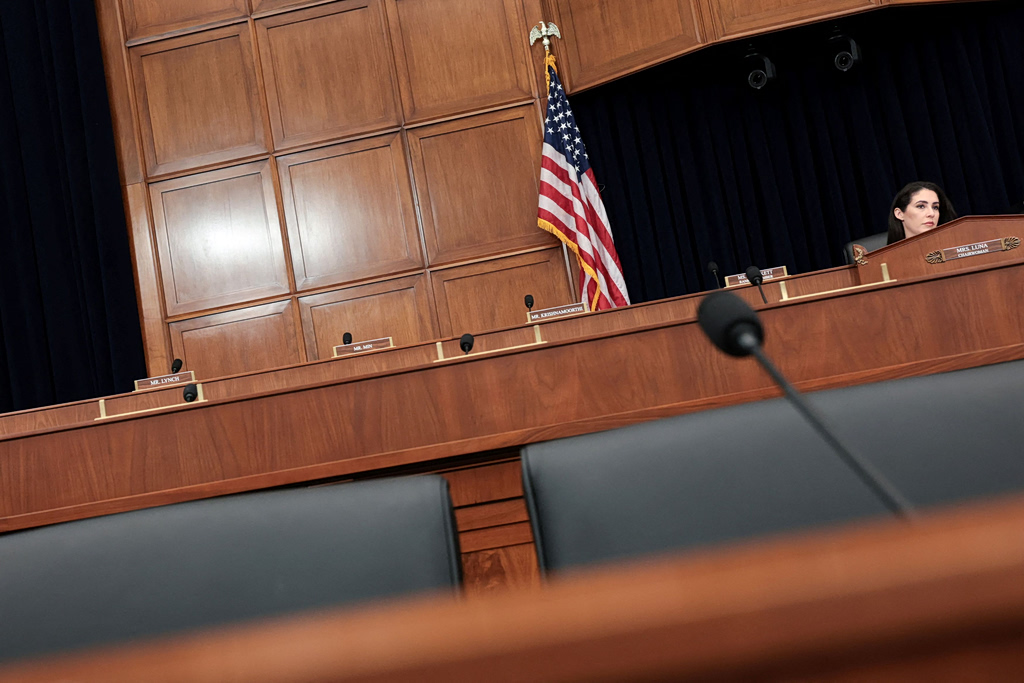
Capitol Hill in Washington, D.C., U.S., June 30, 2026. REUTERS/Jonathan Ernst
Some lawmakers are interested in serving in the administration once they leave Congress. The prospect of a potential job could keep several retiring members in line, according to people familiar with the matter. A White House official said it is normal for the administration to talk to congressional allies about possible future roles, but any conversations that may have occurred have no connection to votes or attendance.
Some members feel the White House has focused only on the president’s priorities, rather than taking into account the broader party.
“It’s safe to say the White House has created an environment where a lot of people are going to feel free to vote their conscience without any question,” said Rep. Chip Roy (R., Texas), who lost his bid for state attorney general. “For people who have always done that, it’s easy. For those who haven’t, they might feel a little more free.”
White House spokeswoman Abigail Jackson said the administration looks forward to continuing its “close relationships” with GOP leaders and lawmakers and “fulfilling President Trump’s priorities that Americans elected him to enact.”
The drama and schedule changes are wearing on some lawmakers.
Colleagues throwing out last-minute demands “curbs people’s enthusiasm and willingness to go and miss those important family things” and other events in their home districts, said Rep. Bill Huizenga (R., Mich.). “That sort of every-man-or-woman-out-for-themselves attitude has been growing, and that means that we’re less likely to be coming together and thinking like a team.”