
 Μake us preferred on Google
 WASHINGTON—The U.S. pounded sites along Iran’s coast in airstrikes and blocked its ability to sell oil legally on Tuesday in a fierce response to Tehran’s recent attacks on ships near the Strait of Hormuz.
Iran responded with counterattacks, according to a senior U.S. official, threatening to unravel an interim peace that took weeks to negotiate and drive up oil prices.
The attacks mark the most significant escalation since the U.S. and Iran signed a memorandum of understanding on June 17 to reopen the strait and wind down the war. Prior to that agreement, the two sides exchanged fire multiple times, but Tuesday’s strikes were planned to be much more significant in scale to send a strong message to Tehran, according to the senior U.S. official.
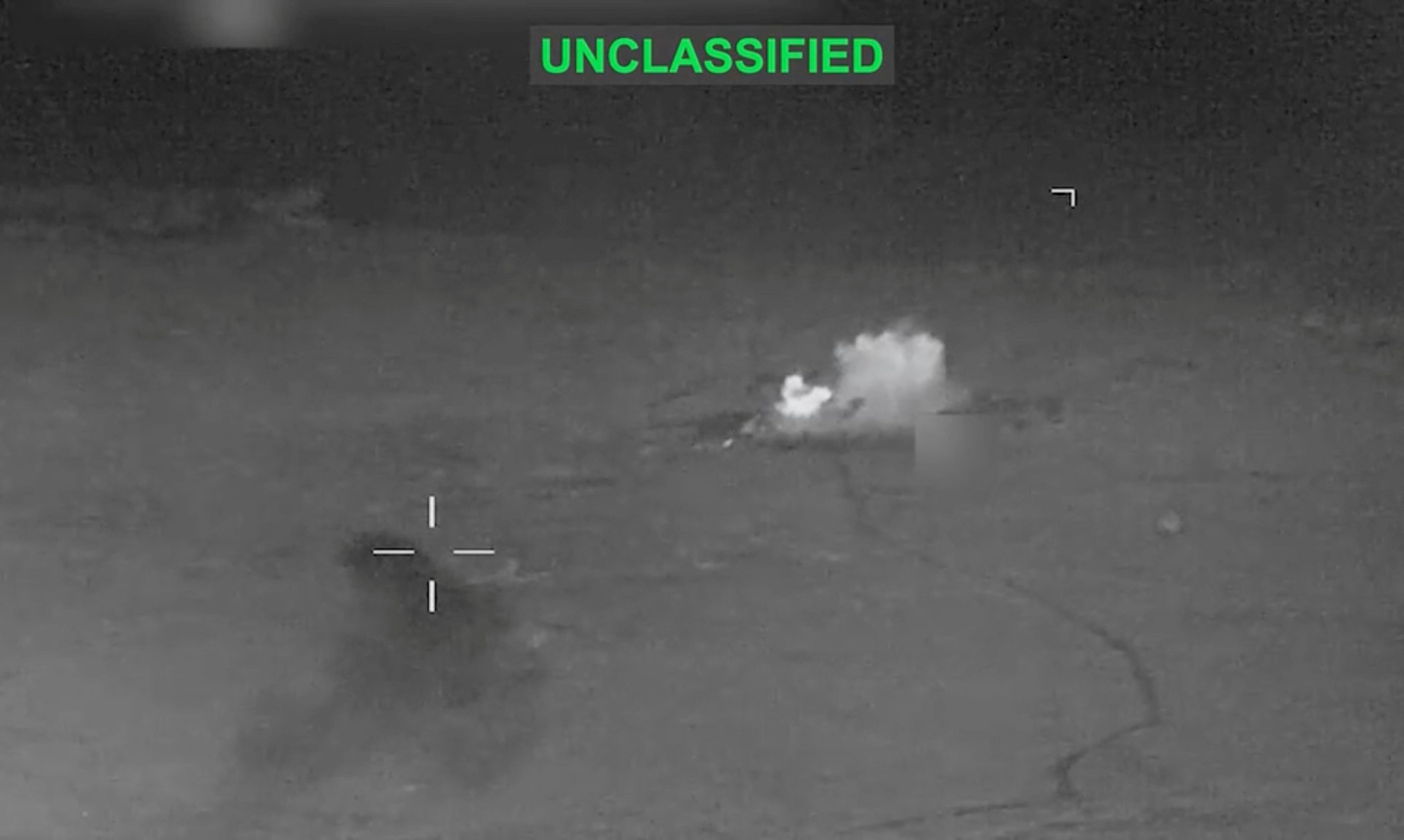
U.S. Central Command, which is overseeing the war, said the U.S. completed the strikes, after hitting more than 80 targets including air defense systems, command and control networks, antiship missile sites and more than 60 Iranian small boats near the waterway. The attacks were four to five times more extensive than other strikes launched since the agreement to end the war was signed last month, the senior official said. The U.S. still considers the ceasefire in effect, the person said.
“Centcom forces remain postured and prepared to hold Iran accountable when the agreement is not adhered to or obeyed,” the command said in a statement.
Iran responded by firing drones and ballistic missiles at Bahrain and Kuwait, which host U.S. bases and have accommodated the U.S. military throughout the war, according to a U.S. official. Sirens sounded in the two Gulf states where citizens were asked to adhere to safety protocols. Kuwait said on social media that its air defenses were “confronting hostile missile and drone attacks.”
Iran also blamed the U.S. for violating the deal. Iran’s parliament speaker and chief negotiator Mohammad Bagher Ghalibaf said on social media that the U.S.’s reinstated sanctions and fresh strikes, as well as violations of “Iranian adjustments in the Strait” amounted to breaches of the memorandum of understanding. “The era of bullying and extortion is over. It leads nowhere. We don’t fold,” he wrote.
Explosions were reported in Sirik, Qeshm and Bandar Abbas, sites in or near the strait, according to Iranian media. Abu Musa island and the Tunbs islands in the strait were also struck, the senior U.S. official said.
U.S. forces targeted those sites during the war that started on Feb. 28 until the ceasefire went into effect on April 7. But since then Iran has reconstituted its military capability in that area, the official said, for example moving in small, portable radars to replace the fixed sites that were destroyed.
Since the ceasefire, Iran has dug out or repaired hundreds of missiles and launchers that were damaged or buried in U.S. strikes, the official said. The regime now has access to more than half of the missiles and launchers it had before the conflict, the person said.
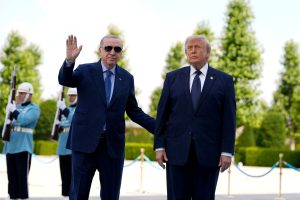
President Trump is in Ankara for a meeting of North Atlantic Treaty Organization leaders. The war with Iran and fallout for the world economy is among the points of discussion. Trump has decided to try to find a lasting diplomatic resolution to the war, which began in February, but has weighed a return to all-out war .
Other NATO leaders have cautioned on the need to end the conflict and some have said they are willing to help restore maritime activity through the Persian Gulf, though this would be unlikely amid any sustained return to fighting.
The attacks came shortly after the Trump administration revoked a license allowing Iran to sell oil on the open market, eliminating the primary economic benefit for Tehran as part of an interim peace deal with the U.S. and threatening to unravel the agreement after days of skirmishes in the Strait of Hormuz.
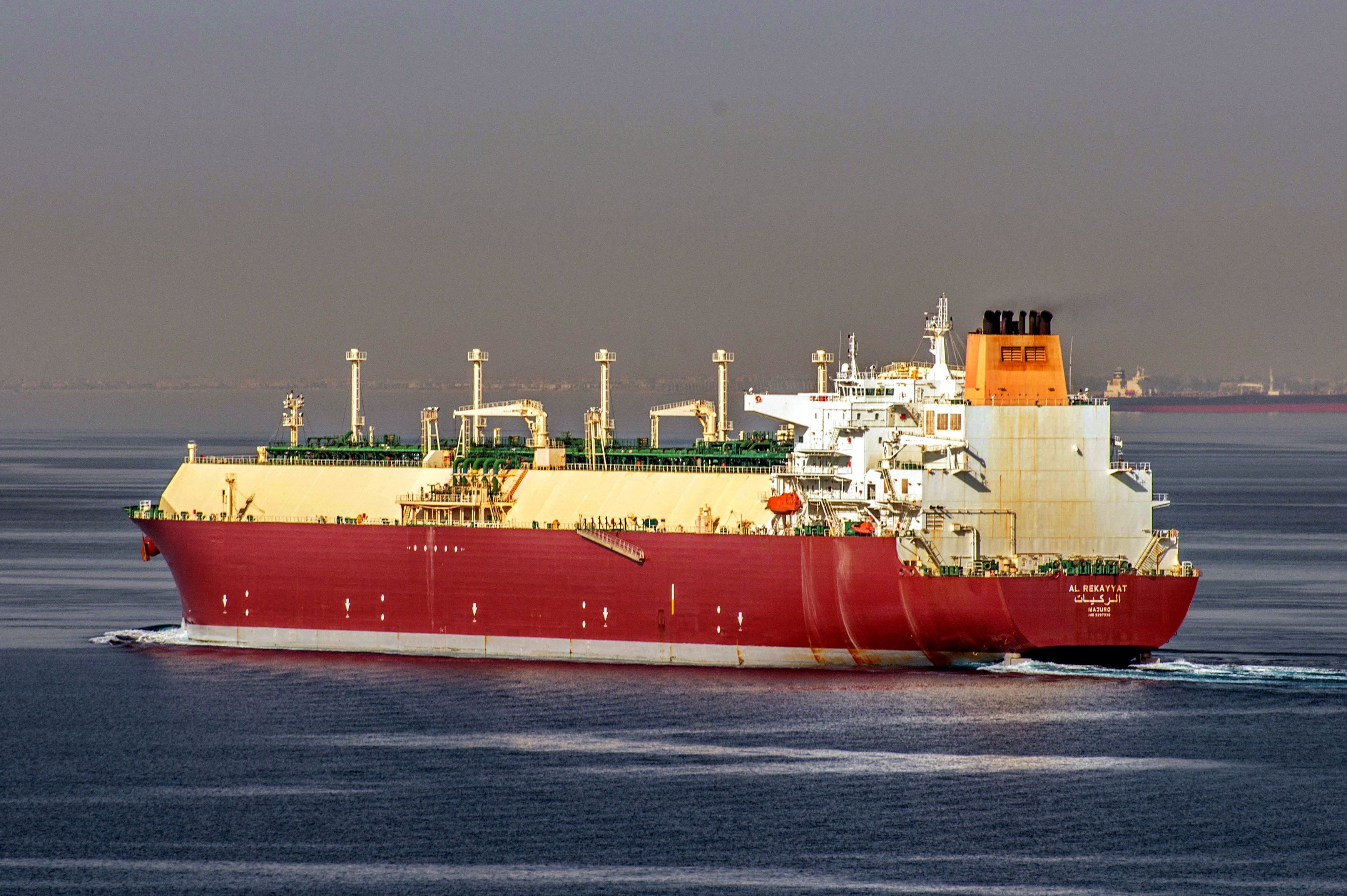
An archive photo taken on May 9, 2015 of Qatari LNG tanker Al Rekayyat, that a source said on July 7, 2026 had sent out distress signals seeking assistance after it was hit on its port side, at an unknown location. Ivan Meshkov/Handout via REUTERS THIS IMAGE HAS BEEN SUPPLIED BY A THIRD PARTY. MANDATORY CREDIT. VERIFICATION: – Date verified by original file metadata. – Location not verified
The Treasury Department said the June 21 temporary license granted to Iran after several months of war would no longer apply, a reprimand coming hours after the Islamic Revolutionary Guard Corps fired missiles and drones at ships near the strategic waterway Tuesday. The Treasury allowed for a grace period until July 17 for transactions already authorized under the license.
The price of oil rose shortly after the move, even as Trump has boasted that his efforts to wind down the war with Iran have lowered the price of gas and other products. The price of a barrel of Brent crude oil was almost $76 after the announcement, up about 5% on Monday’s closing price.
Ever since signing the memorandum of understanding last month with Iran, which reopened the strait and ended the U.S. blockade on Iran, the U.S. said it would only provide Tehran with financial incentives for abiding by the agreement.
Allowing Iran to sell oil and to repatriate dollar-denominated revenue into the Iranian banking system was the most important incentive in convincing Tehran to enter a 60-day diplomatic process aimed at ultimately dismantling its nuclear program.
Tuesday’s action underscores how many issues the interim deal left open—or open to different interpretation by the two sides. That includes the critical question of who should control the strait and the passage of vessels through it in the coming months.
A U.S. official said Iran’s actions in the strait were considered unacceptable and deserved a stern response. The U.S. would continue to negotiate with Iran toward a final agreement, the official said.
When the U.S. first lifted sanctions on Iranian oil and fuel in June, oil analysts predicted a cool reception. China would likely remain the main buyer, they said, because other potential buyers worried that a walk-back from the U.S. administration would leave them stuck with Iranian barrels bought but not yet delivered.
U.S. officials were surprised by Iran’s attacks on commercial ships amid ongoing negotiations and the funeral of the former supreme leader, Ayatollah Ali Khamenei. The Trump administration has sought to set up a back channel between the U.S. military and the IRGC, a powerful military and political force in Iran, but the IRGC has been slow to engage, the officials say.
The U.S. has continued to coordinate with commercial vessels transiting the Strait of Hormuz using a route that it cleared near the coast of Oman. Over the weekend, the IRGC warned ships that it was prepared to target them if they used the route promoted by the U.S. and Oman.
Early Tuesday, Iran fired antiship cruise missiles and one-way attack drones at vessels seeking to cross the southern route. Three ships were struck, and the U.S. downed some of drones, according to U.S. officials.
Iran’s foreign ministry spokesman said Tuesday that commercial vessels using routes not coordinated with Iran were disrupting plans to facilitate safe passage through the strait.
American warships remain on standby to restart the blockade of Iranian ports should Trump choose to reimpose it, the officials said.
Iran’s attacks come just as traffic through the Strait of Hormuz is recovering. Daily traffic through the chokepoint has stabilized at between 30 to 60 crossings in recent days.
Other critical elements of the interim deal included the lifting of the U.S. blockade on Iranian ports and commerce, as well as an agreement by Tehran to maintain “the status quo” on its nuclear program and for the U.S. to do likewise on sanctions against Iran. Tehran was also negotiating for the release of some of its frozen funds trapped by U.S. sanctions.
Meanwhile, people close to the talks say there has been no substantive progress made yet by the U.S. and Iranian teams on a final nuclear agreement, with technical talks on the issue barely commencing. Negotiations are currently on hold for the funeral of Khamenei.
Write to Lara Seligman at lara.seligman@wsj.com , Shelby Holliday at shelby.holliday@wsj.com and Alexander Ward at alex.ward@wsj.com