 Μake us preferred on Google
 ANKARA, Turkey—President Trump said Tuesday that he would consider selling the F-35 jet fighter to Turkey, signaling his embrace of Turkish President Recep Tayyip Erdogan and setting up a potential showdown with U.S. lawmakers who have long opposed such a deal.
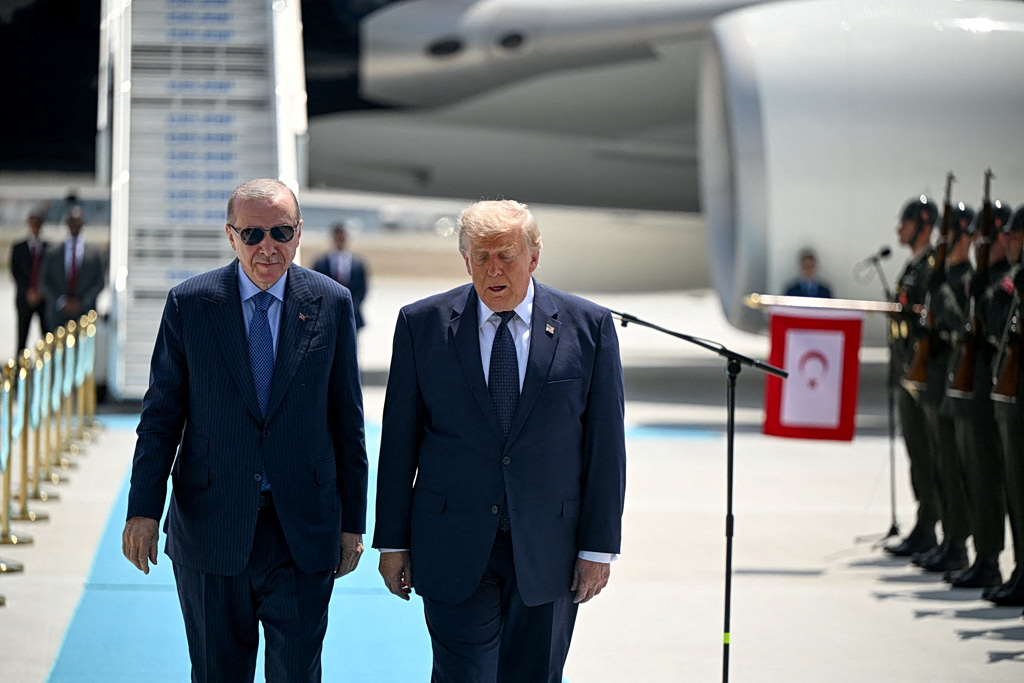
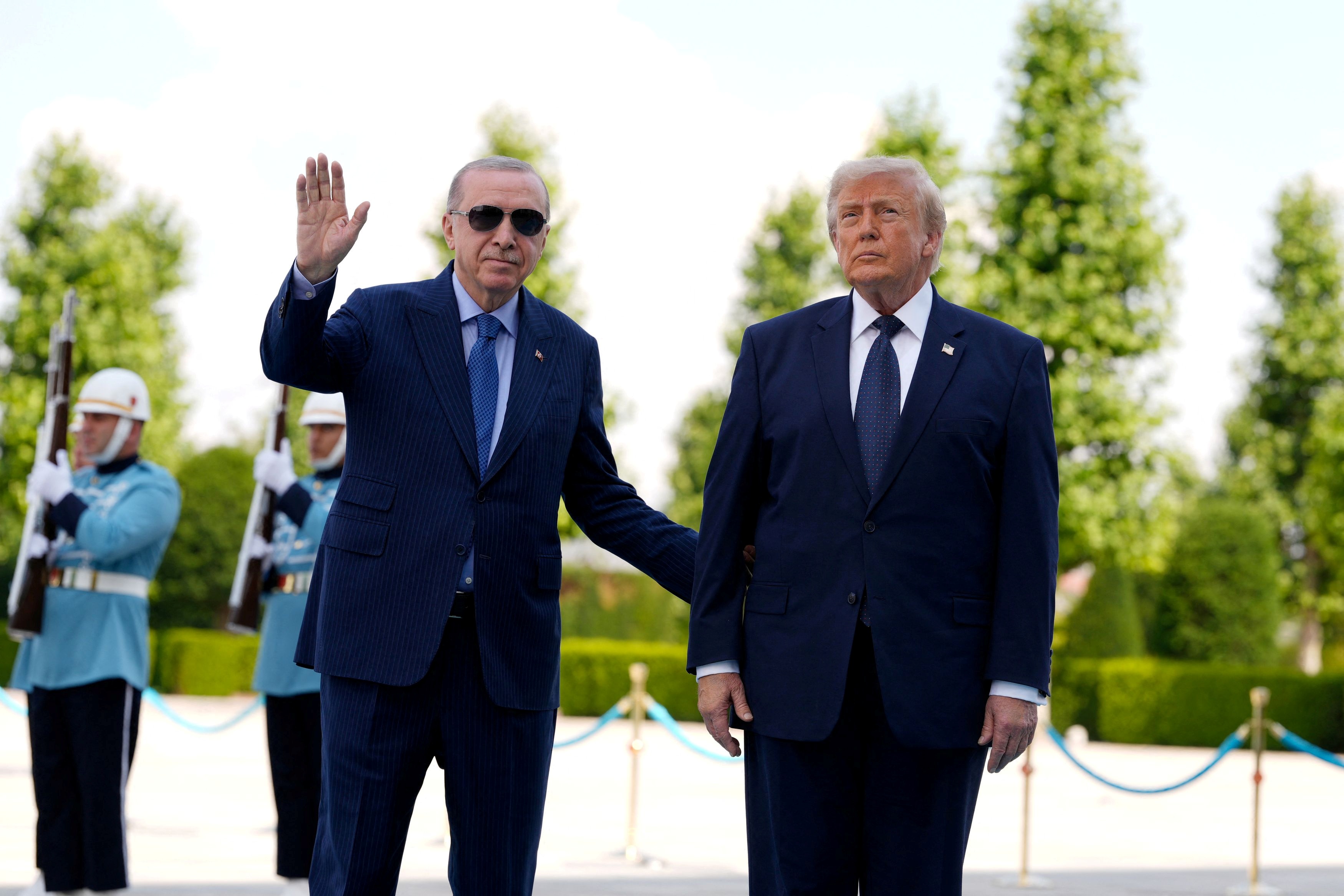
Trump spoke alongside Erdogan at the presidential complex in the Turkish capital, where he landed on Tuesday for a summit of the leaders of the North Atlantic Treaty Organization.
“We have a better relationship with Turkey, and Turkey has been in many ways much more loyal than other countries that we think would be loyal,” Trump said when asked about the program by reporters.
“So yeah, it’s something certainly we’d consider. It’s a great plane. It’s the best, currently the best plane by far, and certainly something we will consider,” he said.
The U.S. and Turkey have been stuck in a yearslong diplomatic impasse over weapons sales since Erdogan in 2017 approved Turkey’s import of a Russian air-defense system called the S-400. The move triggered American sanctions, and the first Trump administration removed Turkey from the F-35 fighter program in response.
U.S. officials are concerned that the Russian air-defense system could gather data about the F-35, including its radar signature, and send it to Moscow. The integration of the Russian system into NATO air defenses, along with the potential presence of Russian personnel, also raised concerns among Western defense officials.
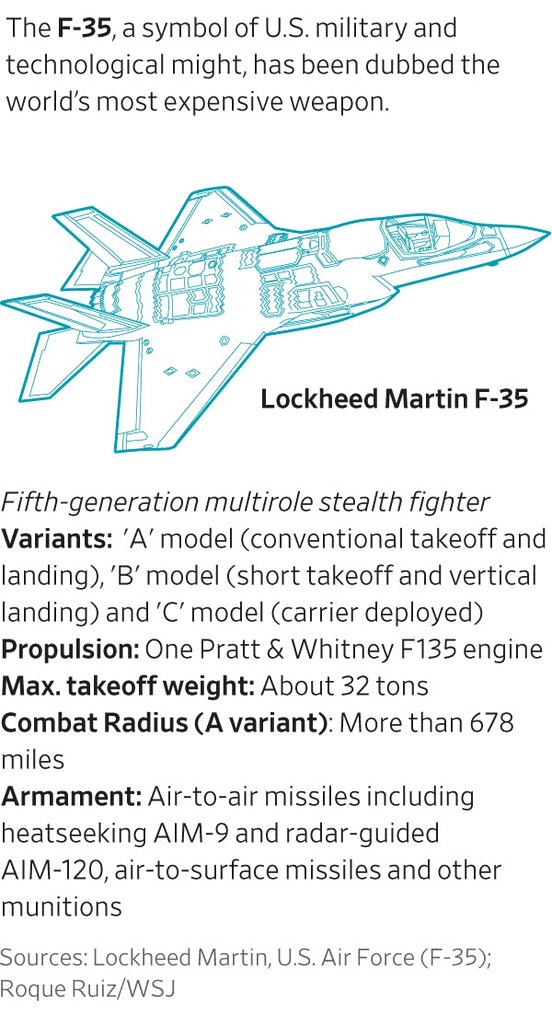
In 2020, Congress passed a law that explicitly barred the U.S. from allowing Turkey back into the F-35 program until Turkey agrees to remove all S-400 systems and commits to never acquiring them or other Russian systems that could compromise the high-end jet fighter.
On Tuesday, Trump said he wanted to remove the sanctions and would make a decision about selling F-35s to Turkey—though such a move would require approval from a Congress that remains staunchly opposed to offering Ankara a way back into the program unless it relinquishes its Russian air-defense systems.
“I hope this is wrong,” Sen. John Cornyn, (R., Texas), posted on social media in response to reports on the proposal.
American and Turkish officials have in recent years discussed potential workarounds to the problem, including sending the S-400 to Ukraine or moving it to an American-controlled secure site. None of those solutions has so far materialized.
U.S. lawmakers who traveled to Ankara for the NATO summit said they would welcome Turkey rejoining the F-35 program if there is a solution on the S-400 first.
“It would be very good news to be able to see Turkey back into that program and see the S-400 dealt with in a way that doesn’t give Russia the ability to use the S-400 to figure out how we’re building the F-35,” said Sen. Jeanne Shaheen (D., N.H.), the top Democrat on the Senate Foreign Relations Committee.
“We know it will not happen until the issue of the air-defense system, the S-400, has been resolved,” said Sen. Mike Rounds (R., S.D.).
Four Democratic lawmakers including Rep. Dina Titus of Nevada urged House leaders to introduce a joint resolution of disapproval should the Trump administration move ahead with plans to allow Turkey to rejoin the F-35 program.
U.S. and regional officials familiar with the diplomacy around the deal said in the days leading up to the summit that there had been no progress in breaking the impasse around the F-35.
Trump cited his close relationship with Erdogan in saying the U.S. was ready to move ahead.
“We’re going to be taking the sanctions off. It’s time to do that. We don’t want to sanction friends,” he said.
The White House declined to clarify the comments further. A spokesman for the Turkish foreign ministry didn’t respond to a request for comment.
The tension around American weapons sales to Turkey is a major subplot of this year’s NATO summit, at which European allies are working to adapt to Trump’s tirades against the alliance and the drawdown of U.S. military commitments to Europe.
The U.S. and some European countries have turned to Turkey as a key weapons supplier that has played an important role in arming Ukraine, but the tension in the U.S.-Turkey relationship is a major obstacle to further enlarging Turkey’s role in the alliance and deepening defense ties.
Trump has warm relations with Erdogan and said he only agreed to attend this year’s summit because the Turkish president asked him.
Turkey, like other NATO members, has been a major buyer of American weaponry for decades and has factories for U.S. defense firms. The country has the second-largest fleet of F-16 jet fighters in the world after the U.S.
Turkey’s expulsion from the multinational F-35 program cost the country and its defense firms billions of dollars in contracts and iced a major NATO ally out of Washington’s largest worldwide weapons program.
Even if sanctions were removed, it is unlikely that Turkey would resume its role as a full-fledged member of the F-35 program, a major Turkish defense industry executive said.
“I think we are way behind, because years already passed,” said Mehmet Akif Nacar, the chief executive of Havelsan, one of Turkey’s most prominent defense firms. He said his company had been involved in developing an Automatic Logistic Information System for the F-35 project.
“There is always hope,” he said.
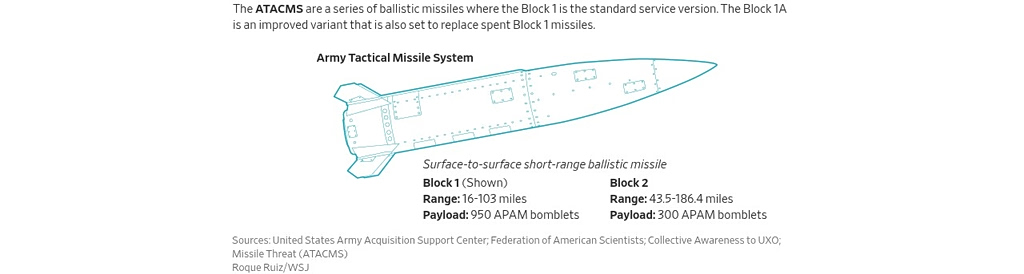
The U.S. and allied nations announced other defense deals at the NATO summit, including a long-awaited agreement between U.S. military giant Lockheed Martin and the German company Rheinmetall to produce Atacms in Europe for the first time. Atacms, or Army Tactical Missile Systems, is a long-range missile system.
The U.S. is looking at expanding overseas production of munitions to address critical shortages of missiles such as the interceptors for Patriot air-defense interceptors. Such deals would also allow U.S. companies to capture a greater share of the region’s swelling budgets.
Write to Robbie Gramer at robbie.gramer@wsj.com and Jared Malsin at jared.malsin@wsj.com