
 Μake us preferred on Google
 Israeli Prime Minister Benjamin Netanyahu on Tuesday reiterated his opposition to a potential US decision to restore Turkey’s access to the F-35 program, citing, among others, Ankara’s policies toward both Greece and Cyprus. He also argued that Washington should consider Turkey’s wider regional conduct before approving any transfer of advanced military technology.
Speaking ahead of the NATO summit in Ankara, Netanyahu said Turkey’s occupation of the northern part of the Republic of Cyprus and its longstanding threats against Greece demonstrated why the United States should not provide Ankara with fifth-generation fighter aircraft or related technology. His remarks add to growing opposition in Washington, where members of Congress have continued to argue that Turkey should remain excluded from the F-35 program while it retains the Russian-made S-400 air defense system.
Israel argues that preserving its qualitative military edge remains a cornerstone of regional security. Israeli officials contend that Turkish acquisition of the stealth aircraft would significantly enhance Ankara’s ability to conduct long-range strike missions, gather intelligence and operate with reduced detectability, potentially altering the strategic balance in the eastern Mediterranean.
Netanyahu also linked the issue to the increasingly hostile rhetoric exchanged between Turkish President Recep Tayyip Erdoğan and the Israeli government, portraying the prospective sale as a strategic, rather than commercial, decision with implications extending beyond bilateral US-Turkey ties.
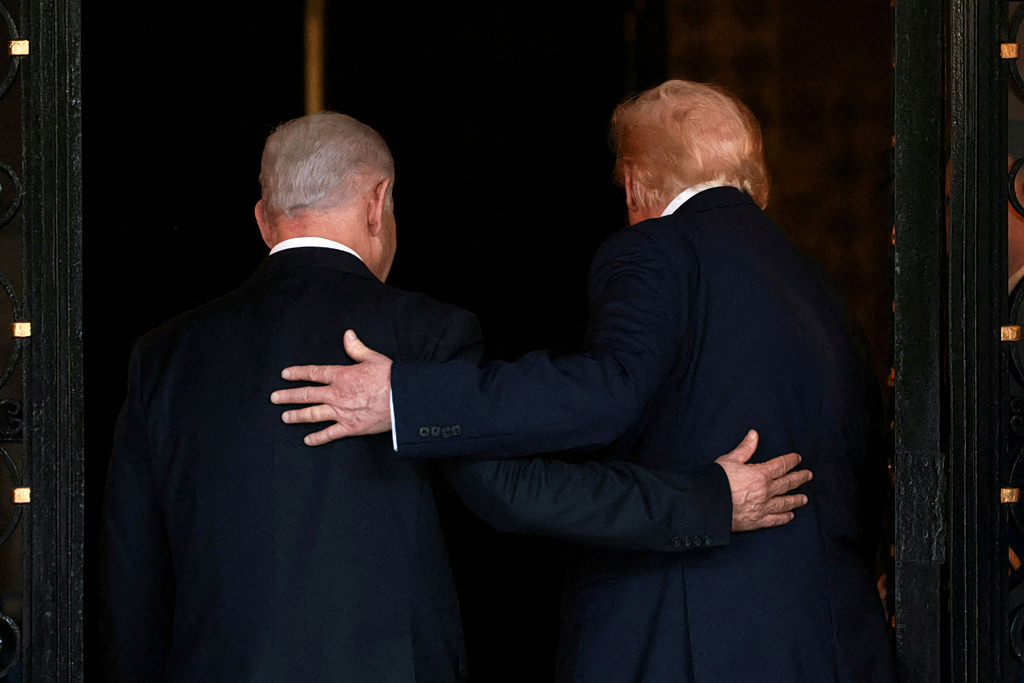
Despite his public objections over the F-35 issue, Netanyahu sought to downplay broader tensions with US President Donald Trump, saying the two leaders remain aligned on major strategic issues while acknowledging occasional disagreements. The comments reflected his effort to preserve the image of a close US-Israel partnership even as differences have emerged over Turkey and the approach toward Iran.
Trump has repeatedly highlighted his personal relationship with Erdoğan and has indicated he is willing to lift sanctions imposed over Turkey’s acquisition of the S-400 system, potentially reopening the path toward F-35 sales. However, any move faces legal and political hurdles in Congress as well as opposition from regional US partners, including Israel.
Over the past six months, Greece has consistently maintained that US restrictions preventing Turkey’s return to the F-35 program remain in force, while continuing its own modernization effort with the planned acquisition of 20 F-35 aircraft, plus an option for 20 more, alongside upgrades to its F-16 fleet. During the same period, Athens has also deepened strategic cooperation with Israel through the broader Greece-Cyprus-Israel-US “3+1” framework, particularly in energy and regional security, reinforcing a partnership that has become an increasingly important pillar of eastern Mediterranean stability.