 Μake us preferred on Google
 Greenland is cashing in on President Trump’s threats and talk of dealmaking by using its position as a strategic Arctic linchpin to draw investments from European allies.
Ursula von der Leyen , president of the European Union’s executive arm, visited Greenland on Monday and pledged investments worth 200 million euros, equivalent to about $230 million, in minerals, satellite communications and renewable energy.
The move is the latest in an international tug of war for influence over the vast island. The Arctic has assumed greater strategic importance as melting ice is opening new shipping routes and gradually making the region’s deposits of fossil fuels and minerals more accessible. Greenland in particular has become a flashpoint in the combustible relationship between Europe and the U.S. because of Trump’s repeated threats to take control of the island.
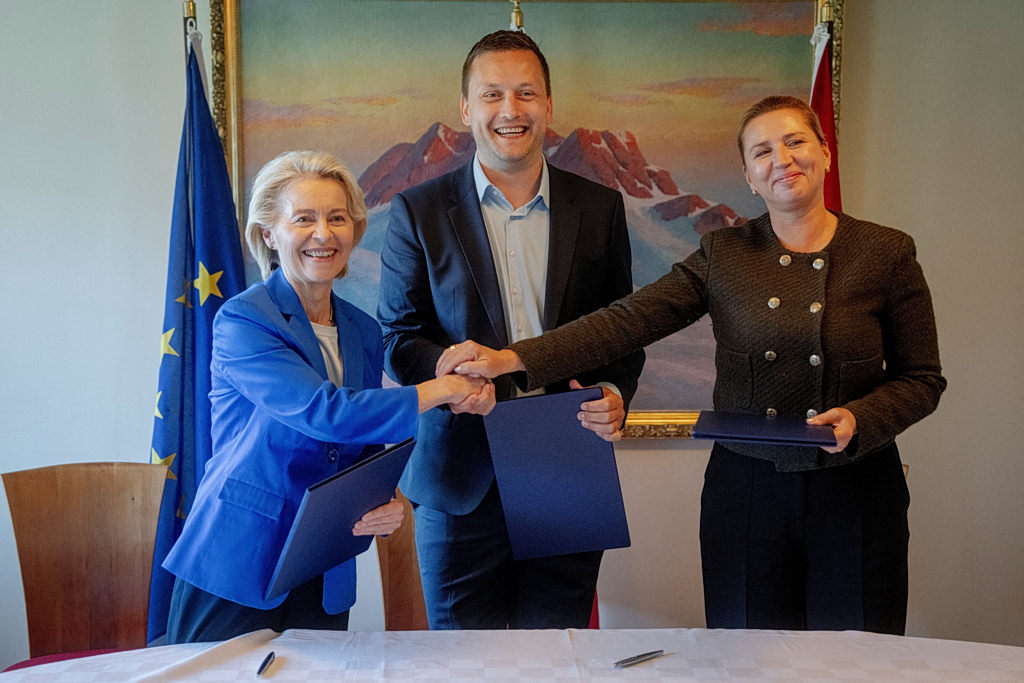
Danish Prime Minister Mette Frederiksen, President of the European Commission Ursula von der Leyen and Greenland’s Prime Minister Jens-Frederik Nielsen react on the day they sign a joint declaration in Nuuk, Greenland, September 7, 2026. Ritzau Scanpix/Mads Claus Rasmussen/via REUTERS ATTENTION EDITORS – THIS IMAGE WAS PROVIDED BY A THIRD PARTY. DENMARK OUT. NO COMMERCIAL OR EDITORIAL SALES IN DENMARK.
Trump on Monday posted on Truth Social an image of the U.S., Canada, Greenland, Iceland, Mexico and Caribbean islands all colored as an American flag.
Greenland, an autonomous territory within the Kingdom of Denmark, controls its own internal affairs. The island withdrew from the EU in 1985 following a referendum, but maintains extensive ties to the bloc through fisheries arrangements and development cooperation.
Speaking in its capital, Nuuk, alongside the Danish and Greenlandic prime ministers, von der Leyen said a joint declaration they signed showed that the Arctic island has chosen Europe.
“I think it reflects a clear choice expressed by Greenland to strengthen the ties with the European Union, in line with your values, your freedom and your interests,” von der Leyen said. The declaration also showed that Europe had made “the choice to be more present and to be more engaged in Greenland and in the Arctic,” she said.
The new EU investments include a project to boost satellites and improve internet access in remote areas of the sparsely populated island, and two mining projects to secure critical raw materials.
Even as the island has been seriously rattled by U.S. threats against its sovereignty, it has managed to use its uncomfortable moment in the spotlight to gain concessions from its friends.
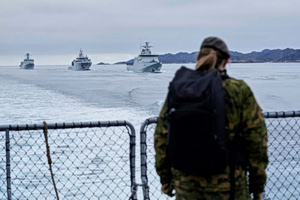
Denmark last year announced more than $6.5 billion in extra military spending to boost security in the Arctic and North Atlantic regions, including Greenland. Copenhagen also allocated an additional $250 million through 2029 to support infrastructure, healthcare and economic growth.
In addition to Monday’s announcement, the EU has proposed more than doubling the funding allocated for Greenland as part of its long-term budget, to €530 million from 2028-34.
Greenlandic politicians use the specter of U.S. involvement in the island to accelerate European investments in its mining projects as well.
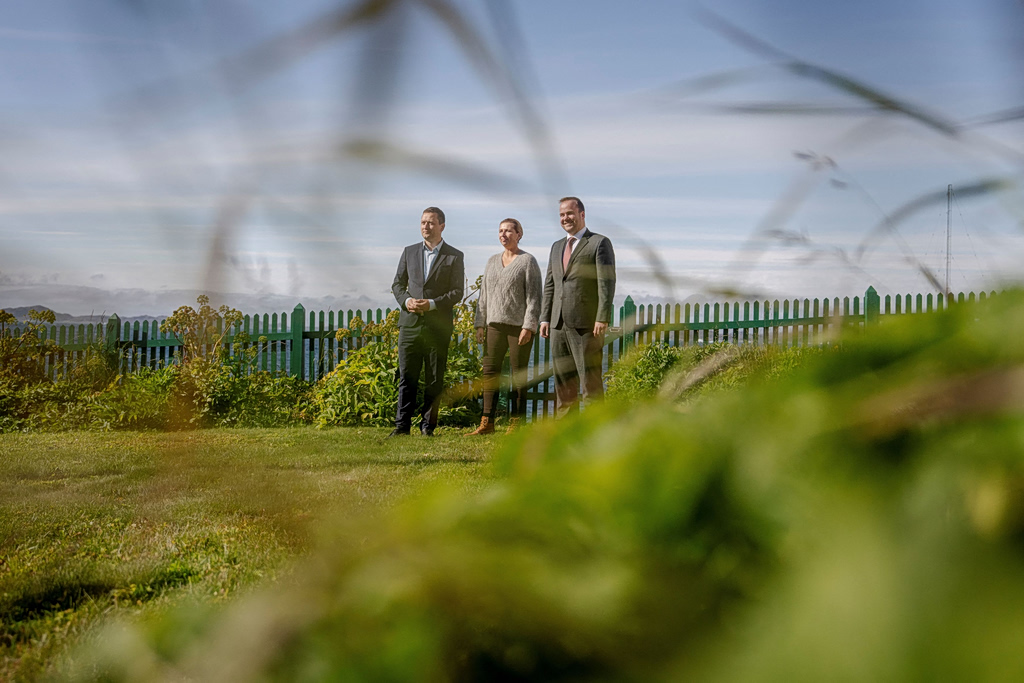
Danish Prime Minister Mette Frederiksen meets with Greenland’s Prime Minister Jens-Frederik Nielsen and Faroese Prime Minister Beinir Johannesen before the meeting of the Realm in Nuuk, Greenland September 7, 2026. Ritzau Scanpix/Mads Claus Rasmussen via REUTERS ATTENTION EDITORS – THIS IMAGE WAS PROVIDED BY A THIRD PARTY. DENMARK OUT. NO COMMERCIAL OR EDITORIAL SALES IN DENMARK.
“If you don’t make an offer fairly soon, others will,” Greenland’s foreign minister, Múte B. Egede , told members of the European Parliament last week. “We can feel that things are on the move.”
Increased European spending in Greenland exposes one thing that the U.S.—despite Trump’s threats and offers to buy the island—has yet to provide: cash.
American businessmen and prospectors, some linked to the Trump administration, have invested in projects to develop a rare-earth mine in southern Greenland, and to harness hydroelectric power to run an AI data center in a remote western corner of the island. Neither project is close to fruition, or to yielding any economic benefits to Greenlanders.
Texas-based Greenland Energy intends to spend about $60 million on exploring sites on the Jameson Land peninsula in eastern Greenland, alongside British mining company 80 Mile. In July, Greenland Energy towed a barge with an excavator and more than a dozen containers to the area, before the company was told by the Greenlandic government that it didn’t have permission to unload any equipment at all. Drilling has been postponed at least until late next year.
The company claims as much as 13 billion barrels of crude may lie beneath Jameson Land. The Geological Survey of Denmark and Greenland in 2022 estimated the area contained 2.3 billion barrels of undiscovered oil, adding that any estimate is uncertain.
The EU’s efforts to draw Greenland closer comes after Iceland, which is regarded as an Arctic state, last week rejected new talks to join the EU, dealing a blow to the bloc’s effort to position itself as a geopolitical counterweight to Trump’s high-pressure tactics.
Trump says the U.S. needs Greenland—which lies on the flight path for missiles fired from Russia toward North America—for national-security purposes , and has expressed interest in Greenland’s natural resources, including rare-earth minerals. He has repeatedly offered to buy the island, though without naming a price or offering the island concrete deals.
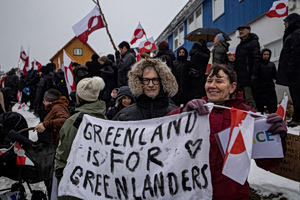
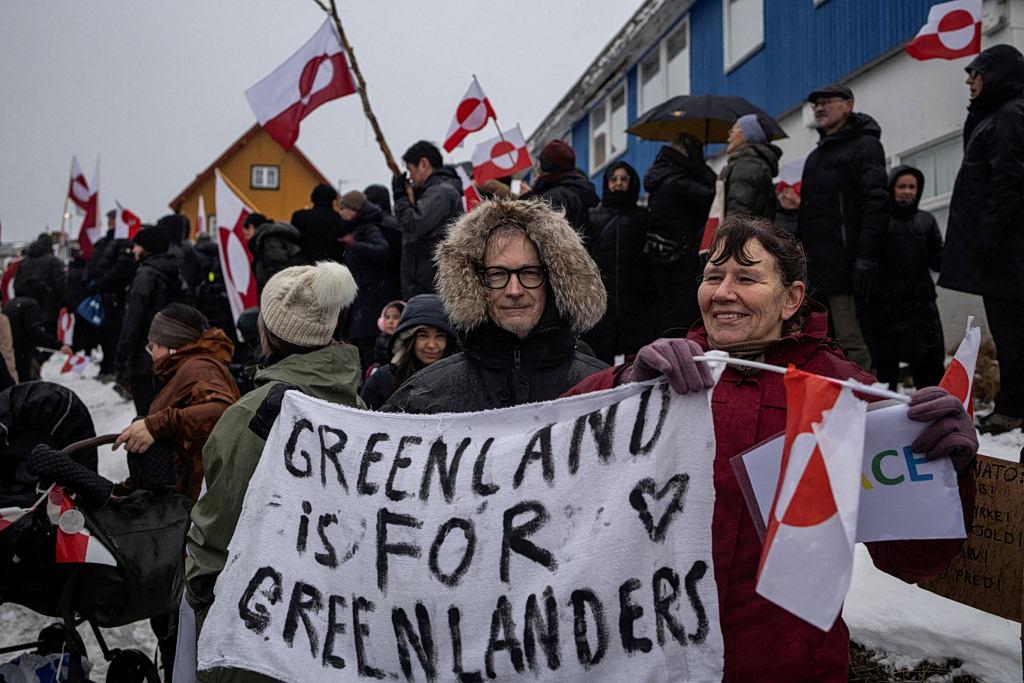
Trump’s approach to Greenland has been met with derision among locals. Most of them shunned the president’s handpicked envoy to the island, Louisiana Gov. Jeff Landry , when he visited Nuuk for the first time in May.
Trump’s threats have pushed Greenland’s government closer to Brussels.
“It has supported us morally, knowing that the EU is standing by us, and even more importantly, it has sent a strong message to the U.S. administration that interfering with Greenland also means interfering with the entire European Union,” Egede told the European Parliament last week.
Greenland’s economy is dependent on subsidies to sustain its population of roughly 56,000 people. Denmark supports Greenland’s economy with an annual block grant of approximately $620 million, and finances its police, prisons and defense. In total, subsidies from Denmark and the EU constitute nearly half of Greenland’s budget.
One American businessman has spotted a potential commercial opening: sealskins. Investor Larry Swets said he last month delivered a 36-page proposal to the White House, through Landry, calling on the president to lift the U.S. ban on seal products as a way to improve relations with Greenlanders, through what he calls sealskin diplomacy.
Greenlanders and other Inuit peoples have hunted seals for their meat and skin for centuries, but international bans have collapsed sealskin markets. Swets’s proposal, which The Wall Street Journal has seen, seeks to generate income for some of Greenland’s remote communities and to serve as a “confidence-building measure.”
Swets said he came up with the idea after a business conference in Nuuk earlier this year, in which Greenlanders kept bringing up the challenge of exporting seal products.
“Restoring access to the U.S. market would support Greenlandic hunters and communities, while also sending a powerful signal that America respects Greenlanders’ culture, livelihoods and right to make these choices for themselves,” Swets said.
Greenland has repeatedly asked the EU to lift its ban on seal products, in effect since 2009, saying it harms indigenous people in the Arctic.
Write to Sune Engel Rasmussen at sune.rasmussen@wsj.com