
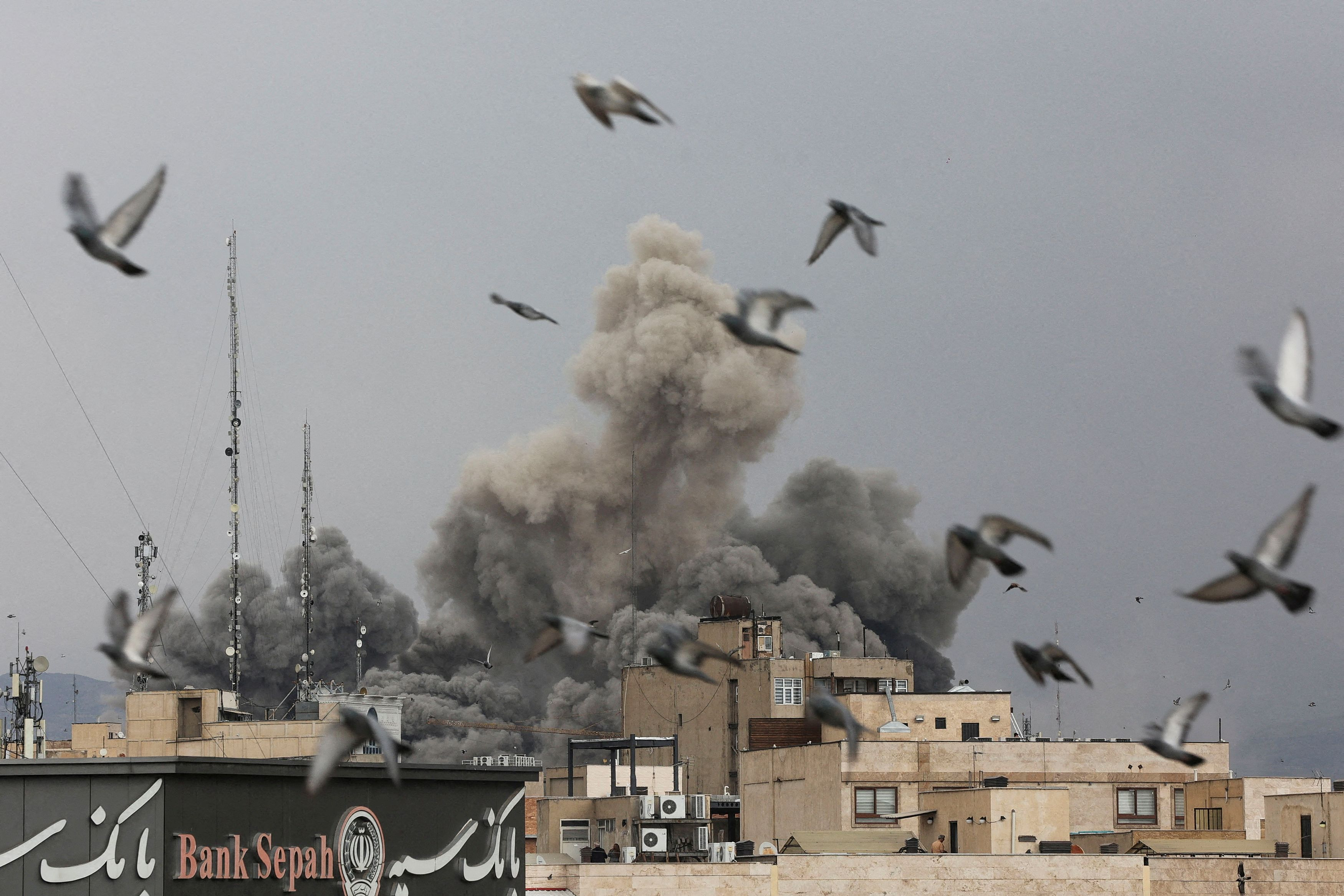
Persian Gulf nations targeted by Iran have, so far, managed to limit the damage by deploying sophisticated U.S.-made air defenses against the hundreds of drones and missiles that have rained on their cities.
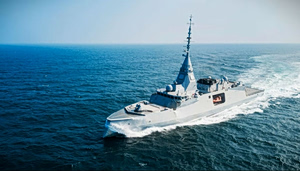
With costly interceptors and radar, all integrated with the U.S. military, the oil-rich Gulf Arab states have fielded some of the most advanced air defenses in the world, despite their small populations and militaries.
A crucial variable in this war , however, is whether these monarchies start running out of interceptors before the Iranian regime runs out of projectiles.
At current burn rates, it could be very soon.
“The intensity of interceptor usage that we have seen over the last couple of days can’t be maintained for more than another week—probably a couple of days at most, and then they will feel the pain of interceptor shortage,” said Fabian Hoffmann , a missile expert at the University of Oslo.
The other important part of this equation is the speed with which Israel and the U.S., which began the air campaign against Iran on Saturday morning, manage to hunt down and destroy Iran’s missile launchers and missile and drone stocks.
The United Arab Emirates alone said that by Monday evening it has been targeted by 174 Iranian ballistic missiles, eight cruise missiles and 689 drones in three days, with no missiles and 44 drones hitting the country.
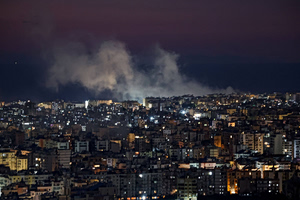
Bahrain, Kuwait and Qatar also came under heavy barrages, with Bahrain reporting 70 incoming ballistic missiles. On Monday, the U.S. Embassy in Kuwait and Qatar’s key power station and main liquefied-natural-gas plant were struck by Iranian drones, among other targets.
It usually takes two or even three interceptors, such as missiles for the Patriot or Thaad systems, to shoot down one ballistic missile. Western officials have estimated that Iran possessed well over 2,000 missiles capable of reaching the Gulf nations at the outset of this round of fighting. While the exact number of interceptors deployed in the region is classified, Hoffmann calculated from open sources that the U.A.E. has ordered fewer than 1,000. Kuwait has ordered about 500 and Bahrain fewer than 100.
The U.A.E. dismissed concerns about its interceptor availability. The country’s foreign ministry said on Tuesday that the Gulf nation “possesses diverse, integrated, and multi-layered air defense systems capable of countering a full spectrum of aerial threats with high efficiency.”
The U.A.E. also “maintains a robust strategic stockpile of munitions, ensuring sustained interception and response capabilities over extended periods, while preserving full operational readiness to safeguard national security,” it added.
Qatar, in a similar statement, said that its inventory of Patriot interceptors has not been depleted and remains well-stocked.
The Gulf states are also defended by interceptors fired by the U.S. military, which has rushed more hardware into the Middle East. But the Pentagon, too, is running low on its stockpile of Patriot missiles, in part because Ukrainian air defenses have consumed a large part of the Patriots owned by Western nations while repelling Russian attacks in the past four years of war. Lockheed Martin manufactured 620 PAC-3 MSE Patriot interceptors last year, and plans to boost its production to 2,000 annually over seven years. Each missile costs millions of dollars.
Unlike Ukraine, which has long been constrained by the shortage of missile interceptors, Gulf nations have also been using their Patriots to down Iran’s Shahed drones, which cost only a fraction of the cost of the missile. That approach isn’t sustainable for much longer, military analysts warn.
“We’re going to see a change of tactics. We’re going to have a much more judicious use of those incredibly high-demand interceptors that are running low, and using them only against the highest-value targets, the ballistic missiles,” said Becca Wasser , a fellow at the Center for a New American Security and a former staffer of the 2022 U.S. national defense strategy commission. “That shift means accepting risk and essentially allowing some of these drones to get through, which is going to have a devastating effect on the relative calm and stability that these Gulf states have touted for years, as they’ve been trying to attract investment, tourism and expats.”
Israel was confronted with a similar challenge during the 12-day war with Iran last summer, and had to ration missile interceptors toward the final days of the conflict. That meant allowing some civilian areas to be hit in order to preserve crucial strategic installations.
Gulf states face a more difficult predicament. Even last year, Iran had a limited number of medium-range ballistic missiles that could reach all the way to Israel, some 600 miles away, and much of that stock was either used up or destroyed. Its arsenal of short-range ballistic missiles was much larger to begin with—and remained mostly intact after the 12-day war.
More important, Gulf states are much more vulnerable than Israel to Iran’s trademark weapon: the Shahed drones that have become the munition of choice for Russia’s war against Ukraine. Drones flying to Israel from Iran take several hours and are therefore easier to detect and intercept. By contrast, the flight time from Iran to some Gulf targets can be counted in minutes.
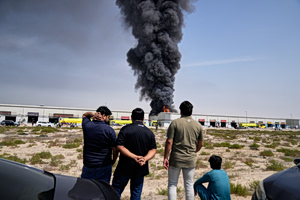
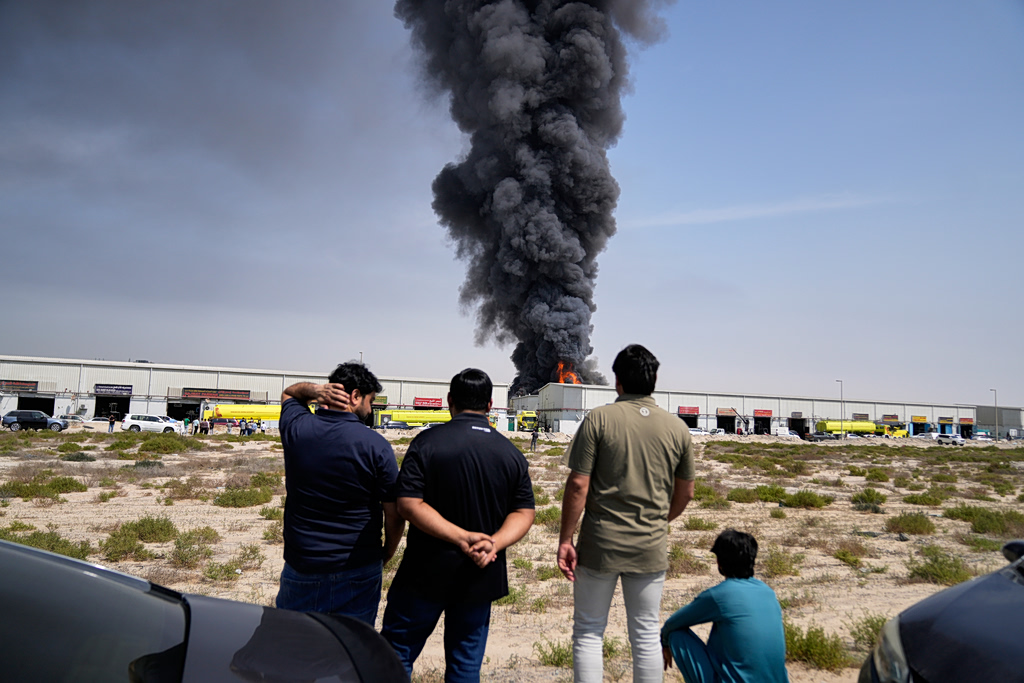
It is these drones that have managed to strike hotels, airports and the Jebel Ali port in the U.A.E., as well as the Ras Tanoura oil refinery in Saudi Arabia and the Ras Laffan liquefied-natural-gas plant in Qatar.
Unlike missile launchers, which because of their size and signature can be hunted down by U.S. and Israeli aircraft, Shaheds are easily concealed. While their warheads are much smaller than those of missiles, the war between Russia and Ukraine has shown that drones can still inflict catastrophic damage on flammable energy installations such as refineries, pumping stations and oil terminals.
“The energy facilities are incredibly hard to defend against drones. The Ukrainians have adapted after some time, but by the time the Saudis, the Emiratis, the Qataris and the Kuwaitis adapt, the damage will be done if the Iranians go down that road,” said Israeli security analyst Michael Horowitz . “In terms of major geostrategic consequences, the drones are actually much more impactful than missiles. And the Iranians can keep going with drones for a very long time.”
While hailing the successes of U.S. and Gulf air defenses in recent days, Gen. Dan Caine , chairman of the Joint Chiefs of Staff, acknowledged on Monday that “the threat of one-way attack [drones] has remained persistent,” adding that “our systems have proven effective in countering these platforms, engaging targets rapidly.”
Unlike Ukraine, Gulf nations and the U.S. haven’t developed a layered air-defense system with dedicated antidrone teams, armed with low-cost weapons such as machine guns, that are positioned to protect important targets, said Dara Massicot , a senior fellow at the Carnegie Endowment for International Peace and a former senior analyst of Russian military capabilities at the Defense Department.
“It’s painful to see the lack of these point defenses at our military installations, particularly because we do have partners in Ukraine who have thought through these things and have implemented solutions,” she said. “We are not institutionalizing the lessons learned from the war in Ukraine across the force. The war in Ukraine is not just a land war in Europe, there is a revolution in the way that war is being fought that needs to be considered by the Air Force and the Navy as well.”
Write to Yaroslav Trofimov at yaroslav.trofimov@wsj.com