
 Μake us preferred on Google
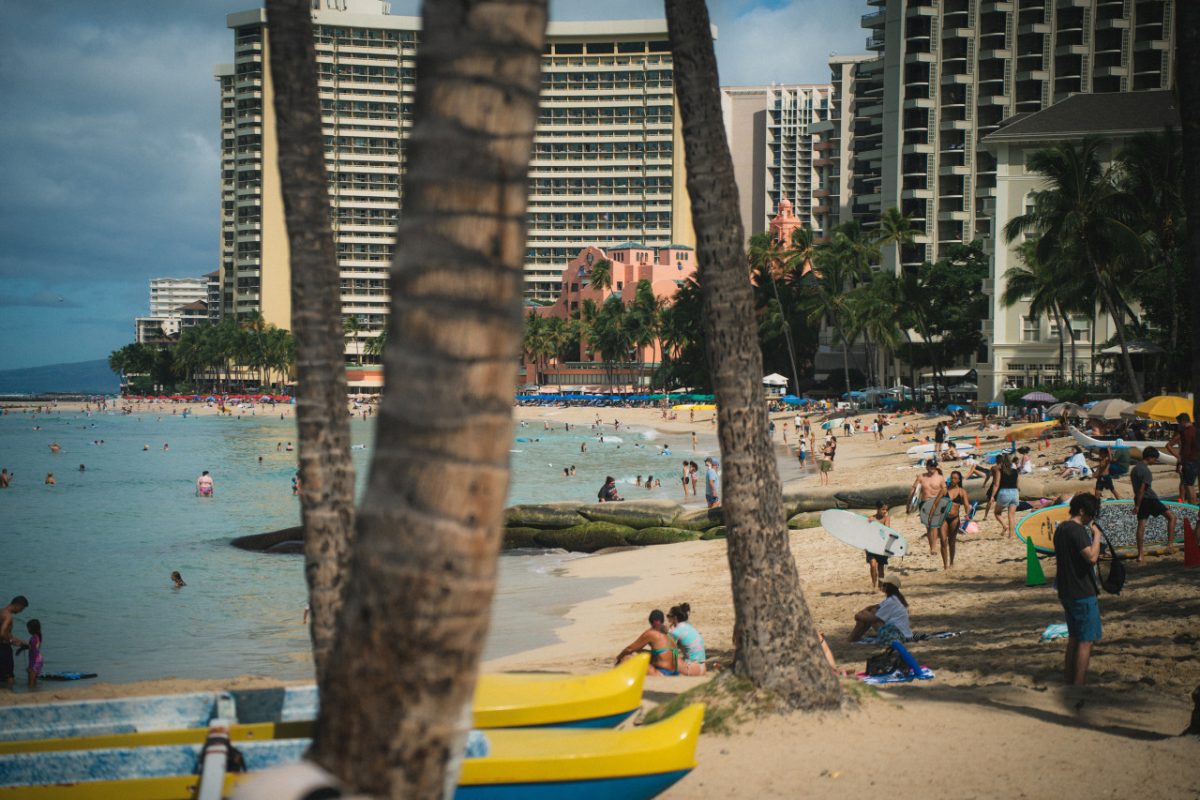
 KAILUA, Hawaii—The seaside streets bear the unmistakable look of a Hawaiian beach town, an oasis of palm trees, swimsuits and surfboards.
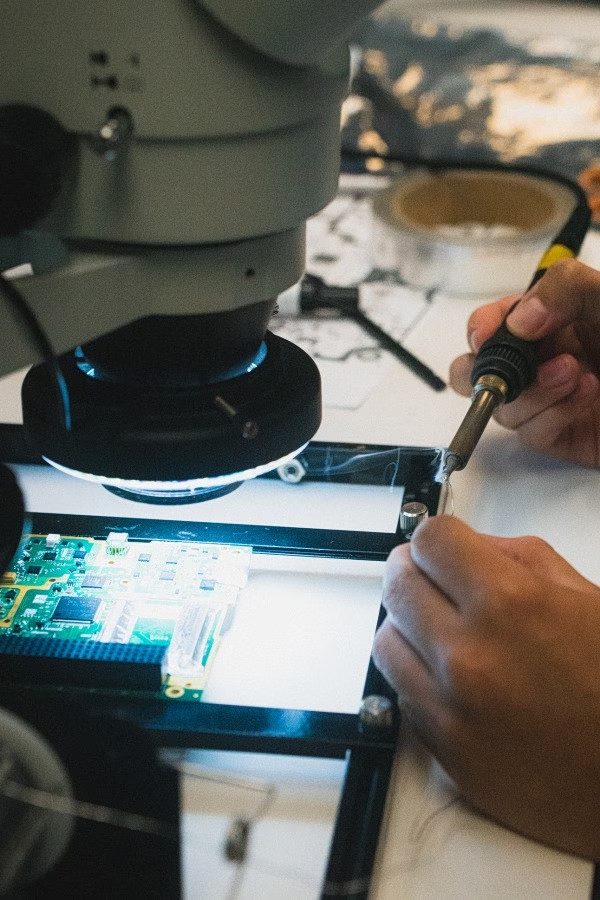
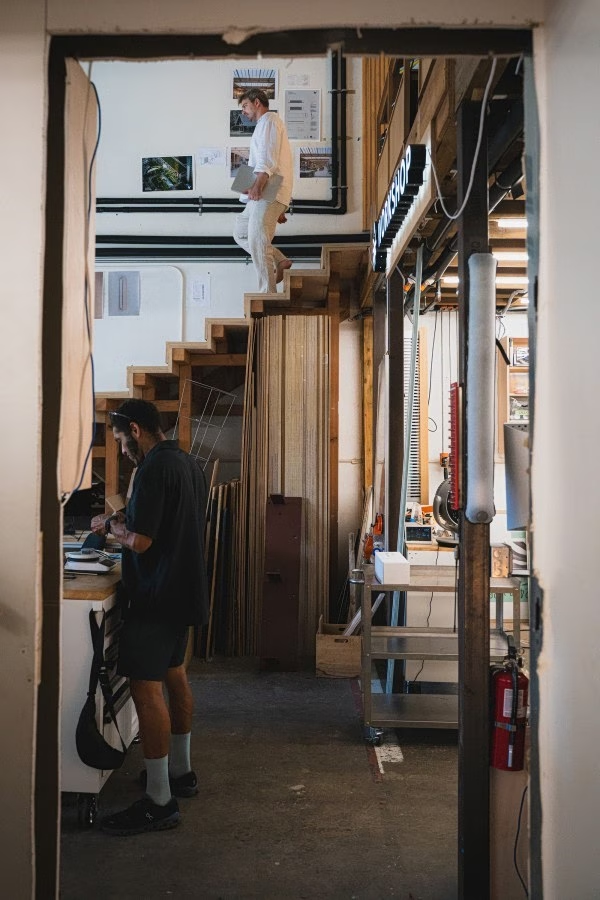
Yet tucked behind a café where baristas make $11 lattes, young workers write code, design machinery and operate an industrial laser that can cut through a car door—all in service of the Airform, a heating and cooling system dreamed up by the engineering startup Normal Corp.
Elsewhere on the island of Oahu, students at the University of Hawaii make equipment bound for the moon. In a yurt on a hill overlooking the surf on the North Shore, young scientists create parts on 3-D printers for wastewater-treatment machines. In a Honolulu basement, engineers make textiles out of chicken feathers.
These men and women belong to a band of whip-smart engineers building a manufacturing and technology industry that officials hope will rescue Hawaii from a sagging tourism economy, depressed wages and an exodus of young residents to the mainland.
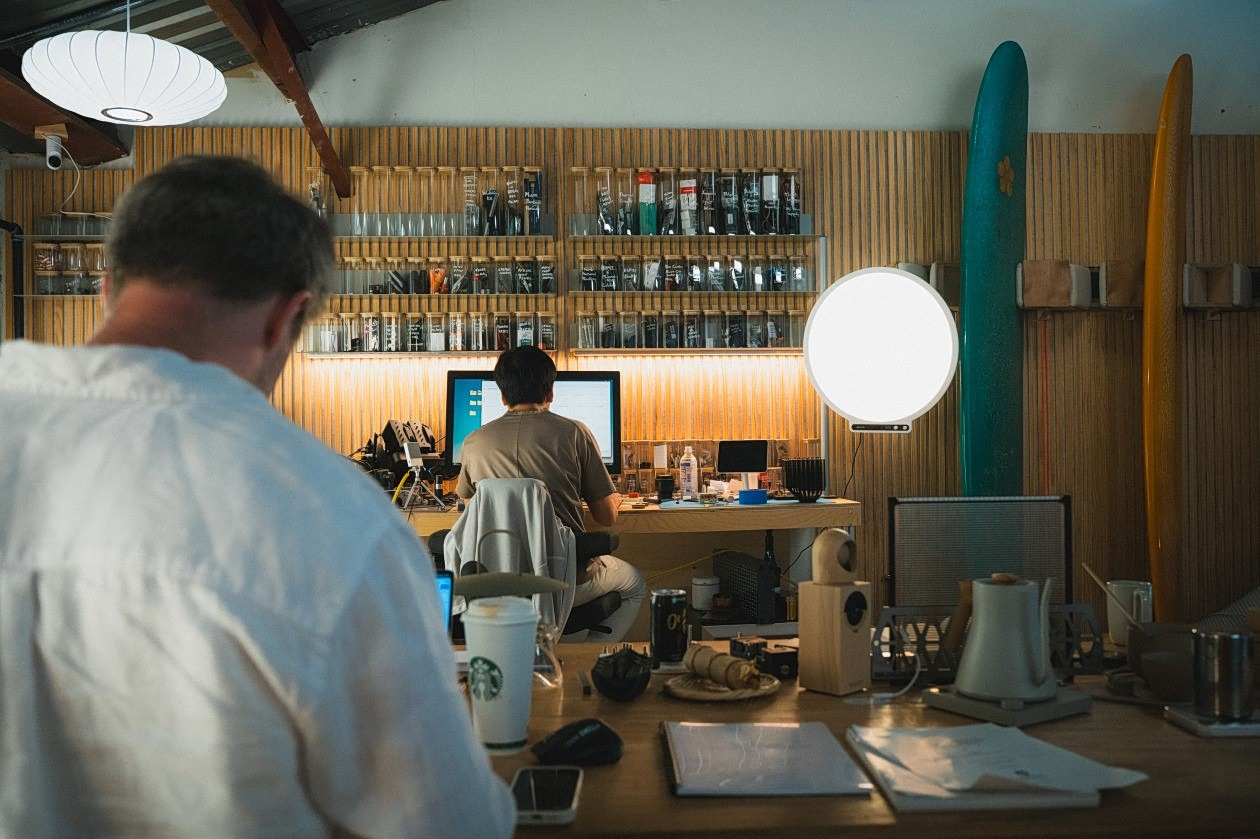
Work under way at Normal, which builds heating, ventilation and air-conditioning machinery. RICKY-THOMAS SERIKAWA FOR WSJ
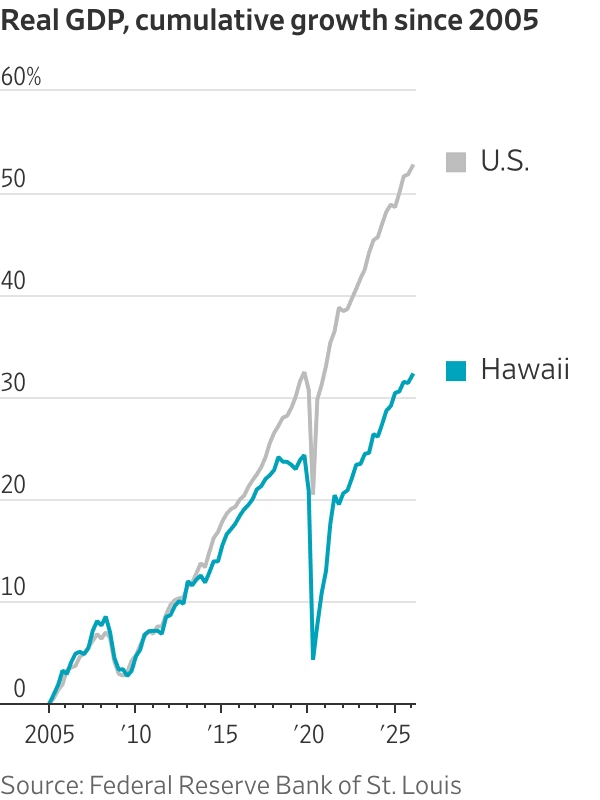
The flow of inflation-adjusted tourism dollars into Hawaii’s economy peaked decades ago. Hawaii, once a premier destination for American and international visitors, has lost traffic to newly popular vacation spots. The number of visitors hasn’t rebounded to prepandemic levels, and no industry has replaced tourism, much less with higher-paying work.
Overall arrivals to the state in June were down 9% compared with the same month in 2019, diminished by a roughly 50% drop in international tourism during that period. Food and housing prices have climbed while incomes , adjusted for the cost of living, are among the lowest in the U.S. Only California has a higher median home price.
Economists say Hawaii needs to shift away from the service-based industry that propelled its explosive growth in the late 20th century. “If we don’t fix the problem, we’re going to face many more years of anemic growth and people voting with their feet,” said Carl Bonham, executive director of the University of Hawaii’s economic-research division.
Hawaii has reinvented its economy before. In the 19th and early 20th centuries, the islands depended first on sugar plantations and then the pineapple industry. Waikiki was mostly duck ponds and swampland. Local excitement was limited to “the activity of the insect tribes and the occasional fall of a coconut,” one early visitor wrote.
In 1936, Pan American Airways flew passengers from San Francisco to Honolulu for $356, the equivalent of more than $8,000 in today’s dollars.
After Hawaii became a state in 1959, Pan American began flying newer, larger aircraft that eventually cut airfares in half, putting Hawaii within reach of America’s middle class. In a decade, the number of visitors grew sevenfold. During the 1980s, the Japanese economy swelled, drawing legions of new visitors.
But by 2000, the volume of inflation-adjusted tourism dollars in Hawaii had peaked. By 2024, Hawaii’s economy remained highly dependent on a weakened tourism industry, according to a state report issued last fall.
The state needs only to cultivate a few successful enterprises to jump-start the economy, said Zack Hernandez, who left for college on the mainland and returned to run a talent-development startup on Oahu.
“If you bring 30 or 50 jobs with a $100 billion company, you create 30 or 50 millionaires” who can then invest in more young startups, he said. One possibility is expanding the defense-tech sector, he said, taking advantage of Hawaii’s strategic position between the U.S. and Asia.
Glenn Wakai, a state senator, said new industries would help keep more residents on the islands where they grew up. “The people who are leaving Hawaii are the very people we need to stay to reinvent the economy,” he said. “As those people exit Hawaii, who’s going to be left?”
Greener pastures
Nearly every choice 18-year-old Ariana Thomas made while growing up on Oahu was geared to escape. She worked to improve her grades to apply for colleges on the mainland. As a backup plan, Thomas sought top performances on her volleyball and cross-country teams, thinking she might get recruited.
“Deep down I knew I wanted to be somewhere else,” she said. “Hawaii’s never been a tech space.” Thomas picked the University of Massachusetts Amherst, sight unseen. She is a computer science major pursuing a career in data science and machine learning.
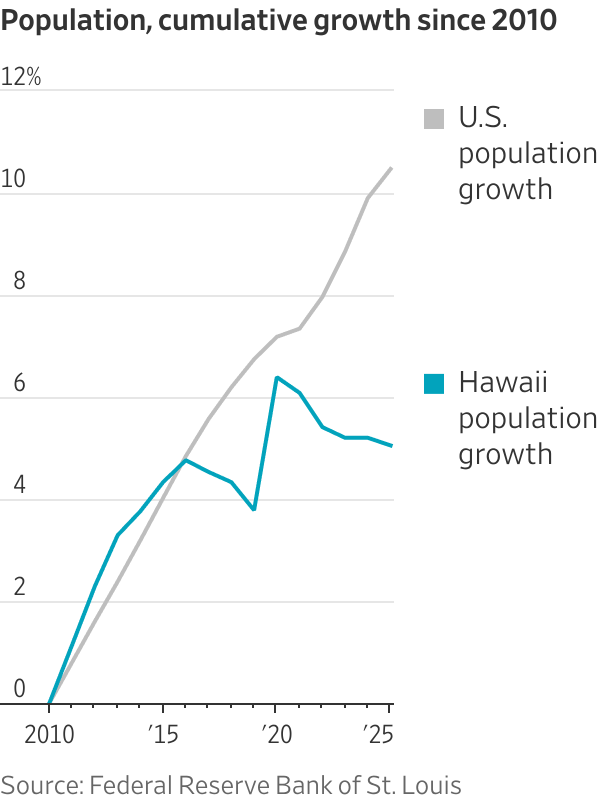
Hawaii lost a greater share of its population last year than any state except Vermont. Young adults make up roughly a fifth of Hawaii’s population but account for more than 40% of the residents who leave. More than half of Hawaii-born college graduates now live on the mainland.
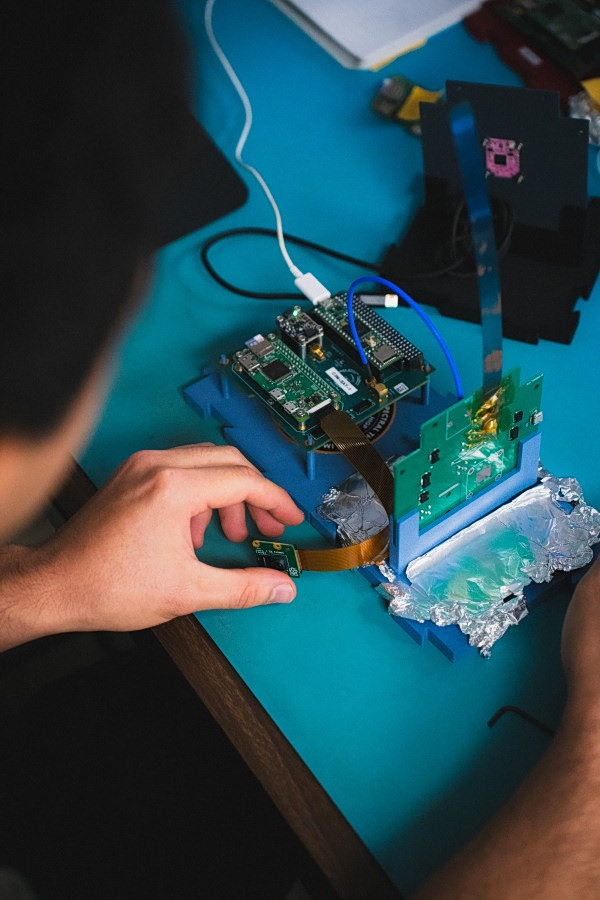
In a nondescript tower in the foothills of the Koolau Mountains, a crew of University of Hawaii students, staff and faculty hope a local aerospace industry might change that. The students crouch over monitors, assemble flight hardware, run orbital simulations, wire power systems and design satellite-tracking stations.
“Our names will be going around the moon,” said Matthew Madayag, who found the Hawaii Space Flight Laboratory from a flier posted in a campus elevator. “A high-school version of me would not believe what I’m doing.”
As a practical matter, nearly all these students will likely move to the mainland unless things change, said Miguel Nunes, an aerospace engineer recruited from Portugal to join the project. The best jobs are at SpaceX and other mainland-based companies, he said.
State officials have been in talks with Fenix Space, an orbital launch company based in California that has expressed interest in establishing a launch site on the island. That would be a significant step to building an aerospace industry, according to Nunes. “We miss this opportunity, and in two years it’s going to be too late,” he said.
RICKY-THOMAS SERIKAWA FOR WSJ
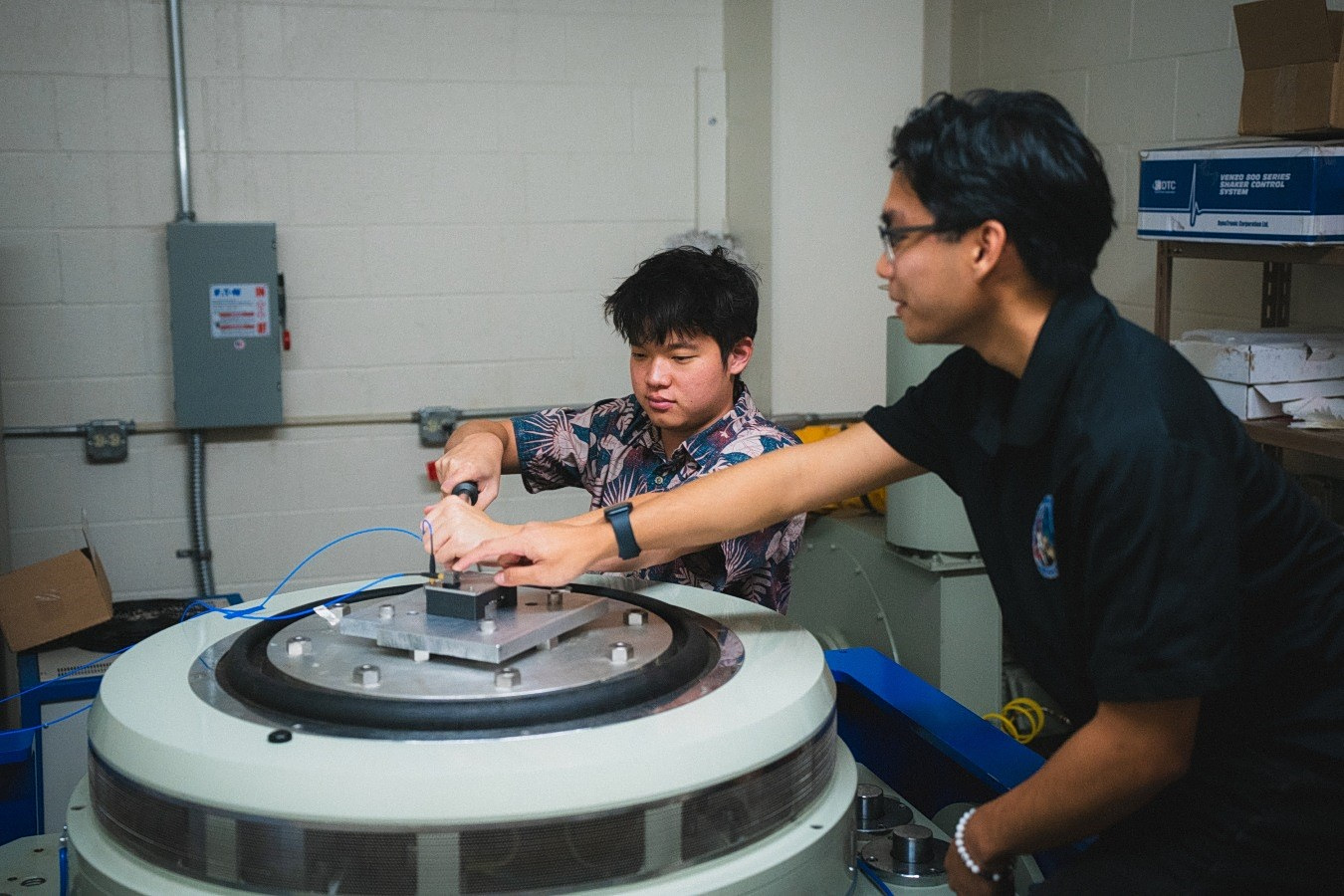
Workers at the University of Hawaii’s Space Flight Laboratory. RICKY-THOMAS SERIKAWA FOR WSJ
RICKY-THOMAS SERIKAWA FOR WSJ
If Hawaii’s dreams could be pinned on a single person, it might be Trung Lam. The 45-year-old grew up in Hawaii to Vietnamese immigrant parents who ran a Honolulu sandwich shop. Lam helped manage the business when he returned to the island after earning a mechanical engineering degree at the University of California, Davis.
While working at the family business, Lam joined a startup that built an app to help people at shopping malls find stores. During the pandemic, he stepped away from the family business to help his children with remote learning. Soon after, he helped start an organization to support local tech workers.
Lam applied to head the Hawaii Technology Development Corporation, a state agency struggling to diversify the local economy. He met with venture capitalists, executives and lawmakers before aiming his focus on ocean- and space-based industries, convinced that Hawaii could attract founders and investors with its locale—close to the equator for easier space launches and surrounded by the Pacific Ocean.
The corporation is signing a lease worth more than $1 million for manufacturing space at the Kapaa Industrial Park, a maze of steel buildings on the outskirts of Kailua. The state intends to sublet space to startups that might not have the wherewithal to commit to long-term leases.
The project is a test of whether state intervention can stimulate new manufacturing. In meetings of the corporation’s board, agency documents show, board members questioned the state’s acting as a landlord and the risk of losing public funds.
One past effort failed. In 2001, the state began offering 100% tax credits to investors in technology businesses. An audit after the program ended a decade later found the state had afforded nearly $1 billion in tax credits with little to show for it.
Keizo Gates, 41, knows firsthand the challenge of turning ideas into money. He runs an industrial canoe business that he started with high school friends who also grew up in Hawaii. Gates attended Rensselaer Polytechnic Institute in Troy, N.Y., before starting Kamanu Composites, which employs aerospace-grade machinery. The business is in debt, Gates said, and he isn’t sure it will survive the year.
“We wanted to prove that you can do something different,” he said, pacing through his facility in the Kapaa Industrial Park. “And I feel like we failed.”
Seaworthy
Economists such as Steven Bond-Smith are leading the call to diversify Hawaii’s economy with businesses that take advantage of Hawaii’s geographic strengths. Bond-Smith has studied how the state can create higher-paying jobs that retain local talent and attract skilled workers from the mainland. “If your wage doesn’t keep up with the rest of the United States,” he said, “then the opportunity cost of staying in Hawaii becomes higher and higher.”
One option is Hawaii’s small but promising ocean-tech industry, which includes firms that repair cargo ships, make sensors to detect floods, breed commercial shellfish or make livestock supplements from seaweed.
Patrick Sullivan, chief executive of Oceanit, an industrial research and engineering company, has overseen plenty of marine-technology projects. His business, based in Honolulu, is one of the state’s largest tech companies. On a recent Friday, scientists cultivated living tissue, engineers tested new flavors for an 80-gram protein bar for the U.S. military and interns modeled coastal erosion on Maui.
Sullivan’s company has trained 800 interns over the years and most leave for the mainland, he said—a sign Hawaii needs to change. But he is skeptical the state can establish an ocean-tech industry on its own. “People think we’re in the middle of the sea, so let’s focus on seawater,” he said. But the state shouldn’t try to predict which industries or businesses will succeed, he said.
Ashten Akemoto, 23, studied computer engineering and would have been one of the college students leaving Hawaii but for a meeting with a tech entrepreneur. He had tickets for a flight to Japan and a new job waiting there when he was introduced by Lam to Josh Leong, a 40-year-old former Google employee and an alumnus of the Silicon Valley startup incubator Y Combinator.
They met at a café in Waikiki where Leong, still wet from surfing, persuaded Akemoto to stay in Hawaii. Together, they launched Normal and recruited recent college graduates and experienced engineers to build energy-efficient heating, ventilation and air-conditioning machinery. The business has grown to roughly 20 employees.
To set up manufacturing space on a lot zoned for retail, Leong and his wife opened Ando Café on the premises. Akemoto recruited some of his NASA friends. “It was surprisingly easy to convince a bunch of 20-year-old tech guys to live on my couch and build robots with me in Hawaii,” he said.
Some state leaders believe entrepreneurs like Leong and Akemoto are the missing pieces of the economy’s diversification puzzle: local startup founders who team up with so-called Silicon Valley refugees lured by the weather and glamour of living in Hawaii, and who know how to tap venture capital.
On a recent summer day, Leong stepped into a Volkswagen microbus that he had retrofitted with Tesla batteries, a side project that expanded his interests from software to hardware engineering. “This is the fastest VW bus on the island,” he said.
Leong pulled out of Normal’s Kailua headquarters, where a flock of college-age kids were inside manufacturing and testing circuit boards. “It feels like we’re moving on a different timeline than the rest of Hawaii,” he said behind the wheel.
RICKY-THOMAS SERIKAWA FOR WSJ
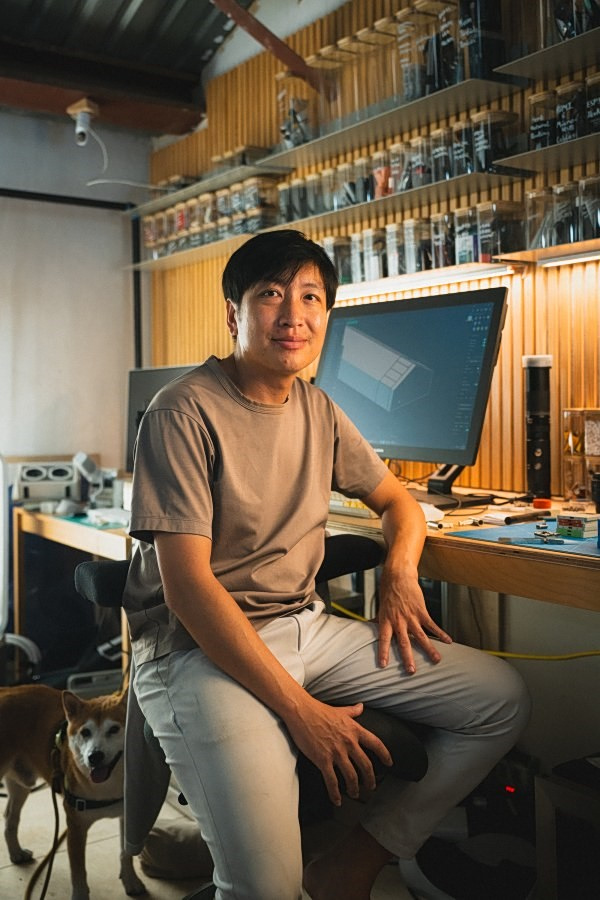
Josh Leong, at Normal headquarters in Kailua, Hawaii, retrofitted his Volkswagen microbus to run on Tesla batteries. RICKY-THOMAS SERIKAWA FOR WSJ
He turned onto Kapaa Quarry Road, en route to the Kapaa Industrial Park, where Normal has a second facility. He followed a winding road under low-hanging trees until the industrial neighborhood of Kailua came into view. To one side were the warehouses of the industrial park where Lam plans to foster a manufacturing oasis.
More traditional island businesses there—chocolate making, boat repair, welding and plumbing—operate alongside Leong’s HVAC operations, the struggling canoe builder and incoming ocean-tech startups. If all goes according to plan, this gritty pocket of Kailua will soon be roaring with new machinery.
“Hawaii needs one unicorn. We need one crazy success,” said Akemoto, who left Normal last week to launch his own robotics startup. “You can change a place, you can change perception, you can change everything with one crazy success.”
Corrections & Amplifications: Zack Hernandez runs a startup on Oahu. An earlier version of this article incorrectly said his first name was Zach. (Corrected on Aug. 20)