NATO airspace in Europe is now an active front line.
Almost every week this summer brought new reports of drone incursions over the alliance’s eastern frontier and North Atlantic Treaty Organization jets mobilized to shoot them down.
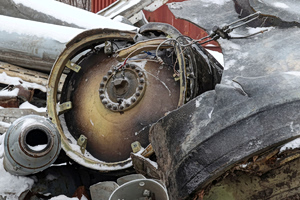
In total, 16 NATO countries have reported airspace violations by drones—or found remnants of drones—in their territory over the past two years.
The pace and proportion of these attacks, which NATO members say fall below the threshold for a collective military response, has increased in recent months.
Germany blamed Russia for explosive drones found this August at Leipzig airport, a supply line for Ukraine. The same month, NATO member Romania scrambled jets to destroy a naval drone sailing close to its gas platform in the Black Sea. The Kremlin denies involvement in the spate of gray-zone attacks.
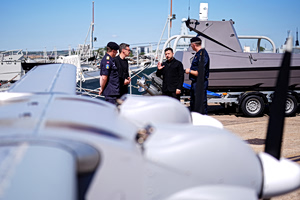
NATO is racing to adopt new technologies that can spot drones from afar and destroy them without wasting expensive weaponry. Alliance members are also trying to raise the cost for Russia of such attacks by increasing their support for Ukraine.
“We do not consider ourselves at war, but we are the daily target of hybrid warfare,” German Interior Minister Alexander Dobrindt said this month.
Data from Acled, an independent organization that specializes in tracking conflicts around the world, show a proliferation in incursions in Europe in the past year as Russia has stalled on the battlefield in Ukraine.

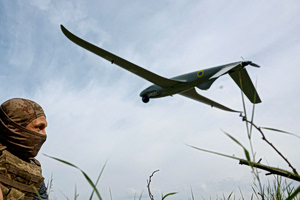
Determining where the drones come from, their type and the intention of their operators is difficult. Analysts say that photos and witnesses describe a mix of fixed-wing surveillance craft and quadcopters—including, in one case, a larger fixed-wing “mother ship” launching smaller drones.
Russia’s Merlin-VR, which is suited to the prolonged monitoring of infrastructure, is likely involved in gray zone combat, according to the International Institute for Strategic Studies, an independent think tank.
Drones that take off and land vertically can be launched from ships with minimal deck space, potentially making them suitable for covert operations from Russia’s shadow fleet, IISS says.
Two types of drones known to have been involved are the one-way attack Geran-2 (which the Romanian government said struck a high-rise building in the town of Galați in May) and the reconnaissance Gerbera (which the Polish military identified in September 2025 after a nighttime swarm of Russian drones over Poland).
Europe’s “drone shield” is a proposed multilayered defense network of sensors, electronic warfare systems and interceptor drones designed to protect the European Union’s eastern border from aerial threats. The drone wall , as it is also known, is expected to be fully operational by the end of 2027, with basic radar and infrastructure deployed along the eastern borders by the end of this year, according to the EU parliament.
Until then, jet fighters remain the main high-speed response to drones that enter European airspace.
The F-16 and F-35 are NATO’s main fighter aircraft deployed to intercept hostile drones. Eurofighter Typhoons have also been operating in antidrone missions.
Fighter pilots typically fire guided rockets or the aircraft’s cannon to shoot down drones. However, air-to-air missiles are an expensive way to take out low-cost drones. Belgium is equipping its F-16s with specialized Thales rocket pods , giving the aircraft a cheaper and more effective option for countering large numbers of drones.
Write to Roque Ruiz at roque.ruizgonzalez@wsj.com , Daniel Kiss at daniel.kiss@wsj.com and Emma Brown at Emma.Brown@wsj.com