
 Μake us preferred on Google
At the start of the year, Russian troops began infiltrating deep behind Ukrainian lines several miles and a river away from their own positions.
They hadn’t crossed through minefields or through treelines stalked by drones. They had gone under them.
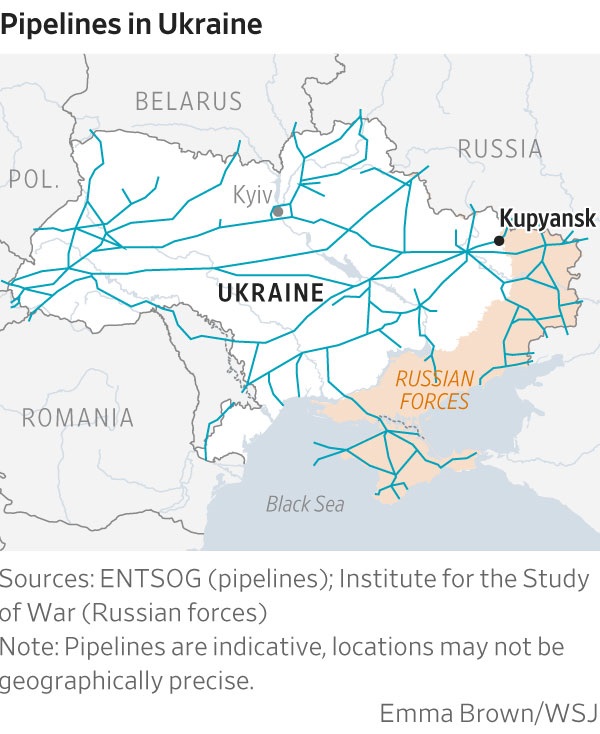
It wasn’t the first time Russian soldiers had used hundreds of miles of Soviet-era gas pipelines to crawl behind Ukrainian positions to cut their way through to the surface and stage surprise attacks. But near the city of Kupyansk, Ukraine is now fighting back underground, leading to pitched battles in the dark to stem the Russians’ subterranean advance.
Throughout history, armies have used tunnels to hide, attack enemy positions and undermine fortifications. Underground warfare is now making a comeback, from Gaza to Iran and Ukraine.
On the battlefields of Ukraine, soldiers are being forced underground because drones make movement above so dangerous. The extent of what’s happening has caught many by surprise.
“We didn’t understand the scale of the issue and we didn’t realize the number of enemy personnel involved,” said Abbat, the call sign of the deputy brigade commander of Ukraine’s 13th Khartiia Brigade.
The brigade has led the Ukrainian response in an operation called Veles, after the Slavic god of the underworld. Soldiers cram into tunnels with a diameter of around 4 feet, sleeping in bunkers that are cut through the side of these steel tunnels, Ukrainian troops say. Fighting, mainly with heavy machine guns and with soldiers wearing gas masks, is almost single file. The smell of gas and corpses is so strong, uniforms have to be washed in vinegar several times to get rid of it.
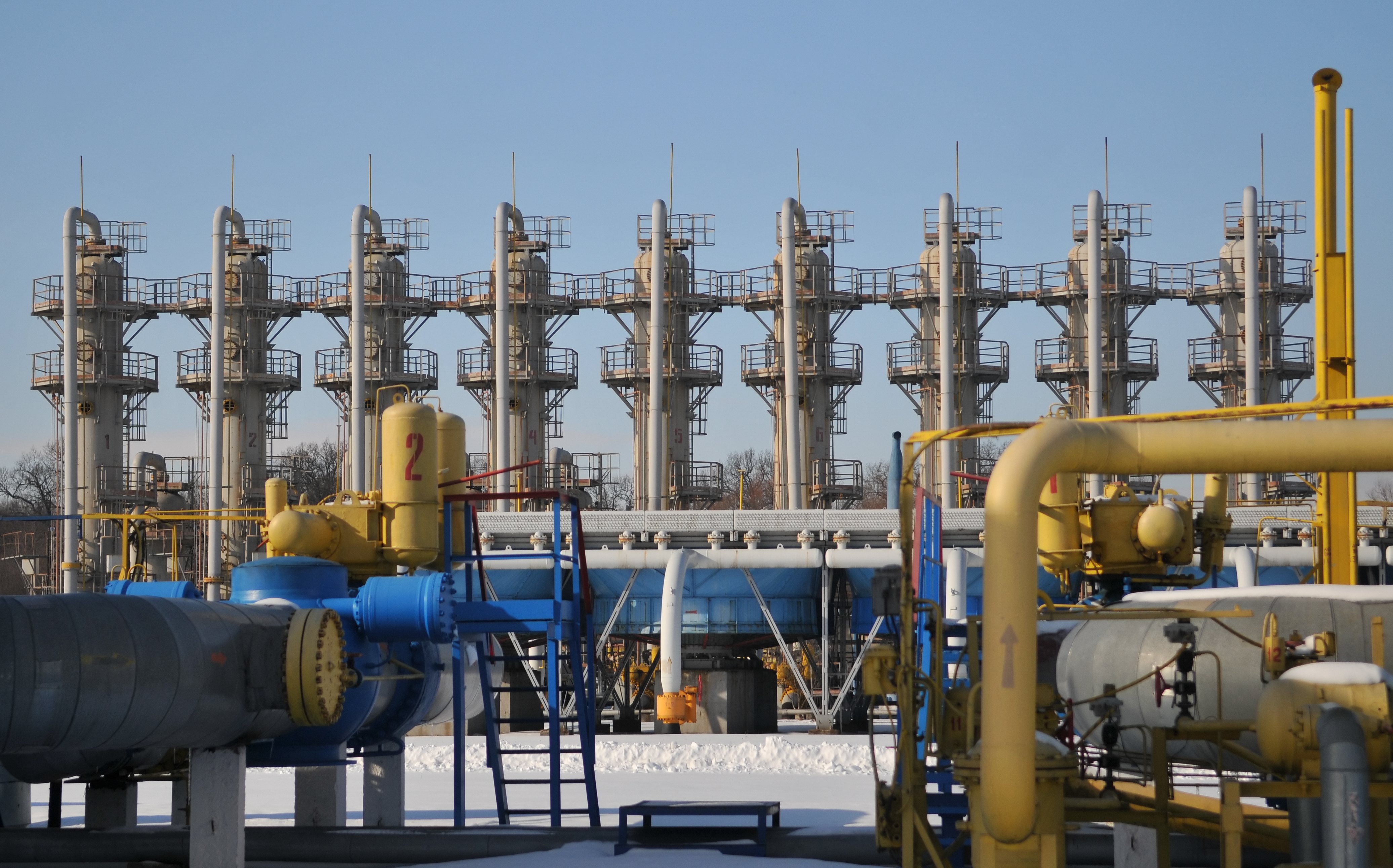
Every country has a network of underground pipes, whether they are sewers or gas pipes. Ukraine, though, was the transit point for the vast network that fed Central and Western Europe with Russian energy. Ukrnafta, Ukraine’s energy supplier, said it operates 2,000 miles of oil and 1,900 miles of gas pipelines.
Russian troops used gas pipelines to counter Ukrainian forces’ invasion of the Kursk region in 2024. They have also used pipelines to try to break into the eastern city of Chasiv Yar and elsewhere.
The Khartiia Brigade has known since last year that Russia was using the tunnels to get to new sites for launching drone attacks and getting behind its lines near Kupyansk. To go overland would have involved crossing a river and traversing a swath of terrain under almost constant surveillance and bombardment from drones and artillery.
The Russian forces would cut holes in the tunnels and dig their way to the surface to launch their own drones before disappearing back underground.
At first, Ukraine tried to hit Russians as they emerged from the tunnel and to destroy exits they knew of, using artillery or aerial attacks. But when Ukraine destroyed an exit, the Russians would just dig into the soil around the breach and cut a new entry to the tunnel.
“It’s like whack-a-mole, you need to be very quick and have multiple drones in the air,” according to Volodymyr Dehtyarov, a lieutenant and spokesman with the Khartiia Brigade.
Destroying the pipes from above is also difficult. The pipes are usually protected by half an inch of steel and around 3 feet of soil.
By spring, the Ukrainians realized that just destroying exits wouldn’t be enough.
“We had to push them back inside those tunnels,” said Abbat, 31.
After sending an unmanned ground vehicle into the tunnel, Khartiia soldiers saw that Russian troops had created sandbag barricades dotted with machine guns at points throughout the structure. They would later discover that Russians had dug sideways and below at these barricades to create large living hubs where soldiers would have to spend months at a time.
Ukraine used UGVs loaded with explosives to blow the barricades up and remotely operated heavy machine guns to fire at them. Sometimes the UGVs couldn’t get around the sandbags, dirt and corpses. At the barricades, battling troops can be as close as 13 feet away.
“When we would kill an enemy, there would be another guy right behind,” said Abbat.
“There were a lot of people inside those hubs,” he said.
Khartiia says it has captured over 30 Russians in the main pipeline near Kupyansk and its tributaries, and killed more than 100.
Despite the danger and pervading sense of claustrophobia, Ukrainian soldiers have told their officers they often preferred this subterranean fighting to war above ground, where drones are a constant menace.
Modern militaries have often moved underground when firepower makes the surface too dangerous. In World War I, all sides dug in to escape artillery barrages, while the British Army formed units of miners, nicknamed the Moles, to tunnel to German trenches and plant explosives.
During the Vietnam War, the Viet Cong used miles-long tunnel networks to hide from U.S. air power and ambush the U.S. military. U.S. attempts to tackle them, often using specialized soldiers called tunnel rats, largely failed.
More recently, Hamas built more than 300 miles of tunnels under the Gaza Strip that Israel has struggled to disable. Iran has placed its nuclear and missile programs underground.
Russian and Ukrainian soldiers, though, have been engaged in extended underground battles that could now spread across the front lines.
“The subterranean is coming back as an element of warfare, as a response to precision weapons like missiles and drones,” said Mark Cancian, an adviser with the International Security Program at the Center for Strategic and International Studies.
Soldiers have offered mixed accounts of the strategy’s success—notably, Russia’s attempts to get into Chasiv Yar through the pipelines failed. But Moscow is training new units dedicated to underground warfare, according to Abbat. The old Soviet-era pipeline networks also extend deep into other countries in the region, including the Baltic states and Poland, whose military leaders keep a wary eye on what unfolds in Ukraine.
The Ukrainians have created schools, field hospitals and command centers underground.
By the summer of 2022, Russia had built some of the most extensive systems of military defensive works seen for many decades, British military intelligence said. Well-dug-in positions helped Russia repel Ukraine’s 2023 counteroffensive.
“The Russians are diggers,” said Morty, the call sign of a senior officer in Khartiia’s drone unit. “Everyone just wants to go very deep, very deep underground, in order to protect everything from drones.”
Write to Alistair MacDonald at Alistair.Macdonald@wsj.com