 Μake us preferred on Google
The Greek government is seeking to push back against fierce opposition criticism, which has gone as far as describing the ratification of the Turkey-Libya agreement as a “national defeat,” arguing that such criticism effectively adopts and legitimizes what it considers the illegal positions of Turkey and Libya.
Political Cost
The government is not underestimating the possibility that the development could cost the government “points” in its narrative about Greece’s enhanced geopolitical role.
National issues have traditionally been a strong card in the government’s agenda and remain a key priority for right-wing voters, at a time when the New Democracy party appears to be losing its dominance in that political space. Government officials are seeking at every opportunity to highlight Athens’ swift response, as well as Greece’s role in the wider Eastern Mediterranean.
Maximos Mansion Message
The government’s position was made clear during Wednesday’s briefing of political reporters, when government spokesman Pavlos Marinakis categorically rejected the portrayal of Greece as a country that had suffered a defeat.
“When you talk about defeat, it means that, perhaps without realizing it, you are legitimizing the position of other states, which is illegal and unfounded,” he said.
He argued that, while the European Union is rejecting the memorandum, part of Greece’s political system has chosen to conduct opposition politics on national issues by adopting, in his view, unfounded positions.
Diplomatic Record
Marinakis pointed to Greece’s maritime delimitation agreements with Italy and Egypt, the extension of the country’s territorial waters to 12 nautical miles in the Ionian Sea and maritime spatial planning.
He also reiterated the government’s position that Turkey’s removal of its casus belli — its declaration that extending Greek territorial waters to 12 nautical miles would constitute grounds for war — is linked to the possibility of Turkey participating in the European Union’s SAFE defense procurement program.
“Do all these things describe a country that is suffering a diplomatic defeat?” Marinakis asked, seeking to shift the discussion toward the government’s overall record on foreign policy and defense.
However, that question could perhaps also have been directed at “blue” lawmakers, with the assessment offered by New Democracy lawmaker Dimitris Kalogeiropoulos being particularly characteristic and vivid, regardless of the fact that he subsequently walked back his position a few hours later.
Legal Argument
The government’s argument rests on the position that ratification does not alter the memorandum’s illegal and unfounded character, nor does it produce legal effects.
The government spokesman described the move as a “firework-like maneuver” and insisted that Greece has tools at its disposal to respond both within the European Union and at the United Nations.
European Reactions
Government officials emphasize that Athens responded immediately to the ratification of the Turkey-Libya agreement.
They point to the unanimous reaction from European institutions and countries, placing particular emphasis on interventions by the presidents of the European Council, European Commission and European Parliament. They also highlight the reaction of all 27 EU member states through a joint statement.
Next Steps
At the same time, Athens will raise the issue of consequences for both Libya and Turkey before the European Union and the United Nations.
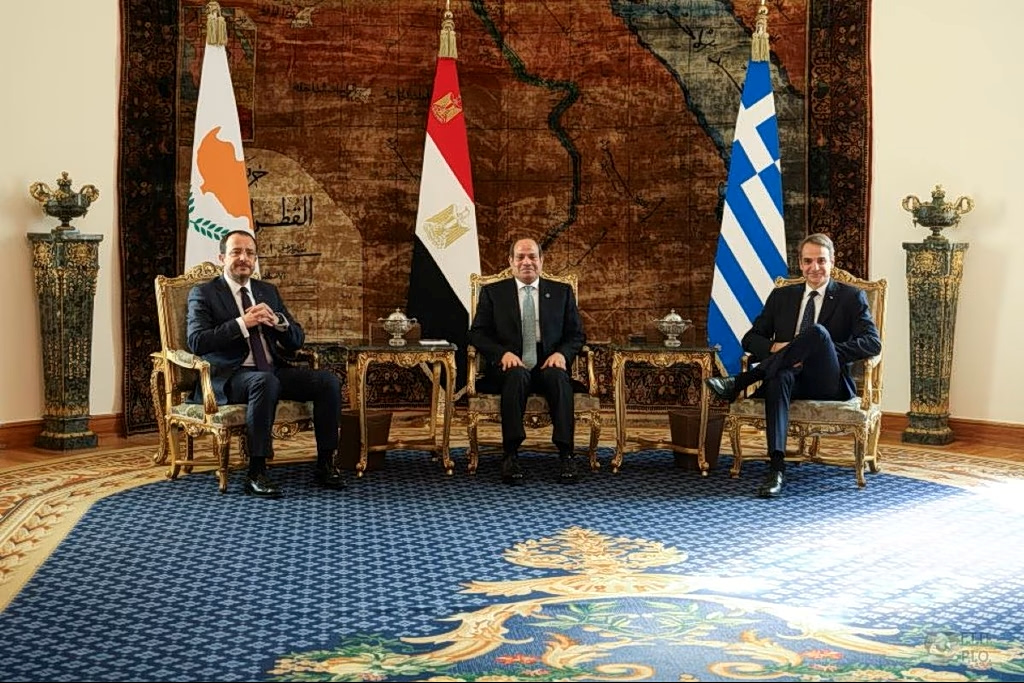
The same officials say discussions will begin with Egypt on expanding the agreement delimiting the countries’ Exclusive Economic Zone, or EEZ, and explain that talks will be held on a new Greek-Egyptian agreement covering additional maritime areas.
Diplomatic Activity
Meanwhile, Greek diplomatic initiatives are continuing in an effort to strengthen the country’s position against what Athens describes as Turkish revisionism in the Eastern Mediterranean.
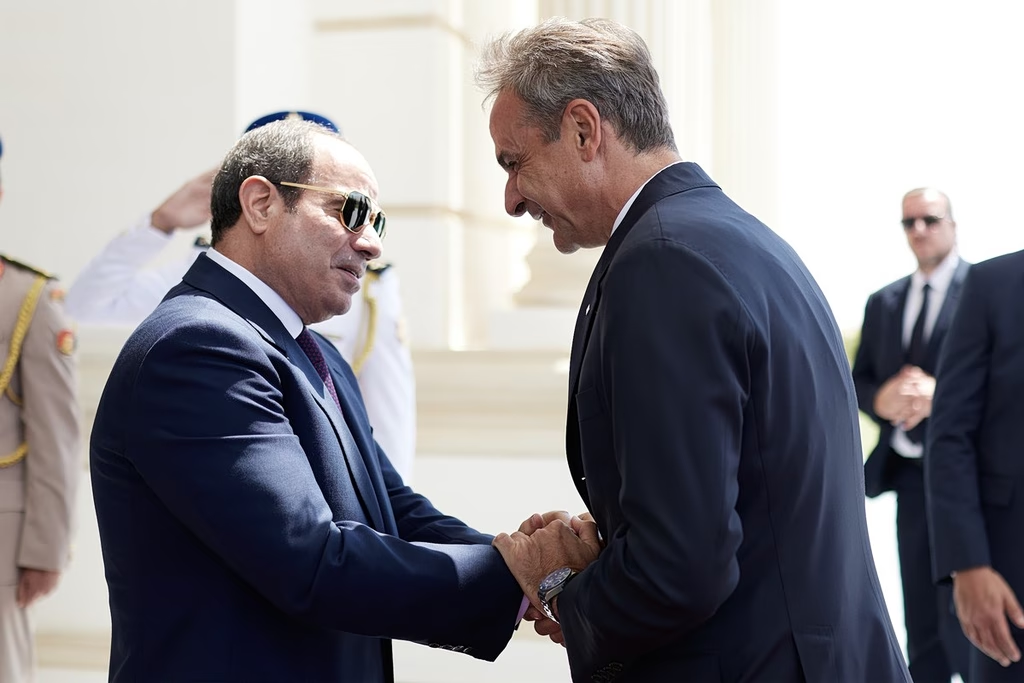
In this context, Foreign Minister Giorgos Gerapetritis spoke on Thursday afternoon for the second time within a few hours with his Egyptian counterpart, Badr Abdelatty. The two agreed to continue consultations aimed at expanding the geographic scope of the delimited Greece-Egypt EEZ, always in full compliance with the provisions of the United Nations Convention on the Law of the Sea.
Message to Ankara
The move, perhaps the most significant since the ratification of the Turkey-Libya memorandum, sends a strong message not simply to Benghazi but primarily to Ankara, which has for years been pressing Cairo to delimit their maritime zones while offering Egypt considerably more maritime space.
As TO BHMA reported several weeks ago, although the issue had always been part of the bilateral agenda, Greece and Egypt had until now not even begun preliminary discussions on expanding their agreement, as Cairo had indeed left open the possibility of reaching a maritime delimitation agreement with Ankara.
It should be noted that the Greek-Egyptian agreement of August 2020 is partial. At the time, Athens was under pressure from the Turkey-Libya memorandum and the agreement slightly reduced the effect of the islands involved in relation to Egypt’s mainland coast.
The Open Front
Today, the area under discussion for an expansion of the agreement lies east of the 28th meridian. Turkey has consistently claimed the area as potentially belonging to its continental shelf.
It should also be noted that in recent months Ankara has launched a campaign to improve relations with Egypt, with the two sides once again cooperating in the crucial field of defense and jointly forming, together with Pakistan and Saudi Arabia, the R4 group.
The Sisi Government
President Abdel Fattah el-Sisi, however, does not appear willing to give in to Turkish pressure for Egypt to join the Mecca Pact.
At the same time, the Sisi government views the expansion of Turkish influence in eastern Libya with particular suspicion. Egypt has traditionally maintained influence in the region and seeks to control it as part of its security architecture.