 Μake us preferred on Google
 Swiss voters on Sunday rejected a high-stakes proposal to impose a hard constitutional cap on the country’s population, averting economic shock waves and a severe diplomatic rift with the European Union.
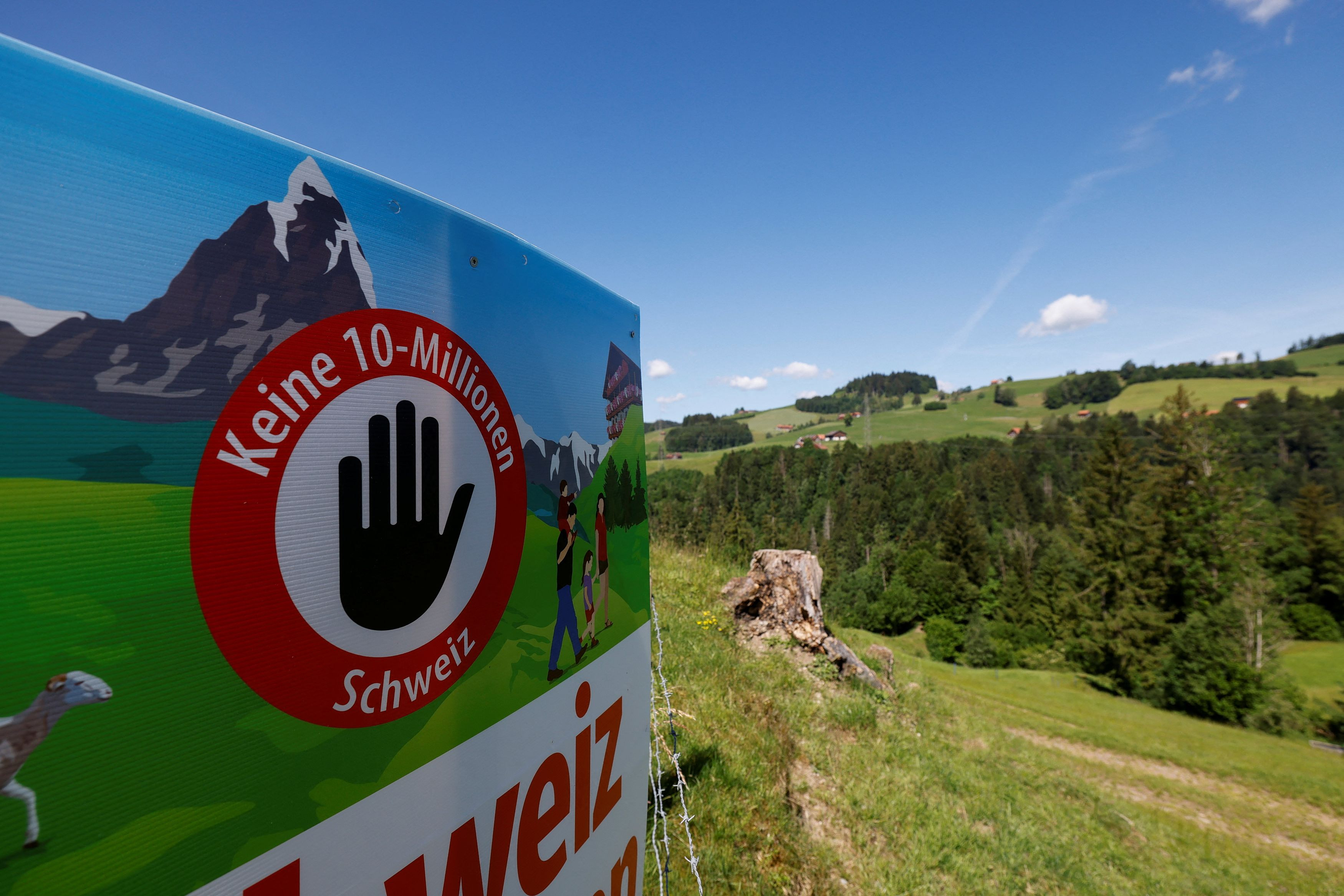
In a national referendum, 55% of voters and a majority of the 26 cantons opposed the “No to a Switzerland with 10 million!” initiative, spearheaded by the right-wing Swiss People’s Party, or SVP.
The vote electrified and polarized the electorate, drawing widespread comparisons to the U.K.’s Brexit referendum due to its potential to dismantle Switzerland’s critical ties with its largest trading partner.
“With today’s decision, the electorate has sent a signal for stability and reliability,” Swiss federal justice minister Beat Jans told reporters at a news conference Sunday afternoon. “It makes clear that it wants to continue the bilateral path with the EU. This is important for jobs and prosperity.”
At its core, the initiative aimed to put a tight leash on immigration, which has caused the number of foreign-born residents in Switzerland to jump from 1-in-5 to 1-in-3 since 2000. This gives Switzerland the second-highest proportion of foreign-born residents among wealthy nations, trailing only Luxembourg.
If the initiative had passed, the government would have been constitutionally required to curb asylum and family reunifications once the population reached 9.5 million. Crossing the 10 million threshold would have forced Bern to terminate its free movement of persons agreement with the EU, a move that business federation economiesuisse warned would trigger labor shortages and retaliatory tariffs.
While the “No” vote prevailed, the result exposed a stark urban-rural divide and left critical economic questions unanswered. The countryside voted heavily in favor of the cap, but an enormous “No” turnout in urban centers and French-speaking cantons ultimately tipped the balance.
The referendum comes amid a broader shift in sentiment among rich countries, where voters are increasingly skeptical of the large-scale immigration proposed by many politicians as a solution to economic problems of aging societies.
Anti-immigration sentiment that has simmered for years across Europe is boiling over, aggravated by the soaring costs, overburdened social-welfare systems and lackluster economic prospects . Riots and protests have erupted in the U.K. over the past week after stabbings blamed on immigrants. The anger is boosting populist right-wing politicians , who now control or support governments in more than a half-dozen European countries including Italy, Sweden and the Netherlands, upending mainstream parties and policies.
Leaders across the Swiss political spectrum who had opposed the population cap said on Sunday that the “No” vote didn’t soothe the grievances of the 45% who voted “Yes,” many of whom are struggling with urban housing shortages and overstretched infrastructure.
“Now the focus is on better managing growth: with more housing, efficient infrastructure, better use of the domestic workforce potential, and an economy that focuses on value creation rather than pure quantity,” said Yvonne Bürgin , parliamentary leader of the Centre Party.
Advocates of the cap had argued that unchecked immigration overloaded infrastructure and diluted productivity, allowing companies to import lower-cost labor rather than investing in automation or domestic workers.
Opponents, including economiesuisse, warned that hitting the 10 million ceiling would have invalidated a web of vital bilateral treaties, triggering acute labor shortages and exposing Swiss exports to heavy retaliatory tariffs.
For global investors, the outcome signals continuity, ensuring Europe’s premier financial refuge keeps its borders integrated with the continent. Analysts noted that while Swiss voters narrowly approved immigration quotas back in 2014, today’s highly volatile geopolitical climate has made the public far more protective of stable EU relations.
Write to Tom Fairless at tom.fairless@wsj.com