 Μake us preferred on Google
 On a cool summer evening, we left central Athens and headed to Keratsini, a working-class district of Piraeus, to spend a few hours in the leafy courtyard of a wine tavern that had long been synonymous with its owner and chef, Lefteris Keladitis.
A remarkable man, gone far too soon.
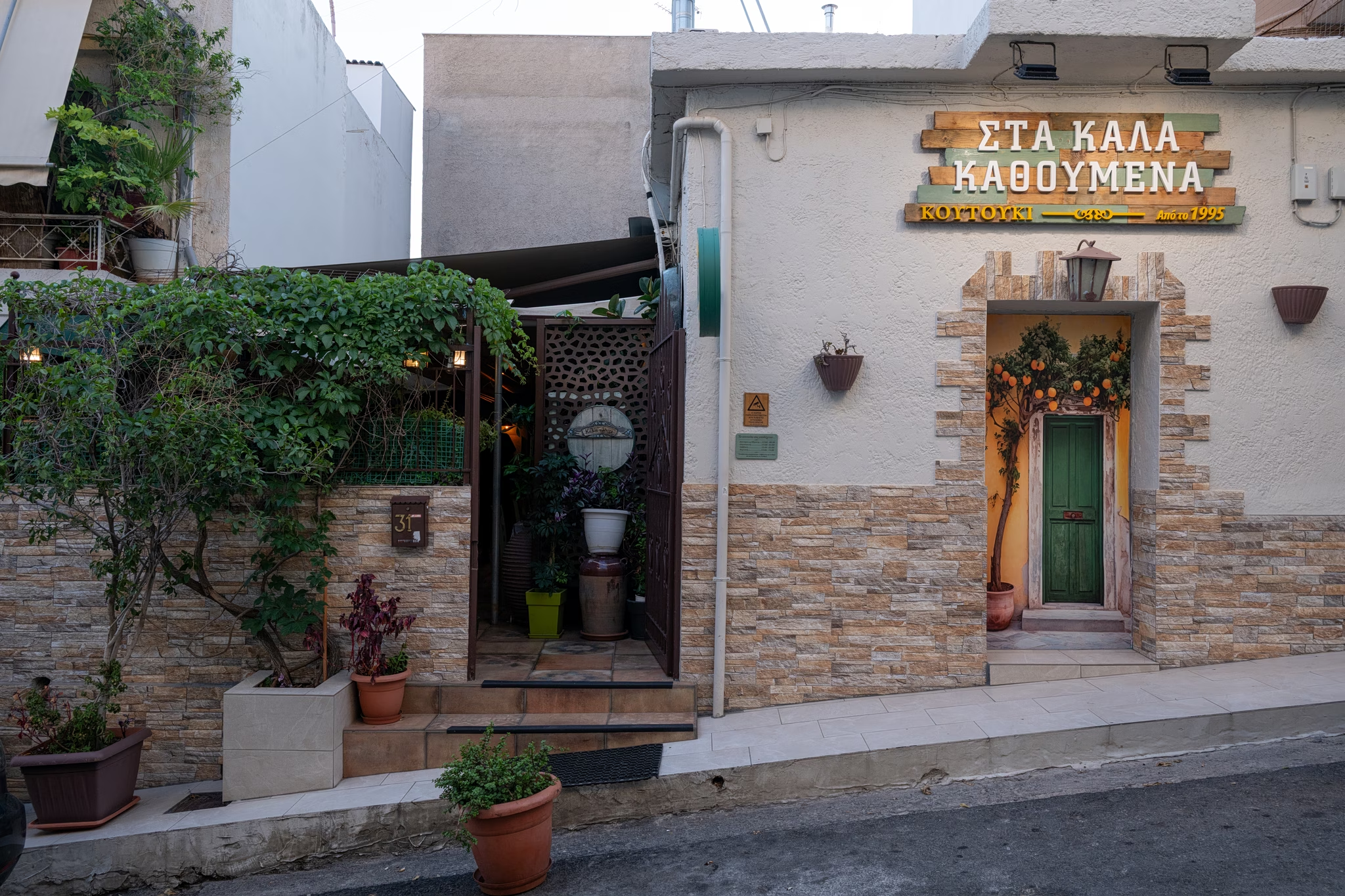
His tavern, with the wonderfully Greek name Sta Kala Kathoumena—an expression meaning something like “Out of the Blue” or “Just Like That”—continues to thrive under the care of his wife and lifelong partner, Olga Baloumi.
Over glasses of house wine and shared meze, we talked about their story, the wine taps still standing beside every table, and the man who never stopped searching for his own truth—whether on the motorcycle journeys he loved so dearly or in the kitchen, where he cooked with sincerity, curiosity and genuine passion.
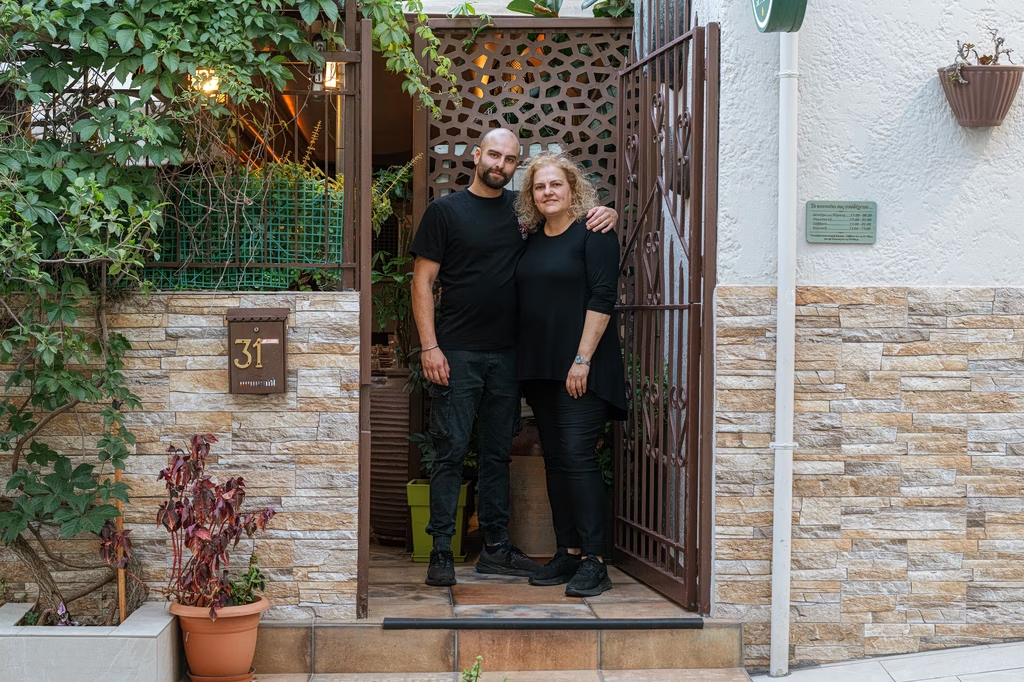
Olga Baloumi and her son, Vangelis Keladitis, welcomed us to Sta Kala Kathoumena and shared the story of the tavern that has won the hearts of people across Keratsini—and far beyond. Photo: Alexandros Alexandris
It All Began with a Few Wine Barrels
The story begins in 1995, long before Sta Kala Kathoumena became a destination for diners from across the Athens metropolitan area.
Lefteris’ parents, Vangelis and Sofia, had no professional connection to hospitality. What they did have was a deep love of good wine and good company.
That passion inspired them to open a small wine shop.
In the beginning, they even made the wine themselves.
“I still remember the whole process,” Olga recalls. “The grape must would arrive, fermentation took place in the barrels, they’d adjust whatever was needed and then take samples to the laboratory until the wine was exactly as they wanted it.”
At the time, she had only just begun her relationship with Lefteris.
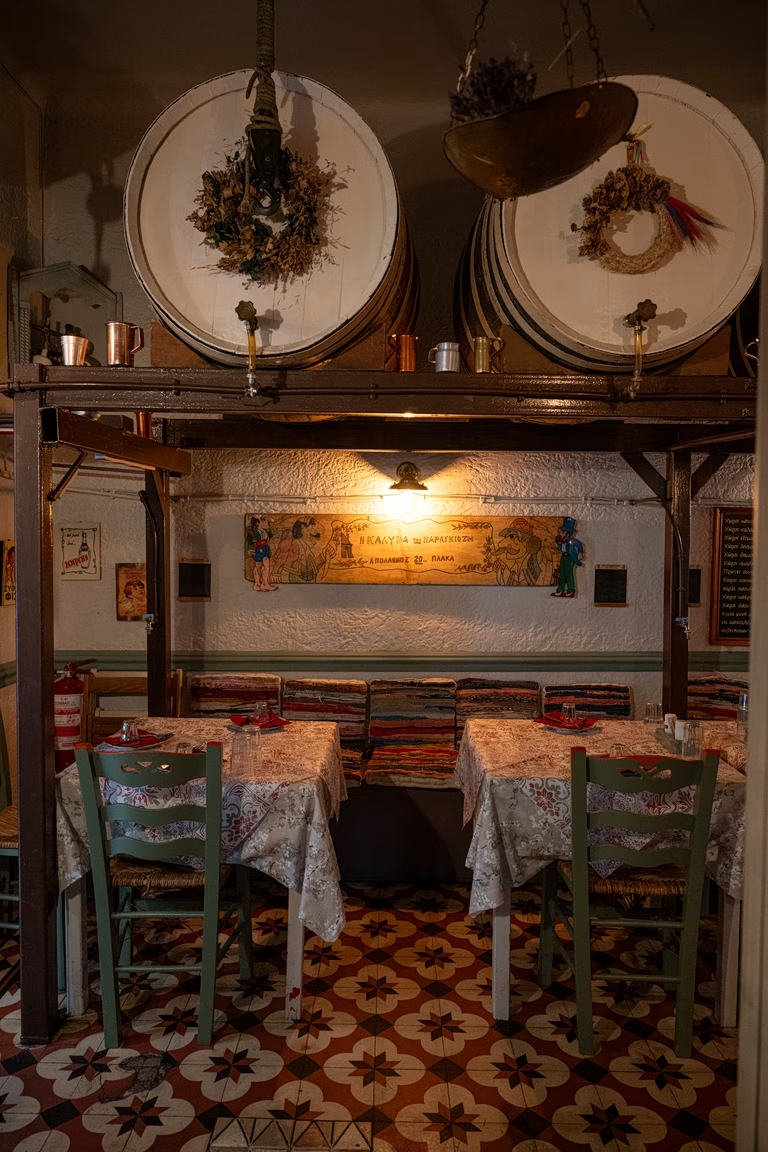
The wine barrels that started it all. The business began as a wine shop before gradually evolving into a tavern. Photo: Alexandros Alexandris
For customers who came to refill their traditional glass demijohns, Sofia would prepare a few simple meze. Within months, the wine shop had obtained a tavern license.
No one imagined that three decades later this modest family business would become one of Piraeus’ best-loved dining spots.
Not even Lefteris.
Before long, he left his job as a welder, joined the family business and took charge of the kitchen.
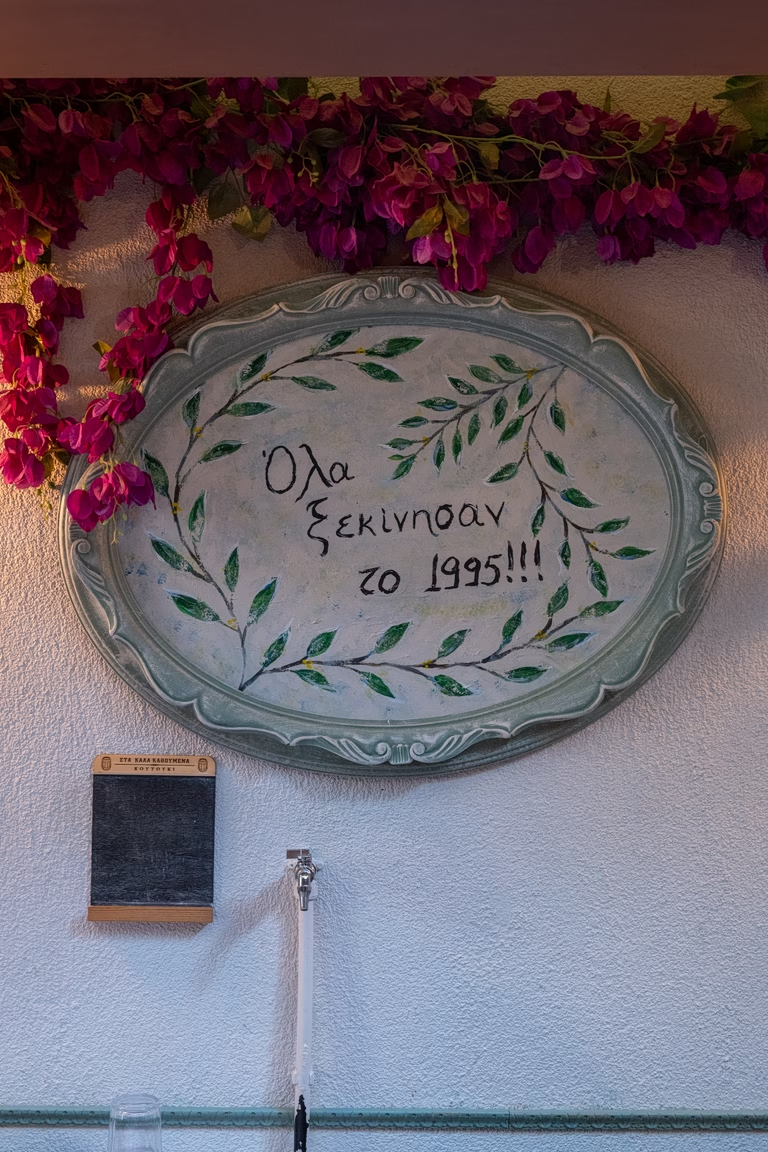
When Lefteris took over the business, Sta Kala Kathoumena began to develop the character that would define it. Photo: Alexandros Alexandris
“He had always loved cooking,” Olga says. “And because he wanted everything done properly, he enrolled in culinary school to improve his technique. Little by little, the menu began to change.”
The traditional neighbourhood koutouki—a casual Greek wine tavern known for simple dishes like fried salt cod with garlic dip and classic meze—began to evolve.
“We moved away from the old-fashioned menu, but without losing the tavern’s identity,” she explains. “Lefteris never wanted to turn it into a fine-dining restaurant. He wanted it to remain an authentic gathering place for friends, simply with better food, outstanding ingredients and greater attention to every detail.”
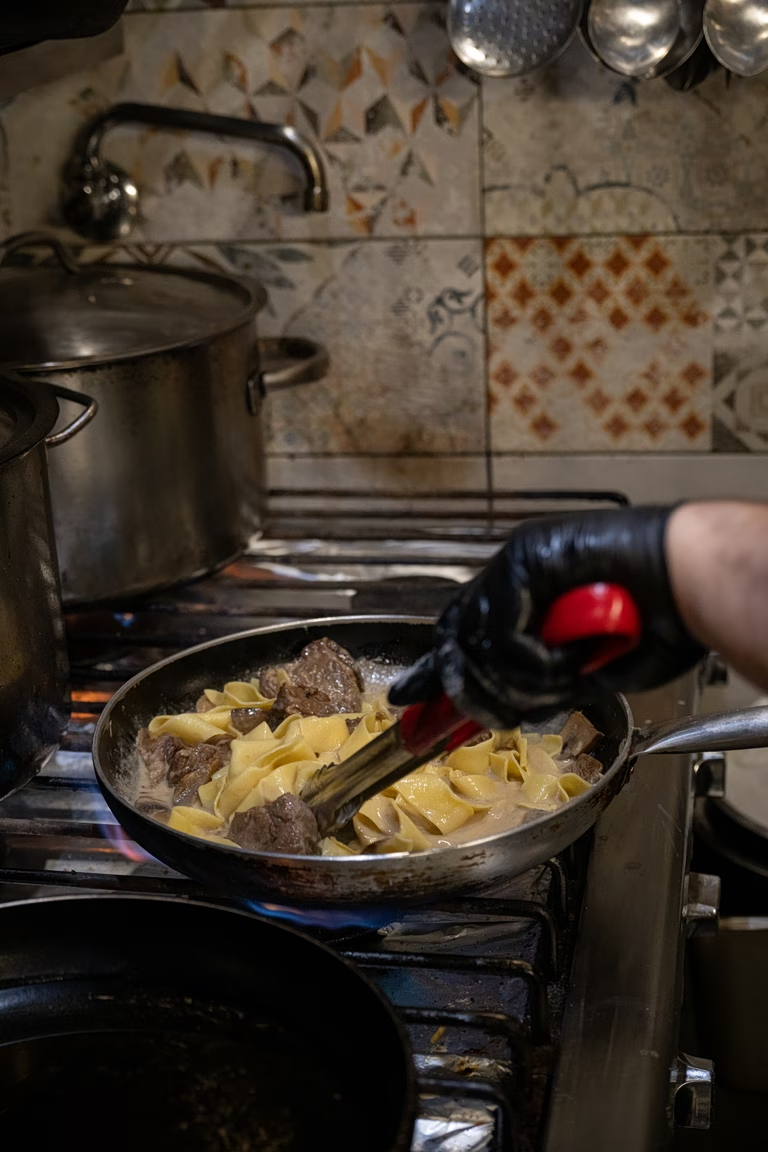
The philosophy of the kitchen evolved as Lefteris constantly searched for new ideas and exceptional ingredients. Photo: Alexandros Alexandris
Olga stood beside him every step of the way.
In many ways, they grew up alongside the restaurant itself.
She watched customers first arrive as children and years later return holding the hands of their own children.
“I witnessed every stage of its evolution,” she says. “I watched our customers become younger over the years. The tavern kept changing without ever losing its soul. We never advertised. People discovered us through word of mouth, and our tables were never empty.”
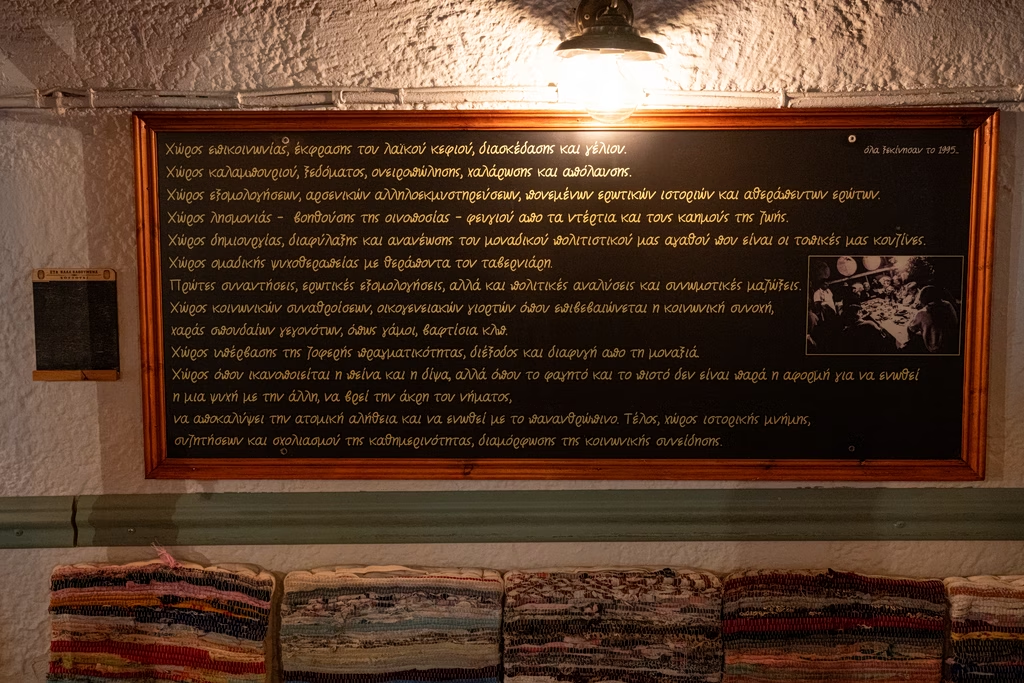
Lefteris and Olga never needed advertising. People loved the tavern for what it was, and its tables were always full. Photo: Alexandros Alexandris
Lefteris, the Road and His Dreams
Winter left little room to breathe.
Summer was different.
Before the courtyard was added, the tavern closed as soon as schools broke up for the holidays, remaining shut until the end of August.
Those two months were what Lefteris looked forward to all year.
Every summer began the same way: climbing onto the motorcycle he loved so much.
His first trips were around Greece, but the maps soon expanded.
The Balkans.
Europe.
Thousands of kilometers in the saddle.
To him, these weren’t holidays. They were therapy.
“That was his way of resetting,” Olga says. “When you spend months working inside the same place every single day, you need to escape.”
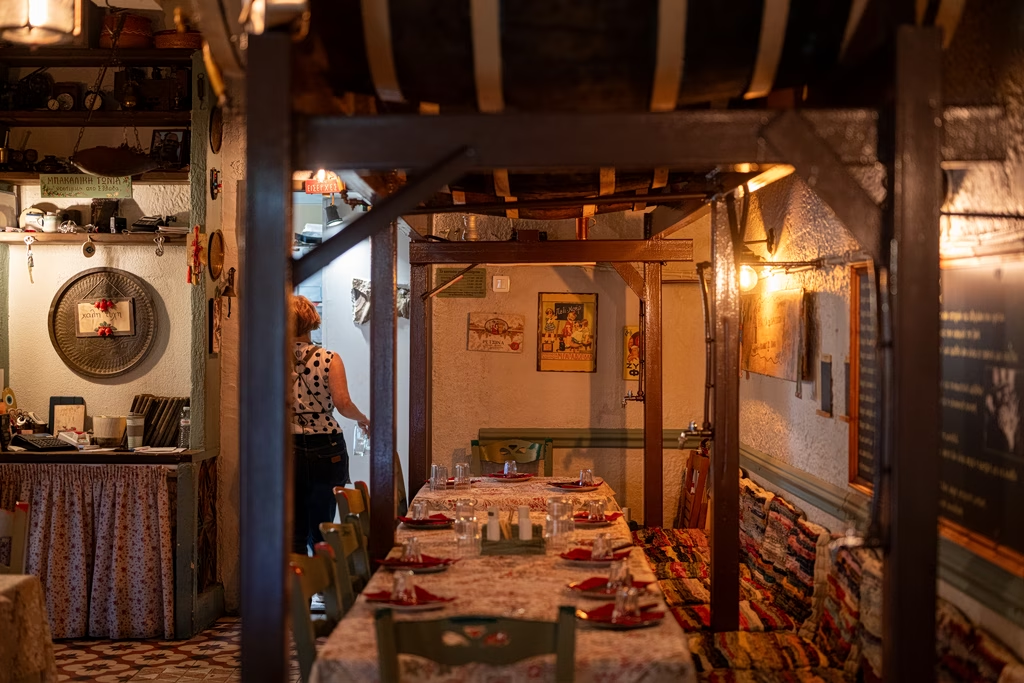
In the early years, the tavern closed every summer. Lefteris would set off on his motorcycle to explore Europe. Photo: Alexandros Alexandris
At first he travelled with large groups.
Eventually, those journeys became something he shared with only two or three close friends.
Not because he withdrew from people, but because motorcycle travel demands absolute trust.
“You need to know the person you’re travelling with incredibly well,” Olga explains.
Wherever he went, he collected images, flavors, conversations and stories.
Without even realizing it, all those experiences gradually found their way back into his cooking.
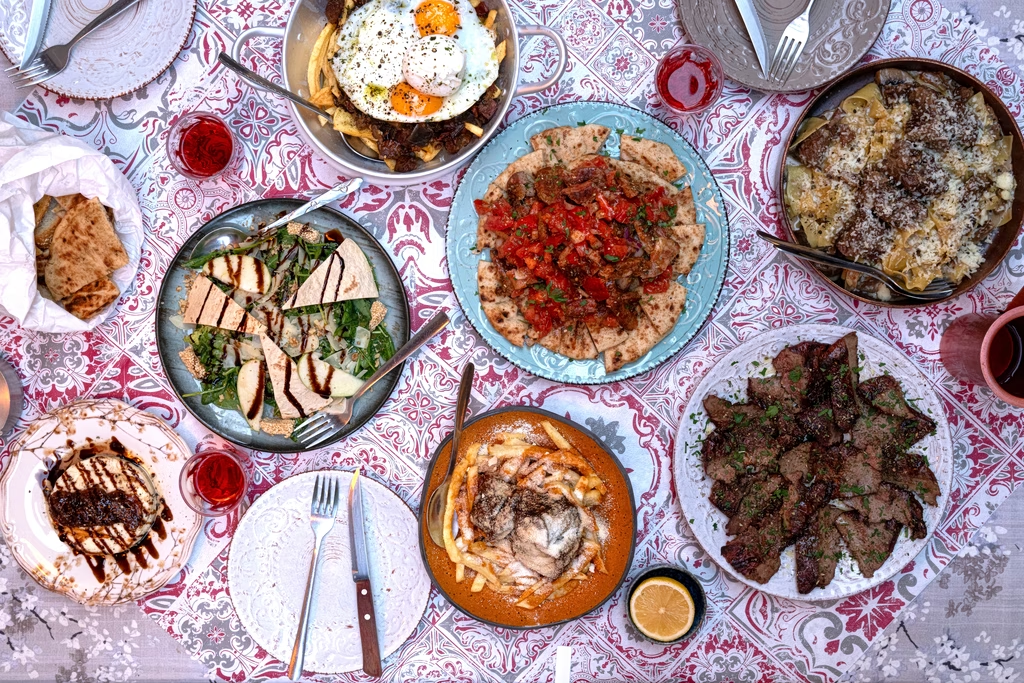
Lefteris’ travels continually enriched his cooking with new flavors and ideas. Photo: Alexandros Alexandris
Then, in 2007, life came to an abrupt halt.
Their daughter was only 50 days old and their son just four when Lefteris was diagnosed with cancer for the first time.
Yet the illness didn’t make him retreat.
If anything, it had the opposite effect.
“From then on, he lived even more fully,” Olga says.
“He appreciated every moment more deeply. But he never walked away from the restaurant. Every year it kept evolving. It just kept getting better.”
Repeating himself never interested him.
Even when everything seemed to be going well, he was already searching for the next idea.
A better dish.
A new producer.
A different route.
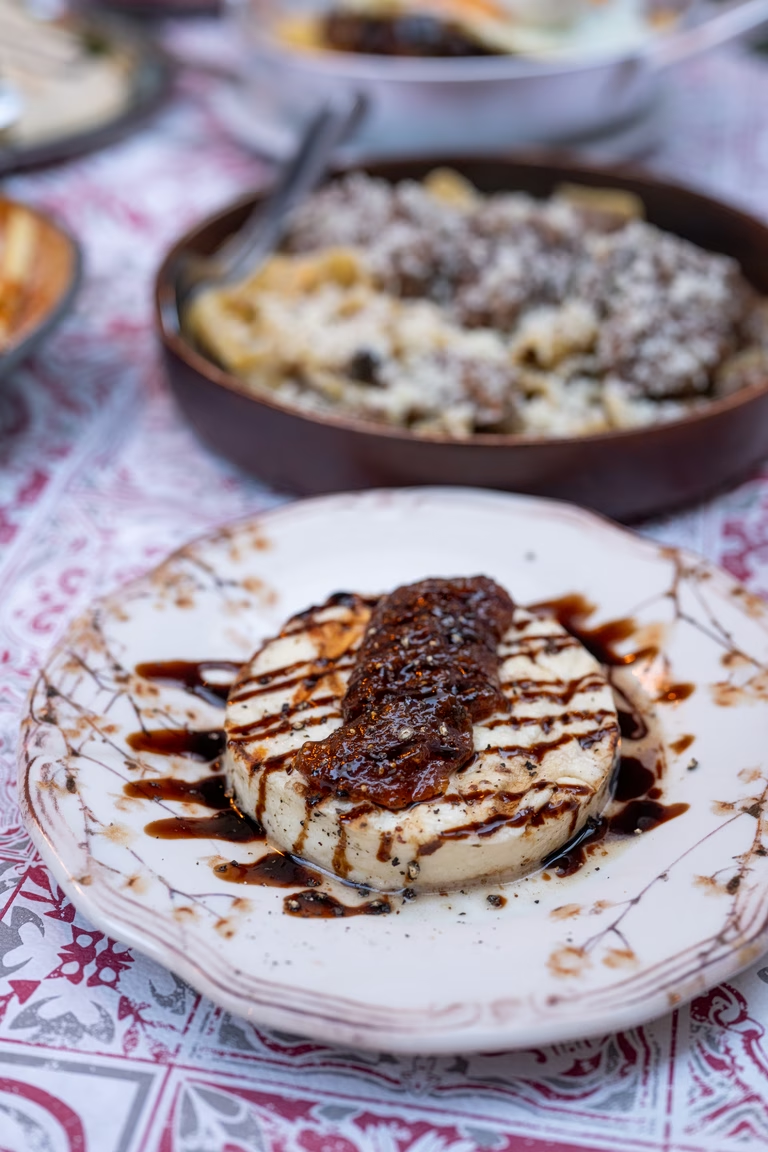
Exceptional ingredients were—and remain—the heart of the kitchen. Photo: Alexandros Alexandris
Six years later, in 2013, he faced cancer once again.
Another difficult chapter for the family.
But daily life never stopped.
“He carried on exactly as before,” Olga says immediately, as though wanting to make that point perfectly clear.
“And his journeys became even bigger. He travelled farther, tackled more demanding routes abroad and made sure every year included one major trip.”
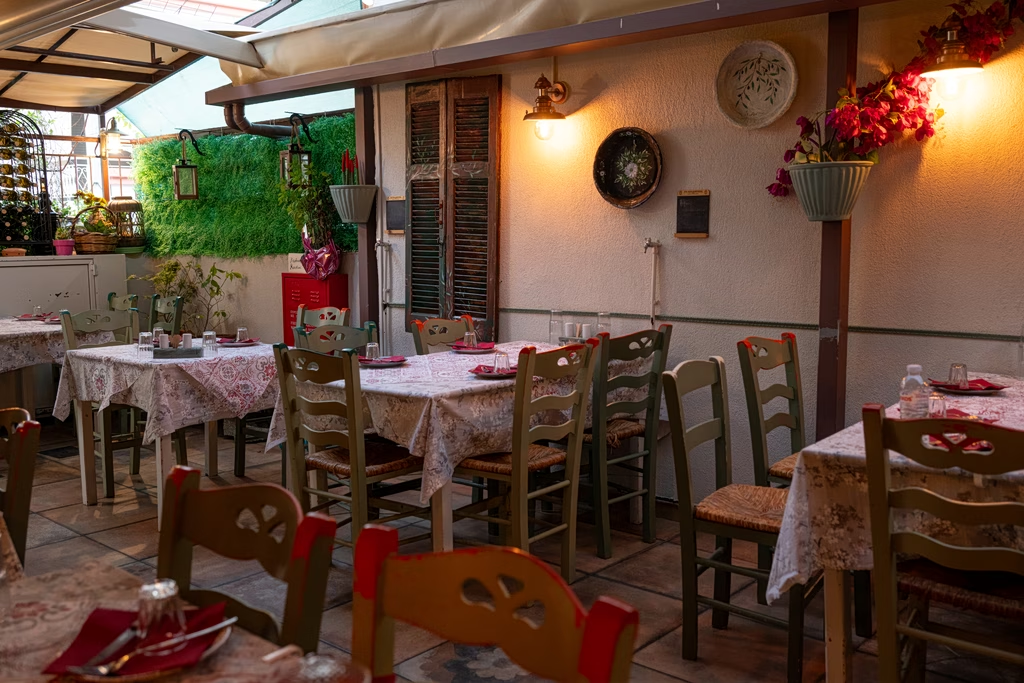
The tavern’s courtyard has always been a welcoming place for friends to gather. Photo: Alexandros Alexandris
Some of those journeys they made together.
Others he preferred to take alone—or with just a couple of trusted friends.
“Dakar, in Africa, was one of his greatest dreams.”
Whenever she talks about him, emotion still surfaces.
“He was always setting new goals. He was an extraordinary person. For him, family and work always came first. Although hundreds of people knew him through the tavern, he was deeply introverted. I understood why he needed those trips. I supported him, no matter how much I worried. Our children were still young, but I knew those journeys were his therapy.”
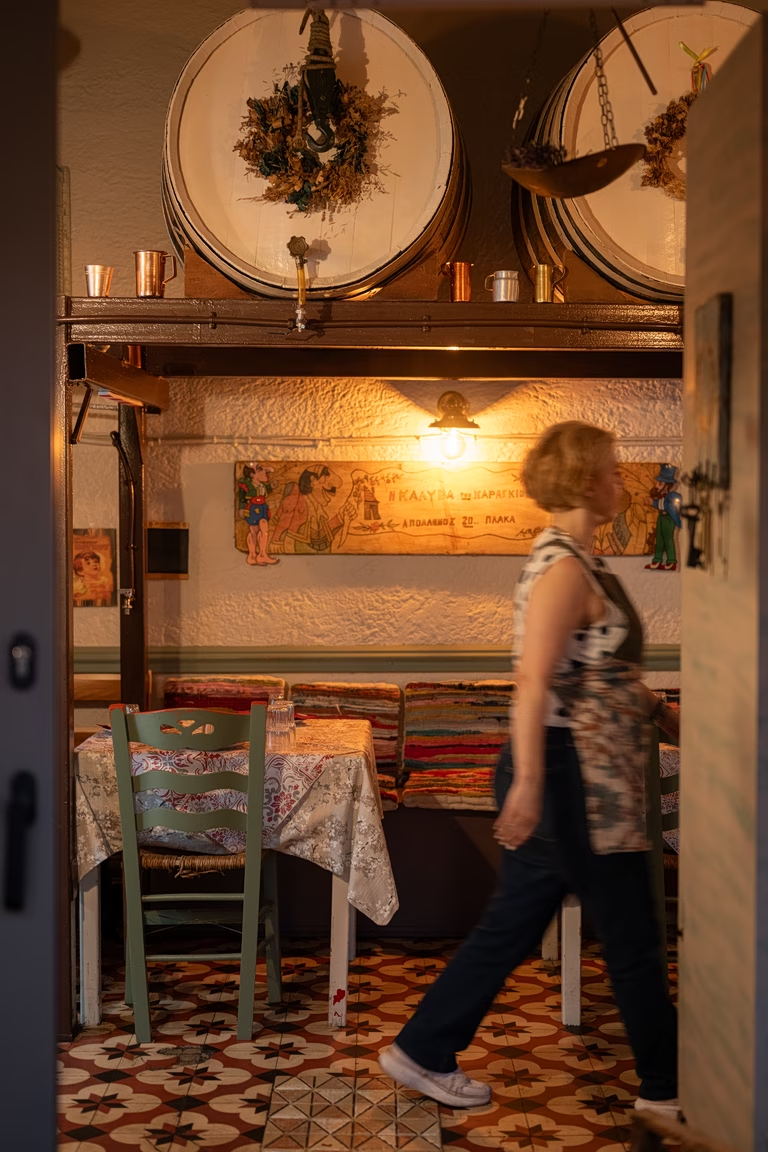
Many members of the team have worked here for years. Here is Natasha, who continues to stand alongside Olga today. Photo: Alexandros Alexandris
At the time, Olga worked as an HR manager.
Her life unfolded between two completely different worlds: an office during the day and the tavern whenever she wasn’t at work.
“Because our schedules were always opposite, I spent weekends and holidays here. Our children essentially grew up inside this restaurant.”
When their son reached adolescence, she made a life-changing decision.
She left her career behind and devoted herself fully to the family business.
“At first I simply helped out. Gradually, it became my everyday life.”
Cooking That Speaks to the Heart
Lefteris never sought to impress with elaborate presentations.
His cooking celebrated outstanding ingredients and honest food that spoke directly to people’s hearts.
What fascinated him most wasn’t creating complicated recipes.
It was finding exceptional produce.
“He was obsessed with ingredients,” Olga says.
“Wherever he travelled, he’d seek out small producers. He’d visit dairies, taste wines, cured meats, cheeses and olive oils. He’d spend hours talking to people. He always came back full of ideas.”
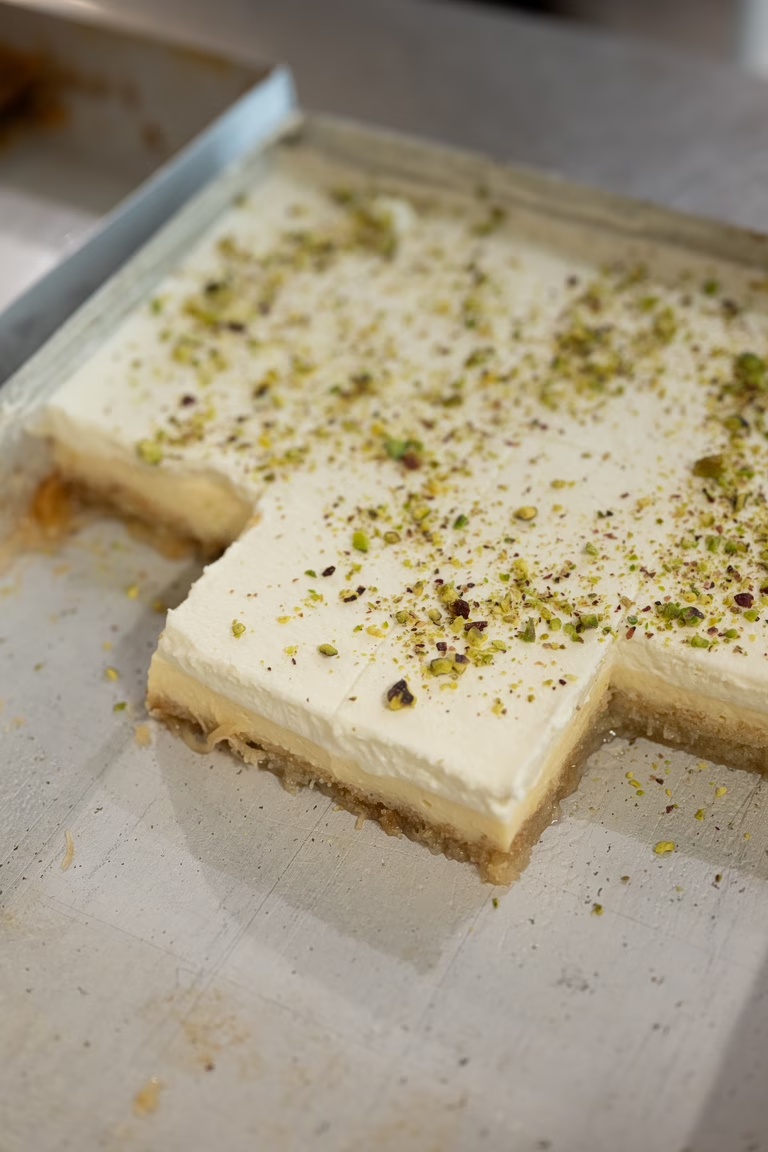
Lefteris constantly searched for the finest products, building relationships with small producers across Greece. Photo: Alexandros Alexandris
His ancestral island of Tinos always held a special place in his heart.
References to it remain throughout the tavern, including the distinctive marble doorway in the courtyard.
But sentiment never dictated his sourcing.
“He didn’t care where a product came from,” Olga says.
“He only cared that it was exceptional. If he found a brilliant producer anywhere in Greece, he’d bring their products here.”
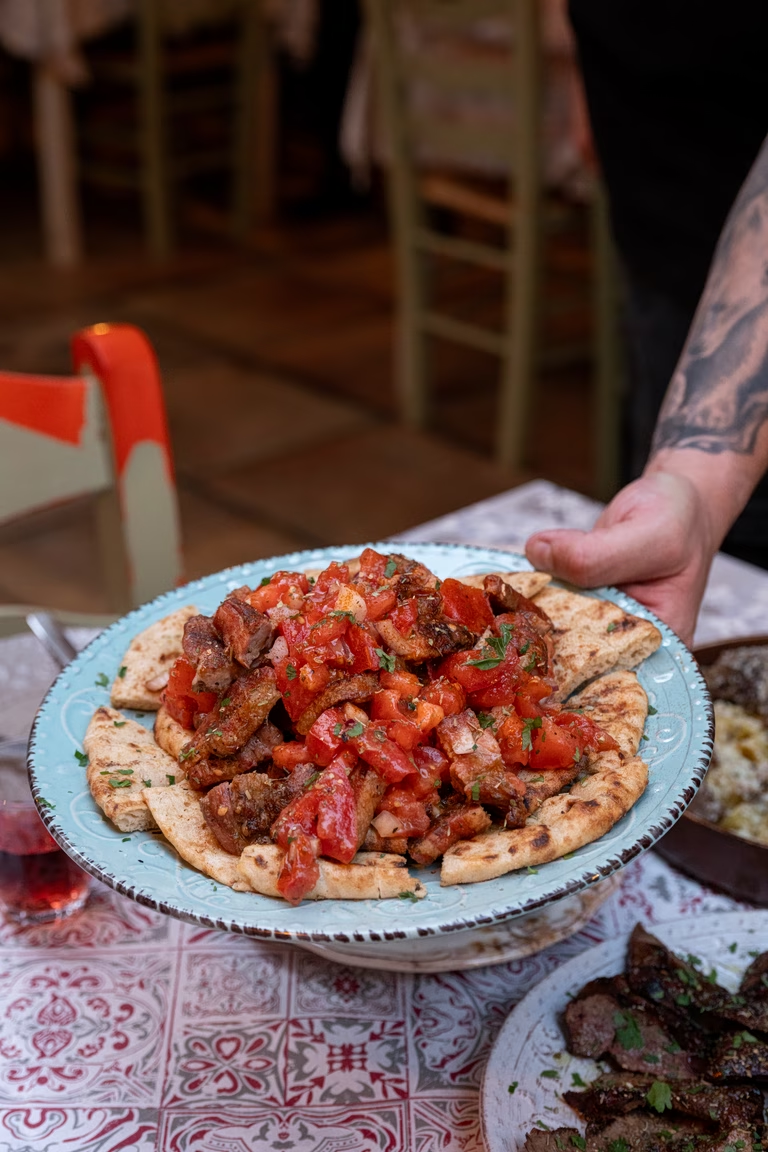
The menu evolved subtly over the years, although some signature dishes never changed. Photo: Alexandros Alexandris
The menu changed a little every year.
“One salad would disappear, another would take its place. He’d introduce a new starter or a different main course. He always wanted something new—for himself as much as for our guests.”
For several years he quietly dedicated every weekend to the cuisine of a different Greek region.
There were no announcements.
No themed menus.
No publicity.
Guests would simply sit down and discover three daily specials inspired by Macedonia one weekend, the Cyclades the next, or perhaps the Ionian Islands.
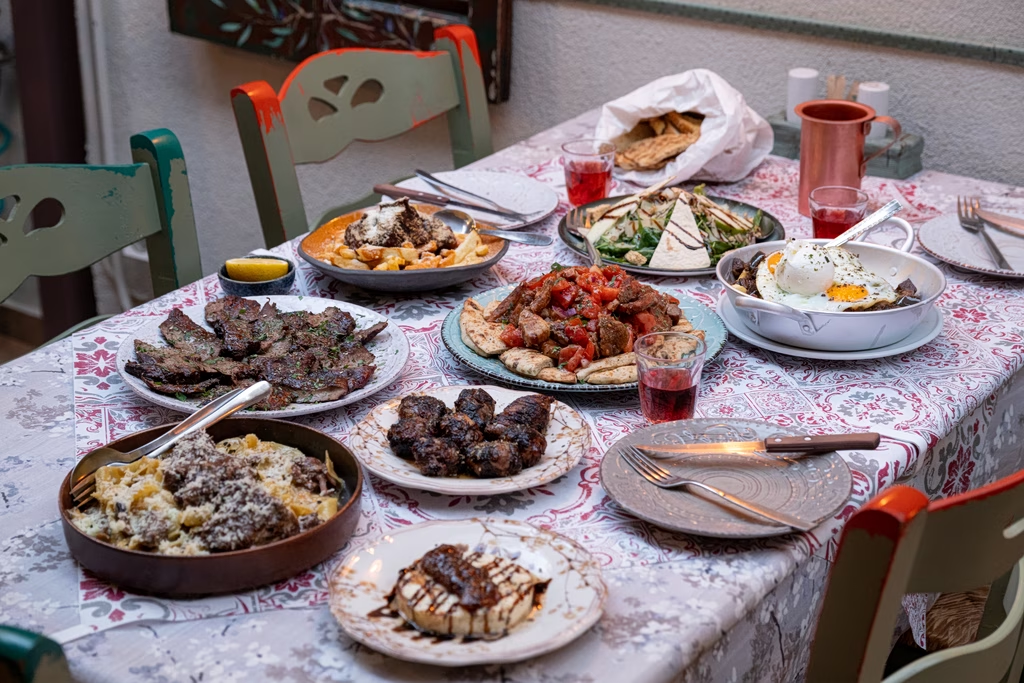
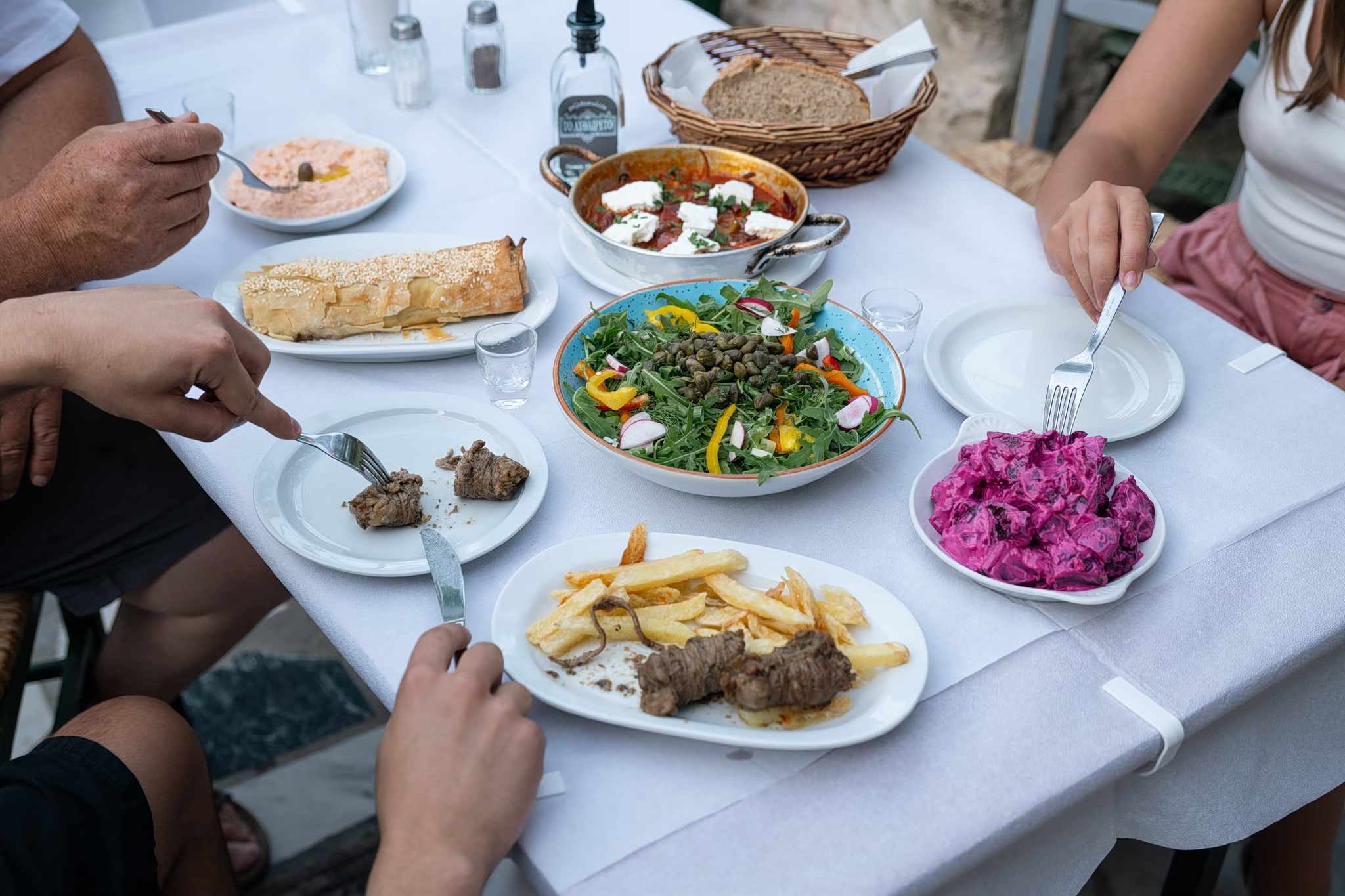
The meze dishes Lefteris created were designed to be shared around the table. Photo: Alexandros Alexandris
Yet some dishes remained untouched because they had become part of the restaurant’s identity.
Braised beef cheeks with hand-cut fried potatoes.
Pappardelle with slow-cooked beef.
Homemade cheese pies filled with smoked Metsovone cheese.
Crispy pastries stuffed with spicy pastourma.
Grilled or fried liver.
Traditional frygadeli.
Regulars also remember warming winter bowls of trahana soup—a fermented grain and dairy soup—and hearty patsa, Greece’s traditional tripe soup.
That was simply how Lefteris cooked.
He followed his instincts.
If he felt people needed something comforting to bring friends together around the table, it went onto the menu.
A Team That Became Family
Six months after Lefteris’ passing, the kitchen continues under the care of the very same team.
“The staff is essentially unchanged,” Olga says.
“They’re Lefteris’ people. In hospitality it’s incredibly difficult to keep great colleagues for many years, and I feel very fortunate that they’re still with us.”
Their children, Vangelis and Anelina, remain by her side.
He studies oceanography.
She studies psychology.
Whenever needed, both step into the family business.
Still, Olga refuses to burden them with decisions about its future.
“I don’t know whether they’ll continue running it. It’s far too early to say.”
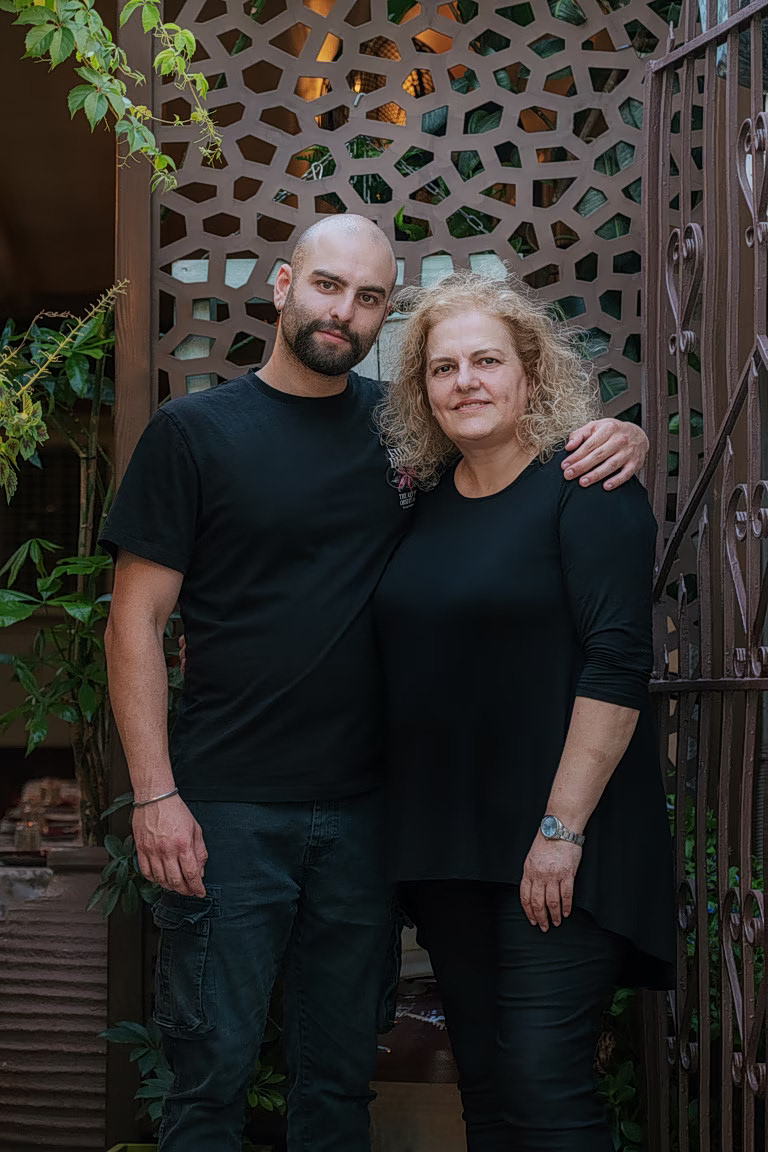
Vangelis, like Olga’s daughter Anelina, is studying while helping their mother continue Lefteris’ work at Sta Kala Kathoumena. Photo: Alexandros Alexandris
She admits she wrestled with the same question herself after Lefteris died.
Should she continue?
Or let it go?
“This is an incredibly demanding life. There is no personal time. We always worked when everyone else was enjoying themselves, and you never really get used to that.
“But then I remember that Lefteris truly gave his life to this place.
“And I gave a huge part of mine as well.
“So no.
“I simply can’t let it go.”
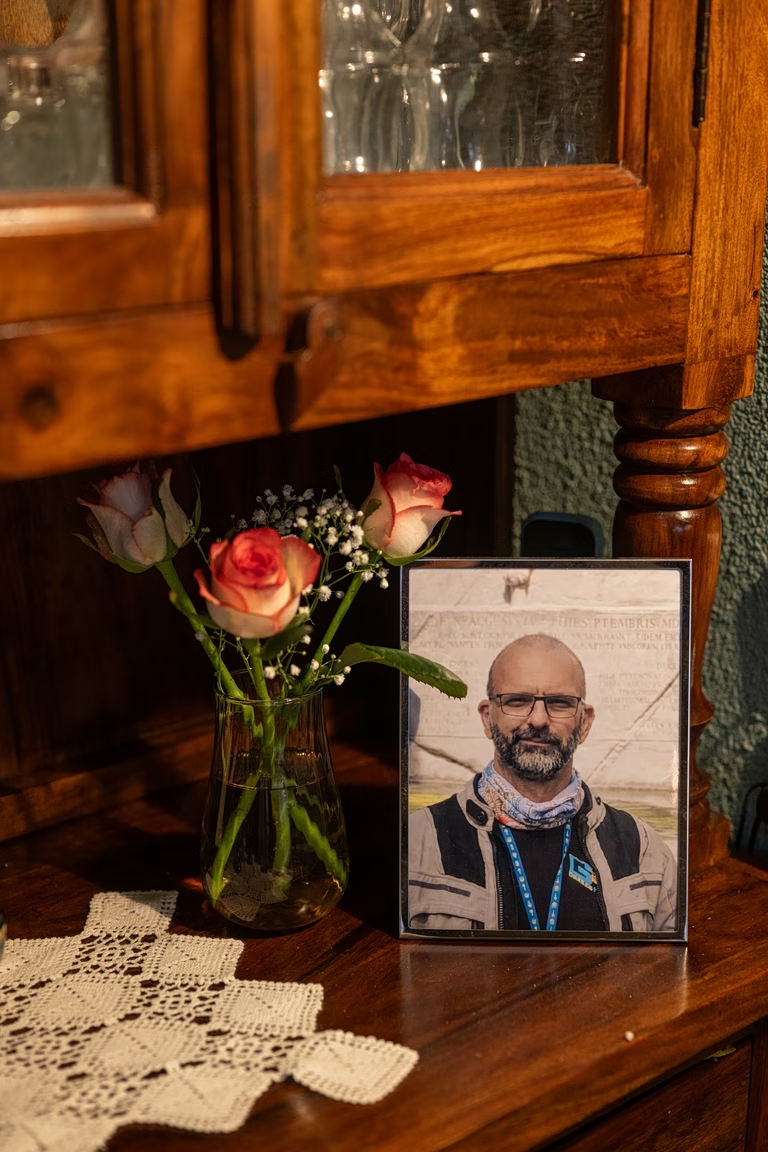
Lefteris devoted his life to the tavern, and his presence is still deeply felt by everyone who works there. Photo: Alexandros Alexandris
Before leaving, I took one final look around.
Almost nothing inside the restaurant seemed accidental.
Vintage cameras.
Old tools.
Decorative objects collected over decades.
Each one carried a story.
Throughout his travels, Lefteris gathered pieces that moved him and carefully found them a place among the tavern’s walls.
Shortly before he died, he asked Olga to keep refreshing the space.
He always wanted to offer the very best to the people who had trusted him for so many years.
Inside, one remarkable feature remains exactly as he left it.
Beside every table are small wine taps connected through a network of pipes built by his father, carrying wine directly from the barrels.
Guests fill their own traditional metal wine jugs, known locally as katroutso, then simply chalk up how many half-litre servings they’ve poured on a small blackboard.
It’s an old-fashioned system built entirely on trust.
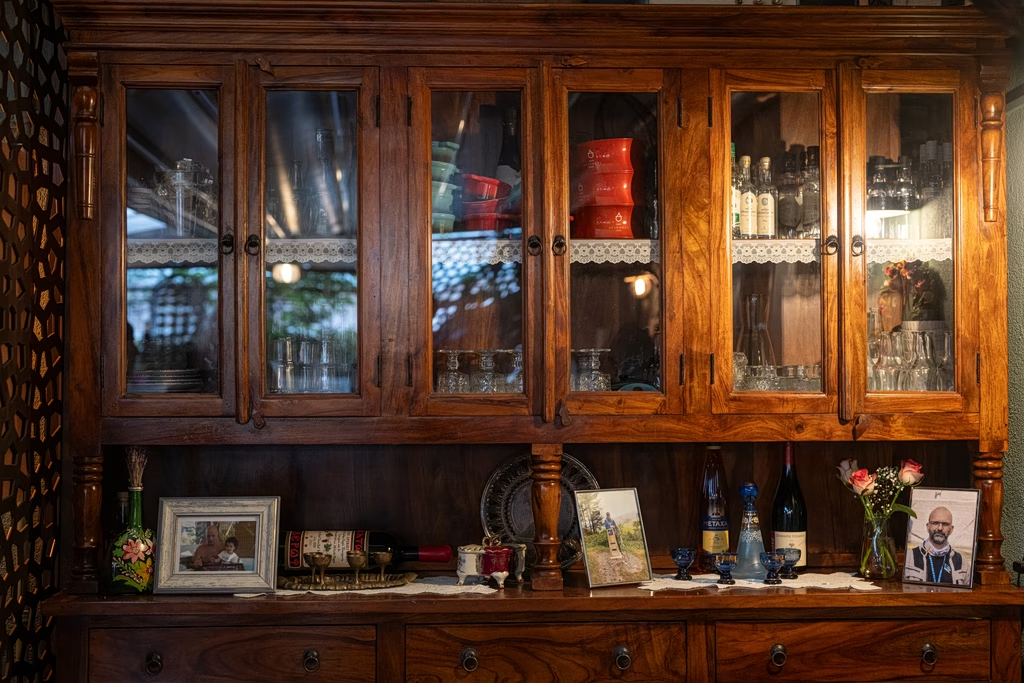
Sta Kala Kathoumena is the kind of place that instantly feels like home—and that’s why people keep coming back. Photo: Alexandros Alexandris
Few restaurants place so much faith in the people who walk through their doors.
And few welcome them with so much warmth.
Before I left, we agreed to meet again in September.
But secretly, I found myself looking forward to winter.
To the day the courtyard doors close against the cold, when I’ll sit once again at one of those tables with its own wine tap, enjoying good food while stories unfold around me.
That’s the magic of Sta Kala Kathoumena.
Simple.
Genuine.
And impossible not to love.