 Μake us preferred on Google
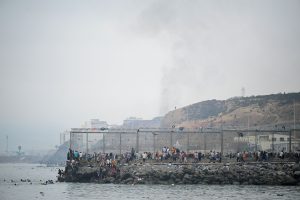
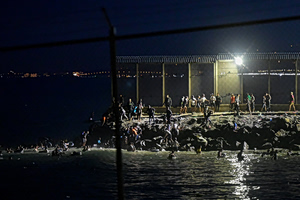
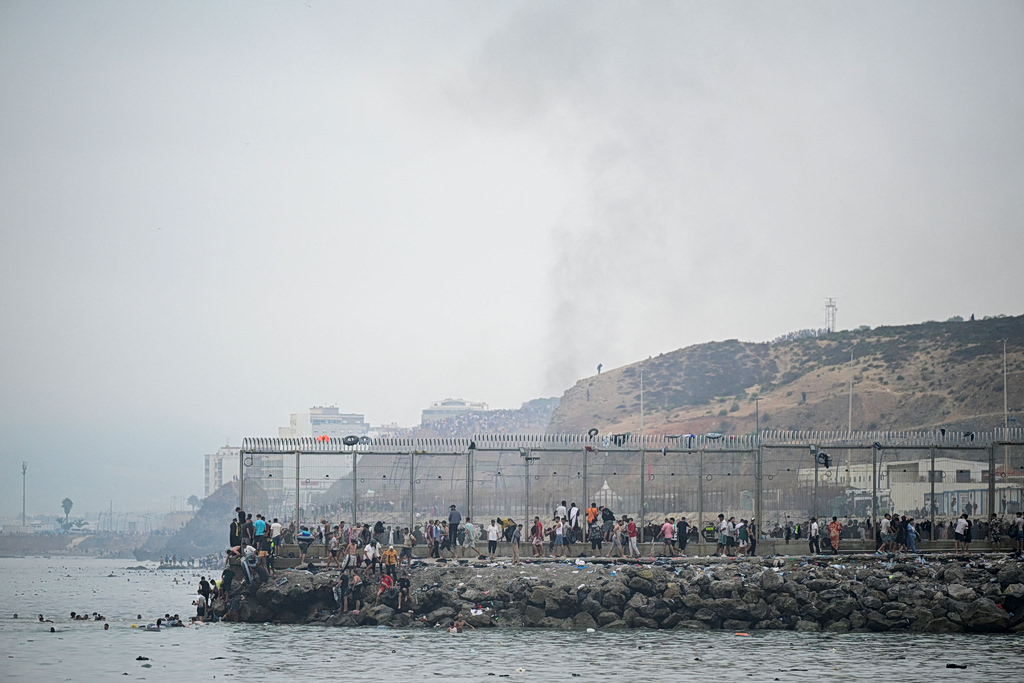
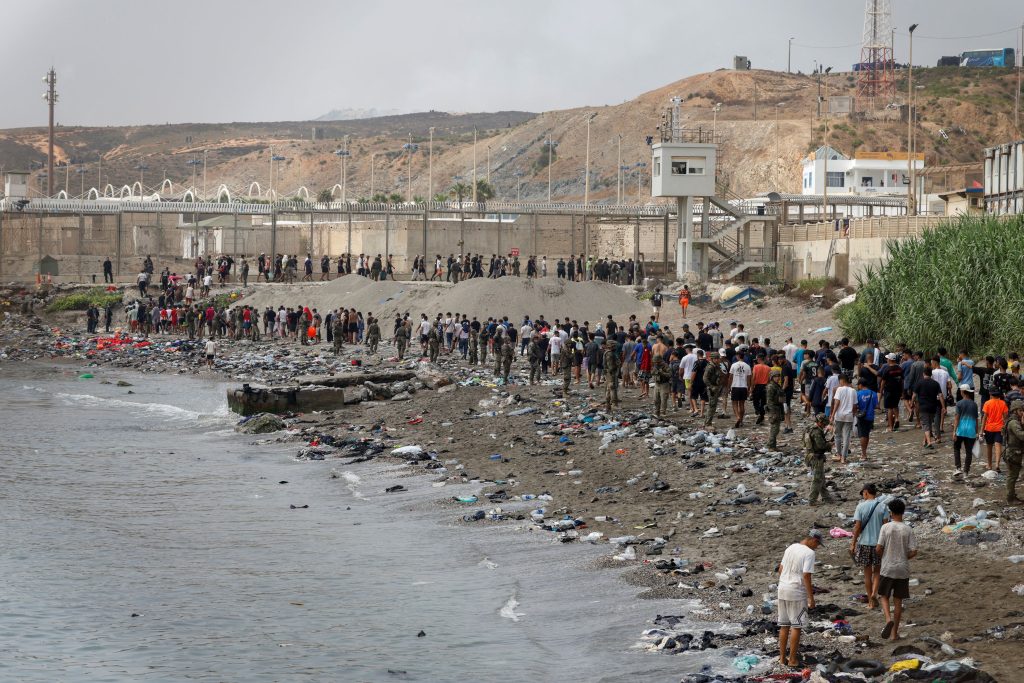
 People swam toward the coast, others scaled the border fences, and within hours thousands flooded into Ceuta, Spain’s small enclave in North Africa. Spain’s Interior Ministry said roughly 50,000 people entered Ceuta from Morocco between Thursday and early Friday, though Ceuta’s local president, Juan Jesús Vivas, put the number as high as 60,000. About half, some 25,000 people, had already returned to Morocco by Friday afternoon, largely because the enclave was overwhelmed and they had no food or water.
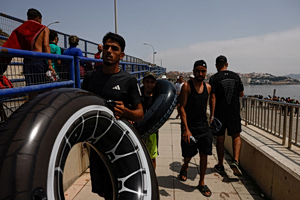
People carrying inflatable floats walk towards the border with Morocco to leave Spain, amid mass crossings of migrants on foot and by sea from Morocco into Spanish territory, in Ceuta, Spain, July 31, 2026. REUTERS/Jon Nazca
At least 34 people died, mostly by drowning as crowds tried to swim around the breakwaters separating Ceuta from Morocco, with some deaths also linked to a crush in the crowd.
Ceuta covers just 19 square kilometers and has only about 84,000 residents, so the scale of the arrivals quickly overwhelmed the city. Streets filled with young men sleeping outdoors, looking for food, water, or a SIM card to call home, and many shops closed to prevent looting.
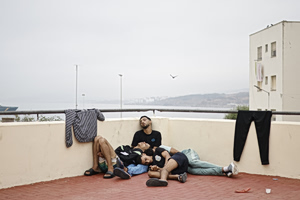
Many slept outdoors after arriving in Ceuta. Jesus Torres/Contacto/ZUMA Press
Local residents described feeling frightened and outnumbered, with one telling a Spanish broadcaster it felt like there were now more migrants in the city than residents.
Why so many people crossed at once
There is no single confirmed explanation. Spanish media and officials say Moroccan security forces did not intervene as forcefully as in past mass-crossing attempts, reviving suspicion that migration is again being used as leverage in Rabat’s relations with Madrid and Brussels.
Some reports suggest a recent Spanish Supreme Court ruling, which made it harder for authorities to return migrants who arrive by sea without assessing each case individually, was interpreted or promoted by smugglers as a sign that reaching Ceuta would improve someone’s chances of staying in Spain. Prime Minister Pedro Sánchez’s government says trafficking networks exploited that ruling to mobilize thousands of people.
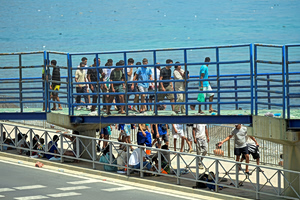
Migrants walk towards the border with Morocco to leave Spain, amid mass crossings of migrants on foot and by sea from Morocco into Spanish territory, in Ceuta, Spain, July 31, 2026. REUTERS/Fabian Bimmer
Ceuta’s local government has also accused Madrid of responding too slowly and failing to reinforce the border with a stronger military presence, letting reception facilities become overwhelmed within hours.
Though Ceuta and Melilla fall inside the EU’s Schengen area, Spain’s own internal rules require a separate border check before anyone can travel from these enclaves onward into mainland Spain, which in practice limits undocumented migrants from moving freely into the rest of Europe. Madrid says it has reached a tentative agreement with Morocco to speed up returns, though it remains unclear how quickly that can happen given the court ruling.
Sánchez traveled to Ceuta on Friday, called the scenes there deplorable, and said human-trafficking groups had taken advantage of the court decision. He did not comment on his recent visit to Algeria, a country that backs the Polisario Front’s claims to Western Sahara, a topic some see as relevant given Morocco’s sensitivity over the region.
A recurring flashpoint
Ceuta, one of two Spanish autonomous cities in North Africa along with Melilla, sits on the Moroccan coast opposite Gibraltar and is one of the few land borders between the EU and Africa. Because it is European territory on African soil, it has repeatedly become a flashpoint for mass crossings.
In February 2014, at least 15 migrants died trying to swim to Tarajal Beach on Ceuta’s border, an incident that became a turning point in the debate over EU border practices and so-called “pushbacks.” In May 2021, between 8,000 and 10,000 people, including around 1,500 unaccompanied minors, crossed into Ceuta over roughly 36 hours after Moroccan authorities eased border controls, a move widely linked to Spain’s decision to allow a Western Sahara independence leader to receive medical treatment there.
In 2024, Ceuta saw another wave of crossing attempts, mainly by young Moroccans citing unemployment and limited economic prospects, though the numbers stayed below 2021 levels.
A European problem
The crisis has spread beyond Spain. France said it was reinforcing security at its border with Spain, and Italy’s prime minister, Giorgia Meloni, said her country might consider suspending Schengen rules to stop Spain from being used as an entry point into Europe.
Migration has been a defining political issue in Europe since 2015, when more than a million people, many fleeing the war in Syria, entered the continent, fueling the rise of anti-immigration and far-right parties across the bloc. The Ceuta crisis adds a new challenge for Sánchez, whose government has taken a more lenient approach to immigration than many of its European peers, including granting legal status earlier this year to roughly half a million immigrants with no criminal record.
Whether this was a spontaneous mass movement driven by rumors and smugglers, or another episode in which migration is being used as pressure in relations between Europe and Morocco, remains unresolved. Either way, the image of tens of thousands of people crossing into a small piece of European territory in a single day, and the deaths that came with it, underscores how volatile the migration question remains for the EU.