
 Μake us preferred on Google
 CHATTANOOGA, Tenn.—On a humid June weekend, three generations of Lodges descended on a Westin here.
Family members, now also bearing surnames like Kellermann, Millhiser and Richards, had flown and driven in from all around the country. There was the high-school fencing coach from New Jersey and the aerospace engineer from Washington. There was a 2-year-old toddler, the youngest of the reunion attendees, and an 88-year-old who joined for multiple scheduled events, including a ride up a mountain in a funicular railway.
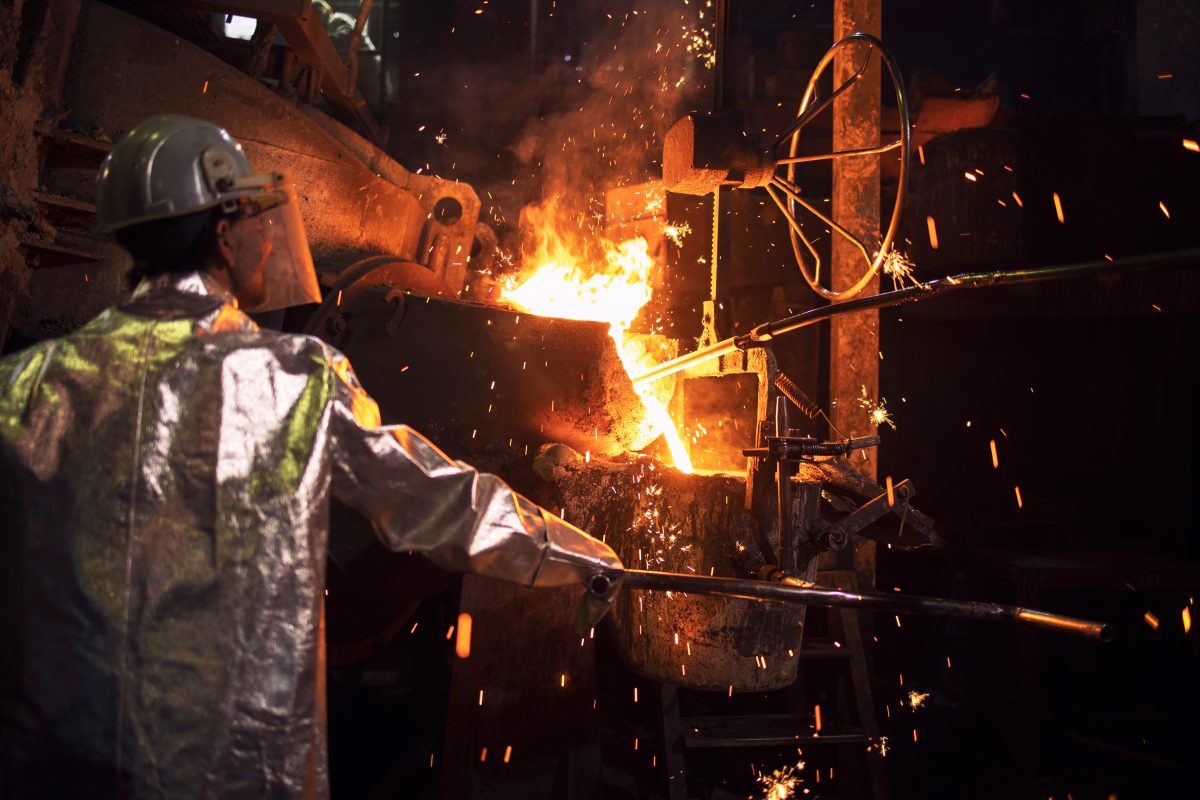
This wasn’t a typical family reunion. The gathering coincided with the annual shareholder meeting of the Lodge Cast Iron pan company, which has been melting pig iron and recycled steel to form cast iron pans for 130 years.
Most of the families had long since left nearby South Pittsburg, Tenn. Hardly any of them work at the company or in the factory itself, let alone could tell you much about the melting temperature of pig iron. But in an era of public offerings and rich acquisitions, this family has kept a tight grip on the handle of the business their patriarch founded in 1896.
Each year, dozens of Lodges return to Tennessee. The 70 family shareholders come back for the company’s annual meeting; the extended family, every five years on the company’s dime.
“As there get to be more family members, and more in the sixth [generation] than in the fourth, it’s a greater challenge for those individuals to connect,” said David Lodge , 69, a fourth-generation family member, Lodge director and biology professor at Cornell University. The gatherings help family members get to know each other and “make sure that knowledge and affinity for the company continues,” he said.
A sprawling universe of family-owned companies has stayed private, often giving priority to different values than public companies. Spanning everything from huge, multigenerational businesses like agriculture giant Cargill and candy maker Mars, to midmarket companies like Lodge and small businesses, these family-owned businesses are a force in the U.S. economy. Many of them are part of the “ stealthy wealthy ,” folks who make great sums of money with little fanfare or flash.
Family-controlled businesses, whether public or private, employ 59% of the U.S. workforce, excluding federal employees, and generate 54% of U.S. gross domestic product, according to 2021 data from Washington, D.C.-based advocacy group Family Enterprise USA.
“It’s just a remarkable part of the economy,” said Josh Baron , a senior lecturer at Harvard Business School who studies family businesses, which he also defines as family-controlled companies, public or private. “We treat it as if it’s this specialty thing, but it’s the majority of the economy in most places in the world.”

The family behind Lodge has no interest in relinquishing ownership of the company, said Lodge Chairman Jay Daniel , a fifth-generation family member and founder of an IT company. “It wouldn’t be the same business if the family doesn’t remain connected to it. As a private company, we get to think about the next quarter-century and not the next quarter.”
For much of its history, Lodge has just scraped by. In 1996, at the 100th anniversary of Joseph Lodge building a foundry on the banks of the Tennessee River, Henry Lodge , the company’s chief operating officer at the time, was worried the company might fold even as family members gathered to celebrate the milestone. Sarah Lodge Tally , a retired lawyer and company director who lives in Nashville, said her parents urged her to look outside the company for work when she was growing up.
A breakthrough—and the company’s turn toward growth and profitability—came in 2002 when Lodge figured out how to season its products so they could be used off-the-shelf, eliminating the need for customers to peel away a wax layer and bake items in an oven for hours before they were ready to use.
The 2008 financial crisis accelerated the company’s “hockey-stick growth,” as one director put it. Consumers started cooking for themselves more, and sales of its bestselling 10.25-inch skillet, typically selling for $29.95, spiked. The start of the Covid pandemic in 2020 led to a surge in demand, too.
Lodge today employs about 570 people, near its all-time high during the Covid pandemic, and is the largest employer in the county. It has employed three or four generations of some families. Collectors pay up for rare, vintage products like waffle irons and garden gnomes; a Grateful Dead pan fetched $4,100 in an auction at the Lodge Museum in 2024. Skillets get passed down in wills.
Under Mike Otterman , Lodge’s first nonfamily CEO, Lodge has added production capacity with a new foundry, continued to upgrade its teams and equipment, and reduced turnover in its hourly foundry workforce by upping hourly wages and expanding benefits. The company’s annual revenue has grown more than 10 times since 2002; Otterman declined to provide profitability figures or the company’s valuation.
“We want to be that indie band who never sells out,” Otterman said. “That’s kind of my guiding light: How do you stay original and authentic and meaningful, so that the person who cares about you now cares about you in the future?”
Before the board hired Otterman, two fourth-generation second cousins had led Lodge for nearly 50 years despite a relationship marked by what Daniel called “productive friction.” “Bowtie” Bob Kellermann was the convivial sales guy who got Lodge into Walmart and Williams-Sonoma , while Henry Lodge dove into finances and foundry operations. Each reported to the board.
The board pushed for a succession plan after years of Kellermann and Henry Lodge repeatedly saying they would retire—in five more years.
Otterman was an 11th-hour candidate. His 2-year-old daughter had died of cancer months earlier and he was planning to take some time off. Catching up with a recruiter friend one Friday, he said he would want to work in the southeast, closer to his wife’s family, at a brand that customers recognized when he returned to the workforce. Come Monday, at his friend’s urging, he was in South Pittsburg interviewing.
“Where I was in my life, where my family was, everybody just adopted me from day one,” said Otterman, who joined Lodge in 2016 and became CEO in 2018. (He and his wife have an 18-year old and an 8-year-old.)
Lodge’s roughly 150 family members vary in how early their memories trace back to the company. One director remembers visiting an older foundry as a child and being scared of the dark and noise. Another, Elizabeth Richards , a former chef who had grown up in London and New York, began engaging with the company in her late 20s after attending the 120th anniversary celebration. For younger family members growing up far away, a family reunion or seeing a Lodge pan at a restaurant might be the first time they feel connected to the company.
Most of the family shareholders each own less than 1% of the company; three own more than 5% each. Over time, their stakes will dilute further as current holders give their equity away and the ownership group keeps expanding. Stock-restriction agreements mandate that shares can only be transferred within the family, including to spouses and adopted children, or placed in trusts or similar entities that benefit family members.
Family members generally don’t live off the dividends company shares throw off, even as they have become more meaningful in recent years. They instead expect to and do forge their own livelihoods, Daniel said. The company declined to share how much a typical shareholder can expect in dividends annually.
A 10th of the company’s pretax profits make up shareholders’ dividends, Otterman said. Twenty percent of pretax profits go to employees, with half going to quarterly bonus pools and half going to their retirement plans. The employee profit-sharing program replaced a company pension in the late 1980s.
When demand slowed after Covid receded, the company suspended dividends for 2022 to maintain employee profit-sharing.
Some family members’ interest in the company has grown recently. A “family council” started around 2017 organizes the family reunions and helps educate family members about the company. Multiple applicants now vie for open board seats.
Richard Millhiser , 56, part of the fifth generation and a former engineer, said he most recently applied for a board seat in 2025 as his load lightened; in his second chapter, he had become a stay-at-home dad and fencing coach. His two rounds of interviews were tougher than some job interviews, he said. One question he faced during a four-hour grilling: How would he deal with his mother?
“My mother is very passionate about Lodge and very opinionated,” Millhiser said of Carolyn Millhiser , a former Lodge director and the family’s de facto historian. “My answer was along the lines of, ‘I’ve been disagreeing with my mother my entire life.’”
Carolyn Millhiser, 86 , said of her son’s characterization of their relationship, “I think that’s a little extreme…He was raised to think and do his own thing and his brother was, too.” (He got the board seat.)
At the recent gathering, family members wore nametags detailing their generation and family branch. Shareholders re-elected three board members. There was a tour of the foundry and museum, and a murder-mystery scavenger hunt.
As Sarah Lodge Tally sat in a hotel conference room for a board meeting, her husband texted her a steady stream of pictures of their 11-year-old son tossing skillets that didn’t make the cut onto a giant recycling pile in the foundry, and of their 13-year-old daughter picking out “18 different pans” at the factory store. At some point down the road—she and her husband are still discussing the timing, she said—“they will become shareholders.”