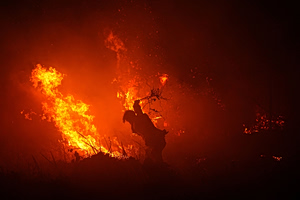
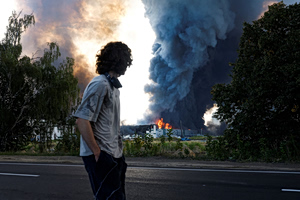
The answer lies not only in climate change or firefighting capacity, but in the institutional arrangements through which societies manage risk
Born of colonialism alongside Melilla, Ceuta has played a pivotal role at key moments in Spanish history and is now one of Europe's most heavily guarded borders
One could foresee any of the above “open fronts” coming to hit Sanchez at some point, but all of them coming together at the same time can hardly be a coincidence.
The Prime Minister's latest statements have given the impression that the elections are not imminent, which leaves a little political wiggle room.
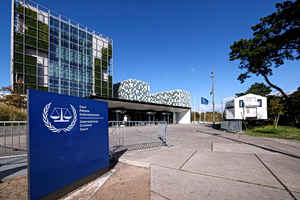
Two landmark court rulings in Greece and Strasbourg reaffirm the rule of law, protect judicial independence and send a clear message: press freedom cannot be threatened, intimidated or silenced.
When we Europeans think about security, they often imagine borders, armies, weapons, alliances and geopolitical crises. These are important of course. When we think about Russia’s war against Ukraine, the instability in the Middle East and growing global competition we are reminded that hard security has returned to the center of politics. But the next […]
Will the elections be held institutionally or as a matter of prime ministerial prerogative? From a purely betting perspective, it is an amusing question. It is not amusing, however, because from the government down to the public administration, the country freezes before elections and struggles to recover after them.
Beyond the economic dimension, the profound changes currently reshaping security and defense policies across Europe are likely to generate significant social and political implications at both the European and national levels
Purpose demands discipline. And nothing builds purpose like service, especially when that service is to your country
For more than half a century, our democracy has been taking shape and gaining strength.
This is not diversification. It is laundering.
The decline of Greek language studies in Australian universities is not simply a story of shrinking university programs. It reflects broader changes in Australian society, higher education and public policy. Universities respond to student demand, but that demand is generated by a wider ecosystem of families, schools, communities and government policy. The future of Greek studies therefore depends not simply on preserving university courses, but on rebuilding the conditions that make them viable.
The country’s fiscal position, the condition of its financial system, and the level of private-sector indebtedness have all improved substantially compared to the pre-crisis period
Which means the "any given Sunday" has to end some time in March 2027. But as we said: it begins in September 2026…
After Kasselakis split from SYRIZA, New Left and his own party emerged, echoing a long history of splinter parties in Greek politics
The strait carries between 35% and 43% of the world’s seaborne urea and nearly half its traded sulphur, the backbone of the phosphate fertiliser chain.
A series of high-profile controversies has intensified debate over institutional accountability, judicial independence, and the rule of law in Greece, raising broader questions about the resilience of its democratic institutions
Elsewhere in democratic Europe, a government crisis has all the force of a firecracker or all the significance of a broken faucet. Not here.
Market access exists in EU law. Can European firms use that access in practice, with enough speed and predictability to grow across the Union?
What sort of alliance could survive in such a universe? None