Heatwaves are no longer viewed solely as a public health concern in Greece but as an increasingly costly burden on households, with rising electricity bills emerging as the most immediate financial consequence of prolonged periods of extreme heat.
A nationwide survey conducted by Metron Analysis last month for the NGO Mindworks Lab, as part of the Greece Heatwave Project, found that 77% of respondents identified higher electricity costs as the biggest impact of heatwaves. Another 26% reported additional household expenses, while 23% said they had reduced their use of air conditioning because of the cost.
The survey also highlighted widespread disruption to everyday life. Nearly two-thirds of respondents said heatwaves affected their daily travel, while 55% reported difficulties carrying out outdoor work or errands. Almost half cited poorer sleep and reduced rest, and many also reported effects on their physical and mental well-being. Exhaustion was the most common feeling associated with extreme heat, followed by a sense of reduced productivity and feeling confined to homes or urban areas.

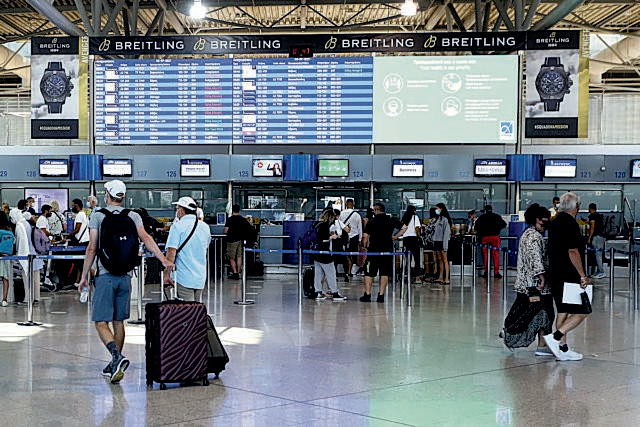
File photo. InTime Sports
Public confidence in the country’s preparedness remains low. Some 78% of those surveyed said the country is no better prepared for heatwaves than it was a year ago, while only 18% believed preparedness had improved.
Although 70% said communities should organize and take collective action when public authorities fall short, only 18% believed their own neighborhood has the capacity to respond effectively without state support. Nearly half said they would be more willing to participate in local initiatives if they were given clear guidance on how and where to help.
The survey also points to growing public concern about the future. Nearly nine in 10 respondents view heatwaves as a threat to quality of life and well-being, with 57% describing the risk as serious or very serious. Two-thirds believe heatwaves are becoming more intense each year, while 73% expect cities will have to adapt the way people live and move during periods of extreme heat.
Respondents identified expanding urban greenery as the highest priority for local authorities, followed by opening air-conditioned public spaces, supporting vulnerable residents and installing more public drinking water points.
Medical experts continue to warn that prolonged heatwaves pose the greatest health risk. Research has shown that long-duration heat events have a substantially greater impact on daily mortality than shorter but more intense episodes, particularly among older adults. High levels of ozone and particulate pollution further increase the risk of heat-related deaths.
The findings come as Greece experiences what is being billed as a marked shift in its climate. Over the past two years, scientists have warned that heatwaves are arriving earlier, occurring far more frequently and lasting significantly longer than in previous decades, while persistently warm nights leave the human body with little opportunity to recover.
Recent analyses have shown that the country now experiences roughly five times as many heatwaves as it did before the mid-1990s, with the number of heatwave days increasing sevenfold as prolonged episodes become the new norm. Greek authorities have repeatedly responded by opening cooling centers, restricting outdoor work during peak temperatures and urging vulnerable groups to take protective measures as extreme heat increasingly shapes daily life across the country.