
 Μake us preferred on Google
Lawmakers in Greece on Thursday approved legislation tightening supervision of companies managing NPLs, introducing additional safeguards for borrowers and providing for repayment arrangements of up to 120 installments for outstanding tax and social security liabilities.
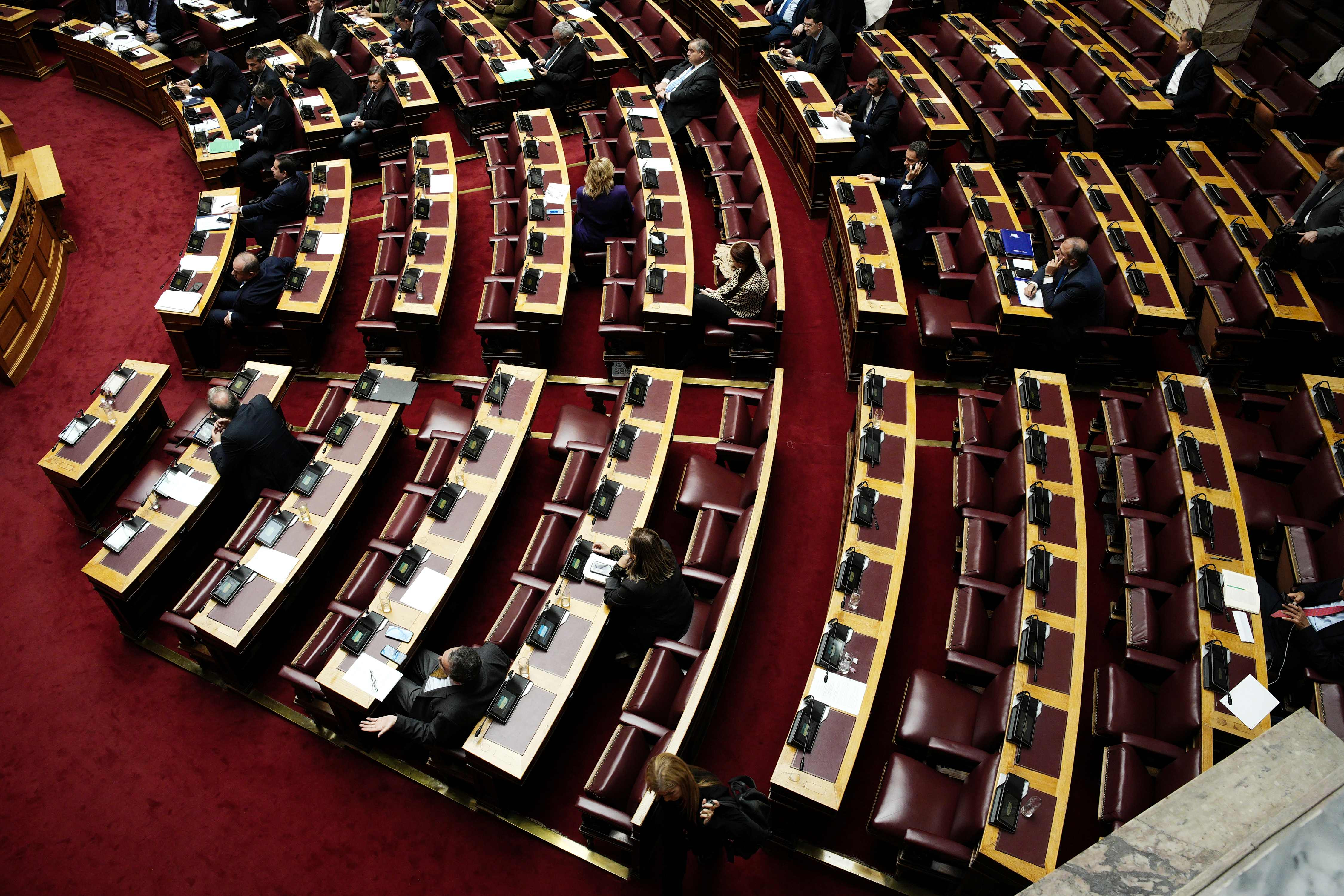
The bill, submitted by the economy and finance ministry, passed in principle with the votes of ruling New Democracy (ND) party, while opposition parties voted against. However, several individual provisions received broader cross-party support during a separate roll-call vote on 19 articles and a government amendment.
The amendment, introducing a fixed 3% interest rate for eligible borrowers using the out-of-court debt settlement mechanism and increasing tenfold the maximum fines imposed on loan servicers, garnered 212 votes in favor, 49 against and 27 abstentions.
The individual articles received between 158 and 227 affirmative votes. Article 15, concerning protection for borrowers who consistently meet their repayment obligations, secured the strongest support, with 227 votes in favor, 47 against and 14 abstentions.
The vote followed two days of heated parliamentary exchanges, with the controversy centering on Article 23, a provision withdrawn by the government following strong criticism from opposition parties and concerns over its implications for indebted households.
Article 23, which had generated the most heated exchanged between the government and opposition parties, was not included in the final roll-call vote and was not adopted. A separate amendment introducing the fixed interest rate and higher fines, however, remained in the legislation and was approved.

Tighter supervision and borrower protection
The legislation establishes a more demanding regulatory framework for companies managing claims arising from loans and credit agreements, commonly known as servicers.
Its provisions include annual management audits, more extensive disclosure obligations and requirements for servicers to submit information to supervisory authorities and demonstrate compliance with regulations.
Borrowers will be entitled to receive detailed information about their outstanding obligations, while interest accrual can be suspended if servicers fail to provide the required documentation within the prescribed timeframe.
The bill also establishes a ceiling on interest accruing on outstanding claims and strengthens protection for borrowers who consistently meet the terms of an existing debt-restructuring agreement.
Under Article 15, creditors face restrictions on initiating enforcement proceedings against borrowers who comply with their repayment arrangements. Violations of these safeguards can render enforcement actions invalid and trigger financial penalties.
Another provision requires creditors to submit a standardized, documented debt-restructuring proposal at least three months before a scheduled property auction, giving borrowers an additional opportunity to settle their obligations and avoid losing their homes.
The legislation also introduces a framework for bilateral negotiations between borrowers and creditors, establishing deadlines for examining applications and submitting restructuring proposals. The process must be completed within six months, while any required down payment cannot exceed 15% of the outstanding debt.
Servicers are also required to cooperate with the Financial Ombudsman in the country. The Bank of Greece (BoG) is designated as the competent supervisory authority, with powers to monitor compliance, examine complaints and address violations.
Fixed interest rate and higher penalties
The government amendment introduces two additional measures aimed at strengthening borrower protection.
The first establishes a fixed interest rate of 3% throughout the repayment period for eligible borrowers whose debts are restructured through the out-of-court mechanism. The measure is intended to provide greater certainty over monthly repayments and protect households from fluctuations in borrowing costs.
Under the previous framework, the 3% rate applied during the first three years for secured debts, while unsecured debts carried a 4% rate. Interest subsequently became variable.
The second measure increases the maximum administrative fine the Bank of Greece can impose on servicers from 500,000 euros to 5 million euros for violations of the regulatory framework.
The legislation also provides for the repayment of overdue tax and social security liabilities in up to 120 monthly installments, subject to eligibility requirements. It removes time restrictions on the inclusion in debt arrangements of liabilities arising from guarantees called by the Greek state and designated development and business-support institutions.
Article 23 sparks political confrontation
The most contentious provision, Article 23, would have allowed bilateral debt-restructuring agreements between borrowers and creditors to acquire the status of enforceable titles.
Under the proposed arrangement, if a borrower fell behind on payments by an amount equivalent to more than three installments, the creditor could terminate the agreement and pursue enforcement proceedings on the basis of the agreement itself, without first obtaining a new payment order or court ruling.
The government argued that the provision would simplify the implementation of mutually agreed debt-restructuring arrangements and would not give servicers unrestricted powers to seize borrowers’ assets.
Opposition parties, however, warned that it would substantially strengthen the position of investment funds and servicers, potentially facilitating seizures and property auctions while reducing the scope for judicial scrutiny before enforcement proceedings began.
The government eventually withdrew Article 23 following mounting criticism, but the dispute continued throughout the parliamentary debate.