 Μake us preferred on Google
After two years of Donald Trump 2.0, voters have delivered a rebuke to his way of running the United States and given Democrats an opportunity to correct course.
But there is danger in reading too much into the results. Voting “against” a president, as often happens in midterms, is not necessarily an endorsement of the opposition’s policies, much less evidence of a lasting ideological shift.
The cost of living was a major concern for voters in 2024, and it remains one today. Groceries, fuel and healthcare continue to weigh on household budgets. Trump’s tariffs and the war with Iran have added to those pressures, bringing the consequences of foreign policy directly into American homes.
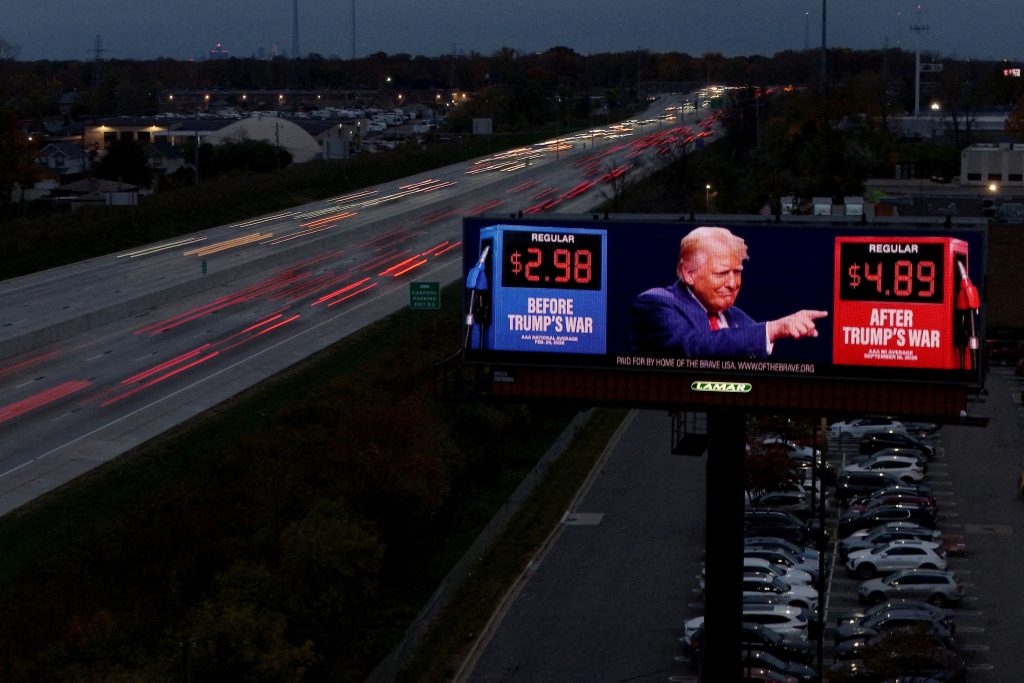
A drone view shows a billboard featuring US President Donald Trump and a sign referencing gasoline prices, ahead of the midterm elections, in Madison Heights, Michigan, US, November 2, 2026. REUTERS/Brian Snyder TPX IMAGES OF THE DAY
Corruption also featured among voters’ concerns, a reminder of Trump’s own promise to “drain the swamp.”
In short, the same economic frustrations that helped return Trump to the White House may now be working against him.
But those frustrations run deeper than the price of groceries or gasoline. Trump did not create America’s divisions. He exploited resentments that had been building for decades.
As American businesses moved manufacturing overseas, particularly to China, communities lost jobs, economic security and, in many cases, confidence in their future.
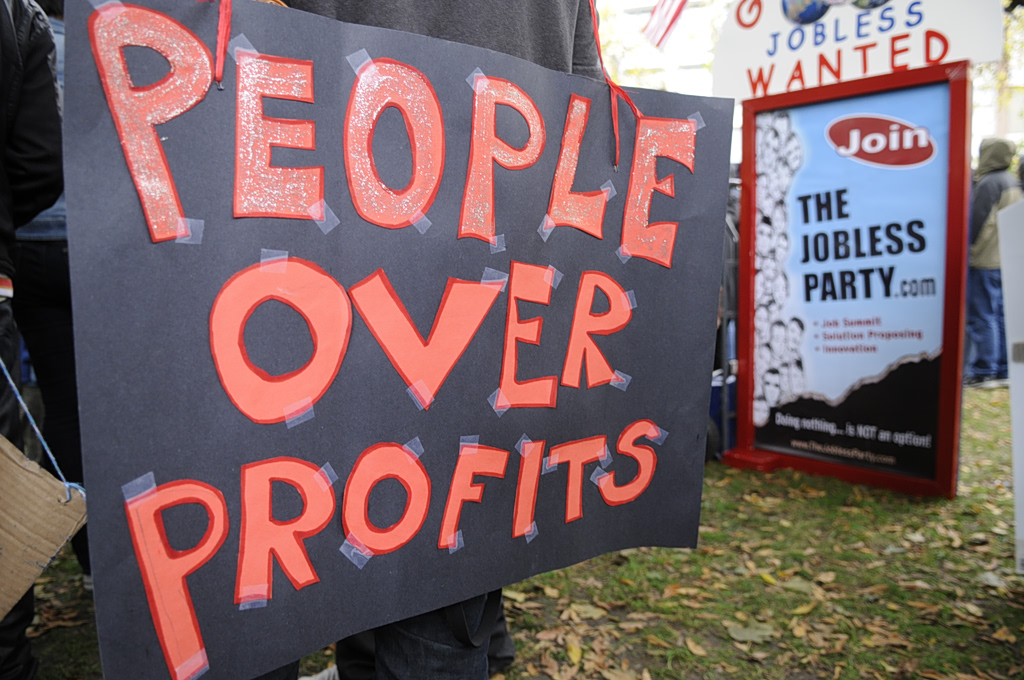
Global Youth Unemployment Rose in 2025, UN Says
Globalization delivered enormous benefits, but not everyone shared in them. Successive Democratic and Republican administrations have continually failed to adequately address the consequences. Trump’s attempts to strengthen American industry through protectionist policies have added costs and uncertainty to an economy still heavily dependent on imported goods and global supply chains.
These grievances deserve recognition and it is important to understand why so many people feel abandoned. This does not, however, justify the blanket racism and bigotry that have become so prominent in American, and even European, political discourse.
Clearly documented and justified safety and security concerns must be address at the US’ borders and within the country, but they also can not spiral into the deadly violence we have seen through ICE. The election of candidates who broke historic barriers offers some hope that appeals to division and prejudice have their limits.
Still, rejecting these approaches is only part of the challenge. Americans must also recognize that the country, and the world around it, have fundamentally changed.
Trump’s biggest mistake thus far has been trying to “Make America Great Again” by using old formulas and political playbooks. The biggest mistake Democrats could make now is to let the political pendulum swing in the opposite direction and promise their own outdated version of America, based on a world that no longer exists.
With national debt exceeding $40 trillion, the highest nominal debt in US history, America faces some difficult choices. Americans are understandably weary of paying for foreign wars, particularly when so many needs remain unmet at home. But the country cannot simply withdraw from the world and expect the consequences of international instability to pass it by. Growing competition from China, energy security, industrial competitiveness and strained international alliances all demand attention, at a time when the country’s financial room for maneuver is increasingly limited.
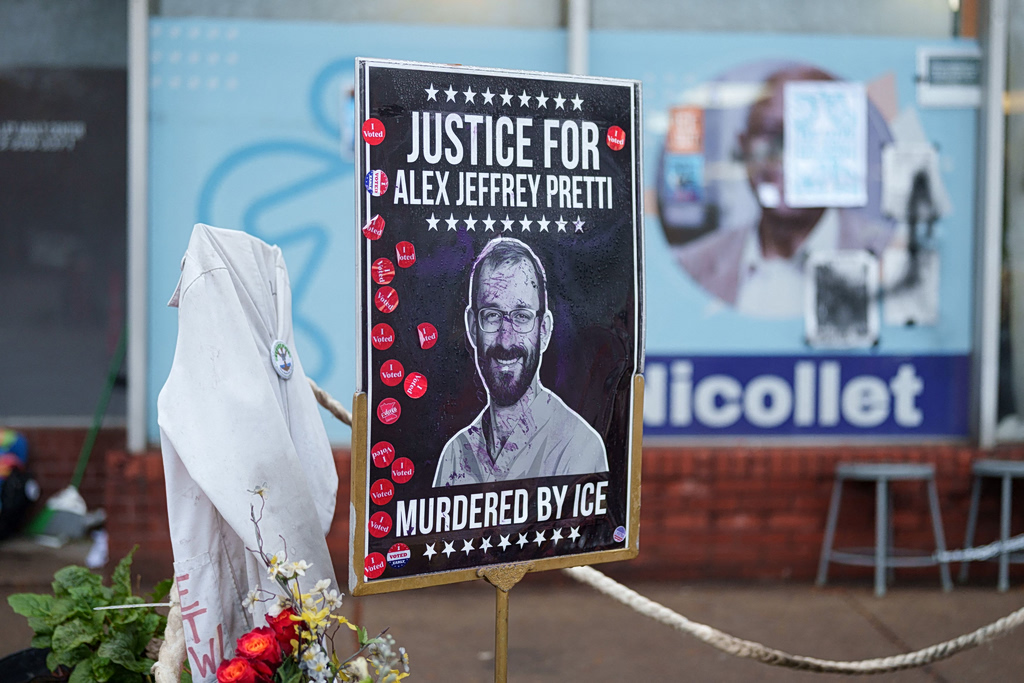
Stickers reading “I voted” are placed on the memorial site for Alex Pretti, a US citizen shot and killed in January 2026 by federal immigration agents shortly after agents also shot dead Renee Good, the morning after Democrats captured majorities in both the Senate and House in a stinging midterm election rebuke by voters for US President Donald Trump’s policies, in Minneapolis, Minnesota, US November 4, 2026. REUTERS/Tim Evans
Nor can America expect its international relationships to return to normal simply because the political winds have shifted. After two years of erratic trade and security policies, rebuilding trust with longstanding partners will take time. We should not expect to be welcomed back with open arms.
And then there is climate change. Humanity has never faced a challenge quite like it, with consequences that cross borders, threaten livelihoods and carry enormous human and financial costs. We cannot expect the policies and assumptions of the past to provide the answers, however profitable they may be in the short term.
These are the challenges awaiting Democrats. Their electoral victories should be celebrated, but the party cannot afford to mistake electoral success for permission to return to blue business as usual.
And to the many honorable Republicans who know their party and their country deserve better, these election results should prompt some uncomfortable reflection. For two years, too many chose silence when principle demanded otherwise. Political expediency took precedence over accountability, and party loyalty often outweighed the responsibility to defend democratic institutions. The midterm losses are, at least in part, the price of that silence.
Both parties now have some serious thinking to do. America needs a new playbook, one that recognizes the world as it is today while offering a bold vision for the world we want to live in. Because for most of us, Mars is not a viable alternative.

President-elect Donald Trump arrives to watch SpaceX’s mega rocket Starship lift off for a test flight with Elon Musk from Starbase in Boca Chica, Texas, Tuesday, Nov. 19, 2024. (Brandon Bell/Pool via AP)