 Μake us preferred on Google
 A few years ago, the idea of Greece as something more than an “exotic” filming location would have seemed far-fetched. Today, the country boasts one of Europe’s fastest-growing film industries, supporting thousands of professionals, showcasing Greece and Greek talent globally, and generating revenues that help the local industry grow while bolstering the national economy.
The real story isn’t that Greece has successfully established itself as a filming destination, but that it has strategically repositioned itself: attracting audiovisual investment, featuring more in international productions, and creating jobs across sectors–spanning everything from film crews and transport to hospitality and post-production.
Greece has gone from being a beautiful backdrop to consolidating its position as a global production hub, and continues to build momentum with new policies, international partnerships, and high-profile projects. In-house productions are now competing on the world stage, earning nominations and even wins at the Oscars, Golden Globes, and Cannes Film Festival. Greece is set to host the European Film Awards in Athens next year, while its Hollywood presence remains strong, with Brad Pitt in Greece this month filming psychological thriller “The Riders”.
Industry expansion is a top priority with collaboration between the Hellenic Film and Audiovisual Center and Netflix. In addition, a broader-ranging MoU signed by Tourism Minister Olga Kefalogianni, the Greek National Tourism Organization, Netflix, and Elise Jalladeau of the Thessaloniki International Film Festival, which celebrated its 66th edition in 2026, seeks to strengthen the link between Greek culture, cinema, and tourism.
At the same time, international productions continue to spotlight the country’s diverse locations, from Crete, Mykonos and Santorini to Meteora, Corfu and Kefalonia, while industry buzz includes reports of a potential Greece-set storyline in the 6th season of “Emily in Paris”, reflecting how Greece is increasingly featured in both major film productions and high-end television.
A Vision Over a Decade in the Making
The seeds of this impressive transformation were planted more than 10 years ago, when persistent industry stakeholders envisioned a multi-layered film industry that would bring Greek talent into the spotlight.
The journey has been rocky, but it’s paying off. A key catalyst has been the Hellenic Film and Audiovisual Center (HFAC – Creative Greece), known locally as EKKOMED. This entity, formed in 2024 through the merger of the Greek Film Center and the National Center for Audiovisual Media and Communication, operates under the Culture Ministry and oversees Greece’s film and audiovisual policy.
TO BHMA International Edition spoke with Leonidas Christopoulos, President and CEO of EKKOMED, about the growth of the Greek film industry, its prospects, and the challenges it faces.
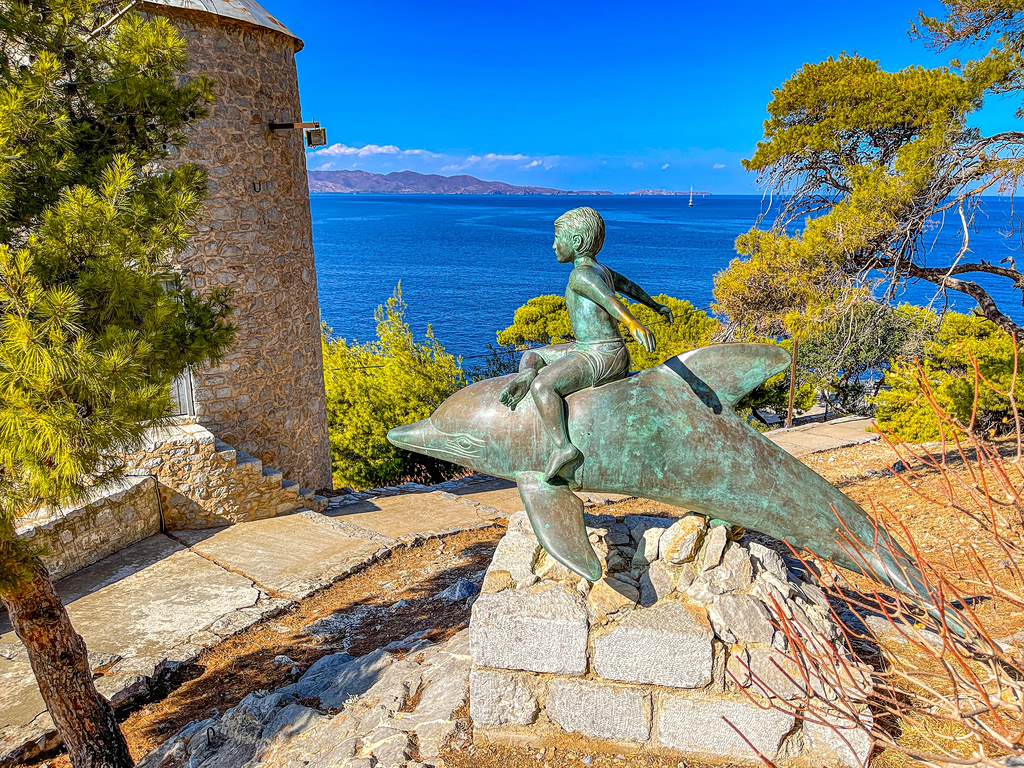
‘Boy on a Dolphin’ – inspired by the film of the same name filmed on the Greek island of Hydra in 1957 and featuring Sophia Loren.
More Than a Filming Location
Greece has made remarkable strides in attracting international productions through promotion, incentives, and simplified procedures. But how does EKKOMED balance positioning Greece as a competitive filming destination with also strengthening its identity as a producer of original, internationally-relevant films and series?
“Attracting international producers and strengthening Greek creation are not conflicting goals; they are complementary pillars of the same strategy,” explains Christopoulos.
“EKKOMED works to position Greece as both an attractive destination for film and media production and a hub for developing original creative content. International productions bring investment, know-how, and opportunities for Greek crews. Meanwhile, support tools, co-productions, and collaborations create conditions for Greek stories to reach wider international audiences.”
Economic Impact
The economic benefits of Greece’s film growth are undeniable, but Christopoulos stresses that success is measured in more than numbers.
“Our goal is for Greece to function not only as a filming location, but as a complete creative content ecosystem. International productions offer Greek professionals the chance to collaborate with global studios, learning high production standards that elevate domestic projects,” Christopoulos explains.
“Long-term success depends on establishing a stable production ecosystem with specialized staff, modern infrastructure, and the ability to produce projects with a global perspective.”
This mutually beneficial system attracts international productions that raise technical standards as local crews gain experience that makes them “export-ready”. He goes on to add that profits from these projects can then be reinvested in Greek-led films and series, helping domestic creators gain credibility and access to co-production networks.
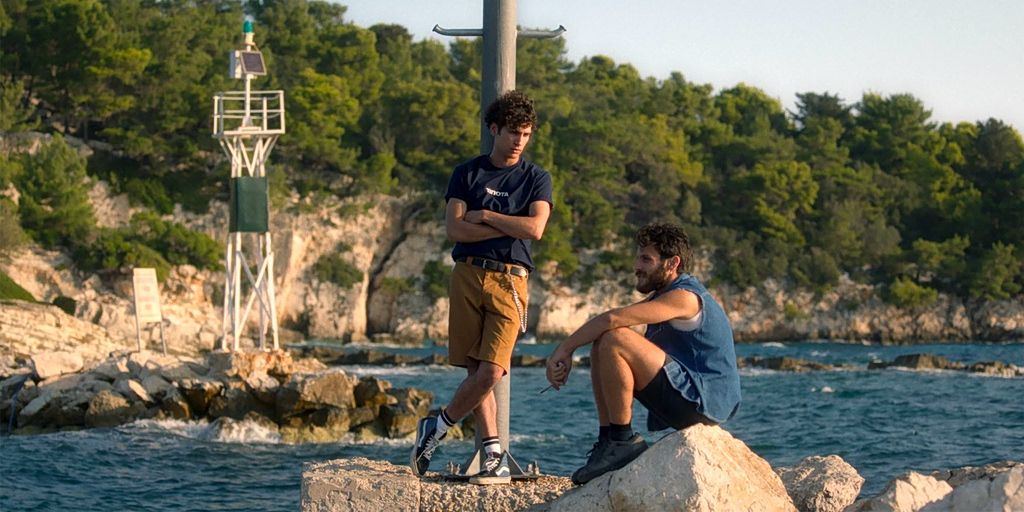
Scene from popular Greek series ‘Maestro in Blue’ filmed on the Greek island of Paxos and airing on Netflix.
The Role of Financial Incentives
In a hyper-competitive global market, financial incentives are crucial. Greece’s cash rebate system has not only helped attract productions, it also has a multiplier effect few see. Because when international companies invest locally, they support employment and contribute to cultural value.
Greece’s cash rebate system has attracted significant attention. While it has supported the growth of the Greek film industry and kept funds circulating, reported issues have raised concerns about transparency.
“There’s no doubt that financial tools like cash rebates and co-production schemes have driven growth,” says Christopoulos. “The challenge now is maintaining competitive incentives while ensuring they are strategically targeted and sustainable. Our focus is to streamline procedures, enhance transparency, and link incentives to the development of domestic creative talent. Incentives are a tool for developing content, not just attracting filming,” he tells TO BHMA International Edition.
Greek Content on the World Stage
In recent years, Greek cinema has gained significant recognition, with auteurs like Yorgos Lanthimos and acclaimed documentary filmmakers making waves. Greek series on platforms like Netflix are reaching global audiences.
“The next step is strengthening international distribution and market access,” Christopoulos tells TO BHMA International Edition.
“This means more co-productions, partnerships with global distributors, and developing projects with international appeal from the outset. EKKOMED supports premieres at international festivals and partners with platforms like Netflix to ensure Greek content travels and reached new audiences.”

Filming in action in Thessaloniki featuring a classic Plymouth Barracuda during production of action-thriller ‘The Enforcer’ starring Antonio Banderas.
Building Infrastructure and Human Capital
As production activity grows, Greece faces challenges: the need for modern studios, post-production infrastructure, and skilled crews. EKKOMED is collaborating with government bodies, universities, and the private sector to strengthen investments and create training programs tailored to market needs.
“Developing the industry requires a parallel growth in infrastructure and human capital,” says Christopoulos. Another priority is decentralization. “Greece’s geographical and cultural diversity is a significant advantage. Regional film offices facilitate productions, connect local authorities with the industry, and create opportunities for local economies.” Currently, offices operate in Athens and Attica, North Aegean, Western Greece, Western Macedonia, Epirus, Thessaly, Central Macedonia, Peloponnese, and Crete.
“The goal is a balanced national film economy, where the benefits of production activity are spread throughout the country.” He is quick to point out that this will require active regional participation in the design of financial incentives and supporting productions.
Lights, Camera… Greece!
Looking ahead, Christopoulos defines success not just by the number of productions but by the development of a mature, sustainable, and internationally recognizable content creation ecosystem.
Gone are the days when Greece was just a pretty face. Today, it is a thriving ecosystem, supporting tourism, exporting Greek culture, and creating highly trained professionals that can stand on par with other film-producing countries.
“Over the coming decade, we aim to see a rise in international co-productions with Greek creative input, more Greek films and series with strong international distribution, and an increasingly dynamic network of infrastructure, professionals, and creators contributing to both cultural extroversion and economic development.”