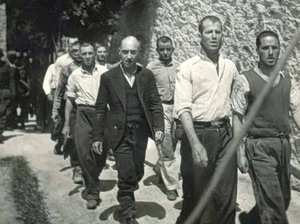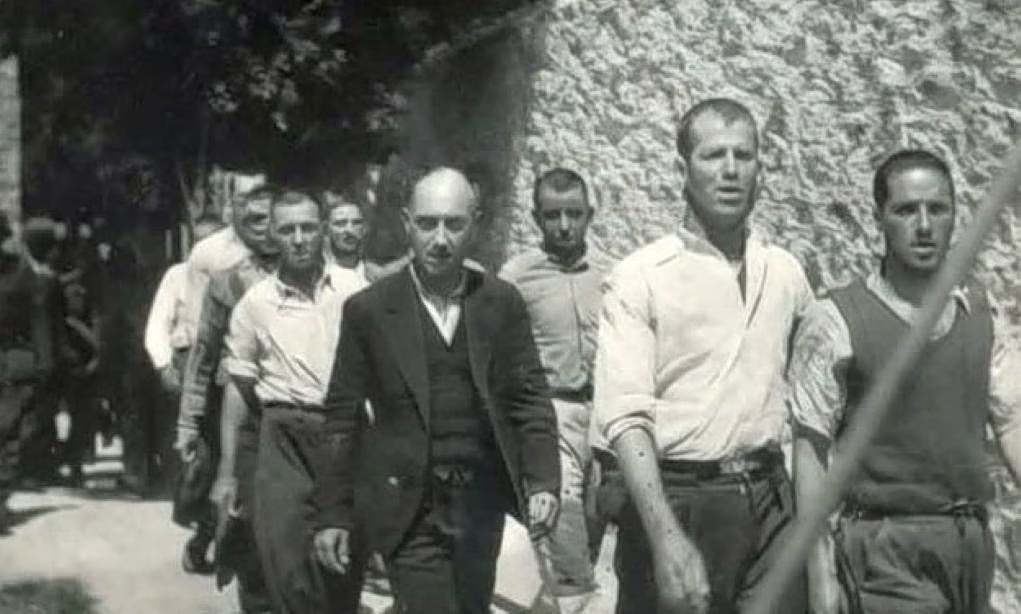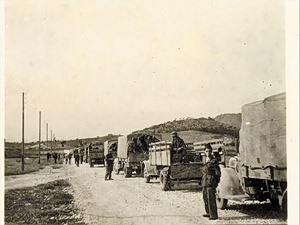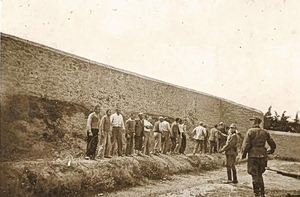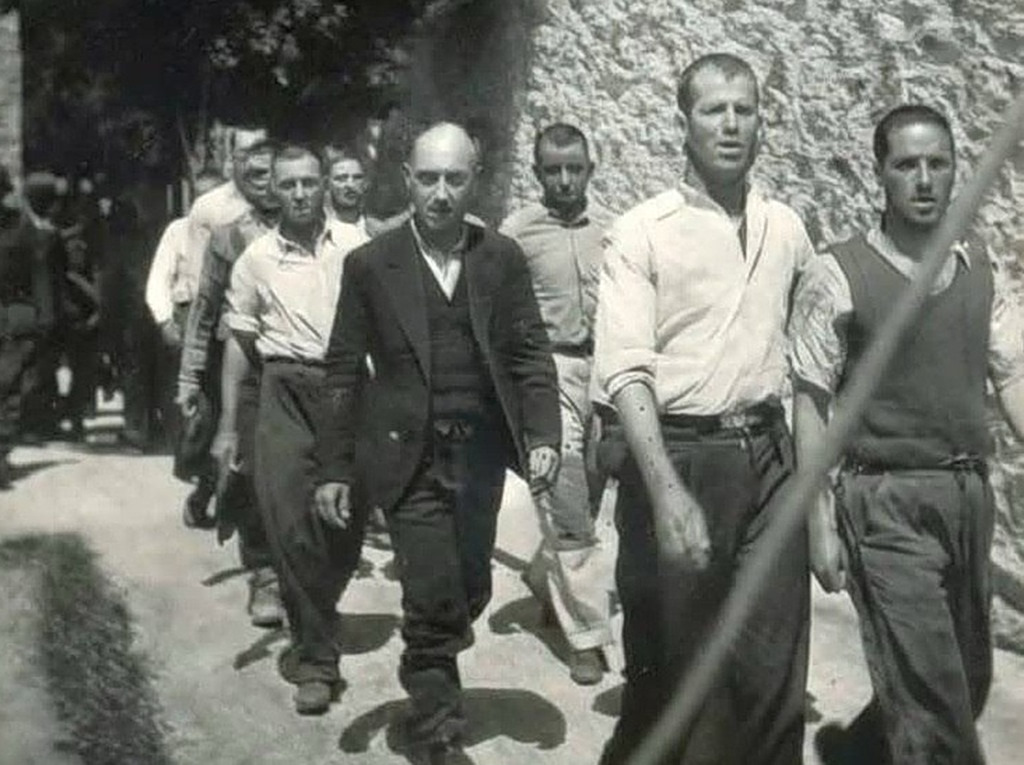
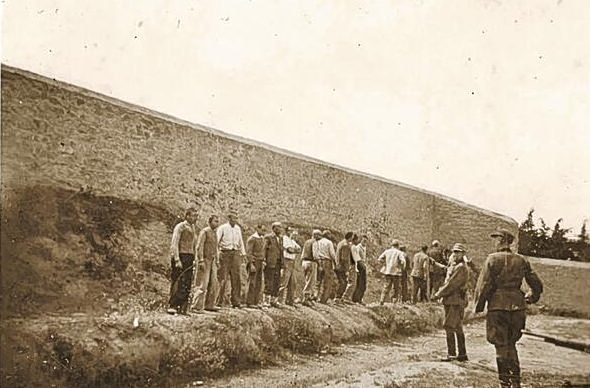
Two-hundred and sixty-two historic photographs showing scenes from the May 1, 1944, execution of 200 Greek prisoners by Nazi occupation forces in Greece are now in Athens as property of the Greek state.
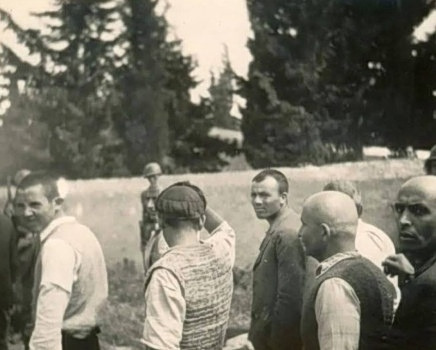
The cache of authentic photographs two weeks ago generated a firestorm of controversy and attracted international attention after a Belgian collector tried to sell them in an online auction. They constitute the only known record to date of the execution of 200 Greek prisoners by the German occupation forces in the east Athens district of Kaisariani’s shooting range on May 1, 1944.
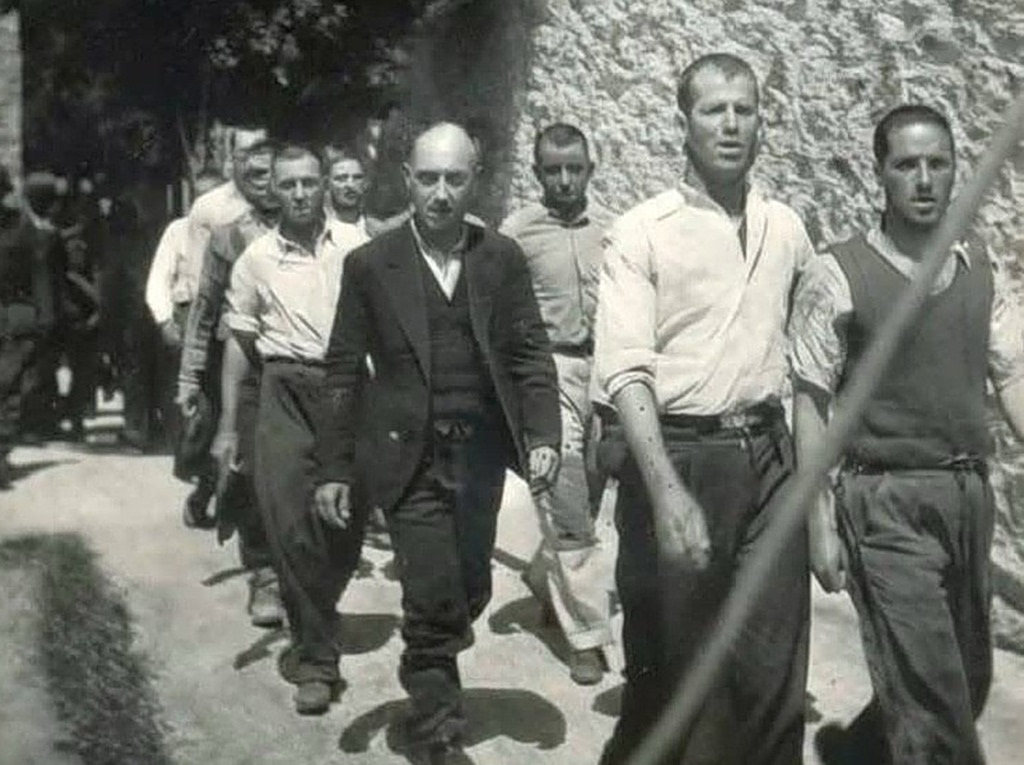
Ownership of the historic photographs—part of a set of 262 frames, including three completely unknown images taken during and immediately after the execution—along with 16 documents and four occupation-era banknotes, was transferred to the Greek state, following a preliminary agreement signed on Feb. 21 between collector Tim de Craene and the Greek culture ministry. The final act took place last Friday, when the entire collection was handed over to officials of the ministry who had traveled to Belgium for this purpose. The transfer was carried out at the offices of the Greek embassy in Brussels.
With the development, the chapter of acquiring the valuable historical materials by Athens is completed, and a new chapter begins concerning their preservation and study—a process likely to lead to the further identification of victims. According to the Athens daily “Ta Nea,” an exhibition to allow the general public to view the photographs and documents is considered certain.
“The Ministry of Culture reacted with exceptional speed and accomplished a difficult task, which included documenting the authenticity of the collection, designating it as a monument, verifying its provenance, negotiating to ensure it would not be broken up and would be transferred in its entirety to the Greek state, and finally completing all necessary procedures for the transfer, as required by the current institutional framework,” Culture Minister Lina Mendoni said on Saturday.
The price tag
The question of what consideration was paid for the acquisition of the material remains unknown, so far. Although press reports cited an amount of 100,000 euros, there has been no official confirmation. In a comment to “Ta Nea” following a joint statement to Greek media outlets, as he has declined interviews, de Craene stated:
“As for the financial terms agreed upon with the Greek government, I would like to emphasize that my expectations were lower than the highest spontaneous private offers I received, even when those concerned only the 10 Kaisariani photographs whose auction was suspended. The inclusion of the three additional photographs of the execution, as well as the entire collection of more than 250 additional photographs and documents, was not driven by financial motives but was a conscious choice. The study of the complete collection will contribute to providing a broader historical context for future researchers.”
De Craene, the owner of the company Crain’s Militaria, through which approximately 300,000 authentic World War II photographs have been sold—mainly private snapshots taken by German soldiers, such as the controversial album that belonged to German sergeant Hermann Hoyer—said that “photographs of executions by German forces are unfortunately not particularly rare, especially concerning Poland, the former Yugoslavia and the Eastern Front,” and that within this context the full historical weight of the Kaisariani executions was not initially entirely clear.
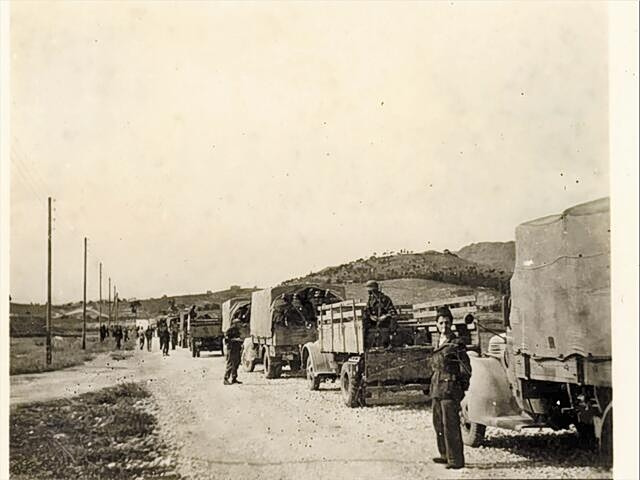
“In the case of the Kaisariani photographs, I initially decided to allow the auctioning of the series of images taken shortly before the execution through a public online platform,” he said, confirming the existence of three photographs taken during and immediately after the execution, which were never offered for sale “due to their shocking nature and the possible identification of victims,” as he stated in a lengthy statement.
“When I realized the national sensitivity surrounding these images, I immediately decided to suspend the auction and begin negotiations with the Greek authorities. From that moment on, my priority was to ensure that the photographs would be incorporated into an institutional framework where they could be preserved, studied, and presented with the necessary historical responsibility and dignity. Although I did not organize any private auction after halting the public process, I received several particularly high spontaneous offers from private individuals in the following days,” he claimed, emphasizing that “the negotiations with the Greek authorities were consistently constructive.”