 Μake us preferred on Google
 Marrow Deep couldn’t be just another entry in Mastodon’s discography. It arrives at a moment when the band has to redefine itself, having lost one of the figures who shaped its sound and identity for a quarter century.
The post-Brent Hinds era necessarily begins here, and the big question is whether Mastodon can change without ceasing to sound like Mastodon.
The answer Marrow Deep gives is emphatic. Hinds’s absence is still felt, and his memory inevitably lingers in the background, but the band doesn’t try to recreate its past or build an album centered entirely on loss.
Instead, as Wall of Sound notes in its review, Mastodon sound determined to use this change as a starting point for something new.
The first major lineup change
Nick Johnston now holds down lead guitar, and he doesn’t try to become the “new Hinds.” He fits into Mastodon’s already dense sound and proves flexible enough that the band doesn’t lose its power or technical precision.
An even bigger sense of renewal comes from Joao Nogueira’s presence as a full member. Keyboards and synths stop being just supplementary touches and move to the forefront far more often, strengthening the progressive and psychedelic side of Mastodon.
Marrow Deep also seems to consciously move away from 2021’s Hushed and Grim. That double album was dark, heavy, and full of sprawling progressive compositions. Here things feel more direct, more aggressive, and often faster, without losing the complexity that has defined their music for years.
From sludge to punk
“Barbarians Blood” looks back toward the band’s sludge roots, but presents them through the more modern, cleaner sound that made Emperor of Sand one of their most acclaimed records. Ben Koller of Converge and Killer Be Killed handles drums, giving the track huge rhythmic drive.
At one point, the song morphs into an almost punk outburst, giving Koller room to unleash his skills. That’s also where one of Nogueira’s first synth solos appears, an early clear sign of how important keyboards have become to the band’s sound.
On “Poisonous Weapons,” Mastodon return to a tested formula: calm moments interrupted by sudden eruptions, Troy Sanders’s and Brann Dailor’s vocals trading off, and a sci-fi narrative that carries their clear signature.
“Your Ghost Again” moves even closer to what people expect from Mastodon. Progressive passages, powerful riffs, and striking guitar work come together in a track that sounds instantly familiar, while also standing as the album’s most direct tribute to Hinds. By contrast, “Snakes for Dinner” treats loss in a hazier, more suggestive way. The lyrics never make clear whether the person who “left and took the moon and stars with him” is gone for good or still out there somewhere.
View this post on Instagram
A sound that stays recognizable
What’s always been interesting about Mastodon is their ability to draw from sludge, prog, metal, psychedelia, and space rock without the result sounding like a mere sum of influences. As Wall of Sound observes, even amid the changes on Marrow Deep, the songs still carry the band’s stamp.
That’s especially clear in the album’s middle stretch, from “Out Like a Lamb” to “Moth and Bone,” where their love of 70s space prog comes more to the surface.
On “Out Like a Lamb,” Dailor drives the tempo up furiously while Bill Kelliher and Johnston build a wall of riffs around him. “In The Ruins” moves in the opposite direction. It’s more restrained, but the sense of threat never disappears. Its dark mood ties back to what Sanders went through during Hurricane Helene, something reflected in his performance.
The music gradually swells around his voice, until the relative calm gives way and Sanders erupts in the chorus.
Nick Johnston introduces himself to Mastodon
If there’s one moment where Johnston clearly announces his presence, it’s “They’re Coming For You.” The opening guitar solo functions almost like a personal statement before the track explodes into a barrage of riffs.
“Golden Spires” puts Dailor out front on vocals, with Sanders taking the chorus. The two voices remain completely different, but it’s exactly that contrast that makes them work together. Dailor’s distinctive tone can take some getting used to, but here their pairing is one of the album’s strong moments.
With “Moth and Bone,” the band moves fully into spacey territory. Nogueira’s keyboards steer the song in a more psychedelic direction, building to the slowest, most contemplative moment on all of Marrow Deep. The lull is only temporary, though, as the riffs return and the composition starts shifting shape again.
From Josh Homme to Geezer Butler
Mastodon have always had plenty of friends willing to stop by the studio, but Marrow Deep raises the bar on guest appearances.
Josh Homme appears on the groove-heavy “Snakes For Dinner,” his voice pairing especially well with Sanders’s. The guests, though, aren’t treated as big names who have to command attention. Their contributions serve the songs themselves.
A good example is “A Vampire’s Demeanor,” which Wall of Sound considers a likely future Mastodon cult favorite. Randy Blythe adds his growls, and Nate Newton of Converge also appears. The result combines Mastodon’s drive with space rock, gothic atmosphere, and hardcore aggression.
A dive into 70s heavy metal
One of the album’s biggest surprises is “The Vanishing.” The track opens with Geezer Butler’s signature fuzz bass, with Joe Duplantier of Gojira also featuring.
Here Mastodon pay open tribute to 70s heavy metal. Blues lines, a psychedelic atmosphere, and processed vocals reminiscent of “Planet Caravan” create one of the album’s most distinctive moments.
On “The Three Fates,” an old friend of the band, Neil Fallon of Clutch, shows up. Rather than a conventional vocal feature, he delivers a spoken-word section with the character of an almost apocalyptic sermon.
Mastodon save plenty of energy for the finish. The song builds into an explosive finale, with riffs, dense guitars, and one more keyboard solo closing out the album as loudly as possible.
Not a return to the past
Hushed and Grim was a record whose ambition and quality were hard to question, but as Wall of Sound’s writer notes, it wasn’t necessarily an album fans returned to as often as the band’s classic work.
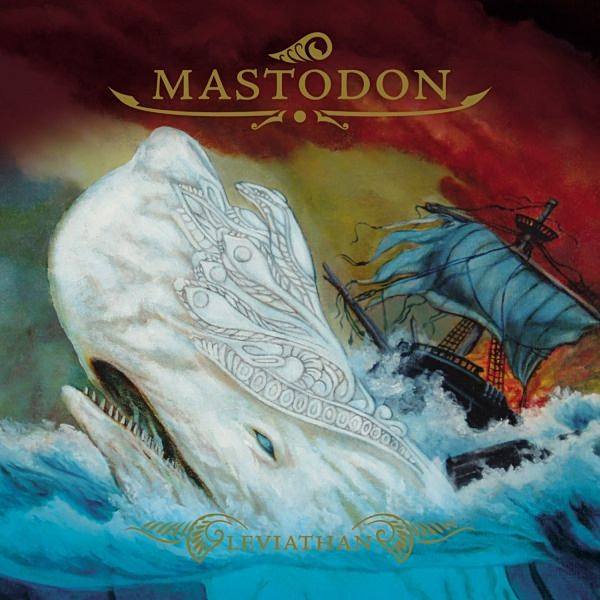
Marrow Deep seems to have a different goal. It doesn’t try to recreate the Mastodon of the Leviathan or Blood Mountain era, nor does it try to paper over Hinds’s absence by pretending nothing has changed.
Instead, it accepts that something has changed for good and builds from there. For Wall of Sound, the result is strong enough that the conversation among fans isn’t really about whether Mastodon survived the biggest change in their history, but about how high Marrow Deep can ultimately rank among their best records.