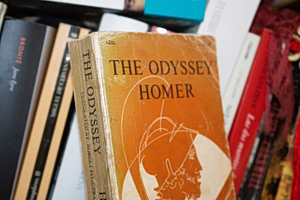
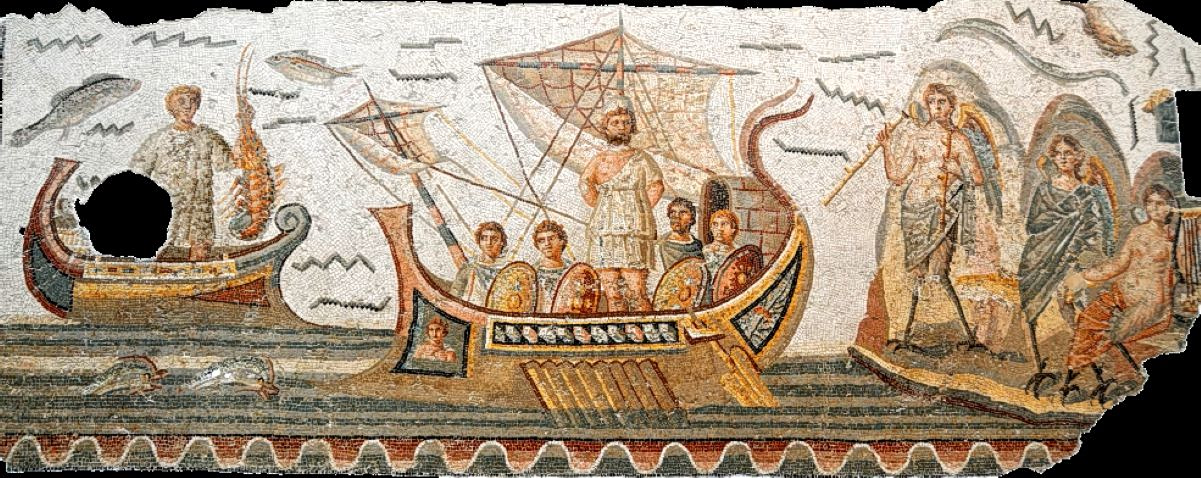
For more than 2,700 years, Odysseus has remained one of the most recognizable figures in world literature. The resourceful king of Ithaca, famed for devising the Trojan Horse, blinding the Cyclops Polyphemus, resisting the Sirens and spending a decade trying to return home, has become synonymous with adventure, perseverance and the longing for one’s homeland.
For most people, however, Odysseus remains a literary hero. That perception is now being challenged by modern archaeology. As highlighted in an extensive BBC feature, recent discoveries in Ithaca suggest that Odysseus was not only the protagonist of the Odyssey, but also the focus of an organized cult that may have lasted for around 1,000 years.
Coins depicting him, inscriptions bearing his name, votive offerings and the remains of a public sanctuary indicate that, for the people of ancient Ithaca, their legendary king was far more than a figure from the distant past.
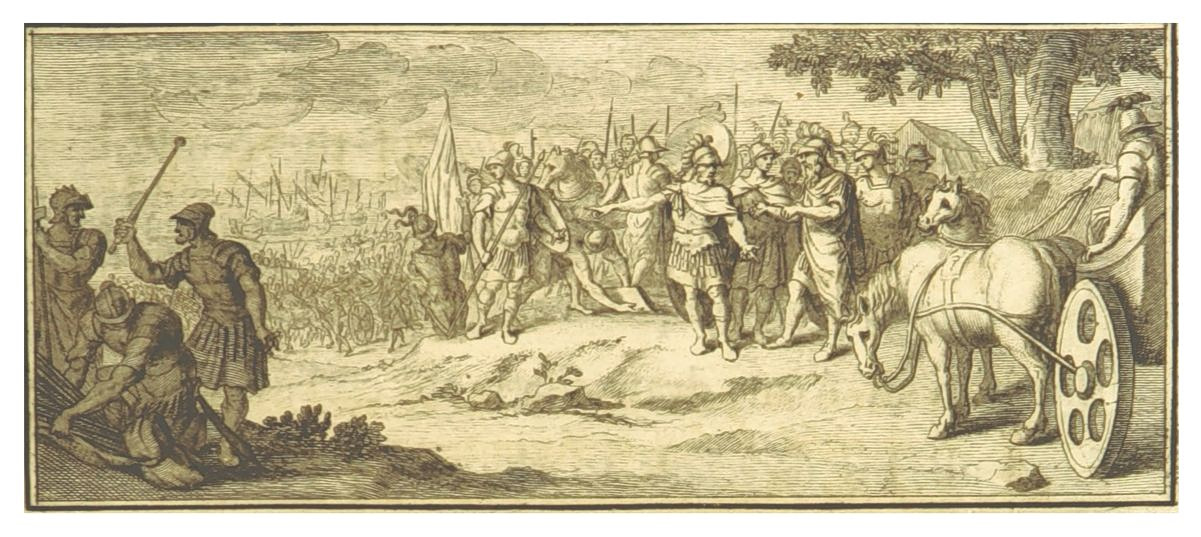
The findings also shed light on a world where mythology, religion, politics and collective identity were closely intertwined. Long before the Odyssey was written down, stories of Odysseus were passed orally by bards as part of a living tradition that connected communities across the Greek world.
At the heart of the epic is the hero’s longing to return home. Although Calypso offers him immortality and eternal youth, Odysseus chooses Ithaca, Penelope and Telemachus instead. His devotion to his homeland may help explain why he resonated so deeply with ancient Greeks.
According to the BBC, archaeologists believe that a form of worship surrounding Odysseus may have emerged as early as the 9th century BC, while his stories were still largely transmitted orally. By the late 8th century BC, when the Homeric epics took written form, his popularity—and possibly his religious significance—had grown further.
While heroes such as Heracles, Jason and Achilles also received cult worship, Odysseus appears to have had an exceptionally strong and enduring bond with Ithaca.
The Mystery of the Odysseion
The idea that Ithaca was home to a sanctuary dedicated to Odysseus is not new. A decree discovered in Magnesia in the late 19th century, dating to 207 BC, referred to an Odysseion in Ithaca and an annual Odysseia festival honoring the mythical king. For decades, however, the sanctuary’s exact location remained a mystery.
That may have changed in 2025, when the University of Ioannina excavation team announced that discoveries at the site known as the School of Homer strongly linked the complex to the ancient Odysseion. Finds include bronze coins depicting the bearded Odysseus and three roof-tile fragments bearing his name.
Giannos Lolos, Emeritus Professor of Prehistoric Archaeology at the University of Ioannina, described the discoveries as “new and decisive evidence” that the site served as a public sanctuary dedicated to the hero during the Hellenistic and early Roman periods.
The Inscriptions That May Solve the Mystery
The roof tiles discovered by archaeologists have played a crucial role in interpreting the site.
Archaeologist Christina Marabea, a member of the research team, told the BBC that two of the fragments bear the inscription “of Odysseus.” The wording is significant. Similar inscriptions have been found on tiles from sanctuaries dedicated to Poseidon, Apollo and other deities, suggesting that this building, too, was dedicated to Odysseus.
The third tile is even more revealing. It bears the inscription “to Odysseus,” which, according to Marabea, points to a personal offering made by a worshipper. Such practices were widespread in ancient Greek sanctuaries, where devotees left small objects made of clay, bronze or stone as expressions of gratitude or as offerings to the god or hero they revered.
The new discoveries add to earlier finds from the same area, including a small bronze bust of Odysseus. Taken together, they present an increasingly convincing picture: the Odysseion was not merely a symbolic location, but a functioning sanctuary where the people of Ithaca honored their legendary king.
Where Worship Met Public Life
The evidence suggests that the Odysseion was more than a religious site. According to Lolos, the monumental complex at the so-called School of Homer served as a public sanctuary during the Hellenistic and early Roman periods and was also a gathering place for the people of Ithaca. It was therefore not an isolated temple, but a space where religious belief and civic life intersected.
Marabea explained that the citizens’ assembly met at the Odysseion, while the site also served as a center for the worship of Odysseus, attracting not only local residents but pilgrims from elsewhere in the Greek world.
This is particularly significant because it shows that the mythical king was not simply a glorious memory of the past. His presence lay at the heart of the community’s public life, influencing even the way its citizens understood their collective identity.
The connection between a city and a mythical founder or protector was not unique to ancient Greece. Many communities linked their identity to legendary figures. In Ithaca, however, the relationship appears to have been especially powerful. Odysseus was not merely the island’s legendary king, but the figure around whom part of its religious, political and social life was organized.
The First Traces of Worship Date to the 9th Century BC
The recent excavations are not the only evidence connecting Ithaca with the worship of Odysseus. Instead, they add to a series of archaeological discoveries spanning centuries.
As early as the 1930s, archaeologists uncovered 12 bronze tripods inside a coastal cave in northwestern Ithaca. Dating to the 9th and 8th centuries BC, they belong to the period when stories of Odysseus were still transmitted mainly through oral tradition.
According to Marabea, the tripods may well have been offerings dedicated to the hero, potentially pushing the origins of his cult back several centuries before the Hellenistic period, the BBC reported.
If this interpretation is correct, devotion to Odysseus did not begin after the Odyssey was written down. It may already have been established while his stories were still being passed from generation to generation. The recording of the Homeric epics, in this view, did not create his cult but helped spread and strengthen it.
The Odysseia: A Festival in Honor of the Hero
Another clue to the ancient Greeks’ devotion to Odysseus comes from a decree discovered in Magnesia, which refers to the Odysseion in Ithaca and an annual festival known as the Odysseia in his honor.
Although the details have been lost, archaeologists believe the celebrations may have included athletic contests, recitations of Homeric epics, theatrical performances and competitions such as archery, along with sacrifices to Odysseus and Athena.
The festival was more than a religious ceremony. It brought people from different regions together, strengthened ties between communities and helped preserve a shared cultural identity, keeping Odysseus deeply embedded in the religious and civic life of the ancient Greek world.