 Μake us preferred on Google
When Aleksandar Vučić’s regime was toppled in Serbia on Sunday, October 25, 2026, following the decisive Student List’s election victory, everything once again seemed familiar. It recalled October 5, 26 years earlier, when the Democratic Opposition of Serbia overthrew Slobodan Milošević’s regime. A dictator had been defeated and crowds celebrated in the streets, but time showed that hopes for a better future were quickly dashed.
Yet this time things are substantially different. The Student List has been given an opportunity that Prime Minister Zoran Đinđić did not have when he came to power in 2000. Above all, this time power has not been taken over by a coalition of political parties, or even by a single party, but by a democratic movement.
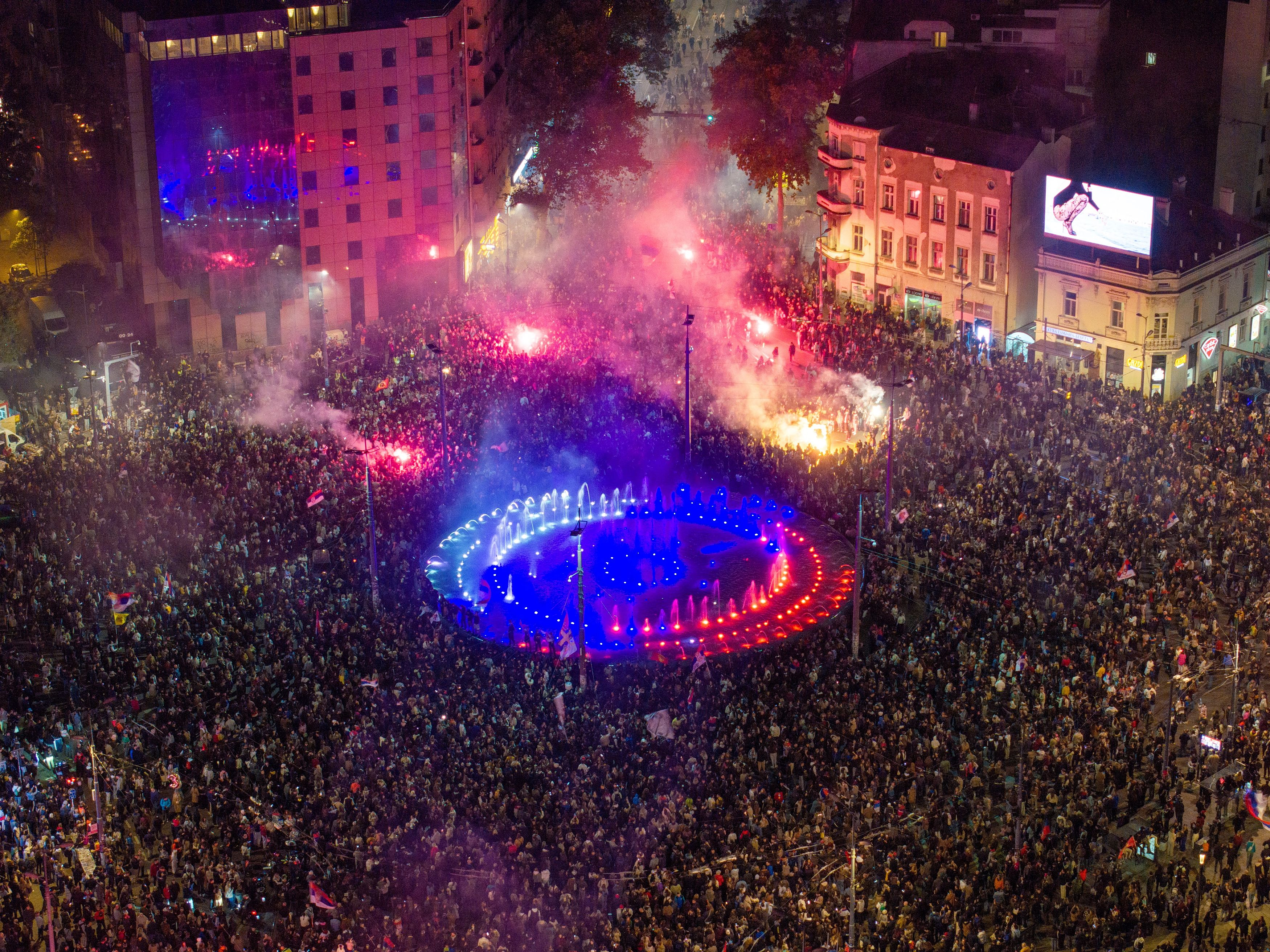
People celebrate the victory of the Student List at parliamentary election after Aleksandar Vucic conceded defeat, at Slavija Square in Belgrade, Serbia, October 26, 2026. REUTERS/Marko Djurica
Students organized and launched a series of protests and street actions after the authorities failed to accept responsibility, conduct an investigation, and punish those responsible for the collapse of a canopy at the recently renovated railway station in Novi Sad, which killed 16 people on November 1, 2024. After the authorities tried to suppress the daily commemorations of the victims by force, high-school students, ordinary citizens, academics, intellectuals, and many opposition parties joined the student protests. The student movement grew into a mass movement, bringing together years of dissatisfaction with the ruling regime.
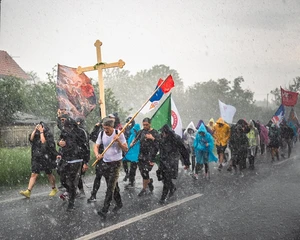
The student movement organized protests, rallies, marches, a cycling marathon to Strasbourg, road-junction blockades, signature drives, and numerous other actions. The resistance movement that emerged was unique in many respects. Decisions were, and still are, made by student plenums, while the organization is horizontally democratic rather than vertically hierarchical.
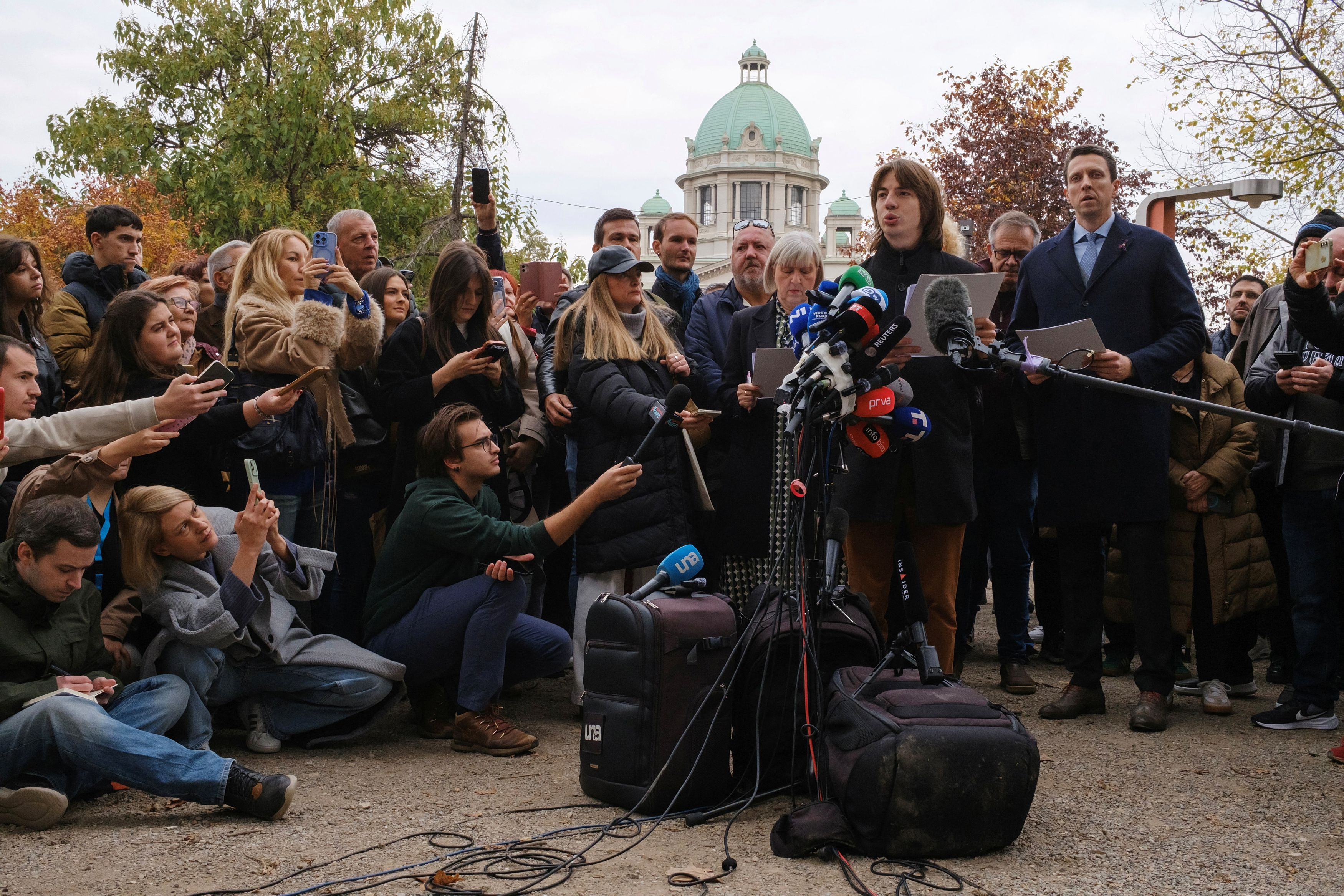
Representatives of the electoral list “Student List – Students Win” hold a media conference in Pionirski Park in Belgrade, Serbia, October 29, 2026. REUTERS/Marko Djurica
No clear leader ever emerged within the movement. In 2000, political opponents demonized Zoran Đinđić, then prime minister, portraying him as a foreign mercenary and a criminal. This time the authorities had no single person to demonize. All the surreal accusations that students were Serbia-haters, foreign mercenaries, traitors, and saboteurs fell flat in the eyes of the public for a very simple reason: these were their own children, who were fighting for truth and justice over the deaths of 16 people.
The leaderless student movement, with its opaque internal decision-making structure, proved to be an unsolvable problem for Aleksandar Vučić. The regime tried various tactics, from meeting demands and offering talks to threats and beatings. Nothing worked, because the regime itself proved to be the greatest obstacle to meeting the demands, and society would not tolerate violence against kids silently honoring the victims in the streets. The students began their protests without political demands, calling for the system to function properly, but soon began demanding the removal of a government unwilling to meet all their demands.
What the days since the regime’s fall have shown is that, unlike the opposition in 2000, the student movement had prepared well to assume power. Soon after the election victory, the names of academician Radomir Saičić—as a moral authority, public speaker, and potential candidate for Serbia’s next president—and economist and professor Dejan Šoškić, a former governor of the National Bank of Serbia, as a potential candidate for prime minister, emerged in public discussion. What is interesting is that Saičić, Šoškić, and many other intellectuals and activists close to the movement neither created nor led the student movement. Instead, the students brought them to the forefront as their professors and respected figures in whom they placed their trust.
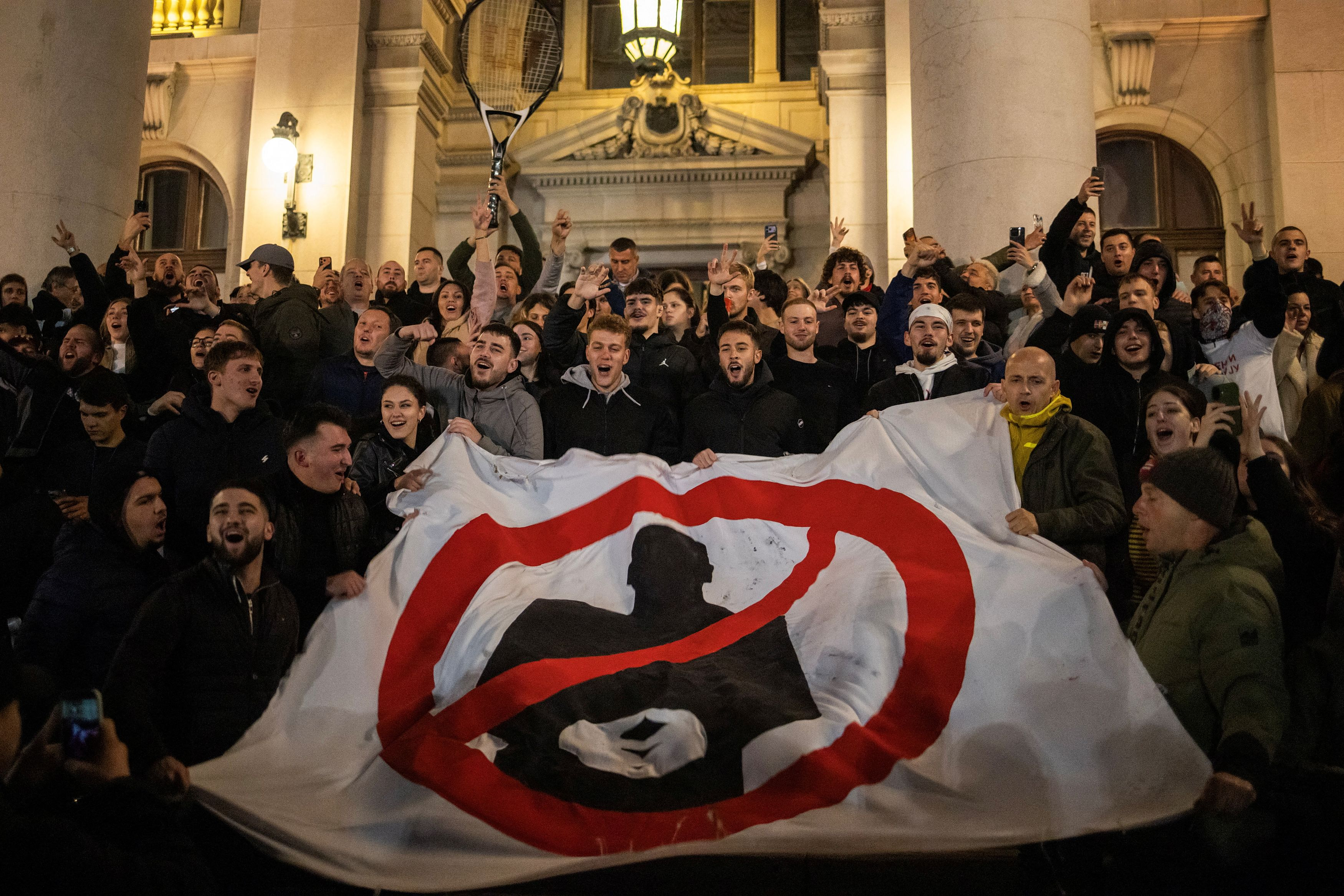
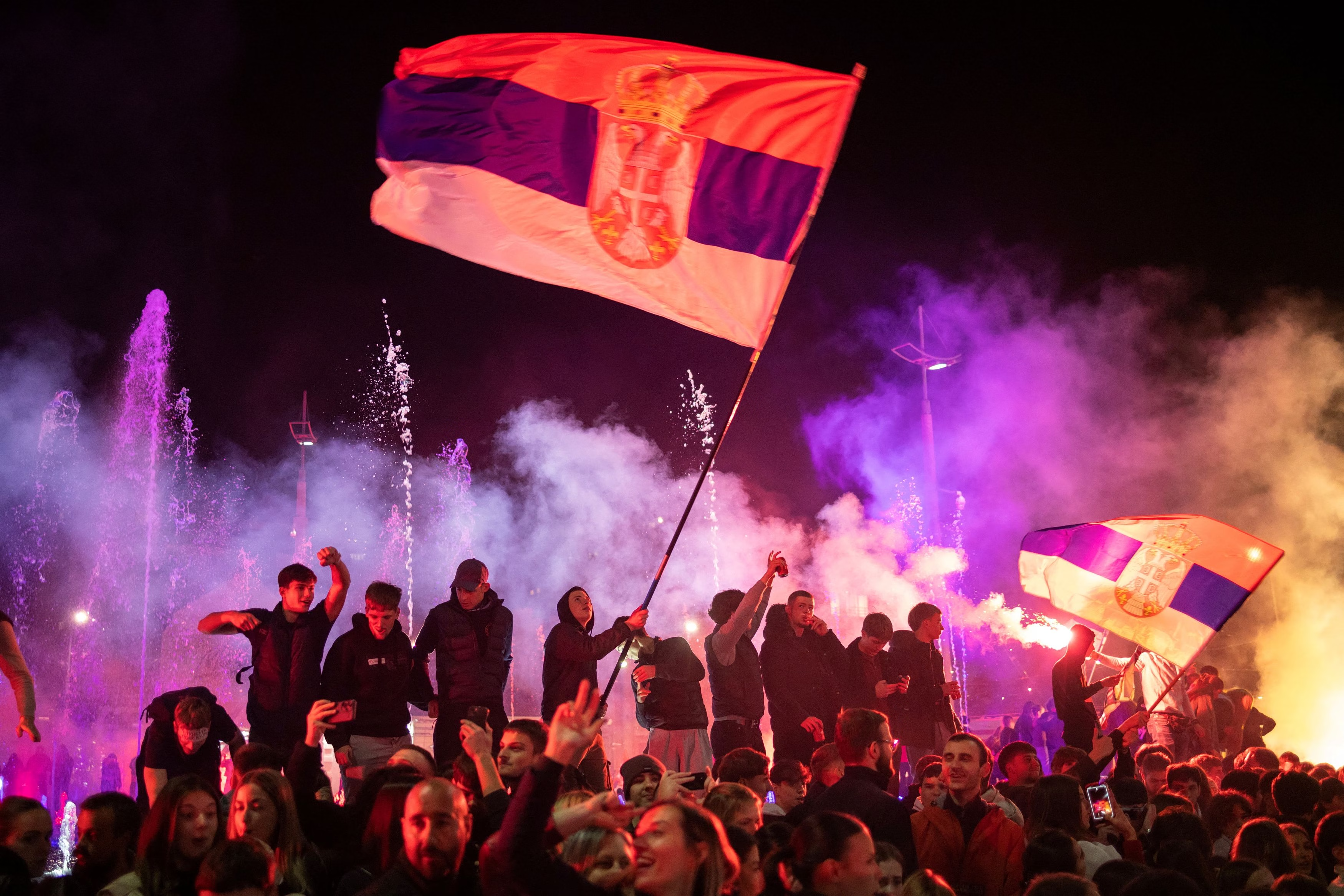
Supporters of the electoral list “Student List – Students Win” celebrate at the Parliament building after Aleksandar Vucic, Serbian Progressive Party (SNS) prime ministerial candidate, conceded defeat in the parliamentary election in Belgrade, Serbia, October 26, 2026. REUTERS/Marko Djurica
Moreover, Saičić, Šoškić, and other newly elected members of Serbia’s National Assembly representing the student movement have already announced substantial reforms in the past few days. Saičić, for example, has spoken about the need to reform the police by establishing a separate prosecutorial police service accountable to prosecutors, which would not refuse to carry out investigations as the police answerable to the Ministry of the Interior had done.
Šoškić has raised the need for the state to intervene in production chains and curb monopolies that keep consumer-goods prices exceptionally high in Serbia. Newly elected MP Ana Dimitrijević, a high-school teacher, has announced education reforms, including permanent employment for school staff. The ousted regime had banned hiring under the pretext of austerity and then blackmailed teachers on fixed-term contracts into working for Aleksandar Vučić’s Serbian Progressive Party, attending party rallies, and gathering votes. The student movement has also announced enforcement of the law on public broadcasting to curb hate speech and propaganda outlets, judicial reform, reviews of questionable contracts concluded by the previous authorities, continuation and acceleration of negotiations on accession to the European Union and numerous other measures.
The system itself has also awakened and begun to act. Three days after the election, Serbia’s Supreme Public Prosecutor’s Office began reviewing all cases in the country’s 87 public prosecutor’s offices. Previously, the authorities had used judicial persecution against opponents of the regime. Editors of public media outlets who had spent years disseminating propaganda for the ruling regime, and who had been appointed by it, began resigning en masse. In the small town of Ub, police for the first time detained Serbian Progressive Party thugs who had attacked a group of citizens celebrating the Student List’s victory. Three days after the election, the regime loyalist principal of a Novi Sad high school was also arrested for refusing to comply with an earlier court decision ordering the reinstatement of a teacher suspended for supporting the students.
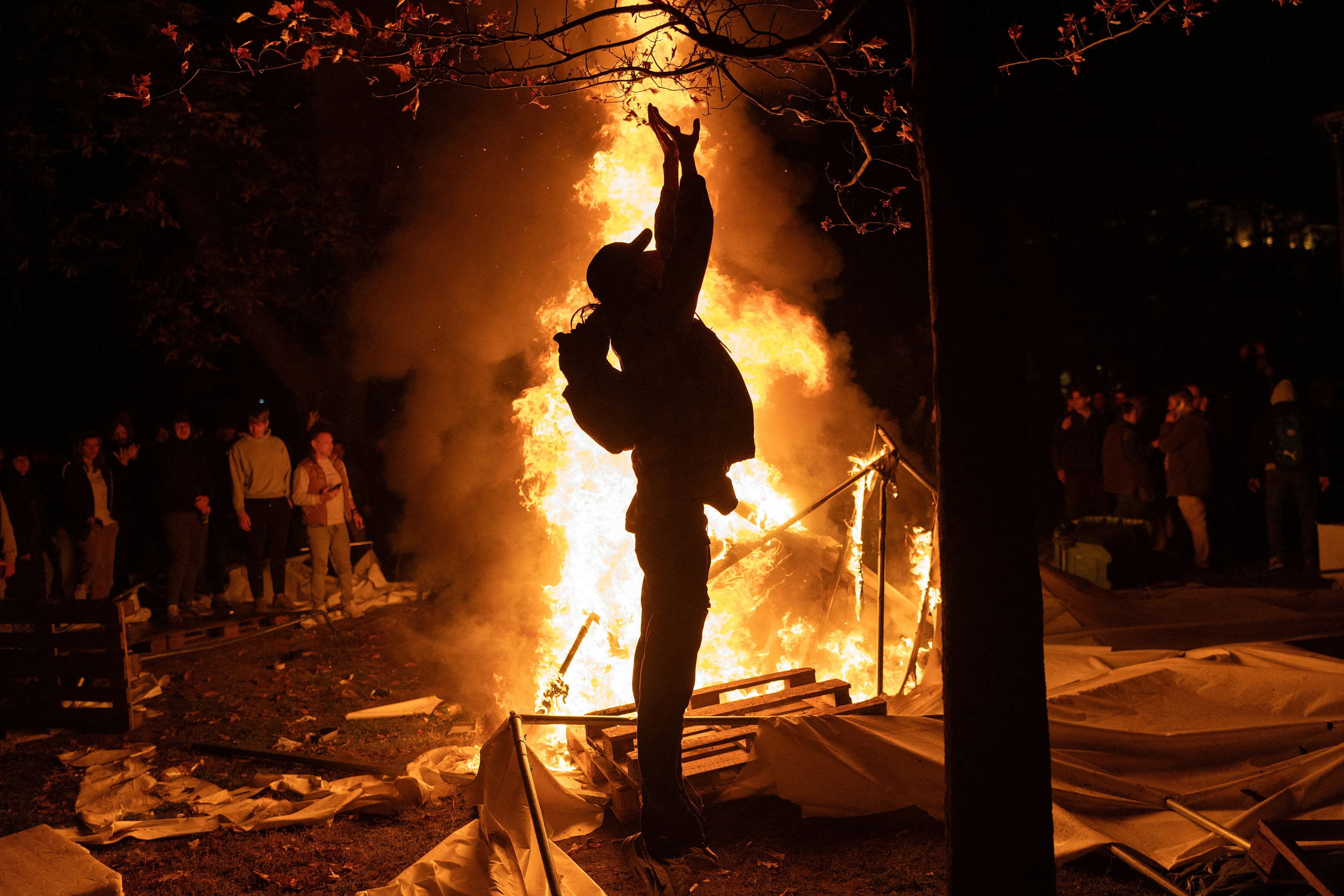
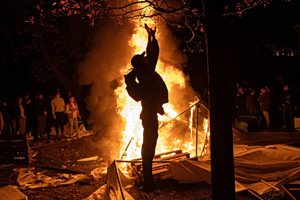
A person celebrates in front of a fire burning at Pionirski Park, site of a government-backed counter-encampment, as supporters of the electoral list “Student List – Students Win” celebrate after long-time ruler Aleksandar Vucic conceded defeat in the parliamentary election, in Belgrade, Serbia, October 25, 2026. REUTERS/Uros Arsic TPX IMAGES OF THE DAY
Citizens themselves also organized, entering the offices of mayors and public-company directors and taking down pictures of Aleksandar Vučić. In Belgrade, at the students’ invitation, citizens began painting over offensive graffiti directed either against their movement or against the former regime. Citizens also cleared out the so-called “Ćacilend,” a camp of former-regime supporters outside the National Assembly, many of whom had criminal records. The day after the election, citizens also stormed the offices of TV Informer, a media outlet that had spent years fabricating scandals, conspiracy theories, and allegations against the regime’s opponents, using lies and hate speech. For example, Informer had labeled the student movement “Ustaše,” the notorious Croatian fascists of the Second World War who carried out genocide against Serbs.
Members of the former regime and ordinary citizens had, in effect, begun implementing one of the most significant measures announced by the student movement: so-called lustration. The movement a long before elections announced that it would remove all personnel installed by the former regime as party loyalists within state institutions. After elections, it became apparent that the former regime lacked the strength to mount institutional resistance, and that its appointees had begun leaving their positions even before the formal transfer of power, which has yet to take place.
Zoran Đinđić also proposed lustration in 2000, but, as Đinđić himself said, he was in the minority at the time, and lustration was never implemented. This was one of the factors that led to his assassination in 2003 by members of the Serbian police’s Special Operations Unit. Unlike Đinđić, the student movement does not depend on a coalition or any political party: it has an outright parliamentary majority and a strong chance of winning the presidential election, which is expected to be called by the end of December 2026. It can therefore implement lustration and other measures without such resistance.
The new government will not have to balance competing political interests or the personalities and interests of party leaders. That will give it a free hand to implement its program, creating the rare situation of a government formed without the need for compromises either within its own ranks or with outsiders. Apart from a few representatives of national minorities, Serbia’s National Assembly will, in the coming period, consist only of representatives of the Student List and Aleksandar Vučić’s Serbian Progressive Party.
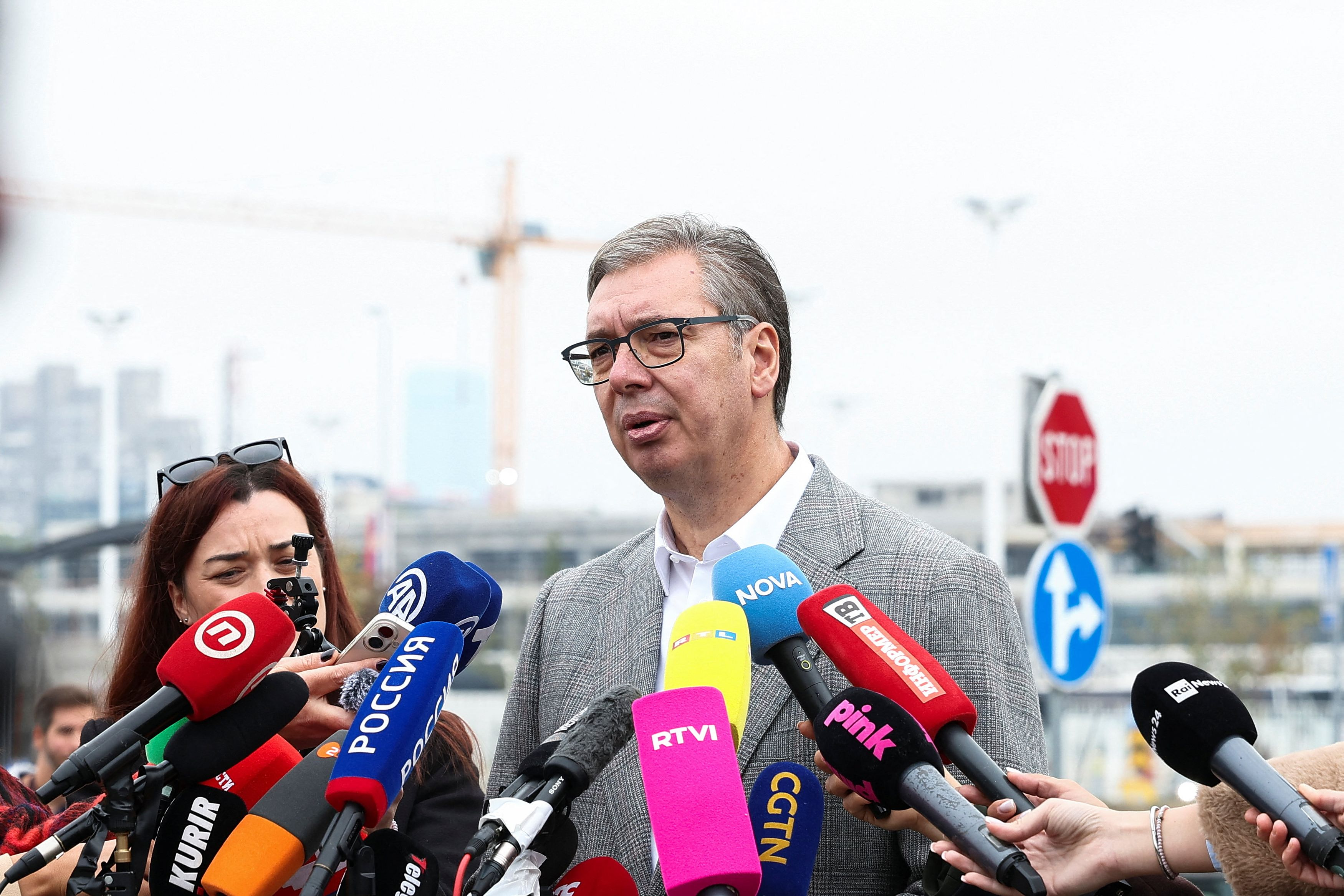
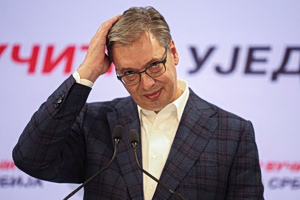
Serbia’s former President and the ruling Serbian Progressive Party (SNS) prime ministerial candidate Aleksandar Vucic speaks to the media during the parliamentary election in Belgrade, Serbia, October 25, 2026. REUTERS/Zorana Jevtic
Serbia has thus become the only country to have voted out both the government and the opposition in the same election. The Student List is particularly immune to so-called “party switchers”—politicians who move between parties and invariably attach themselves to the majority, bringing with them the legacy of the previous government. The Student List neither needs such defectors, since it holds a majority on its own, nor is it a party that one can simply defect to.
Another factor favoring the new authorities is a particular situation in Serbian society that did not exist before, certainly not in Đinđić’s time. After decades of turmoil, Serbian society has reached a consensus on all major foreign-policy issues. This does not mean that every segment of society agrees, but a large majority is prepared to accept compromise solutions, avoid forcing foreign-policy disputes to the forefront, and agree on a common course of action.
The broad consensus in Serbia on Kosovo is that Serbia wants Kosovo back but can do nothing to recover it. It will therefore not recognize Kosovo’s independence, but it will resolve technical matters with Kosovo such as vehicle license plates.
There is also consensus on relations with Russia. Serbia refuses to impose sanctions on Russia, but it has also declined to support Russia directly and has sold weapons to Ukraine. The country is trying to maintain a neutral position, balancing between Russia and the European Union.
Similarly, the broad consensus is that Serbia should support Serbs in the region culturally and economically, but without political backing or destabilizing other countries. There is no consensus on EU membership if it entails recognizing Kosovo’s independence and imposing sanctions on Russia, but there is agreement on continuing negotiations and carrying out reforms.
There are no longer ideological foreign-policy issues in Serbia that the new opposition can use to harass the new government, as Vučić, for example, used Kosovo and relations with Russia against his pro-European predecessor Boris Tadić 14 years ago. On foreign policy, the student movement promises much the same as Aleksandar Vučić did, only more sincerely and decently.
Unlike Đinđić’s coalition in 2000, which included both liberals and nationalists, the student movement is not ideologically divided over reforms. After the opposition overthrew Milošević, Prime Minister Đinđić adopted a pro-European position and extradited Slobodan Milošević to the Hague Tribunal. President Vojislav Koštunica on the other hand adopted nationalist stance and fiercely opposed the extradition. There are no such disagreements within the Student movement over lustration or reform of the media landscape.
Things are not ideal, however. The Student List is deeply divided ideologically over questions of history and identity. Some student gatherings had a pro-European character, and students cycled to Strasbourg to seek support from the European Union. Other gatherings, by contrast, were distinctly nationalist, featuring songs and speeches about a glorious past and the struggle for Kosovo.
The horizontal organization of the student movement has disadvantages as well as advantages. The absence of a leader, hierarchy, and established decision-making system can pose problems. The impression is that, during the campaign, the student movement skillfully united different movements and individuals around the removal of the regime and the implementation of key reforms, while avoiding any issues that might cause divisions. The open question is what will happen when new issues and challenges arise on which no pre-election consensus was reached. The bloc of MPs in the National Assembly could, for instance, fall apart when confronted with a major new problem not directly connected to the former regime.
If the new authorities want to govern Serbia successfully and carry out the planned reforms, their skill will be tested in finding ways to speed up decision-making, establish coordination, prevent the emergence of a leader who could dominate the movement, and resolve or avoid new contentious issues when they arise. Is this possible and feasible? Yes. The student movement has already shown that it can achieve what no one before it has achieved.
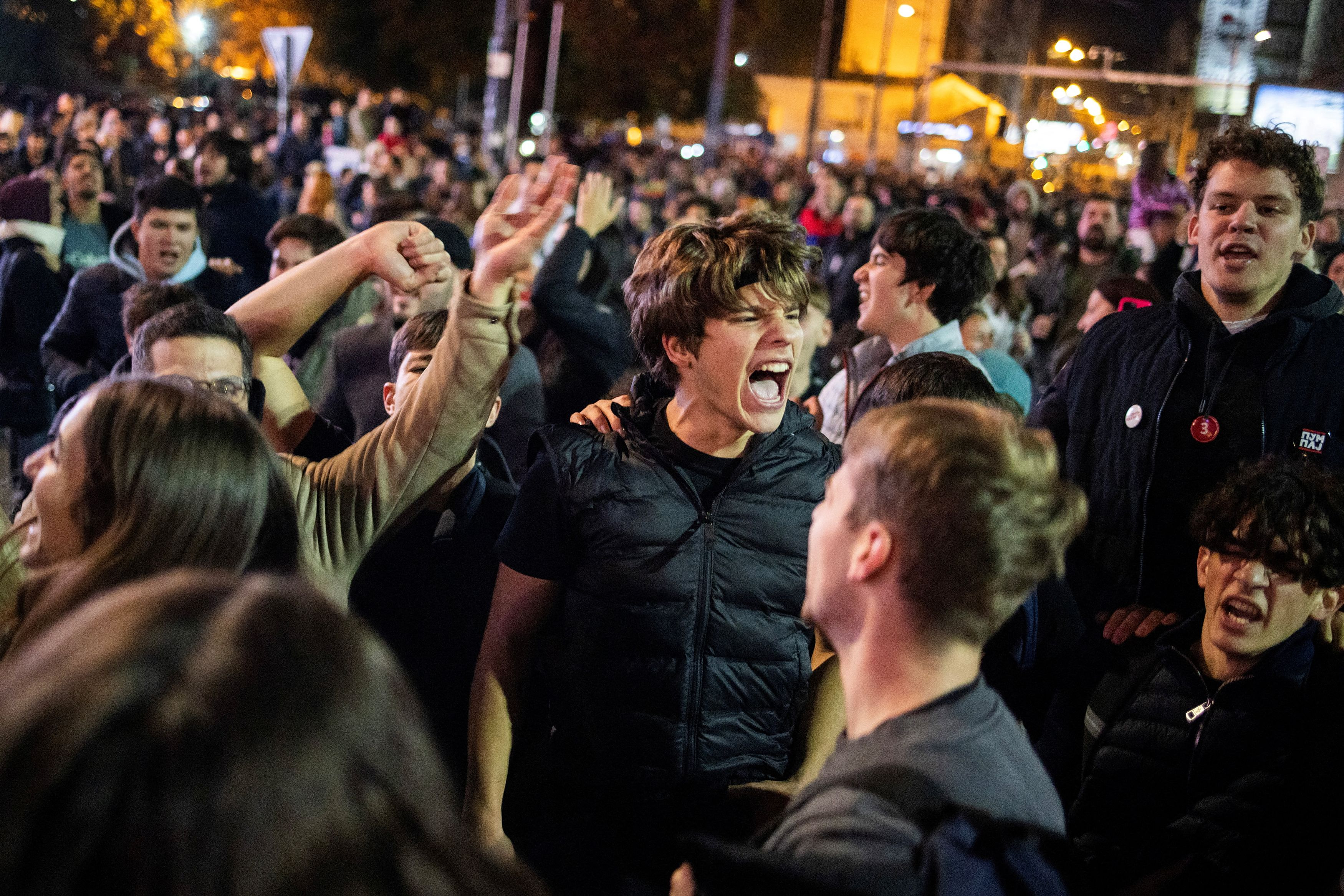
People celebrate the victory of the Student List at parliamentary election after Aleksandar Vucic conceded defeat, at Slavija Square in Belgrade, Serbia, October 26, 2026. REUTERS/Marko Djurica
As complete amateurs with no political experience, the students democratically, peacefully, and with dignity defeated an entrenched regime that controlled the state apparatus and enjoyed the support of both the media and the mafia. Through dignity, they overcame the fallen regime’s manipulation and political intrigue, avoiding every trap it set for them.
However, an informal organization cannot survive forever. A system will have to be established so that the movement can operate through government institutions. But this system does not need be a rigid party structure that will turn the student movement into a political party and restore conventional parliamentary life. More radical ideas and changes are also possible—for example, formalizing this kind of movement through a democratic collective presidency, a delegate system, membership democracy, internal elections, referendums, rotations and other democratic decision-making models.
For now, the new authorities face no contentious issues that could divide them. They hold all the mechanisms of power and enjoy enormous support, both from their parliamentary majority and from the public. All they need is determination, courage, and a little skill to carry out reforms and change Serbia.
This movement in Serbia is the first student movement in European history to win power. What the student movement has achieved is of almost unimaginable significance for Europe and European democracy.
The situation facing the student movement today does not resemble the position of the Democratic Opposition of Serbia in 2000. Rather, it resembles 1945, when another movement in Serbia took power and had a wide-open opportunity to change society as decisively and extensively as it considered necessary. As Nehru put it: “A moment comes, which comes but rarely in history, when we step out from the old to the new, when an age ends, and when the soul of a nation, long suppressed, finds utterance.”
The future belongs to those who believe in the beauty of their dreams, and Serbia’s future is within reach. It only needs to be seized. This time it is different.