 Μake us preferred on Google
Ferries remained docked at Greece’s main port of Piraeus on Friday, Oct. 30, as Greek maritime workers joined a coordinated international strike protesting the use of commercial ports to ship weapons to conflict zones, including Israel.
The coordinated action, organized under the slogan “We Will Not Work for War,” involves more than 25 labor unions across 113 ports in 22 countries, from Europe and North Africa to India and Mexico. Organizers say the protests could affect more than 40% of Mediterranean cargo traffic and disrupt over $2 billion worth of freight, according to Reuters, although the extent of the disruption remains uncertain.
Major shipping hubs targeted by the protests include Hamburg, Valencia, Le Havre, Genoa and Piraeus, as well as Morocco’s Tangier Med port and India’s Nhava Sheva.
Ferries Grounded as Greek Workers Walk Out
In Greece, a 24-hour strike by maritime unions has left ferries docked at Piraeus, disrupting services to the Greek islands. Dockworkers, marine engineers and seafarers are participating in the nationwide action, with rallies taking place at ports across the country.
“We will send our own message of peace from Piraeus, and we will show our solidarity with the peoples suffering from war,” dockworkers at Greece’s largest port said in a statement. Port workers in Piraeus scheduled a three-hour walkout from 10 a.m. to 1 p.m. local time, while other maritime unions called a 24-hour strike.
The Greek Federation of Permanent Port Employees also announced a three-hour work stoppage during the same period, while the Piraeus Labor Center called a full-day strike.
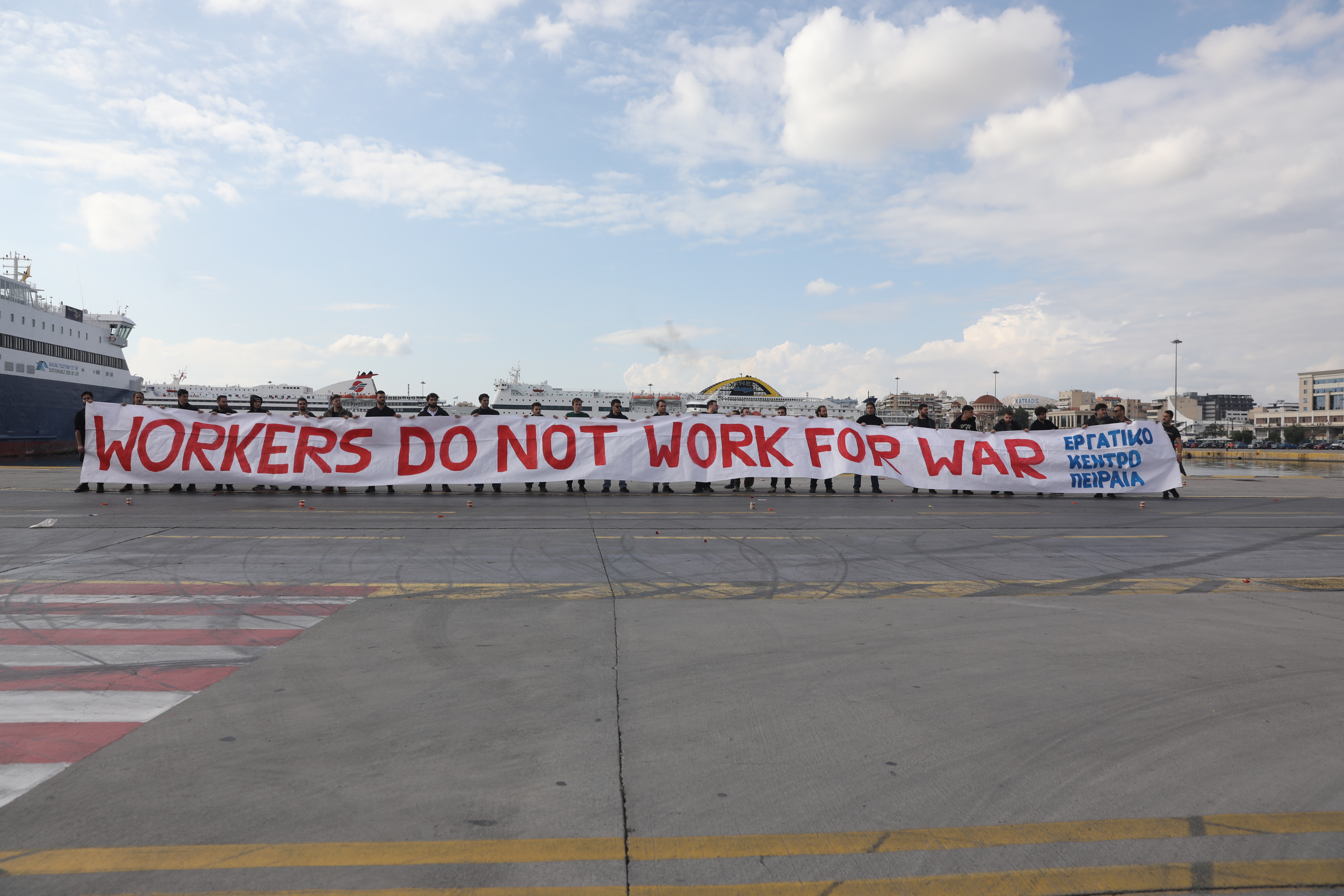
Dockworkers hold a banner at the port of Piraeus during an international strike against arms shipments to conflict zones. Workers at more than 100 ports worldwide joined the protests on Friday, Oct. 30, 2026. (Danai Davlopoulou/Eurokinissi)
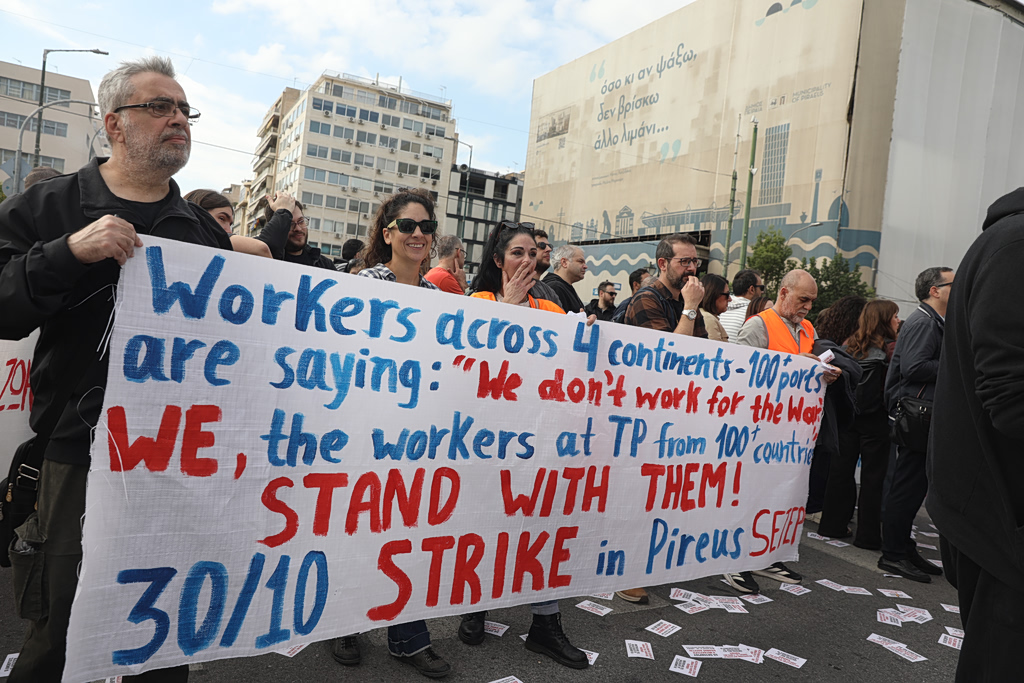
Demonstrators gathered at Municipal Theater Square in central Piraeus, joined by unions representing other professions, including teachers, who organized shorter work stoppages in solidarity.
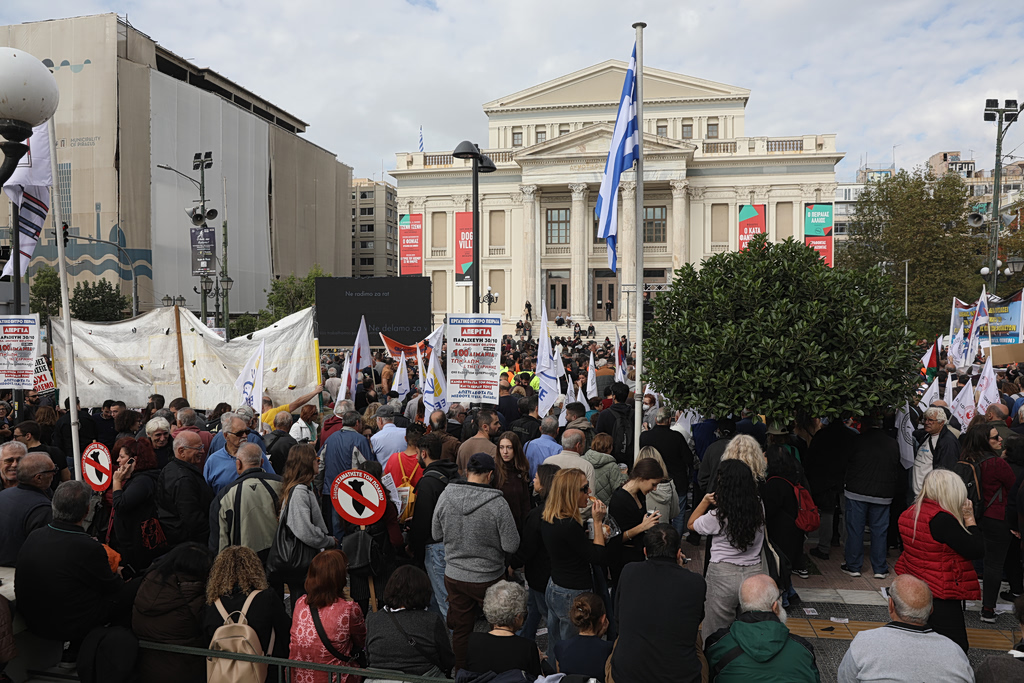
Demonstrators gather outside the Municipal Theater in Piraeus on Friday, Oct. 30, 2026, as part of an international dockworkers’ strike involving more than 100 ports worldwide. Workers are protesting arms shipments to conflict zones and demanding better pay and working conditions. (Danai Davlopoulou/Eurokinissi)
Alongside their opposition to arms shipments, Greek maritime workers are demanding a 12% increase in wages under collective bargaining agreements, improved working conditions and safety standards, a seven-hour workday and the mandatory presence of doctors aboard ships.
Greek Communist Party (KKE) leader Dimitris Koutsoumbas expressed support for the striking workers, describing the coordinated action as a message of solidarity across national borders. “We will not work for their war,” Koutsoumbas said, calling for ports to serve peaceful purposes rather than function as military bases or staging grounds for armed operations.
A Coordinated Protest Against Arms Shipments
The international action follows months of organizing by dockworkers’ unions seeking to prevent commercial ports from being used to supply weapons to countries involved in armed conflicts.
In May, dockworkers’ unions from more than 35 European countries issued the Istanbul Declaration, calling for restrictions on the use of port facilities to transport weapons destined for war zones.
Italian dockworkers, particularly in Genoa, have been at the forefront of the movement, repeatedly organizing protests and blocking cargo shipments bound for Israel and U.S. military bases.
Among the unions supporting Friday’s strike are Germany’s ver.di, Ireland’s SIPTU, Denmark’s 3F and France’s CGT Ports et Docks. Organizers also expect disruptions at about a dozen ports in India.
The Global Sumud Flotilla, a pro-Palestinian campaign group that has attempted to deliver humanitarian aid to Gaza by sea, has also announced coordinated actions in support of the striking workers.
The protests come amid mounting concern among maritime workers over the consequences of armed conflict for commercial shipping.
Representatives of India’s Water Transport Workers Federation said approximately 15 Indian seafarers had died during the U.S.-Israeli war with Iran, while many others remained stranded at sea, according to Reuters.
Source: TA NEA, Reuters