
 Μake us preferred on Google
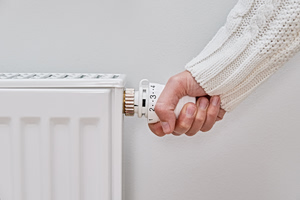
 Heating oil in Greece is expected to cost about 41% more than a year ago when sales begin Thursday, despite new subsidies announced by the government that will see the country’s two major refining companies cover half the cost of reducing prices at the pump. Environment and Energy Minister Stavros Papastavrou and Deputy Finance Minister Thanos Petralias unveiled the measures Wednesday, setting out a combination of state subsidies, refinery discounts and increased heating allowances.
The government estimates that heating oil will initially sell for around €1.55 per liter, compared with a projected price of €1.95 without the intervention. Of the 40-cent reduction, 20 cents will come from public funds and the remaining 20 cents from refiners Motor Oil and HELLENiQ ENERGY.
The projected price is well below the €1.75 per liter benchmark previously cited by Prime Minister Kyriakos Mitsotakis, which reflected prices at the end of the last heating season in April. But compared with October 15, 2025, when heating oil sold for €1.10 per liter, consumers will still be paying about 41% more, despite the subsidies. The increase comes as annual inflation in Greece reached 5% in September.
The announcement follows Finance Minister Kyriakos Pierrakakis’ appearance on public broadcaster ERT on Tuesday, when he first outlined plans to increase the heating allowance by 30% and introduce direct fuel subsidies.
Refiners Cover Half the Heating Oil Discount
The government’s announcement emphasizes the reduction in the expected retail price, but half of that reduction is being financed by Greece’s two major oil refiners. Motor Oil and HELLENiQ ENERGY will provide a combined discount of 20 cents per liter of heating oil, matching the contribution from the state. According to reporting by OT.gr, the companies have already provided at least €100 million in discounts on gasoline and diesel since July.
The latest contribution comes as the refiners face the possibility of additional taxation at the EU level. Industry sources cited by OT.gr have expressed doubts about whether the Greek government would oppose such a measure.
The government’s approach also leaves existing fuel taxation unchanged. The excise duty on heating oil remains at €280 per 1,000 liters, compared with a minimum permitted level of €21 under European rules.
New Subsidies for Heating Oil, Diesel and Gasoline
The measures announced Wednesday include three direct state subsidies covering the second half of October.
Heating oil will receive a state subsidy of 20 cents per liter from October 15 through October 31, supplemented by an equivalent refinery discount.
Diesel used in vehicles will receive a total discount of 20 cents per liter, comprising 15 cents from the state and 5 cents from refineries.
For 95-octane unleaded gasoline, the government will provide a subsidy of 10 cents per liter beginning October 17, following the withdrawal of the refinery-funded discount.
The subsidies will be applied directly to retail prices, meaning consumers will not need to submit applications or meet income requirements. The government estimates the cost of the three interventions at €46 million for the second half of October.
The projected starting price for heating oil is between €1.50 and €1.60 per liter, depending on movements in international energy markets, with €1.55 presented as the central estimate.
For households eligible for the separate heating allowance, the government estimates an effective cost equivalent to approximately €1.35 per liter once that assistance is taken into account. That figure is not the price consumers will pay at the pump and will depend on their individual entitlement.
Heating Allowance Rises 30% for Winter 2026-27
The government also confirmed a 30% increase in the heating allowance for the entire 2026-27 winter season. Unlike the direct price subsidy, which applies to fuel purchases regardless of household income, the heating allowance remains subject to existing income and property eligibility criteria.
The increase covers all eligible heating sources, including heating oil, electricity, natural gas, firewood and wood pellets. The maximum payment will rise from €1,200 to €1,560.
Under the revised amounts, a household previously entitled to €500 would receive €650, while one that received €800 last year would qualify for €1,040, assuming its circumstances remain unchanged.
According to government figures, approximately 1.17 million households received heating assistance across all eligible energy sources last year. Officials estimate that about 750,000 households, representing nearly 60% of those using heating oil, meet the eligibility requirements for that particular benefit. Applications are expected to open by November 10, with advance payments scheduled by December 23. The advance payments will also increase by 30%.
The additional expenditure is estimated at €52 million, bringing the allowance’s overall budget to €225 million from €173 million, based on last year’s figures.
With information from OT.gr
M.P.