Greece’s economic team is monitoring the worsening energy crisis with growing alarm, as rising fuel prices and accelerating inflation put renewed pressure on households and threaten to complicate the country’s fiscal plans ahead of 2027.
A senior finance ministry official told OT.gr that no final decisions had yet been taken, but support measures could be announced by the end of next week and implemented in June. The government is estimated to have roughly €200 million available for interventions and is considering extending existing schemes, including the Fuel Pass subsidy program and support for diesel fuel.
Officials are also working on what they describe as a more permanent package of measures that Prime Minister Kyriakos Mitsotakis is expected to unveil at the Thessaloniki International Fair, the annual event where Greek prime ministers traditionally present major economic policy initiatives. Longer term, one billion euros has been set aside for additional support measures in 2027, with the stated intention of distributing that amount to citizens at the start of the year.
Inflation on the rise
Inflation stood at 2.7% in February. By April, two months into the Iran conflict, it had reached 5.4%, driven by fuel, food, and services. According to ELSTAT, the Greek national statistics authority, beef prices rose 19.2% in April year on year, lamb and goat 13.3%, margarine and vegetable fats 11.6%, coffee 7.9%, fruit 7.5%, vegetables 7.1%, and chocolate 7%. The European Commission’s spring forecasts project Greek inflation at 3.7% for full-year 2026 and 2.4% for 2027, revisions Athens is watching with concern.
Market Pass and VAT Cuts Ruled Out
Despite mounting pressure from opposition parties, the government does not appear willing to revive the “Market Pass” subsidy program introduced during the inflation surge of 2022, nor reduce VAT on basic goods.
Officials at the Ministry of National Economy and Finance argue that reinstating the Market Pass would be too costly given current fiscal constraints. They also maintain that VAT reductions on food and other essentials reduction would reduce fiscal revenues and, in the government’s assessment, would not be passed on to consumers in lower prices.
The government remains particularly cautious about preserving fiscal discipline as it prepares longer-term measures for next year. Speaking ahead of a Eurogroup meeting in Nicosia, Finance Minister and Head of the Eurogroup Kyriakos Pierrakakis warned that if the strait remains disrupted in June, conditions will be worse than in May, and July worse than June. Even if a resolution were reached immediately, the finance ministry believes energy market normalization would take at least three months.
Pierrakakis was explicit about the constraints governing Athens’ response. “We must not allow this energy crisis to turn into a fiscal crisis. We need to be surgical in our approach,” he said.
What’s on the table
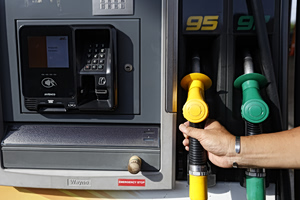
The diesel subsidy, currently set at 20 euro cents per liter, is due to expire and a decision must be made by the end of the month. An extension would cost at least 50 million euros from the 200 million euro reserve. A reduced subsidy of 10 cents per liter is among the options under consideration. An extension of the Fuel Pass, a program that credits eligible individuals with a fixed fuel allowance redeemable via a digital card or bank transfer, is also being examined. The application window for the 2026 Fuel Pass closed on April 30, but approved recipients have until the end of July to redeem their vouchers. Depending on how prices develop through the summer, when fuel costs typically rise further, the program’s eligibility scope could be widened.
Source: ot.gr