 Μake us preferred on Google
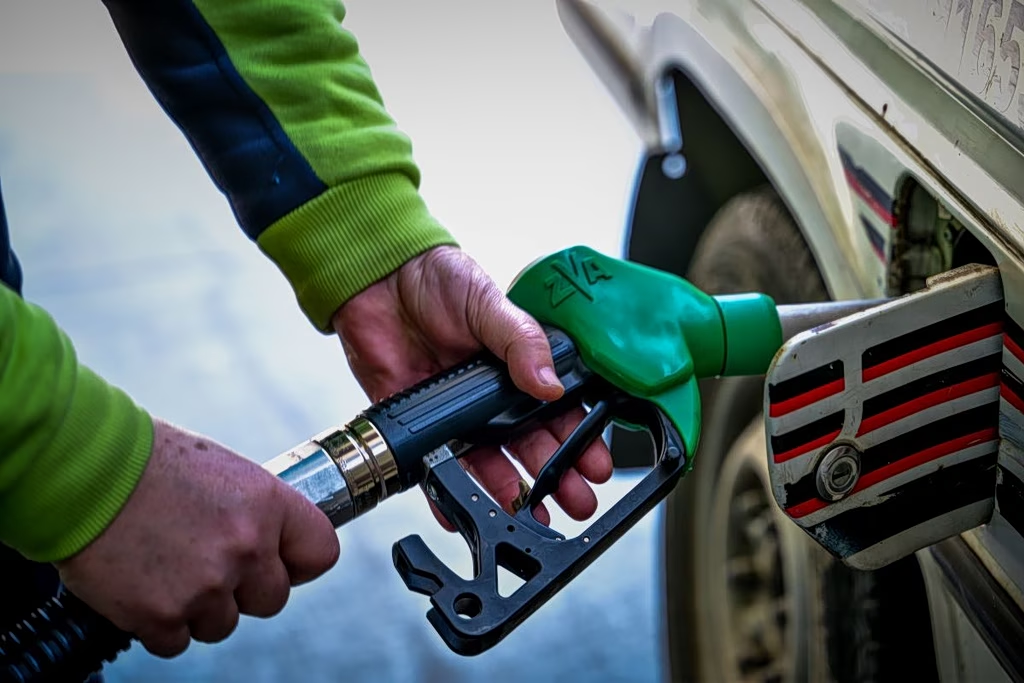
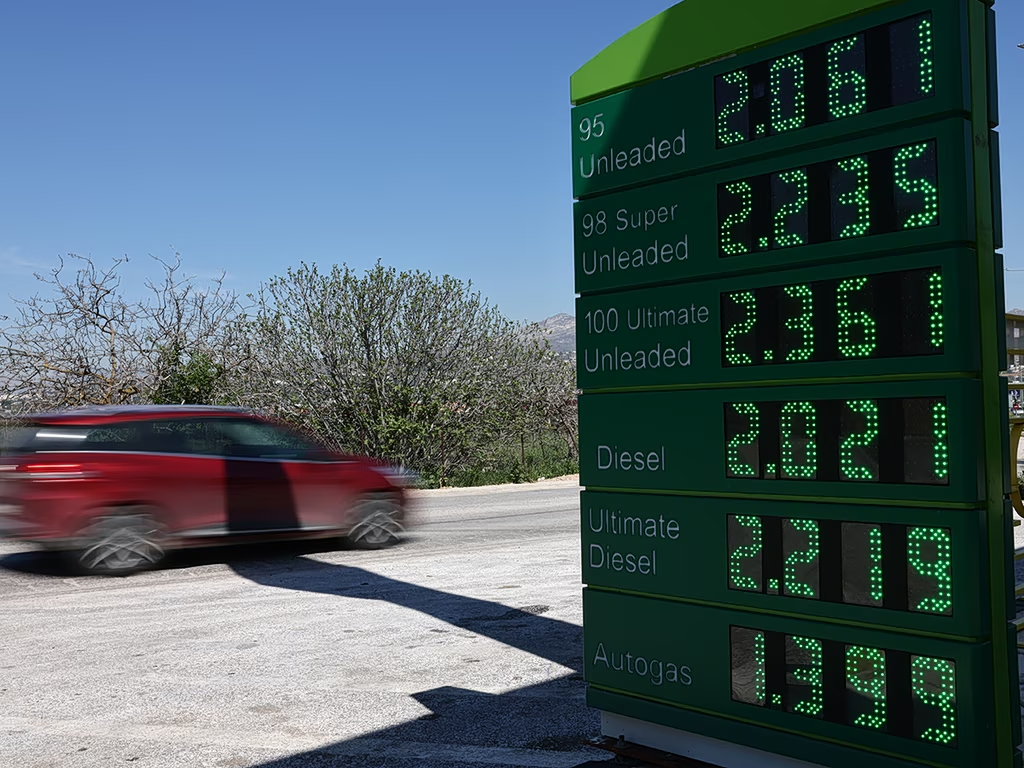
 More than 2.5 million Greeks received state fuel subsidies under the third iteration of the country’s Fuel Pass program, government figures show. The measure was introduced as the war in Iran and the wider Middle East pushed fuel prices higher, adding fresh strain to households already struggling with the cost of living. In total, 2,559,592 beneficiaries shared 113,085,905 euros.
Beneficiaries of Fuel Pass III were given a choice of how to receive the money. The majority went with a direct bank transfer: 1,597,127 people received a combined 65,102,285 euros that way. The remainder, 962,465 beneficiaries, opted for a prepaid digital card, through which 47,983,620 euros were distributed. Unlike in previous rounds, the card could also be used for public transport and taxis, not just at petrol stations.
The amounts themselves were modest. Car owners on the mainland received 40 euros via bank transfer or 50 via digital card. Island residents, where fuel costs more and alternatives are fewer, qualified for slightly higher amounts: 50 and 60 euros respectively. Motorcycle and moped owners received between 25 and 35 euros. The card balance remains valid until July 31, 2026, but cannot be cashed out.
Eligibility followed the means-tested formula established in earlier rounds. Singles earning up to 25,000 euros annually qualified, as did married couples or civil partners earning up to 35,000 euros, with an additional 5,000-euro allowance per dependent child. Single-parent households had a higher ceiling of 39,000 euros.
The program was administered jointly by the Ministry of Digital Governance and the Ministry of National Economy and Finance, under ministers Dimitris Papastergiou and Kyriakos Pierrakakis. Greece first introduced the Fuel Pass mechanism in 2022, when the war in Ukraine triggered a sharp spike in European energy prices, and has since revived it each time global market conditions have threatened to squeeze household budgets even further.